here we go again, part 2

yogis

I want to say from the onset that my writing is not meant to be a scholarly history of Hinduism and I won’t get into any debates about what Hinduism is, who is a Hindu, etc. I am more than cognizant of the various Hindu gods and goddesses and know the difference between a Shaivite and a Vaishnavite (I’m partial to Murugan who is also known in Mahayana Buddhism as Skanda.)

But all that doesn’t matter for this purpose. After all, I am Buddhist with a Kali yantra tattooed on my back so you can figure that out by yourself. I am only writing about yoga as taken from my notes over the years and from the Joshi essay referenced in Part 1. You can read this or move on but be advised that I will not entertain any type of religious debate — there are other forums where you can argue any point you want to make.

When I wrote that “Hinduism actually rejects yoga” in part 1, I knew those words would be shocking.  But when the KYM teacher used those words he was talking about the way Hinduism in general views the philosophy of yoga as a path of liberation.  I have to say that in any yoga training I have ever done I never heard it said that Hinduism gave birth to yoga.  Yes, yoga philosophy is a part of Hinduism, but as for yoga originating in Hinduism, I beg to differ.

Before the time of Buddha (563 BCE to 483 BCE, approximate date of death) the religion of India was Vedic Brahmanism and alongside the Vedic tradition there was an ascetic (the sramanas) form of thought and practice originating in prehistoric times. Prof. Joshi writes that Buddhism had the closest affinity with this sramanic culture and Hinduism grew out of a fusion of Vedic Brahmanism with Buddhism and other sramanic religious trends.

In order to discuss the roots of yoga or whether yoga springs from Hinduism, let’s keep some dates in mind: Vedicism, 1500-500 BCE; Tantricism and Hinduism, 500-1000 CE.

Sages (munis) and ascetics (yatis) lived in ancient India before the time of the Upanisads.  Prof. Joshi writes that “the Rgveda describes a muni who practiced meditation and led an austere life. He is said to be ‘long-haired’ and probably wore a beard. The munis either lived naked or wore … dirty garments and were experts in techniques of silent ecstasy.” (Joshi, p.27)

This was the culture — pre-Hinduism — that birthed the beginnings of yoga.

In part 1 I wrote about Stephen Cope’s talk on the history of yoga during my training at Spirit Rock. He drew a yoga timeline from the Vedas to the explosion of yoga after 1975 when Yoga Journal was first published. He emphasized that the renouncers of the Vedic rituals, these sramanas, starting from the 8th Century BC, used their own bodies and minds as laboratories for the direct experience of yoga and for the research on the nondualism of body and mind.

My KYM teachers taught that Samkhya and yoga are closely related. Prof. Joshi writes:

“In later Brahmanical tradition these two systems [Samkyha and yoga] are generally mentioned together. Yoga as a way of religious perfection is older than the Yoga system of thought now associated with Patanjali’s Yogasutras (cir. 300 CE.) Yoga as a way was an essential element of Sramanic culture. Yoga is therefore of non-Brahmanical and non-Aryan origin. The munis and yatis of Vedic age practiced yoga and dhyana. This is clear from the Rgveda… The early Yoga was possibly identical with Buddhist Yoga or the way of meditation. As it belonged to the non-Vedic Sramanic tradition, the early Yoga was possibly non-theistic and ascetic.” (Joshi, p.33)

Cope taught that Patanjali wrote the Sutras as a treatise for advanced yoga students and reminded us that only three sutras mention asana, the rest are about meditation and the human experience. So when it is commonly said that “yoga is 5000 years old”, that is not true because it was not until the Middle Ages (1300 app.) when the Hatha Yoga Pradipika was written followed by the Geranda-Samhita (1600 app.) and the Shiva-Samhita (1700 app.) that the yoga poses we are familiar with today were revealed.

The Sutras are not about asana practice but about uncovering the roots of human suffering. Yoga and Buddhism both grew out of the same cultural milieu of India as a reaction to the dogma of the Vedic and Brahmin culture. Buddha lived about 700 years before Patanjali wrote the Sutras but given the religious atmosphere of India at that time, it would have been impossible for Patanjali not to have been influenced by Buddhist thought. In his essay Prof. Joshi writes that the Mahabharata (which the Bhagavad Gita is part of) was compiled during the period when Buddhism flourished most in India, during 400 BCE to 400 CE: “the present form of the Mahabharata, with its ethics and philosophy, would have been impossible without Buddhism.” (Joshi, p.13.)

Both the Sutras and Buddhism seek to uncover the roots of human suffering. When Buddha said that “second hand answers have no power to transform”, he was talking about direct insight into known experience, the known experience of sitting and watching the breath, watching the body in the body, and the breath in the breath.

Sounds like yoga (asana-pranayama-meditation) to me. It seems that if anyone should “take back yoga”, it should be my ash-covered friends in the photo above because it was their pre-Hindu forebears who saw yoga as a path of liberation via one’s own efforts rather than through being born into the right caste or through the rites and rituals of Vedic Brahmanism.

________________________________________

Reference:  “Brahmanism, Buddhism and Hinduism: An Essay on Their Origins and Interactions” by Lal Mani Joshi of the Department of Religious Studies, Punjabi University, 1970.

addthis_pub = ‘yogagal60510’;

here we go again, part 1

Hindu blessing of cow, Rameswaram beach, 2006

Getting on the yoga merry-go-round again of the old debate on “who owns yoga?” and whether yoga springs from Hinduism.

There’s lots of stuff going on in the world but it must be a slow news day when the New York Times publishes another article with a dramatic title on the Hindu group that is stirring up the debate over yoga’s soul.

Then there was the USA Today article, “Take Back Yoga Campaign: Back Where?”

Lisa Miller in Newsweek asked whether yoga’s Hindu roots matter. I thought her article was a breath of fresh prana in this debate, but I still think she is mistaken about some things.

And after the debate burned through the yoga blogosphere and Facebook this week, Deepak Chopra finally weighed in on the yoga yada yada in HuffPo.

I thought his article was a bit amusing, since in Miller’s article he claims to have “sanitized” Hinduism in order to make it more palatable: “The reason I sanitized it is there’s a lot of junk in [Hinduism],” explains Deepak Chopra, the New Age guru….“We’ve got to evolve to a secular spirituality that still addresses our deepest longings … Most religion is culture and mythology.  Read any religious text, and there’s a lot of nonsense there.  Yet the religious experience is beautiful.”   But in his HuffPo article he states that  “the nobility of Indian spirituality elevates Hinduism to a unique place in the world.”

Uh, which part of that nobility did he sanitize? OK, whatever…Deepak is a zillionaire guru and I’m not. He must know what he’s talking about because he’s written a ton of books. And is a zillionaire guru. Did I mention that already?

STOP THE PRESSES! I’ve always wanted to say that….

One would think Chopra would be the last word on this but no, I don’t think so…gather ’round, kiddies, and I’ll tell y’all a story. I will preface this by saying that I’m not a yoga scholar and have never written a book. I have no fancy advanced college degrees (yet.) I’m a yoga student first and then a teacher but I’ve been around the yoga block a few times and have taken a workshop or two.  My only claim to yoga fame is studying four times (soon to be five) at the Krishnamacharya Yoga Mandiram, Desikachar’s school in Chennai, India — two intensives and private classes. That’s all.  Like Tao Porchon-Lynch, “I don’t tell you these things from ego, but because it’s what I know.” Be advised that I pulled out my notes from KYM. And I take damn good notes.

But I want to say to the Hindu American Foundation referenced in the NY Times article that I feel your pain. I understand why they are verklempt. As Lisa Miller wrote in Newsweek, “You can’t stop people from using and transforming yoga.  But you have to honor and credit the source….know where yoga came from and respect those origins.” I’m getting very tired of yoga articles written in terms of “fighting” and “owning”, but I don’t blame Indians one bit for wanting reverence and respect paid to an art and science that originated in India. Don’t get me started on OM tattoos on feet but I digress.

But yoga doesn’t come from Hinduism and Hindus don’t own yoga.

Yoga is much older. What I learned at KYM was that yoga was part of the six systems of philosophy in India called the saddarsanas, darsana meaning “to see”:

1. Nyaya — logic; using analysis to look a problem;

2. Vaisesika — evolution; what is the evolution of something to discover its reality. EX: a desk comes from wood which came from a tree which came from a seed.

3. Mimamsa — rituals and rites (doing something in order to get something.) EX: animal and human sacrifice; fire rituals.

4. Sankyha — closely related to yoga; our problems arise because of “seer” and what is seen; there is confusion between the “I” and the rest of the world. “Sankyha” means knowledge of Self through right discrimination. (See the Samkyha Karika of Isvara Krsna.)

5. Vedanta — school of philosophy that interpreted the Upanishads (advaita vedanta is a subset of this philosophy.)

6. Yoga — school of philosophy that holds that the mind is the problem; focus the mind and we solve our problems.

The above information is from my Yoga Philosophy class notes, 2005. The next line I wrote was: “Hinduism actually rejects yoga.” As a legal assistant for 20 years I sat in many a lawyer’s office and wrote their words verbatim to transcribe into letters and legal documents.

So no, I did not make that up and I suppose those words shock some of you. When long-held beliefs are challenged it can be quite painful. Let me try to explain the yoga and Hinduism connection (or non-connection as the case may be) in part 2 after I finish reading the scholarly essay “Brahmanism, Buddhism and Hinduism: An Essay on Their Origins and Interactions” by Lal Mani Joshi of the Department of Religious Studies, Punjabi University, 1970.

This essay was sent to me by a long-time reader and is an essay that Stephen Cope of Kripalu used for his book on the Sutra-s. When I did the Mindfulness Yoga and Meditation Training at Spirit Rock in California, Stephen Cope used many of the points in the essay in his talk to us on the history of yoga.

The gist of the essay is that many of the things Westerners and contemporary Indian Hindus think of as “classically Hindu” actually come from the shramanical tradition generally (the sramanas being the ancient yogis, the ascetics who lived in the Vedic era which is pre-Hinduism) and Buddhism specifically and were incorporated very late in Indian history.

Stay tuned.

addthis_pub = ‘yogagal60510’;

yoga and the evolutionary process

No, not yoga and evolution.  Yoga and YOUR evolution.  Change.

I’ve been thinking a lot about what my student said in class the other night, about what she thinks “real yoga” is.

It was her belief that mainstream yoga caters to this culture rather than trying to change this culture.

To this student “real yoga” is about change on the micro- and macro- level.  Or as I’ve heard Desikachar say, anything else is acrobatics.

I know the phrase “real yoga” irks some people.  People don’t like to hear that phrase used, considering it judgmental or arrogant.  They say that all yoga is good yoga and so what if someone does a 60 minute yoga DVD to get a slim, sexy body.  And contrary to popular beliefs about this Krazy Old Yogini, I agree to a point: so what.  The way yoga is advertised is a separate and entirely different issue.

Because as a wise reader told me recently, reality means that not everyone sings like Cecilia Bartoli or plays violin like Jascha Heifetz.  So why can’t we accept that there is talent involved in yoga and meditative arts also?  The democratization of everything (democratization being another word for mainstream) makes us think everyone should benefit equally from martial arts, yoga, or tea ceremony, but that simply is not true.

Many say that the more esoteric benefits of yoga will eventually come to those who practice for purely physical reasons.  I’ve never believed that because that assumes that everyone is on the same path, running at the same pace, equally.  That’s not true in a marathon and that’s not true on the yogic path.  There is also a little thing called karma.

There are plenty of people in yoga classes who practice for purely physical reasons and become stronger and more flexible, but they are still unhappy and depressed or full of fear. Some will be that way the rest of their lives, in varying degrees; others, not.  There are those who will run from teacher to teacher, from one ‘ism to another, and still die with their most intense fear buried deep within their hearts.  There are others who have suffered horribly in their lives, studying with one teacher or even none, but through their internal work will fly on wings of joy on their dying day.

Life. Change. Stages of evolution. Karma.

The reader who wrote to me believes that it is only natural that some will not connect with the esoteric levels of yoga and will remain happy with a basic understanding of yoga, the basic level being purely physical.  A lucky few on the yoga path will know enlightenment. Most will be stuck somewhere in between.  This has to do with talent, but also with what the Chinese call yuanfen.

So even a basic understanding of yoga and attaining purely physical benefits are better than none at all, but I have my own standards of what constitutes “real yoga.”  And just as there is nothing wrong with someone doing yoga for purely physical benefits, there is nothing wrong with my standards either.

As I’ve come to believe over the years, students get the teachers they need at the time, teachers get the students they deserve at the time.  Think about that.

One of my standards is that yoga is about physical and emotional healing.  Another standard is that yoga is about accelerating our personal evolution.  I’ve told my students many times that if something isn’t changing for you off the mat, then it’s not yoga.  If your path is only the length and width of your yoga mat, that’s not much of a path.  That’s my standard.  And someone can choose to accept that or not because frankly, in the end, I don’t care.  It’s your own personal evolution.  Or should I say revolution?

In his book A Life Worth Breathing Max Strom writes:

“Hatha yoga is a profound evolutionary system that will benefit everyone who has the passion to change his or her troubled existence into an extraordinary life. It has changed my life forever, and every day I see it transform more and more people into happier, healthier, and more empowered beings….


Imagine two people practicing side by side. One is still and struggling in a posture, barely able to open his hips, but he is not letting it bother him. Instead, he feels calm in this difficult moment, centered in deep breathing.


Then there is the second person next to him, able to wrap his legs around his neck, but breathing erratically, thinking negative thoughts. Whose practice is better? Flexibility is not the aim; it is a side effect….


If you find joy and you are living a meaningful life, then you are becoming good at yoga….


Remember, the goal is not to tie ourselves in knots — we’re already tied in knots. The aim is to untie the knots in our heart. The aim is to unite with the intimate, loving, and peaceful power of the universe and fully awaken into the highest level of human consciousness.”
(Max Strom, pp. 122-125)

A spiritual adept once told me that it is not my job as a yoga teacher to change people. They have to change themselves.

I can only give you a road map — you have to drive the car yourself.

just an old-fashioned girl

Last night in class I only had two students. Believe it or not, this no longer bothers me — I show up and I teach. Despite how “mainstream” yoga people love to believe yoga is nowadays — and I would really like someone to explain to me what mainstream is — the number of students in class is diminishing. I’m not the only teacher in my area who finds this to be true. More on that later.

So since it was a loosey-goosey class, we yakked for the first 30 minutes, me and my two students about the State of Yoga in America. I will add that this was totally unsolicited by me, these two gals just wanted to let loose. Of course this is not a scholarly study by any means, merely anecdotal, but interesting just the same.

One woman told me that she was glad she found my class — this woman is older like me, I would say in her 50s. She told me she was glad she found a “real yoga” class — her words, not mine, unsolicited. By “real yoga” she meant not “power yoga” (her words) as is taught in her gym where she takes Pilates. My class is the first yoga class she has ever taken (because her chiropractor recommended it), so she had nothing to compare it to. In spite of knowing nothing about yoga other than it was supposed to help calm her down, she somehow knew she wanted to take a “real yoga” class.

She was dismayed at the lack of commitment from the drop-in students. She asked why students feel that a yoga class is supposed to be convenient for them, instead of making it a priority like anything else in their lives. She asked me why students feel they don’t have to support a yoga class, that they can just show up whenever they want to. We recalled the couple who came once and said that they “maybe” do yoga once a month. Uh…why bother? Was it a night they were bored and wanted to spice up their evening with my class? OK, I’m kidding.

I shrugged. I have no answers anymore to questions about yoga in OMerika. But I smiled and thanked her for calling my class “real yoga” and thanked her for her commitment to herself.

The second woman, younger, 30s maybe, was also dismayed at the lack of students in my class. She had been coming to this venue for yoga for a long time and told me the class used to have about 20-30 students in it. I was asked to take over this class to try to build it back up — I had heard that the class had too many subs and people had stopped coming.

The younger woman told me — again, unsolicited and her words, not mine — that I was old-fashioned. I smiled and she laughed. She told me, “I think your class is the way yoga originally was before it became mainstream. You know…real yoga.” Ahhhh….there are those words again.

I asked her what she thinks “mainstream yoga” is. I said to please explain it to me because I’m stuck in my little ol’ boring box of asana-pranayama-meditation, so I am out of touch.

She said this: that the more mainstream yoga becomes, i.e., yoga taught all over the place, the more people will lose sight of what yoga really is. She said that yoga right now is trendy and popular, it’s merely “the thing to do”, just another fitness trend.

It was her belief that mainstream yoga has been dumbed down (her words) to cater to this culture rather than trying to change this fast-paced culture.

I will let that sink in because it is a very powerful statement.

She believes that people are so used to moving fast in their daily lives, that that is the type of yoga people want instead of yoga to slow them down, to go inward. She told me that to her, that’s not “real yoga.” She said, “if I wanted that, I’d go to an aerobics class.”

I smiled. I told her thanks for saying I’m old-fashioned, but I prefer the term “old school.” “Now let’s do some old-school yoga,” I said, as I started the vinaya krama class.

Out of the mouths of students.

I found the exchange interesting. According to my student then, “mainstream” merely means “popular.” But is popular always a good thing? This student also believes that with the popularity of yoga nowadays, the sheer number of yoga classes being offered outside of yoga studios (her emphasis) actually devalues yoga and cheapens the real message of yoga, which is personal transformation. This student lives in a suburb that is far from my class. She told me that there is plenty of yoga around her house but it is the “fast food yoga”, as she calls it, and will have none of it.

“Fast food yoga.” I like that description. Sure you can survive on a diet of fast food, but how healthy is it for you in the long run?

And now for another real life yoga teaching experience….

A yoga teacher friend has a small studio, trying to make a yoga buck as is every other local studio. A chiropractor in her area organized a lecture on living a holistic life via healthy eating habits, exercise, meditation, things like that. About 200 people attended.

I will say that again: 200.

Every yoga business guru will tell you that is the perfect opportunity and place to advertise yoga. I have heard that suggestion time and again — that in order to get your yoga name out there you must hook up with chiropractors or other holistic businesses.

My friend spoke about her studio, what yoga can do, handed out flyers, and spoke about the yoga fundamentals class series she was offering. She asked me, “and how many people do you think signed up or even asked a question?”

None. Zero. Out of 200 people.

Do you want fries with that?

stick a fork in it….

…I’m done.

For now.

The Yoga Ink Saga.

Not as important as writing about the current state of yoga, but I’m tired….turning inward and slowly checking out.

addthis_pub = ‘yogagal60510’;

October is Domestic Violence Awareness Month

I am a survivor.

That is why my seva is at my local domestic violence shelter for almost 10 years now. It is my favorite class to teach because my students are also my teachers. Someone you know is a survivor of domestic violence, sexual assault, or both.

Consider these facts —

Domestic Violence:

Half of all married women in the United States are physically abused at some time in their marriage.

One in 10 teenagers will be involved in a violent dating relationship before graduating from high school.

A woman is beaten every 10 seconds.

Domestic violence is the most under-reported crime in the US.

Domestic violence cuts across all socioeconomic backgrounds, regardless of race, religion, or level of education.

Battering often occurs during pregnancy.

10 women a day die at the hands of their husbands or partners.

Every five years the number of women in the US who die at the hands of their partners is equal to the number of males who died in the Viet Nam War.

Abused women comprise 20% of all women presenting injuries at hospital emergency rooms.

Sexual Assault:

Every 5 minutes a woman is raped.

One-third of all rapes occur in a woman’s home.

Rape itself is a violent act, but 85% of all rapes are accompanied by more violence or the threat of violence.

Only 7% of sexually assaulted women report rape. This makes the actual number of rapes in the US as high as 2 million a year.

One in three girls and one in five boys will be sexually assaulted or abused before age 18.

In a Cornell University questionnaire, 92% of the respondents listed sexual harassment as a serious problem. 70% had personally experienced some form of harassment.

American women are 8 times more likely to be raped than European women and 26 times more likely than Japanese women.

One third of the sexual assault program clients at the shelter where I teach are children between the ages of 3-13; 50% of these clients are boys between the ages of 3-10.

October is Domestic Violence Awareness Month. Instead of wearing a purple ribbon, find a DV shelter in your community and do you seva. Walk your yoga talk for these women and you will be repaid 10 times over. Last night one of the women brought her little boy and he got on my mat and started teaching with me. Priceless.

Karma yoga = yoga love.

Karma yoga = peace.

May all beings have happiness and the causes of happiness.
May all beings be free from suffering and the causes of suffering.

listen. and then listen again.

“(The Atma) is not even in name different (from the Brahm.) It is not hidden in the high words (of the Vedas.) O Friend! How can I call it uniform or varied? I am by nature Eternal Freedom beyond all ills.” Avadhuta Gita, 4.13

“Know me to be free from one and all. For me there is neither the Maya nor its opposite. How can I be said to have anything to do with the Sandhya and other prescribed devotional duties? I am by nature Eternal Freedom beyond all ills.” Avadhuta Gita, 4.18

The Avadhuta Gita of Dattatreya

“He who has filled the universe, He who is Self in self, how shall I salute Him!” To know the Atman as my nature is both knowledge and realisation. “I am He, there is not the least doubt of it.” “No thought, no word, no deed, creates a bondage for me. I am beyond the senses, I am knowledge and bliss.” There is neither existence nor non-existence, all is Atman. Shake off all ideas of relativity; shake off all superstitions; let caste and birth and Devas and all else vanish. Why talk of being and becoming? Give up talking of dualism and Advaitism! When were you two, that you talk of two or one? The universe is this Holy One and He alone. Talk not of Yoga to make you pure; you are pure by your very nature. None can teach you.”
— Swami Vivekananda on the Avadhuta Gita

As a yoga student/teacher, are you only familiar with the Bhagavad Gita?

It is my nature to be Free.


because yoga cooks us

Chickpea to Cook
~Jalaluddin Rumi
(translated by Coleman Barks)

A chickpea leaps almost over the rim of the pot
where it’s being boiled.

“Why are you doing this to me?”

The cook knocks him down with the ladle.

“Don’t you try to jump out.
You think I’m torturing you.
I’m giving you flavor,
so you can mix with spices and rice
and be the lovely vitality of a human being.

“Remember when you drank rain in the garden.
That was for this.”

Grace first. Sexual pleasure,
then a boiling new life begins,
and the Friend has something good to eat.

Eventually the chickpea
will say to the cook,
“Boil me some more.
Hit me with the skimming spoon.
I can’t do this by myself.

“I’m like an elephant that dreams of gardens
back in Hindustan and doesn’t pay attention
to his driver. You’re my cook, my driver,
my way into existence. I love your cooking.”

The cook says,
“I was once like you,
fresh from the ground. Then I boiled in time,
and boiled in the body, two fierce boilings.

“My animal soul grew powerful.
I controlled it with practices,
and boiled some more, and boiled
once beyond that,
and became your teacher.”

atha, yoga, anusasanam

a question of semantics?

Carol Horton’s post on Tara Stiles’ book still has legs so I thought I would add my two rupees here as a post.

I’m a jazz freak and usually listen to what is considered “real jazz” (as a Sirius XM satellite radio station is entitled) as opposed to “lite jazz” (as a former Chicago radio station billed itself.) Although I learned the piano as a child, I am not a jazz musician so I don’t know what technically makes jazz “real jazz” or “lite jazz” — all I know is that they each sound very different to my ears. However, I also have a “lite jazz” station programmed in my car radio. They advertise themselves as “contemporary jazz.”

The other day when I was driving I thought how appropo for yoga nowadays. If a teacher teaches an asana-only class — i.e,. no pranayama, no meditation, no chanting, no proper instructions on bandhas, no mention of chakras, no discussion on texts or philosophy — call the class “contemporary yoga” and call it a day.  Don’t bother with any name branding, calling it vinyasa, or anything else.  Just “contemporary yoga.”

Or if it’s an asana-only class, why call it yoga at all? Physical therapists use movements derived from yoga all the time but they don’t call it “yoga.” It’s physical therapy and everybody knows that is what it is. Nothing else.

Just like Frank Jude said in his comment to Carol’s post, I have also taught in places other than yoga studios. I started out at my local park district in a gym. But even nine years ago when supposedly there were a lot less people doing yoga, I never felt the need to water down yoga.  Something brought people to my classes other than “slim sexy yoga” or “yoga for abs” when the number of asana-only “yoga” books did not exist as they do now. What brought them, what were they looking for?

I’ve also been told that more people are being brought to yoga now because of books like Tara Stiles’, allegedly a book for beginning students.  If that is the case (i.e., more people doing yoga), then why did I have 40 students in a class nine years ago (when supposedly there was less awareness about yoga) and am lucky now to have 10 in a public class? I’m not the only teacher in my area who has experienced this.

Something in this modern yoga equation does not compute.

As Frank Jude said, “It’s so EASY to teach mindfulness, compassionate action, non-judgmental awareness, radical acceptance [my note: what is usually seen in “real yoga” classes] without using any yoga jargon, overt ‘spiritual’ terms or expressions.”

Indeed it is.  So why the sea of change with the new generation of American yoga teachers?

good news Friday — yoga scholarships!

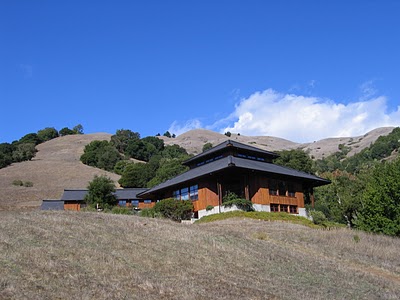
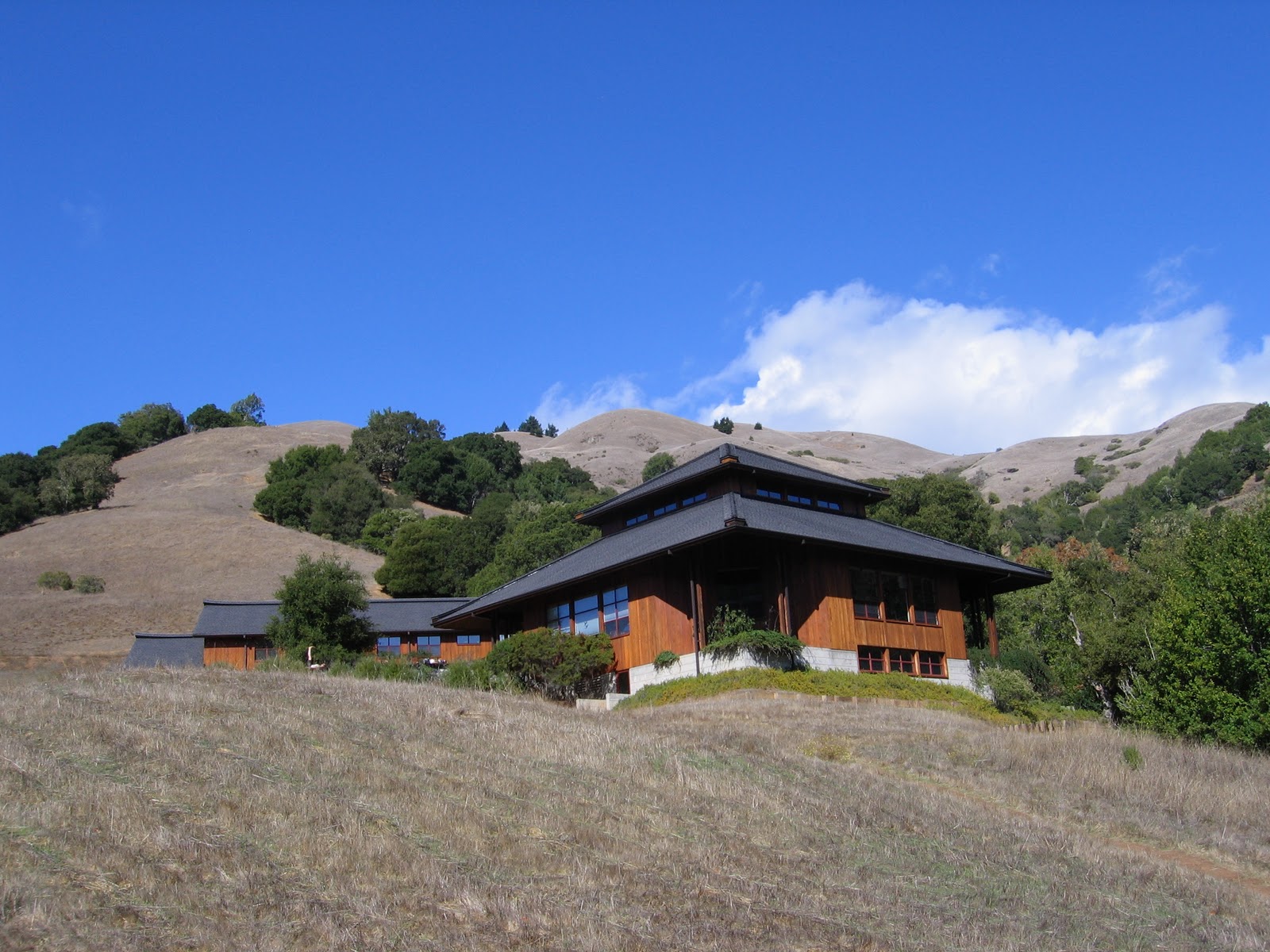
meditation hall, Spirit Rock

Many of you know that I was in the first Mindfulness Yoga and Meditation Training at Spirit Rock Meditation Center in Woodacre, California. The 18 month program ran from 2007 to 2009. It consisted of three 10 day retreats held for the most part in silence.  There are readings, homework, and telephone conferences in between the retreats.  There is a core group of yoga and Buddhadharma teachers such as Anne Cushman, Phillip Moffit, Mark Coleman, Anna Douglas, Janice Gates, and Chip Hartranft. There were different guest teachers at each retreat such as Judith Lasater, Tias Little, Stephen Cope, and Sarah Powers, among others.

It was the first training that spoke to my entire being as a yoga practitioner and Buddhist.  My only regret was that Jack Kornfield was not a larger part of the program because I love his books and teachings. I can sit and listen to him for hours.

Now there is fabulous news!  From Spirit Rock’s website:

“Two yoga teachers will get full tuition scholarship to 18-month MYMT Program

Yoga teachers working with disadvantaged or under-served populations—for example, in prisons, homeless shelters, hospitals, or inner city schools—offer life-changing skills to their at-risk students. But they often struggle with stress, burnout and financial challenges. Now, through a new scholarship program at Spirit Rock funded by a grant from the Yoga Dana Foundation (YDF), two such teachers will have the opportunity to nourish their own yoga and meditation practice—and bring the benefits of mindfulness training back to the communities they serve.”

The above link gives all the information you need on the application process.  The scholarships will provide full tuition and room and board for the 18-month Mindfulness Yoga and Meditation Training beginning in January 2011.  I can’t tell you what an awesome opportunity this is to attend a training at one of the premier dharma centers in North America.  I was honored and blessed to have taken part in the inaugural program.  And the food is fantastic!

The teaching population to whom these scholarships are geared toward is one after my own heart.  My work with domestic violence survivors is pure joy.  They are my teachers and they have inspired me to pursue a Masters in Transpersonal Psychology.

Sometimes the path rises up to meet you and after my yoga therapy training in India next year, I want to somehow combine all my yoga/yoga therapy training with the degree so as to truly bring yoga to the people.

Don’t miss out on this wonderful opportunity, but you need to apply by October 25.

Good luck!

addthis_pub = ‘yogagal60510’;