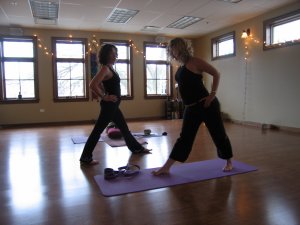
I’m ready for my closeup, Mr. Patanjali…..

OK, that was NOT the latest cattle call for yoga teachers, but with studios cranking out newbie yoga teachers faster than you can say Utthitahastapādāṅguṣṭhāsana it could be.

This is for all you unemployed New York City yoga teachers. Seen at YogaDork’s place via Yogoer:

“The audition will be held Tuesday 3/31 2pm at the Equinox @19th St and Broadway. Please show up between 1:30-2:00pm and sign in at the front desk where you will be asked to show ID. The audition will be held on the 2nd floor Main Studio. Our auditions are held in a round robin format and will be moderated by Sarra Morton, one of our GFM’s. Your audition will last only 2-3 minutes depending on the turnout. We will try to get you all out by 4pm. Mats are provided unless you prefer to bring your own.

We are looking for those instructors who have at least 3 early mornings available (6:30-8am) to pick up regular classes AND BOTH Saturday and Sunday (9-6pm) available. Please do not attend this audition if you are not available for both these times. We have no daytime or evening weekday available classes.

Our auditions are a lot of fun, so no need to be nervous, just come with a smile.

No need to RSVP and please hold all questions till the audition.”

Note that the operative word is AUDITION.

I wonder if they’d like my tap-dancing.

Stripper poles, anyone?

(Seriously — I’ve heard about a “yoga” studio that has a stripper pole.)

addthis_pub = ‘yogagal60510’;

yoga teachers are the new waiters

They say that every restaurant server in Los Angeles is an actor or actress waiting for their big break. So are yoga teachers the new wait staff?

This post over at YogaDork makes one think:

“…many aspiring teachers who hear the call will follow the dream no matter what it takes (meaning, lots of odd jobs and stretching the dollar). For some it’s not worth the stress. Caleb Asch teaches 6 classes a week, but it’s not enough to pay the bills. “The stress of not having enough to live on is a killer,” he said.

JG wrote this comment: “This quote – “The stress of not having enough to live on is a killer” – really hit home for me. I’ve been teaching full time for over five years and I’ve never made a fortune, but I always made the bills. This year has been the exception. With 30+ “one-month-intensive” YTTs in my city churning out teachers and the studios offering increasingly low pay to teachers (after all, why pay when there are people willing to teach for free?), I’m beginning to question my decision to teach, as much as I love it. 2009 may be the year I throw in the towel.”

I’ve written more than a few posts about the economics of yoga teaching and about the plethora of yoga teacher trainings in the Chicago area. The fact of the matter is that there are too many yoga teachers and not enough students, yet studios keep cranking out newbie teachers because teacher training programs pay the bills. A studio doesn’t make money teaching group classes and a yoga teacher certainly doesn’t, not when a studio owner pays a teacher anywhere from $4-$7 per student. I don’t know anyone in the real world who is willing to work 90 minutes to make $4. Yet yoga teachers are expected to and to accept it with a smile and no complaints. And if you don’t like it then you can get out because there are 10 more newly minted yoga teachers waiting to take your place, some who are more than willing to teach yoga for free just for the thrill, uh, experience. This is real world yoga stuff that Yoga Journal does not write about.

Yup, yoga teaching sure has become a funny business in this here Om-mera-ka. In fact, I had a moment last week when the thought popped into my head, “why am I doing this?” The longer I teach, the more yoga nutbars float to the surface. As a yoga teacher friend told me about the following email, “the longer we all hang around this USA, the weirder this yoga tribe is gonna get.”

I received an email with the subject line “private yoga instruction.” I receive more than a few emails like that because I have a website, but it made me suspicious because this was the entire email:

“Hello!

How much do you charge for private sessions? How long are they usually?

Thanks!”

It made me suspicious because when most people ask about private instruction they tell me where they are, what injuries or conditions they have, how they found me, what they are looking for, among other things. Their emails are not two sentences. What also made me suspicious was that it came from a [first and last name]yoga.com. I don’t want to give the name because I don’t want to give this woman any type of publicity.

I googled her name and found a very professional looking website that was, in my opinion, too slick and a bit over the top, a website that buried you with information. The young woman bills herself as “Teacher * Scholar * Consultant * Yoga * Transformation * Sustainability.”

Uh, me too.

I responded: “Why do you want to know that when you are a yoga teacher yourself and not someone in my local area looking for private yoga instruction?”

Ms. Yoga Expert immediately emailed a one sentence reply:

“I am looking to hire Yoga teachers, and gauging further inquiries and
potential offers according to responses to the questions I asked you.”

When I read that sentence I thought “yogabot.” Now is it just me or is this woman disingenuous? Why wasn’t she up front about her real intentions in the first email? Why wasn’t her subject line “yoga teachers wanted” instead of “private yoga instruction”? As far as I’m concerned, she lied and she’s dishonest. As a “scholar”, shouldn’t she know how to word an email so as not to make the person receiving the email suspicious? But what do I know? I only graduated summa cum laude so I don’t know if that makes me a scholar.

Something about the tone of her emails and even her very professional looking website made my skin crawl. I really wanted to email her back and tell her that and some other things, but of course, that would not be very yogic of me.

I don’t belong here. I need to find my own yoga tribe.

yoga in the west: the new aerobics?

Amanda left a very juicy comment to this post. I thought she left such delicious yoga food for thought that it was worthy of its own post.

so what say you, readers? has westernized yoga for the last dozen years or so merely been the “new aerobics”?

Yoga has been in the west for a long time. I have a book I bought at an antique store called The Dayspring of Youth: Yoga Practice Adapted for Western Bodies written by “M” and published in 1933 — not one word about asana is in the book. Indra Devi taught Hollywood stars such as Gloria Swanson and Olivia de Havilland after World War II and in the 1950s. I dabbled in yoga and meditation back in the my college hippie days in the early 1970s and my claim to fame is OMing with Buddhist and Beat Poet Allen Ginsberg. but for yoga to have become so popular and trendy, I believe what Paul Grilley has said about it: that the spirituality had to be totally stripped out of it in order for most westerners to come to it.

So here is what Amanda thinks…the only edits have been for spelling, punctuation, and flow (no yoga pun intended.)

“I am sure there are some lessons for the Western (not the Eastern) yoga community that could be learned from studying the aerobics/groups fitness craze of the 1980s.

At its peak, the aerobics craze dictated (somewhere around 1986-1989) that you ‘needed’ to have all the right brands, the matching leotards, headbands, etc. And preferably be able to teach or do mindnumbingly complex choreography. Aerobics was everywhere – and it was of a variable and questionable quality. Some instructors had ‘it’ and others were simply amateurish, and at worse, downright dangerous. Ironically, the average lifespan of an aerobics instructor was 2 1/2 years.

In the early 1990s, the bubble burst. Be it the matching headbands, the complex choreography, or the whole ‘Barbie Doll/airhead’ image that had built up around the fitness industry, or the economic recession we had back then, people began staying away from classes in droves. It began with men, and continued until it was only the hardcore addicts who were left. Centres that were once highly profitable closed overnight. I know — I owned and operated a centre at this time. I was able to close it and sell the plant equipment and barely avoid losing my house.

By the mid-1990s, this situation began to change. The industry, in Australia at least, had totally professionalised (you need a Diploma level qualification to teach at gyms in Australia — you don’t need this to teach yoga, I notice) and an amazing New Zealand franchise called Body Pump hit the scene. People began to come back. Especially men.

What did Body Pump do? It totally did away with the complexity and the ‘trendy’ clothes. You did Pump in daggy shorts. Instructors taught participants that technique was everything and image was nothing. You focused on the foundations, getting the basics right – with incredible results. As instructors, we were taught how to communicate as experts, were were taught that safety was paramount. Our music and moves were choreographed for us by experts.

Nowadays, if you don’t have Pump on your timetable, you’re losing money. The same New Zealand company has followed with other programs, including one based on yoga. Worldwide, 10 million people every week do either Pump and Body Balance (Flow) alone!

So yoga is 3500 years old and there is a complete way of life, rather than just physical exercise. But when I look at the yoga world in the cities and in the US, all I see is uber-flexible Barbie Dolls in brand name clothes, and a frenzied mega-popularity that will surely burst in this economic climate. I see the aerobics craze all over again. [emphasis supplied.]

Underneath, however, are some dedicated souls who have depth, who are professional and authentic. If I was going to say what can we learn from the aerobics craze, it is this:

the yoga world in the West is yet to really mature – at the moment, it’s an incorrigible teenager. The bubble will burst.

Yet it will mature in order to survive. It will do this and thrive because it will find the right cultural “mix” and niche.

Yoga teachers, studios and schools will disappear whilst this is happening. Those that remain will do so because they have the basics – the heart and soul – of teaching yoga to the community and sharing those basics with others. This is a long, hard journey but one that has to be had.”

Thanks for writing this post, Amanda! check out Amanda’s blog — she is now a “friend of the family”!

And comments are solicited and appreciated!

addthis_pub = ‘yogagal60510’;

a mile wide and an inch deep

I have to give Judith Lasater a big AMEN about her comments about yoga in the latest Yoga Journal.

On the last page (and it seems that YJ always puts the “old” yogis on the last page…hmmmmmm….), when asked the question, “what do you think of yoga’s evolution in the United States?”, Judith said:

“It seems a mile wide and an inch deep. I mourn the fact that many people in the United States know about asana just as a way of working out. To me, that’s not what yoga is. It can lead to deeper personal transformation.”

Thanks, Judith. I’ve been saying that for the three years I’ve been writing this blog, just click on the tag “Americanized yoga.”

When she was asked, “what lessons can you share about what you’ve learned?”, Judith said, among other things:

“Follow your nature. The practice is really about uncovering your own pose; we have great respect for our teachers, but unless we can uncover our own pose in the moment, it’s not practice — it’s mimicry…”.

Kudos to you, Judith. when I used the word “mimic” in this post, a commenter wrote me to say how dare I say that yoga students merely mimic their teachers. uh, yeah you do, each time your mind is out there instead of in your body…each time you are disembodied and not embodied…and each time you are not “in the moment” as Judith said. I’ve told my students many times, don’t look up here, look within.

Maybe Judith Lasater and I aren’t so far apart after all….maybe Yoga Journal should interview moi. or maybe I should write for Yoga Journal….how ’bout it, editors? I need another job because the yoga studio where I teach is closing at the end of the year.

addthis_pub = ‘yogagal60510’;

bhakti required

I find that the longer I practice, the longer I teach, and the more I meditate, the more I am drawn to bhakti yoga. maybe I should say that because of all of the above, my own bhakti has grown exponentially. I call myself Kali’s girl and when I was at a Krishna Das kirtan, he chanted the word “Kali” in a Durga mantra and at that moment it literally felt like I was hit right between my eyebrows and the tears started to flow. that’s bhakti. mantra chanting and kirtan are forms of bhakti yoga. I know a devout American Murugan bhakta who has never done one asana in his life, but he is a bhakti yogi.

I believe that bhakti, for the most part, is missing in Americanized yoga, at least in most of the classes I attend. I know that even chanting the single sound of OM can scare some people away from yoga — I’ve seen students leave classes if the teacher chants. I always open and close my classes with meditation and at the end recite the Four Immeasurables and chant OM MANI PEDME HUM. I would not be true to my heart if I did not teach this way.

So I give you the website Bhakti Collective. The Bhakti Collective is “composed of persons of various backgrounds with a common interest in bhakti, India’s tradition of devotional yoga. It is a non-profit organization based in New York, which serves as a medium for the exploration and sharing of the culture, philosophy and practice of bhakti.”

The Bhakti Collective has many interesting articles including this one, a critique on a Yoga Journal article about bhakti. in it, Kaustubha Das quotes Dr. Robert Svoboda’s feelings about bhakti in western yoga:

“Some Western yogis dabble in bhakti yoga through an occasional prayer or kirtan. But if you’re a serious practitioner looking to find union with the Divine, a more rigorous practice is in order.” Svoboda says the path of devotion involves total dedication and surrender.

Svoboda agrees that it’s good to sing bhajana (Sanskirt hymns) to get into a new space. But he cautions against thinking you can really engage in bhakti yoga by occasionally joining in a kirtan. “That in itself won’t be sufficient to have a transformative effect that will penetrate into the deepest and darkest parts of your being”, he says.

“I don’t think most people in the yoga community have a concept of the degree of emotional depth and intensity and texture that is necessary for bhakti yoga really to flower”.

Get out of your yoga body and get into some bhakti.

addthis_pub = ‘yogagal60510’;

yoga economics: a student’s perspective


This post is an email I received from a devoted reader. his thoughts, his opinion, your food for thought…

“I was interested in, and moved by, your posts on teaching. I hesitated to respond on the site ’cause as you know I’m a student, not a yoga teacher. But even though I am an off-the-charts creative artist type I have labored in the upper echelons of the corporate world long enough to have picked up plenty of business smarts by osmosis, and so I often wonder how it is that yoga in America has become such a lose/lose proposition – economically.

Teachers, unless they own the studio they teach in, make a meager income. And as you say, elite teachers usually do stop teaching led classes at some point if they can (Tias LIttle is a recent high profile example; the great Richard Freeman still does, but he does own the studio and certainly makes most of his income from TT’s and DVD/CD sales). On the student end, to take Boulder, where we lived until just recently, as an example, it is very expensive to be a serious student: $150 a month for an “unlimited” membership, on average, at a good studio, or you might get your per class cost down to $11-12 if you buy the costliest punch card. So for us as a couple taking 3 classes a week $66 a week or $264 a month for steady instruction – plus workshops or trainings several times a year.

The most expensive of the many, many health clubs in Boulder costs $60-80 a month for a couple’s membership and while there are lots of issues with “health club yoga” the fact of the matter is that nearly all of the top teachers in Boulder do teach in those clubs – it is a necessity to make ends meet and offers the kind of predictable income that teaching at the yoga studios does not.

It is just heartbreaking as sincere students to show up at a class in, say, summer when studios in Boulder are slowest and be 2 of 3-4 people at a class to be taught by a teacher with 30 years of experience and many trips to India under her belt, knowing she will net $18-24 for nearly two hours of her time. We offer dana on top (invariably refused), profuse thanks…..and meanwhile Bikrams and Core Power across town are jammed. And this is in one of the meccas of meccas. Yoga Workshop (Richard’s place) would probably be more popular, but with him lecturing on impermanence and death, on how the body is only a vehicle, on confronting our kleshas through the knots in our body-minds – in short, ’cause he and the others there are guilty of teaching and praticing actual yoga, many come once and then go where there’s music and a “real” workout.

I don’t know the solution. For us as people who chose to live cheaply in order to have more time for yoga and meditation practice it has come down to spending our limited funds on periodic private classes with a teacher well-schooled in the later teachings of Krishnamacharya plus periodic weekend and longer immersions. Led classes are now an occasional but much-appreciated luxury for us; we have had to develop a personal practice. That maturing is good, but I’d be lying if we said we didn’t miss the group energy and sangha that comes with more times together. But as you (and Desikachar and others) point out yoga was traditionally taught with a single student, or small handful, sitting at the feet of one teacher, with students and teacher both giving totally of themselves. Maybe that’s the only model that’s meant to endure.”

Thanks, K, for being such a loyal reader of this blog and for sharing your thoughts. much metta to you….peace, love, and hugs.

I know through my site meter that many of you have read my latest posts on yoga teacher pay and gratitude. a few of you have commented and I would be interested to read more of your thoughts on those topics and on this post, from both students’ and teachers’ perspectives.

addthis_pub = ‘yogagal60510’;

dana, gratitude, and love offerings accepted


As a practicing Buddhist, I’m all about dana (pronounced “donna”) — “unattached and unconditional generosity, giving and letting go.” that is how I make payment at Spirit Rock Meditation Center for my Mindfulness Yoga and Meditation training.

in my last post, bindifry made some very pithy comments about students showing gratitude to their teachers, and I agree 150% with her:

“part of the yoga path is gratitude. it is very important to express that to your teacher.

something most yoga students do not understand. often we are left quite empty. many students never even say “thank you” after a class. it’s sad, really.

I study with an amazing Aussie teacher. part of her teaching is a gratitude circle at the end of the cycle. everyone sits in a circle and must show gratitude to the teacher.

and when you receive shakti from your guru, the respectable thing to do is kneel before him and touch his feet. it’s dharma.”

“I just find it quite alarming how many students, rather than saying “thank you” instead say things like “why didn’t i get more adjustments? i paid my money just like everyone else”

sorry, but yoga teachers are also human beings…people need to be educated about etiquette. other cultures do not have this issue at all, as teachers are considered the highest form of professions.”

“yoga teachers are people like the students and that for students to say “thanks” goes a long way, even though i have learned to live without the gratitude. students don’t tell their teachers thanks or even acknowledge them as their teachers far too often. they do not know that gratitude, like santosha, is part of yoga.

“everyone sits in a circle and must show gratitude to the teacher” — how many of you can honestly say you would feel comfortable doing that? I know that many Americans have a hard time wrapping their mind around the idea of their yoga teacher being their “guru”, but that’s Ego, pure and simple. and fear. “guru” is Sanskrit for teacher, someone who has “great knowledge, wisdom and authority in a certain area, and uses it to guide others.” nothing more, nothing less.

I believe that lack of gratitude or lack of acknowledgment is definitely an American/Western thing. it’s not that way in India. this American yoga teacher has no problem whatsoever touching the feet of my teacher, an Indian from Chennai who was an original trustee of the Krishnamacharya Yoga Mandiram, when he comes to teach in Chicago. I wrote about my own feelings about being a good student here.

so it gets my thong in a knot when I write about pay for yoga teachers and I’m told to “be content” or have “santosha”, just accept what is given or not given to you. I DO have santosha, in fact, I feel I am blessed to be able to teach yoga. but like bindifry says, yoga teachers are also human. think about that.

I am blessed to be teaching now at a studio where if two students show up, they thank me for being there, for driving 45 minutes and spending my time with them. this is in stark contrast to the studio where I used to teach where the upper middle-class women had a huge sense of entitlement.

support your local yoga teacher and show her or him some love. that’s all I’m saying.

addthis_pub = ‘yogagal60510’;

why do you want to teach yoga?


I’m just throwing the question out there.  I know why I teach, but why do YOU want to teach yoga?

I suppose this goes back to the “how much is a yoga teacher worth?” question, and for those of us who don’t want to return to the corporate life, yoga teaching is my vocation, my avocation, and my personal dharma.  I know more than a few teachers who also do massage or another holistic practice or their yoga teaching is a “sideline” and they rely on another’s income (and health insurance.)

I know very few yoga teachers who totally support themselves by only teaching yoga. because of a life-changing decision I have made, I may have to get a part-time job.  but I know I will never stop teaching yoga and Buddha/Kali/Shiva willing, I will do this the rest of my life, either in the US or in India.  I still need to finish my Mindfulness Yoga and Meditation training at Spirit Rock, and in October I start Phoenix Rising Yoga Therapy training. in late 2009 I plan on living two months in an ashram in South India studying yoga therapy with a swami.  this will require me to give up two steady yoga gigs, or at least get subs for them. as I mentioned in another post, for those of us who do these lengthy trainings, there is no guarantee we will have yoga jobs when we get back. this is the reality of the yoga biz. but this is my commitment to myself, to immerse myself as much as I can — at my age I have a lot less time on this earth than if I would have started this path 30 or even 20 years ago.

everything I earn gets plowed right back into my yoga biz (I’m incorporated.) I am over 50 and this is my life plan and nothing will keep me from it. I know this is my path and I have given it up to the Universe to follow this path for the rest of my life.

what will you give up to be a yoga teacher?

I live in the Chicago area where there is a plethora of yoga teacher training programs all costing beaucoup bucks. this is where the yoga money is made, in teacher trainings and offering workshops.  a well-known American yoga teacher who was on the same retreat that I was told me that she rarely teaches group classes anymore, that she makes her money on her branded teacher trainings and traveling the world doing workshops.

when I was certified in 2002 there were only four training programs in Chicago that I knew of.  now almost every major studio both in the city and suburbs, and some not-so-major, have teacher training programs that train you in “their” brand of yoga.  and of course there are the weekend programs (become a yoga teacher in 16 hours!) and the online yoga teacher training courses where voila!…anyone with a computer can become a yoga teacher.  of course, not everyone who does a training wants to be a teacher, some do it to deepen their yoga knowledge.

for a while I thought of starting my own teacher training program, which would actually be unique in my area because I would incorporate yoga therapy and Buddhism, no other local training offers that. but I decided I don’t want to be tied down with that right now…my next two years are going to be for my own yoga sadhana culminating in the Kumbh Mela in Haridwar, India in 2010.

so where are y’all going to teach?  after spending thousands of dollars on your training will you be happy making $4 or $5 or $6 when one student shows up to the studio?  I made $12 again last night. I used to teach at a studio where students paid $5 for their first class and the owner did not pay the teachers for those students because she would “lose money.”  some months I had so many first-timers in my classes I lost over $100 in monthly income. I’m not crying about this, this is the reality of the yoga biz.

people want yoga for the same fees that they are paying with their gym memberships. and everybody — every spa, chiropractic center, gym, and physical therapy office — wants in on what they view as big bucks to be made in yoga. the yoga biz in America — a gazillion dollar business according to Yoga Journal.

but who’s making the dough and where’s the dharma?

I have a friend who’s convinced that everyone doing teacher trainings nowadays are delusional, that they’ve all drunk the Yoga Journal kool-aid about becoming a yoga teacher.

have you?

the price we pay, part 2: how much is a yoga teacher worth?


This is another topic that Yoga Journal won’t touch: how much is a yoga teacher worth in this American consumerist society? forget for a minute what our emotional or spiritual value is to our students (actually priceless), but what is our monetary value? in a culture where fitness instructors never have to step foot inside a yoga studio and can get “certified” online as yoga teachers, are yoga teachers now a dime a dozen?

My post “the price we pay” gave rise to some interesting comments:

“have had several conversations with other yoga teachers recently about how they want to earn x amount per class or they won’t teach. Got me to thinking: if I can pay my bills on less than that, and I am maybe helping some people, sharing my knowledge of yoga a bit, isn’t that enough? We aren’t supermodels, we are social workers…”

*******

“i thought going to india for 11 months, teaching in japan and thailand, australia, bali…i thought all of that would make a difference. it actually hurt me. i make less money than ever. no one is impressed with my resume. it means nothing to anyone.

except for me and the handful of students that i am actually reaching. that’s all we can hope for. that’s just how the world is. anyone can teach yoga. we’re indespensable. you are fooling yourself if you actually think you are anything more.

still, i would do it all the same. for me at least.”

*******

“I think yoga teachers are a “dime a dozen” now.

Point – Teacher Training programs. This has become a cyclical conundrum perhaps? An organization decided yoga teachers should be ‘certified’. Studio’s/gyms/fitness centers decided this was a good idea. So, in order to teach you have to be certified and there are a whole slew of students needing those inital hours to become certified because the studios require it…see where it goes?…”

*******

bindifry said this about yoga teaching in her blog: “…and i reached another person. i turned them on to yoga. they turned me on to them. and for that moment i had a purpose.” to which I responded: “yup….that’s what it all comes down to, isn’t it? it’s not about the money, it’s not about some sick inversion to impress or intimidate people, it’s not about lululemon pants….it’s just about the yoga.” and bindi said: “well said….yoga is for everyone to enjoy. yoga teachers should spread it around to who wants and needs it regardless of their economic situation. it’s our duty. if we all did that, we could alleviate much suffering in the world. teaching yoga is the ultimate “green” action. how many yoga teachers teach without the thought of dollar signs? i do not know many.”

Nadine believes that yoga teachers are social workers. bindifry said that teaching yoga is the ultimate green action. I say that teaching yoga is a pure expression of the bodhisattva path. and with my private students, I’m also a psychologist. like bindifry, I’m still going to India to study even though it does not make me one dime extra as a yoga teacher.

I truly believe all of the above. however, I still need to pay the bills and buy food and gas. and I pay the same for food and gas as the person does who makes $200,000 a year. last year I made about $10,000 teaching yoga. I’m not crying about it, it’s merely a statement of fact. it was my choice 10 years ago to stop working for lawyers after 20 years (and making damn good money) and become a yoga teacher. our lives are determined by our choices, not by our circumstances.

I’ve been struggling a lot with this money question as I am in the midst of a life-changing decision that will literally affect how and where I can afford to live. as Nadine said, I know more than a few teachers who won’t teach if they make below X dollar amount — and I am one of them. over the years I’ve invested over $10,000 (probably closer to $15,000) in my training — this does not include travel to India to study. I also know some yoga teachers who’ve been teaching 20+ years who won’t teach a workshop for under $500 even if only three students sign up — they have their minimum show-up price. I believe that to teach a class under a certain dollar amount devalues yoga and puts it on the same level as an aerobics class.

one of the places I teach is a yoga studio where I get paid by the person…so one day I make $12, another day I make $60 per class. I also teach privately, one-on-one, and my prices in my area may range from $75 to $100 per session. what a teacher charges for private yoga in the United States is dependent upon the geographic area, what the market will bear. I feel that prices for private yoga are comparable to getting a massage or a physical therapy or chiropractic or acupuncture session — it’s all about holistic health modalities. unfortunately, most people don’t understand this. I’ve found that people (at least in my area) don’t “get” what private yoga/yoga therapy is all about, not when they only know health club yoga (and I’m not dissing teachers who teach at gyms or health clubs, so don’t get your yoga shorts in a knot.) there IS a difference between yoga one-on-one and yoga in a group class. yoga one-on-one is the the traditional way — Krishnamacharya did not teach Iyengar or Jois or his son Desikachar in a group class.

however, my favorite class to teach is one where I don’t get paid at all — I teach yoga and meditation at a domestic violence shelter. I’ve been teaching there for five years and it’s my hope to start a yoga therapy program there funded by grant money. some day.

I know of yoga studios where the owners have yet to pay themselves, the studios literally don’t make money, they just break even. from a sound business standpoint — and let’s get real, yoga is definitely big business in America– that situation can’t continue forever. my yogini friend in Oakland, California tells me I should move to northern California, that I’d be turning people away, that people can’t get enough yoga out there. in the suburbs of Chicago, yoga studios struggle to survive.

The Krishnamacharya Yoga Mandiram where I study in India has no qualms whatsoever about charging westerners much more money than it does its Indian students. teachers such as Gary Kraftsow and David Life and Sharon Gannon charge at least $8,000 for their teacher trainings here. so why, as not-famous-no-Yoga Journal-cover everyday yoga teachers, are we not supposed to make a livable wage?

what’s a yoga teacher to do? this is not India where I can go live in a cave and spend my days meditating, living off the kindness of my devotees. while I’m Kali’s girl, I’m still waiting for that Goddess-in-Residence yoga gig somewhere that my gal pal in Nepal told me I need to find. this is America where it currently costs $35-$40 to fill my gas tank to get to the studio to make $12 for a 90 minute class.

so it is a fine balance between the bhakti and the bucks, between the dharma and the dough. I don’t want to make what a supermodel makes — I just want to be able to afford to live and do what I love to do.

support your local yoga teacher.

addthis_pub = ‘yogagal60510’;

selling out

I found this video via The Worst Horse which is all about pop- sub- and dharma-culture.

This video is the “Dharma-Burger/Video of the Moment: Get into a meditative pose. OK, good. Now, stare blankly — at the camera.”

from the Horse’s mouth: “Usually, the Horse doesn’t comment too much on the state of the yoga/pop-culture collision. We’ve got our hands full just keeping track of all the Buddhism, quasi-Buddhism, and meditation that’s currently in the mix. But we have made a couple of exceptions, and this video made by “Swami J” is the latest.”

We all know that in advertising “sex sells”, but nowadays “yoga sells”. add a few skinny “yoginis” — god forbid that any woman over size 2 would want some nice yoga clothes — and we have a winning combination for the American consumer.

can someone tell these ladies to eat a sandwich now and then?

addthis_pub = ‘yogagal60510’;