yoga whores* for the corporate dollar

Oh my.

“Yoga” and “whore” in the same sentence. That’s a jolt to the manomayi kosha.

Sometimes strong language is needed to get people to sit up and take notice. What can I say? When I was a young hippie chick I looked up to strong-talking women like Angela Davis and Germaine Greer.

No, I’m not dissing any working girls. In fact, I have a lot more respect for a woman who has to make her living on the street than I do for some of the *corporate* yoga antics out there right now. I’m using this definition of “whore”: A *person* considered as having compromised principles for personal gain.

To clarify, be advised (and that language comes from my working for lawyers for 20 years) that I am writing about CORPORATIONS, NOT about any specific yoga person who is a spokesperson/model for a yoga mat company, yoga clothes, etc. I would not mind being in an ad for the eco-mat that I use because I love the brand (and no, it is not Manduka.) For your ** reference, see the U.S. Supreme Court’s “corporate personhood” debate.

My phrasing is comparable to the way one of my city representatives used it when she said that my town was whoring itself for the local sales tax revenue if the powers that be allowed Walmart (one of the 10 worst companies on the planet according to betterworldshopper.org) to build next to a marsh/bird sanctuary. Long story short: they didn’t. A citizens’ group that I started stopped them from doing that.

A grass roots group. I made my own flyers and walked door to door. No corporate sponsors. Power to the people.

Roseanne is on fire with her post on the rained out “yoga gathering” in New York City. She says:

“I wonder, do we have to do this dance? We all know it’s a dance. You really can’t convince me that, other then sponsoring an event with a guaranteed captive audience of 10,000, do these companies embody yogic values? JetBlue would like to co-opt the openness and transparency associated with yoga by guaranteeing “no blackout dates, no seat restrictions” on its frequent-flier program. It’s nice of adidas to sponsor a high-profile yoga teacher, offer free yoga classes around the world and develop a line of sustainable yoga wear ~ but its other business practices include endorsing the slaughter of kangaroos (an endangered species) in Australia and sweatshops in Asia. Can we separate these actions from its endorsement of yoga?”

Max Strom posted this response on his Facebook page about it:

“…exciting that 9000 people gathered in Central Park to practice yoga and I have been waiting for an event like this for some time. But it my opinion the event was sadly squandered. All the media was there, CNN, the NY Times, everybody – the cameras were pointing. For the first time in history the world put the …microphone at the mouth of the larger yoga community in America. But what was the message given? We are celebrating the Solstice. We want more people to practice yoga. That’s it? We have nothing more to say to the world but that in 2010? With the oil gusher reminding us all that solar power is desperately needed, 9000 people doing salutations to the sun could have brought the world an unforgettable visual and call to invest in a nonpolluting technology. And with hurricane season kicking up in the Gulf, we could have bought attention back to the people of Haiti. Let us come together again in mass. Soon. But next time let’s show what we stand for. And yes we can do it without corporate sponsors. Martin Luther King did.”

Instead, everyone walked away with swag bags.

I loved Max’s last two sentences, especially since I watched Martin Luther King march through my Chicago neighborhood in the late ’60s. I also saw a crazy throw a brick at Dr. King’s head and saw him stumble and then march on. I became politicized, radically, at an early age.

YogaDork asks whether we want to smell like Eat Pray Love….

““Pray” journeys to India’s sultry incense and spice history with jasmine, pink pepper, patchouli, amber, juniper berry, cardamom, and musk for a woodsy scent laced in exoticism.”

…and alerting the advertisers’ new dream, the yoga moms, that they should get ready to take out their wallets for the Home Shopping Network:

“Well, thank goodness for the candle set. What if you want smell like exotic praying patchouli, but want the room to emit love and mangoes??”

Funny.

I kinda remember India smelling a bit differently….
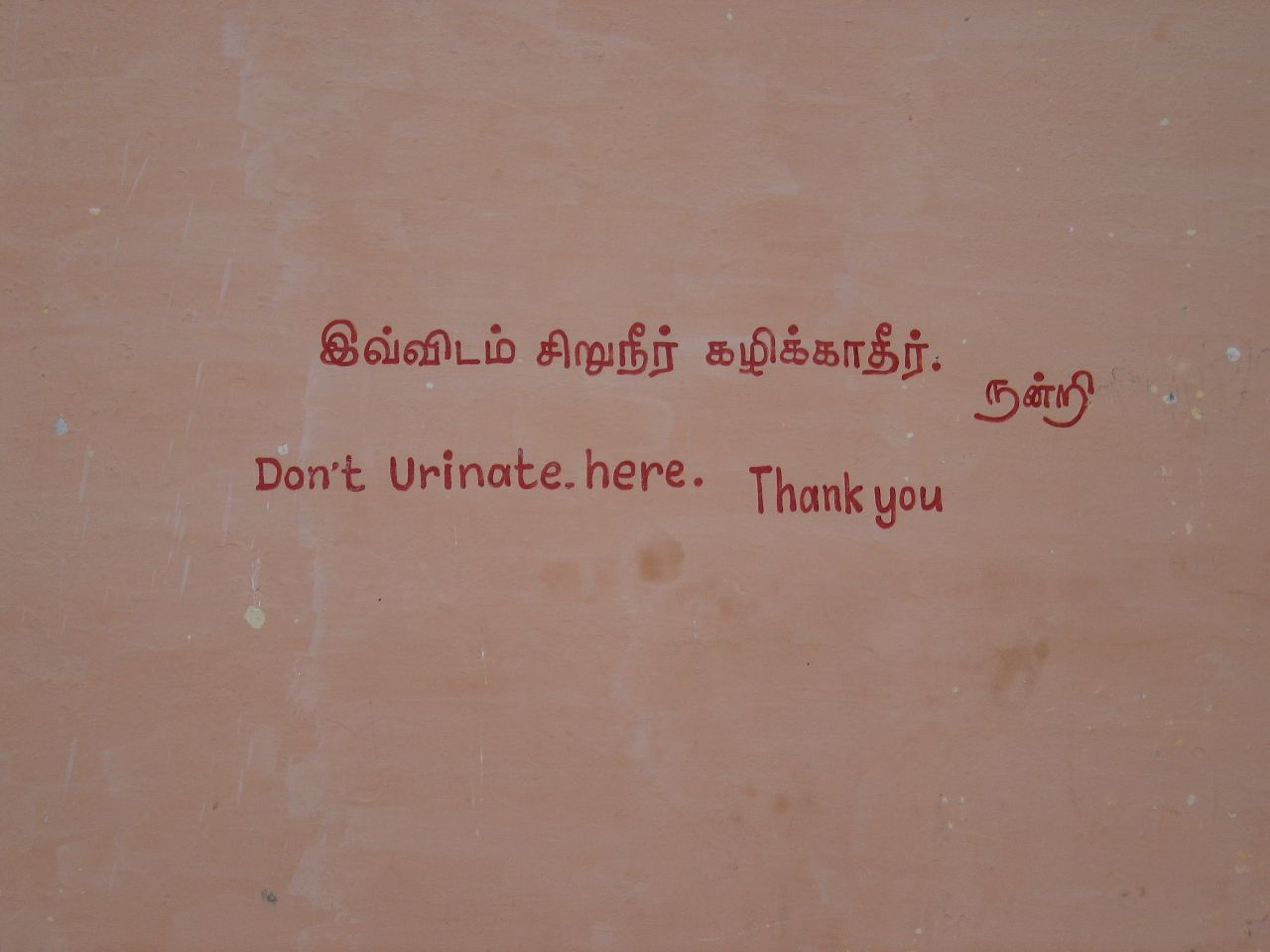
Yeah, something stinks. And it’s not the new Eat Pray Love perfume.

Of course corporate sponsorship is the way of the modern world. Sports teams started it a long time ago. People even get corporate names tattooed on their foreheads (hey, I like tats but you couldn’t pay me enough) and name their kid after their favorite soda or car.

Just because it’s the way it is nowadays, does that make it “good”? Really?

Have we really become that numb that no one asks the question anymore, “when is enough, enough?”


DANA

Buddhists believe that giving without seeking anything in return leads to greater spiritual wealth. Dana is a concept in Buddhism that means generosity or giving. It is also the practice of cultivating generosity. Ultimately, the practice culminates in one of the perfections (pāramitā): the perfection of giving. It is characterized by unattached and unconditional generosity, giving and letting go.

Many Buddhist retreats operate on the concept of dana. My yoga and meditation training at Spirit Rock operated on a sliding scale fee basis and on the last day you also gave what you could afford to pay to all the teachers and staff.

I was inspired to write after reading Blisschick’s post on her installation of a donation button on her blog. Like Blisschick, I don’t have ads on this blog and also like her, I have written many words over five years — this is my 400th post! — and very much appreciate the relationships I have developed because of this blog.

More than a few people have written to me over the years about how inspired they were by my words (“I thought I was the only one to feel this way!”) or how I have helped their yoga practice in some way (for example, my many posts on yin yoga.) This blog is a global teaching tool just as much as my yoga classes are locally.

An old friend told me just the other day that my knowledge is valuable and she suggested that I write a book. She thought it would be shame if I did not put my unique yoga philosophy, my teachings, down in a book because, she said, “You are special, what you have done is special, and once you are gone, who will carry on your teachings? They will be lost.”

My friend wrote a book containing her family recipes because she wanted to share her knowledge, she thought it valuable enough. More importantly, she valued herself enough to do that.

Her words reminded me of what the teachers told us at KYM: that we should spread our knowledge, because if we did not, we would be nothing more than thieves, taking but not giving.

So, like Blisschick, my time and energy and words and experiences are worth something, and I have had a Paypal donation button on the right side for some some time now. If some bloggers can ask their readers to help pay for their yoga teacher training, then I will also graciously accept and appreciate your dana, gratitude, and love offerings. A heartfelt “thank you” goes out to the readers who have donated a few rupees over the years! Of course, readers are free to ignore the donation button, it’s your choice.

But if you have benefited in some way or learned anything from this blog in five years, then consider what that knowledge — indeed, the wisdom of an ageless hippie chick Buddhist yogini — has been worth to you.

Metta to all my readers!

addthis_pub = ‘yogagal60510’;

the truth of my unknowing

more on this later….

“This aliveness is nothing being everything. It’s just life happening. It’s not happening to anyone. There’s a whole set of experiences happening here and they’re happening in emptiness … they’re happening in free fall. They’re just what’s happening. All there is is life. All there is is beingness. There isn’t anyone that ever has or does not have it. There’s nobody that has life and somebody else doesn’t have life. There just is life being life.

This message is so simple it totally confounds the mind. This message is too simple. Already your mind’s saying, “Yes, but come on … what about the levels of enlightenment and what about my emotional blocks, and what about my chakras, they’re not all fully open? What about my stillness – I’m not really still yet, and what about my ego? Somebody told me I still have an ego … it’s a bit reduced but it’s still there.”

But all of that, all of those ideas are adopted lessons about how it should be. The ego is what’s happening. The ego is just being ego. Thinking is just being thinking. There is only being. There is just being. There’s nothing else. There’s nobody that’s running that. There’s no destiny, there’s no God, there’s no plan, there’s no script, there’s nowhere to go because there is only timeless being. Being is totally whole just being. And it is alive and fleshy and sexy and juicy and immediately this; it’s not some concept about ‘there’s no-one here’. It’s not some concept about ‘there’s nowhere to go’. It is the aliveness that’s in that body right now. There is pure beingness, pure aliveness. That’s it. End of story.

Really it is simply that.”

(Tony Parsons)

There is nowhere to get to because we are already here.

There is no enlightenment because we are already enlightened — it is merely covered up with as much muck as is flowing into the Gulf of Mexico right now. Our searching for it is like trying to swim in quicksand.

We are no different from the rishis of ancient India, only we have forgotten what we are, they did not.

It really IS so simple, but none of it is easy.

addthis_pub = ‘yogagal60510’;

feel good friday

It’s been a long time since I’ve been able to listen to Macy Gray. Up until very recently her music reminded me of an extremely painful time I went through a few years ago, an incident that manifested PTSD. So I look at my posting of her new video as a small victory. And I liked the title.

I taught my favorite class last night, my karma yoga at a domestic violence shelter. Despite what y’all read here about yoga economics, who signs up for workshops, yoga studio owners, whatever, it’s not all about that. I love the ladies there because they are my teachers AND they understand intuitively the true purpose of yoga and meditation. They are grateful and beautiful and amazing and we empower each other.

And…my gardens rock!

This photo is from last year. I added new prayer flags in the gardens and seeing them outside my kitchen window every morning makes me smile intensely and immensely. It’s going to be hot and steamy today and I’ll still be out there digging in the dirt because life is too short.

As for everything else….what I say, what I write, my life, my path, I can only be true to myself. This blog is a combination of the sacred and the profane just like I am. If that makes someone uncomfortable, oh well. Go read Eat Pray Love instead.

From a non-conformist business newsletter I get:

“…if what you’re doing is truly innovative, not everyone will understand in the beginning, and maybe you should just go for it. Lately I’ve been thinking about what Henry Ford said: ‘If I had asked people what they wanted, they would have said ”faster horses.””

From a student:

“While not everyone is ready for you, those that are will garner great experiences and make important adjustments in their life because of you and your impact.”

Yeah, I need these reminders.

Beauty in the world, yo.

addthis_pub = ‘yogagal60510’;

a high level of confusement

The warehouse manager at my husband’s company once told The Hubs that he (the manager) had a high level of confusement. 😉 🙂

I’m throwing the question out there: as a yoga student, do you get confused when you experience a style of yoga you are not familiar with? Or do you just go with flow and if it resonates with you that’s fine, and if not, that’s fine too?

The reason I ask is that a yoga studio owner gave me that reason as to why he did not feel comfortable with me doing a workshop. He thought his students would get “confused.”

HUH?

As a teacher getting my name out there in my area, I send a lot of emails to studios asking if they would like to offer one of my workshops. It’s a simple, standard email introduction of myself, giving them my website link, stating what I can offer, giving them a link to news articles about me, things like that. It’s a standard business introduction. A yoga teacher friend told me that when she took a “business of yoga” workshop, the presenter said that you have to get your name in front of people at least 7 times before they connect with you. Sometimes yoga studio owners tell me “let’s do it!”, but for the most part I never hear from them. Not even a “thanks, but no thanks” response. As my husband the Big Shot Corporate Guy has told me, a lot of small business owners have really crappy personal business skills. They may know what they’re doing in their business, but as for people skills, forget it.

This week I heard from one local studio owner who said that he would feel more comfortable if I spent time at his studio getting to know his style and “methods” so that I could “get an understanding of where the students are coming from.” Then he said, “I don’t mind if students seek out other styles on there own, but if I’m going to offer it to them [workshops], I feel it is my responsibility to offer programing that keeps into alignment [sic] with the other offerings so as to not confuse the students.”

HUH?

Now I have a high level of confusement.

The website states that the studio is an “intimate studio that creates a safe environment for exploration into the yogic arts.” OK, sounds good to me, which is why I emailed the owner. I happen to know that the owner is heavily Iyengar influenced because a long time ago one of my former students also practiced with this teacher. The studio is not specifically an Iyengar yoga studio and the classes are advertised as simply being yoga classes, not Iyengar yoga classes.

I was amused by the owner’s email. I must say that this was the first time anyone ever told me that I should spend time at their studio getting to know their style and methods. From the class descriptions on the website, I don’t understand how the owner would think that what I do is so wildly different from his offerings. Obviously I am not going to send my workshop proposals to name-branded studios that only offer Bikram or Anusara yoga or to strict Iyengar yoga studios!

In my response to him I said (tongue in cheek) that I think I know a little bit about classical yoga and therapeutic yoga since I study at Desikachar’s school every year. I said that I am certainly familiar with Iyengar yoga and while it is not a style I have studied in depth, I’ve attended many Iyengar yoga classes over the years. My own teacher in Chicago studied at an Iyengar Institute and also with Pattabhi Jois. If he had taken the time to read my website (and from his response my gut tells me that he did not — or maybe he did and he was confused!), he would have seen that I’ve been around the yoga block more than a few times.

I told him that to me, yoga is yoga, and it all comes from the same source which in this modern yoga era is Sri Krishnamacharya. I said that this was the first time I had heard a studio owner say that students might get “confused” if they experience a style of yoga that is different from what they are used to doing. Wouldn’t taking my workshop be their choice anyway? If they are curious they will take it, if not, they will pass on it.

I asked him to explain why he thought his students would be confused because I was honestly perplexed by his statement.

In any event, I said that the testimonials from my students speak for themselves on my website, so if he would like to offer his students the gift of another style of yoga that may further them along their path, to contact me in the future.

I will let you know his response.

If it’s not too confusing.

addthis_pub = ‘yogagal60510’;

where the ordinary meets the extraordinary

My regular readers know that I attended the Kumbh Mela in Hardiwar in February for 9 days. I bathed in the Ganges on Mahashivaratri. While I was not at the Mela towards the end in March and April when there were millions more people than in February, I certainly don’t feel as if I missed anything. I was there on a very auspicious day and it was wondrous and indeed, extraordinary. I hope that my karma is such that I can return to the Maha Kumbh in Haridwar 12 years from now. Who knows? I would be almost 70, hari om….

Baba Rampuri shared this video with me. It shows the initiations of a “blue-eyed” yogi and a yogini.

Rampuri’s book Autobiography of a Sadhu has been republished, and I read it in 2005 when it came out under the title Baba: Autobiography of a Blue-Eyed Yogi. I found it a fascinating account of the naga baba life from a western perspective.

In this video the initiation is being done in the naga babas’ camp. I walked through the camp twice during the Mela and was blessed by this sadhu:

He is an Urdhabahu Sadhu, a sadhu who keeps an arm up until it atrophies, the physical manifestation of tapas and bhakti. Most of the men and women in the camps are tantric yogis.

Where the ordinary world meets the extraordinary world…..

after bathing in the the Ganges

addthis_pub = ‘yogagal60510’;

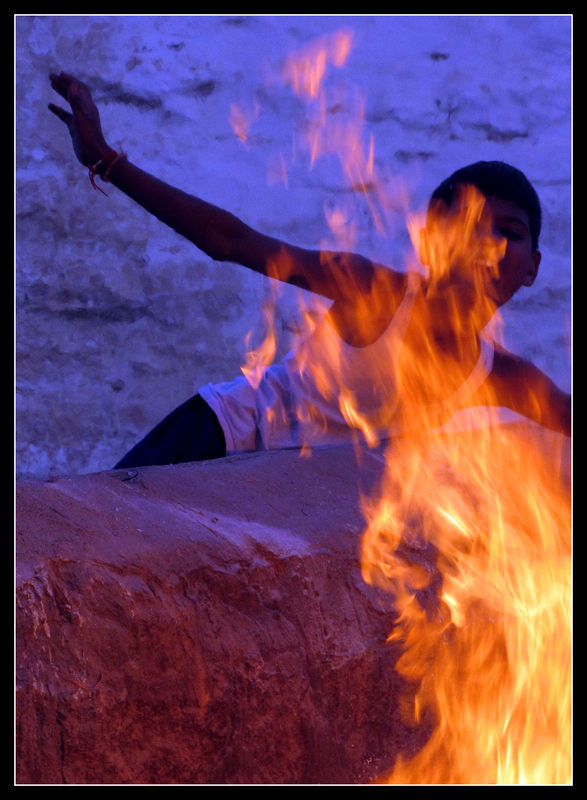
"Transformative Fire"

(photo credit: omtapas)

“There is a great fire that longs to burn you —
Don’t let fear imagine a separation.
It is only yourself, burning for the truth,
The truth burning for itself.
Knowing this, give yourself, without reservation:
In ecstacy the fire burns.”

“Having deeply opened to the annihilating aspect of the path, and having alllowed it to act on us, we may find that now and then it acts through us, cutting through ignorance and sentimentality with a voice of ruthless clarity…”

This is why I always say that yoga cooks us.

(Poem and commentary by Jennifer Paine Welwood,
Poems for the Path,
© 2001, 1999, 1998)

addthis_pub = ‘yogagal60510’;

Srivatsa Ramaswami: chitta vritti

One of my primary teachers is Srivatsa Ramaswami, who studied with Krishnamacharya for over 30 years, longer than anyone in Krishnamacharya’s immediate family. Ramaswamiji was one of the original trustees of the Krishnamacharya Yoga Mandiram in Chennai, the yoga school where I have studied every year for five years.

I first met Ramaswamiji in 2003 and he inspired me to travel to the heart of yoga. I knew that I had to study more deeply the yoga that he teaches, vinyasa krama. Vinyasa krama yoga is a systematic method of practicing and adapting yoga for the individual. “Krama” is a Sanskrit word meaning “stages.” It is a step-by-step process involving the building in gradual stages toward a “peak” within a practice session. This progression can include asanas of increasing complexity or gradually building one’s breath capacity. It is the yoga that I practice for myself and that which I use with my yoga therapy clients.

Ramaswamiji says that “By integrating the functions of mind, body, and breath…a practitioner will experience the real joy of yoga practice. Vinyasa krama yoga strictly follows the most complete definition of classical yoga.”

To me, Ramaswamiji is a true yogi. I consider him to be my guru but I know he would be embarassed if I called him that. I am honored and humbled to be mentioned in the Acknowledgement of his book The Complete Book of Vinyasa Yoga as one who has “studied vinyasa yoga in depth with me” and who has “incorporated essentials of vinyasa krama into…teaching and practice even from Day 1.” I was shocked and amazed and started crying when I saw my name.

The words below are from a newsletter that Ramaswamiji sends to his students. During one of my trainigs at KYM the teachers told us that if we do not pass on the teachings we are nothing more than thieves.

************

“The Sanskrit word vritti is used commonly in many Indian languages to indicate one’s main activity or avocation. A farmer is said to be in krishi vritti or agriculture. A sanyasin is said to live on Uncha vritti or high way of living which is basically asking for minimal food with a begging bowl.

So vritti is used to indicate one’s jivana or livelihood, vritti-jivane as the grammar book says. One mantra in Suryanamaskara is “apa ca avrittim” which is a prayer to be gainfully employed — a+vritti meaning joblessness. Some other prefixes also modify the meaning of the word: pra+vritti or pravritti will indicate activities towards getting what one wants whereas ni+vritti or nivritti will indicate activities (and the result) associated with getting rid of what one does not want. Chitta vritti would mean the activity of the chitta. Chitta itself has an interesting meaning.

Chitta which is usually translated as “mind-stuff” or brain is that which though is inert matter appears to have consciousness. “Citiva bhavayati”, like my computer which does not even have life but appears to be super intelligent.

So what does the chitta do, what are its vrittis or activities? Basically the chitta through the vrittis gives us experiences of varied types. It projects different images within its confines — in its own space, mental space, even though the projections appear to be in the outside real space.

For the sake of convenience several works divide functionally the chitta into manas (mind), buddhi (intellect), ahamkara(ego) and smriti/citta(memory). I receive information from the outside world through my senses, eyes, ears, etc., due to the vrittis of the indriyas. Then the manas or mind which is also known as the 11th indriya collates and coordinates and presents to another faculty of the chitta called buddhi. Buddhi analyzes all the information and makes a judgment and then the ego or ahankara aspect of chitta comes into play. If it likes the presentation, it is happy but if not it shows its unhappiness and produces various reactions. When the Buddhi or intellect is active then the chitta vritti is also known as buddhi vritti, but when it is dominated by ahankara aspect of chitta the chitta vritti is known as ahamkara vritti. When some one says that I am a good person I am happy, my ahamkara vritti makes me expansive and I hit the roof. If then someone says I am a lousy yoga teacher, I feel bad and am down in the dumps due to the ahamkara vritti. So moment after moment I have a chitta vritti which includes images not only of the outside objects but also me as the subject of the whole experience. Therefore the chitta vritti is the totality of my experience at any given moment.

The one that experiences or observes all these successive chitta vritties is the real “I”, the purusha, the drashta or observer or the non-changing and hence eternal pure consciousness.

Patanjali says the chitta is capable of transcending all the vrittis and remaining oblivious to all the vrittis. To understand that state he lists all the chitta vrittis in five categories, the main purpose of it is to indirectly know or infer the state which is beyond the chitta vritti state, trying to show the unknown from the known.

What are these known chitta vrittis? The first one is called the pramana vritti or those vrittis which produce correct knowledge of the various objects. Through the senses, I get information of the outside world thanks to the tanmatras received from the objects and the knowledge produced is the pramana vritti. If the knowledge produced is incorrect then that vritti is classified as the viparyaya vritti. Either one interprets the incoming information correctly or incorrectly but the chitta produces a vritti for experience. The chitta sometimes needs no outside information to produce a vritti experience in which case it is called vikalpa vritti, the typical example is the dream vritti. Then we have deep sleep which is considered another activity of the chitta which vritti is due to the dominance of Tamas and hence is known as tamo vritti. Finally we have a lot of information stored in our chitta and when we recall something vividly in the mind it is termed smriti vritti.

Is there a moment in our lives when the chitta is without a vritti? No, according to the exhaustive classification of chitta vrittis, there is not a moment when the chitta stops its activities, its projections in the mental space, its vrittis. While ordinarily the chitta wallows in these vrittis, Patanjali talks about a state in which the chitta transcends all the vrittis mentioned above and remains in that state. That is the state of Yoga.

It happens when the chitta uses all its faculties and yogic training to concentrate and knows for sure the true nature of the observing self/soul, the non-changing, hence eternal consciousness. With that knowledge, with that direct experience, the chitta remains in a state of resolution, on realizing the nature of the the Self in its true form (svarupa). When there is realization in the chitta that nothing, none of the vrittis changes the essential nature of the pure purusha, it becomes quiet – completely quiet. In that state the chitta does not have any of the vrittis mentioned above. But when not in the state of Yoga, it does not know the true nature of the soul. Rather than trying to locate and realize the nature of the Self (as a Raja Yoga practitioner attempts to do), it creates and projects a shadow self using its own vritti, a viparyaya vritti. The chitta is capable of creating this deception.

Take for example what the lazy chitta does during dream state. Getting out of deep sleep, but yet unable to wake up completely, the chitta creates its own dream space, dream objects and also creates a self, a dream self, only to discard it when it wakes up.

Patanjali uses two terms about the nature of the Self and the nature of the pseudo self. He uses the term swarupa or own form to indicate the nature of the true Self. He uses the term sarupa or something similar to the form of the Self for the self image created by the chitta. It is like the difference between the subject and the wax model. The model however much it may look like the original is still a copy and not the original/Self. In fact Patanjali uses the term sarupa which would mean similar to rather than tadrupa which would mean identical with or the exact replica. The emphasis is not so much on how similar or look alike they are (like the mirror image or reflection, etc. which would be tadrupa) but that the model is not the real thing. The implication is that the created self or ego or ahamkara is a creation of the chitta itself; it is itself a chitta vritti (vritti saarupya).

The ultimate state of Yoga of the chitta is that in which it transcends all its vrittis. In that trance-like state the Yogi is oblivious to the surroundings, not sleeping, not dreaming nor thinking of the past. The brain or the mindstuff has also another set of vrittis. The samkhyas call it the samanya or samanya karanaa vrittis. This set of vrittis helps to maintain life even of the Yogi. These are vrittis of prana which itself is an aspect of chitta. These non-descript or ordinary vrittis maintain life. They are known as prana, apana, vyana, udana and samana vrittis and correspond to the life sustaining autonomic activities of the brain. They function until the Yogi decides to call it quits.

What do I do?
I teach a class.
What do I experience?
I experience that I teach a class.
In the last sentence, there are two “I”s.
Which “I” am I?”

addthis_pub = ‘yogagal60510’;

today is a good day to die

Before the Battle of Little Bighorn, Lakota warrior Crazy Horse purportedly said, “today is a good day to die.”

Today was a good day for Sweet Sox to die, on Buddha Day, the day that honors The Awakened One’s birth, enlightenment, and death. It is a full moon and the weather could not have been any more beautiful.

It was interesting how my mind worked back to the first spirituality I began to study intensely all those years ago as a young seeker starting on my path.

After writing the last post Sox deteriorated rapidly last night. He could barely walk. I made him as comfortable as possible. He would not eat or drink. I tried to hand feed him and dribbled water into his mouth.

This morning I got up at at 5 AM and sat with him until my husband came home from his second office, a three hour drive away. I sat for four hours chanting OM MANI PADME HUM using my mala made from bodhi tree seeds and reading the Tibetan Book of Living and Dying.

I took Sweet Sox outside so he could feel the grass one last time. He hobbled around and laid down every few feet, closing his eyes. I picked him up and walked around the Buddha head three times chanting OM MANI PADME HUM. What is never born can never die.

We went to the vet and it was done. He only weighed 5 pounds. She told me his intestines felt thick and hard, filled with tumors. Just as with Jack the Yogi Cat, I stroked him and chanted OM MANI PADME HUM, asking all the Enlightened Ones to protect him on his journey. Just as with Jackie, all the strain left his face and he looked like a kitten again. The vet and the vet tech cried along with us.

I hope for his fortunate rebirth into a higher realm.

From the Tibetan Book of Living and Dying:

“…we catch glimpses of the vast implications behind the truth of impermanence….Inspired and exhilarated by this emergence into a new dimension of freedom, we come to uncover a depth of peace, joy, and confidence in ourselves that fills us with wonder, and breeds in us gradually a certainty that there is in us ‘something’ that nothing destroys, that nothing alters, and that cannot die. Milarepa wrote:

In horror of death, I took to the mountains –
Again and again I meditated on the uncertainty of the hour of death,
Capturing the fortress of the deathless unending nature of mind.
Now all fear of death is over and done.

Gradually then we become aware in ourselves of the calm and sky-like presence of what Milarepa calls the deathless and unending nature of mind. And as this new awareness begins to become vivid and almost unbroken, there occurs what the Upanishads call ‘a turning about in the seat of consciousness,’ a personal, utterly non-conceptual revelation of that we are, why we are here, and how we should act, which amounts in the end to nothing less than a new life, a new birth, almost, you could say, a resurrection.”

Today was a good day to die.

dharma teaching from my cat on Buddha’s birthday

Life and Death are but an illusion.
Happy and Sad are just a state of mind.
Love and Compassion alleviates the suffering
Of All sentient Beings – those who have been
our Mothers and our Fathers.
To recognize the interconnectedness of all beings

Is to know peace! ~ a Buddhist Homage.

One of the most significant celebrations in the Buddhist tradition happens every May on the night of the first full moon in May when people celebrate the birth, enlightenment and death of the Buddha. It is known as Buddha Day or Buddha’s Birthday and this year it is May 27th.

Buddha Day celebrates the days that Siddhartha Gautama sat under the bodhi tree in Bodh Gaya, India over 2500 years ago and attained enlightenment, when he became The Awakened One. On the third day of sitting, Gautama awoke and saw the world for what it was, realized the process to end our suffering (which is so simple but not easy), and began sharing it with others. Well, not immediately because he believed that what he realized was so simple no one would believe him. But he eventually started turning the Wheel of Dharma to teach us how to free ourselves and awaken just like he did.

My cat is dying. He was diagnosed with lymphoma, intestinal cancer, and he is 18 years old. A cat who decided to adopt us when he followed my husband and Sam Dog (who also passed over the Rainbow Bridge) home on a bright Texas morning. A compassionate woman socialized him when he was a kitten living in a pile of bricks with his mother and siblings. We saw her feeding them and petting them the first 6 months of his life. On that sunny Texas morning he followed Sam Dog into the house and never looked back.

But now he is dying. Buddha said there is no escaping old age, sickness, and death…death is certain, the time of it is not.

All these years his karma was never to be sick, unlike Jack the Yogi Cat. His illness came on suddenly, within the last month, teaching me once again that life can change in an instant. Our lives can change for better or worse in the next moment. How can we sit with the suffering of others if we do not know how to sit with our own?

He had his first chemo treatment last week. Some of you might wonder why I would put an 18 year old cat through chemo but I have an excellent vet and discussed all the options with her. Sox is a fighter, he is still strong, and I will not put an animal down merely because their treatment is an inconvenience. Last year my Jack the Yogi Cat died from complications of diabetes at the age of 17 and I gave him insulin shots every day for 10 years; towards the end it was twice a day. Sox is not very active now and his life is spent in the kitchen on a bath mat and towels as Jack did at his end.

His reaction to the first chemo treatment was not good, but he is better now and I will make him as comfortable as I can. I give him prednisone every day and that is how I know he is having a good day, if he fights me. Just like any other cancer patient he will have good days and bad days. If he begins to suffer or no longer has quality of life, then we will make our decision. But for now, he is comfortable and eating.

I shed many tears last week and also examined my own spirituality. I read an elephant journal post on how a Buddhist deals with the death of a animal companion. I am “officially” Buddhist because I took the Five Precepts, one of them being “no killing.” I read about a rimpoche who fed his cat by hand (which I have done) and took his cat to the litter box (which I have done), but I will not allow an animal to suffer. Everything is about intention. My karma is my karma.

There are no absolutes even though religions try to make us believe there are. Buddha told us to question everything including his teachings. Every situation is different. I asked myself about Sox’s euthanasia…do I want to end his suffering or mine? My suffering is watching him deteriorate as I watched my Jackie. My suffering is my attachment to wanting his life not to change even though I know it must. I will always do what I think is best for my animal companions.

Sox is once again teaching me about impermanence and of course, compassion every day. But also about joy. I am grateful for the joy and laughter he brought to our lives. I am grateful that we are in position to afford chemo therapy for a cat. These remembrances of joy and gratitude have eased my suffering about my dying animal friend. If I should be in the situation that my cat is in now, depending on the circumstances, I would probably forego chemo for myself. I want to end my days in India, just burn my body on Ma Ganga, light the candles for me and send me on my way. Hari Om, Jai Ma.

I will know when it is time. And when that time comes I will take his ashes along with those of Sam Dog and Jack the Yogi Cat and bury them together under our statue of St. Francis of Assisi (or St. Frankie as we like to call him, the patron saint of animals) who wears a Hindu mala around his neck. They will be in view of a large Buddha head that the eastern sun shines on and also near a verdigris sculpture representing Native American spirituality. Many roads lead to the top of the mountain.

There is still that 1% Lutheran in me who believes that Sam Dog and Jack the Yogi Cat will run to greet Sox when he crosses the Rainbow Bridge. It is a beautiful picture in my mind anyway, and it is a reincarnation story.

A cat in this life, a buddha in the next.

“Do no harm.
Work toward the benefit of all.
Maintain a pure outlook on all things.

All beings are potential Buddhas, all sounds are sacred as Mantra, all thoughts as clear as wisdom, and all phenomena as whole and full as the Buddha field…

OM MANI PADME HUM

All of the Buddha’s teachings are contained within this mantra.”


(Jack the Yogi Cat, left; Sox, right)