I am my shadow self

Scott from Scott’s Thott’s posted this Seane Corn video and I wondered what your thoughts were about it.

A long time ago I did a workshop with Corn where she said almost exactly the same thing. When she mentioned the junkies and the whores I looked around the room and saw more than a few eyebrows go up and eyes go down. While the asana practice was good, I loved what she had to say even more.

Corn says that the teachers she is most attracted to are the most human, the realists who are honest about their history and path. In my last workshop with Sarah Powers she said the same thing: that her favorite teachers are the ones whose “humaness” shines through. I agree.

Last weekend I became 55, a fit, fabulous, “woman of a certain age.” While I have my aches and pains I don’t allow my body or my thoughts to define me — I am not this body, I am not my thoughts. And on my birthday I realized: I should be dead. There was a time when I and others thought I would not live to see 21. I tried to kill myself when I was 16. Ask me if I care who knows that.

And now I’m planning my 4th trip to India. I’ve come a long way, baby.

I teach at a domestic violence shelter and the ladies told me that they appreciate me so much more because I’ve been where they are now, that I am not a “white suburban do-gooder” (their words) trying to tell them how to be.

I question how some show biz yogis can teach me because I wonder if they’ve been where I’ve been — abuse, rape, addiction, and domestic violence. I usually do not trust the om namah shivaya types with the ethereal smiles and the wispy, breathy voices. I am a survivor, so what can they teach me? I’d rather get down and dirty.

I loved Scott’s comment:

“A friend and I joke about the “Om Shanti” and “Namaste” crowd. These people who say Yoga is all about love and light, peace and happiness are deluding themselves. It’s so pretentious – just say hello, how are you, have a good day… whatever. I would no more say Namaste to someone (outside north India) than I would say bonjour or auf wiedersehen.

If Yoga isn’t pushing you outside your comfort zone, it ain’t really Yoga. Leave the frills off for me, mama, and gimme an extra dose of darkness.”

“If Yoga isn’t pushing you outside your comfort zone, it ain’t really Yoga.”

Why do you yoga? Not “do yoga” because yoga is about undoing, not doing. Yoga does us. I’ve always thought that the reason more people don’t yoga is because stepping into yoga takes courage and many of us (most?) are afraid to see what might come up, we’re afraid of our shadow selves. It’s so much easier to push that shit down and resist our truths.

Roll around with your demons and become uncomfortable until it hurts. Set yourself on fire because that fire will either kill you or transform you.


Yoga School Dropout

I am not particularly adept at book reviews. If I like a book I tell people “just get it, you’ll like it” and they usually do. So I’ll tell you, get Yoga School Dropout, you’ll love it. I couldn’t put the book down and for any of you thinking of going to India to study yoga, this book is a must read because Lucy names names!

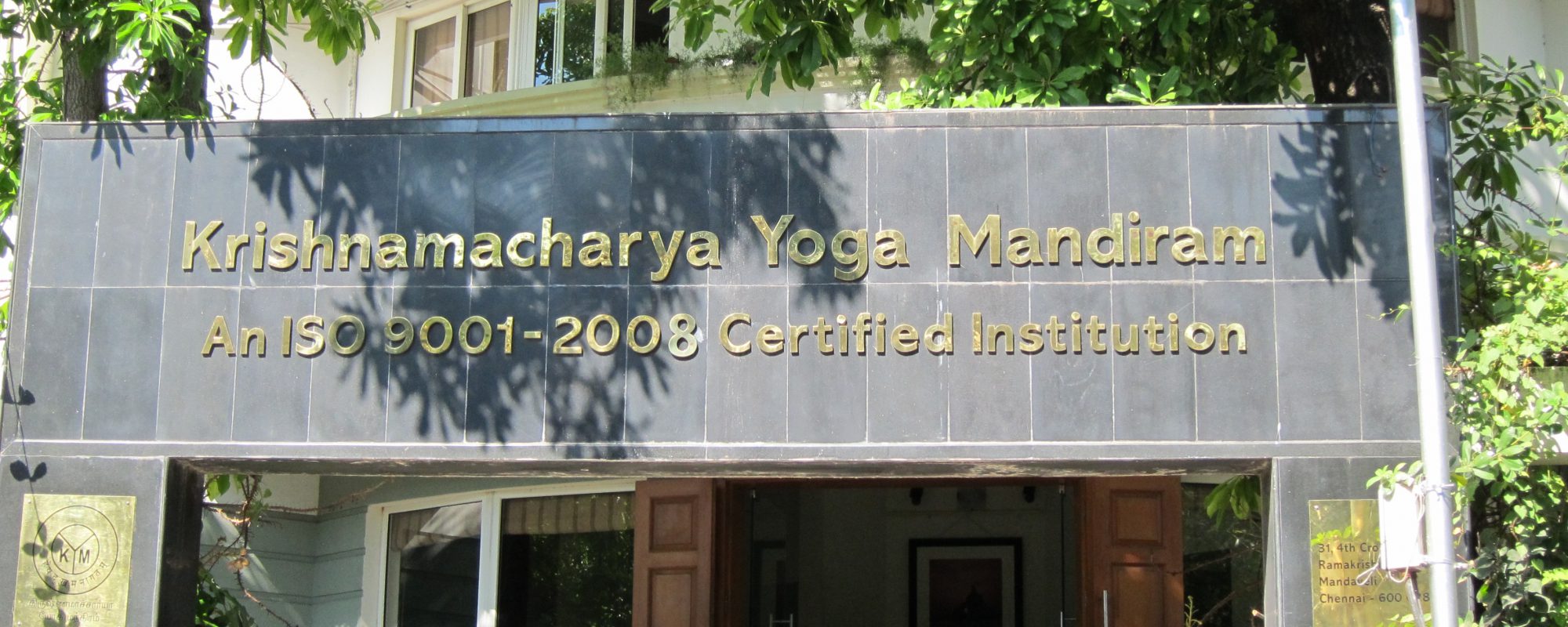
Yoga School Dropout is Lucy Edge’s travel memoir of going to India to study yoga (much like my India travel stories here) so I could totally relate to what she was writing about, especially when she gets to Chennai to study at the Krishnamacharya Yoga Mandiram for a month.

I’ve read most of the books in the yogini-goes-to-India-to-find-herself genre (or you might call it the angst-ridden-yogini-in-general genre) such as Enlightenment for Idiots, Holy Cow, The Yoga Teacher, and Eat Pray Love, and I think Lucy’s book tops them all. Lucy is authentic and insightful and her authenticity will strike a chord with a certain type of yoga practitioner. One reviewer wrote that Lucy is “neither boringly cynical nor stupidly gullible, she’s open minded, warm, and funny.”

Lucy is a former advertising executive in London and travels to India for a yoga school pilgrimage. She went to Pune for Iyengar yoga and Osho, Mysore for astanga, Chennai for viniyoga, Amma’s ashram in Kerala, Auroville (built by Sri Aurobindo and The Mother) in Pondicherry, and other places along the yoga version of India’s Silk Road. She thought she would return from India a Yoga Goddess, but when she got there she found the western obsession with self-perfection shallower than expected (particularly in Mysore with the astangis). Lucy went to India to conduct her personal yoga experiment but ended up writing a book that is love letter to India.

I have no experience with the yoga schools that Lucy visits other than the Krishnamacharya Yoga Mandiram but I can tell you that her writing about Chennai and KYM is spot on, as the British say. What struck me is that Lucy had the same ephiphanies about yoga and India as I did.

At first Lucy calls the yoga at KYM “Pensioner’s Yoga”, “every movement so slow my granny could have done it.” I felt Lucy’s frustration because while I was already familiar with the KYM style before I arrived, when I was there I could see how westerners accustomed to a more dynamic yoga style would view it as yoga for old people until one understood how deeply transformative the style is. I met more than a few former astangis at KYM who told me that the style healed their bodies and now it was the only practice they did.

Lucy thought she would definitely become a yoga school dropout because of KYM — the yoga was too slow, there were too many questions, she didn’t understand the Sutras classes, and she had a hard time understanding “Tamglish”, the combination of English and Tamil syntax that Tamils speak.

It was not until Lucy is in her Sutras class one day that her mind becomes crystal clear (her words.) The Boss (as we called Mr. Sridharan, KYM’s manager and Desikachar’s friend for over 25 years) was talking about duhkha (distress or suffering) which is caused by one of the five kleshas (obstacles.) Lucy suddenly realizes that she has been laboring under avidya, suffering under some severe misapprehensions. She realized that her problems were her own expectations, not KYM or the teachers. She had set up all types of goals for herself (like performing advanced postures) that she was totally unaware of what was going on in her own body (she had a neck problem that started in Mysore when she spent a lot of time trying to perfect headstand.) She remembers what Kausthub (Desikachar’s son) had taught in his class:

“‘Today asana has been made into a photograph. There is no difference between this and gymnastics. We see calendars with photographs of someone balancing on a rock in a headstand…even naked yoga. But asana is not a performance, asana is what happens in the posture and afterwards. A circus man can do many postures — this is not asana.'”

Kausthub encouraged them to cultivate sthiram (stability) with sukham (being comfortable in the pose.) I remembered these teachings very well — that if a practitioner is not 100% in each, you are not practicing yoga. And if you do not have both qualities in the breath and the mind as well as the body in practicing yoga, you are merely doing acrobatics, not yoga.

Months after she first arrived in India for her yoga journey Lucy finally realizes at KYM that she had only been operating on 1% sthiram and sukham, that she needed to start practicing this at all times. She says, “I had to learn ‘to be’, to be patient, to be here, content with where I found myself, both on and off the mat.” It is only then that Lucy begins the slow process of arriving. As Sir (Desikachar) told her class (and my class), “We begin to open our eyes only when we are in trouble.” With this ephiphany Lucy spends the rest of the course with a different attitude and after KYM travels to Auroville and Ramana Maharshi’s ashram in Tiruvannamalai.

After five months in India Lucy realizes that her yoga quest is over. She asks herself what her motivations were, wasn’t it all just an escape from real life? Wasn’t being that Yoga Goddess with 18% body fat an escapist fantasy? She realizes that the transformation she was looking for wasn’t going to be had by enrolling in yet another yoga school, buying another yoga book, or getting another certificate. Lucy realized she had to change her perspective. She remembers what someone told her that “change only occurs when we become what we truly are, not when we are trying to be something we are not. Change can’t happen when we are trying to escape our true nature.” She realizes that the most inspirational people she met in India were the ordinary people like the railway workers, the teachers, the government workers. She found these people so inspiring because their yoga practice stretched beyond their mat. Yoga for them was a way of living, not a physical goal, and if being “ordinary” could make one happy, she wanted it. Lucy fell in love with India and its people and decided to concentrate on the small stuff, just like she learned from her “ordinary gurus” — trying to increase the moments of seeing clearly and choosing wisely in everyday life.

Like Lucy, I also found my yogic inspiration in the people of India. When I attended the month long intensive at KYM in 2005 I did not go to the tea that was scheduled for us on the last day but instead went off on my own — you can read about my inspiration here. Like Lucy, I returned home a different person and in my opinion, a better person.

Lucy did not return to London as the Yoga Goddess she thought she would become but she did not feel like a failure. In fact her “failure” at achieving yoga perfection (whatever that meant) had set her free into being content and knowing that happiness is always available, you merely have to look inside.

I emailed Lucy after I finished YSD and told her how much I enjoyed it. YSD has not yet been published in America and Lucy told me that she is working on getting it to the American market. I bought YSD from an online bookstore in England. Lucy has a website and also has a new book coming out in August.

Krishnamacharya said that “yoga is about Life” and in Yoga School Dropout Lucy Edge wrote a travel memoir that personifies his words.


addthis_pub = ‘yogagal60510’;

I am blessed….

….to have such readers.

Kevin is a long-time reader and has always been very supportive of my cathartic rants and musings about yoga. As what sometimes happens in the online world, we struck up an email correspondence about all things yoga. In fact, Kevin and his wife Erin had also planned to visit the ashram in South India where I was originally scheduled to spend two months but life gets in the way and they had to change their plans — so Kevin generously donated their deposit for my stay. I was overwhelmed by his gesture considering that we have never met. I will say again that I am always amazed at the support I’ve received in the global yoga community through this blog compared to my local “yoga community.” And those of you who have read about my misadventures with local studio owners know what I’m talking about.

Kevin and Erin have relocated to Mexico and have started blogging — Kevin and Erin in Mexico. So I was again overwhelmed to read Kevin’s latest post:

“How could I mention India without mentioning…..?

That “yoga and meditation” (if one has the hard-to-come-by understanding of what yoga actually is, pre-spandex and pre-group class zombie world) is a redundant phrase – and that if you want to learn why that is so, and so much else about yoga, meditation, life, music, great writing, wicked humor and what it means to really love India you must check out this blog:

Linda’s Yoga Journey

I find Linda’s depth and breadth of experience, writing chops and fearlessness very inspiring, and have learned (and continue to learn) so much about all of the above topics from her. Her blog is beautiful in so many ways, and a portal to a vast array of positive things going on in the world. Check it out.”

Wow, wow, wow. I am not only blessed but also humbled. Out of everything that he said, I am most touched that Kevin thinks I’m fearless, more so than being considered a good writer.

I want to take this time to thank Kevin and Erin and ALL my long-time readers — and I know who my regular readers are even if you never comment — for putting up with these “cathartic musings and occasional rants about my trips to India to study my heart’s passion, and my sweet adventures along the yoga path.”

I also want to thank all of the yoga bloggers who have put this blog on your blogrolls. I can tell from my site meter how people find me and I am amazed at how many blogs I’m linked to so mucho thanks for the link love!

May you all know happiness and the causes of happiness.
May you all be free from suffering and the causes of suffering.
May you all never be parted from freedom’s true joy.
May you all dwell in equanimity, free from attachment and aversion.

peace
shanti
a-salaam aleikum
so shall it be.

addthis_pub = ‘yogagal60510’;

talking the talk AND walking the walk

This is yoga.

“Wednesday, April 8, 2009
Hope flickers on
Siteki, Swaziland
4:30 pm 7/04/09

The world is full of tears.

Tears that would overflow the banks of any sea.

And yet I still believe in us. In humanity. In the power of love.

It has only been two days since I’ve been back on Swazi soil… The red dust is burning my eyes as I write these words at the ‘veterinary clinic’ which doubles as an internet cafe.

Each morning i spend an hour in clinic, before heading out into the communities to meet the people….

In every hut there is a story of sorrow.

Yesterday we drove up the most inhospitable hill…. Where there was a single hut perched upon rock after jagged rock.

In the hut we found a man with end stage HIV. He was lying naked in his bed, next to a pool of his own wastes.

Every bone in his body, literally every bone was palpable, visible. He had suffered a stroke secondary to complications of HIV/Toxoplasmosis and was unable to move his left side.

One of the wonderful Swazi nurses in the team explained that he had a caring daughter who washed him and fed him each day, but was only able to visit him once a day.

I cant remember a time ive seen someone so hungry.

We gave him an orange. He took it in his skeletal hands and devoured it.

We took out a bag of corn meal and the nurses mixed it with some milk into a paste.

He ate it faster than anything i’ve ever seen.

He held his hands in prayer and through wide brown eyes filled with tears said “Siyabonga” – Thank you.

There is a story of a sparrow, which my Dad told me once.

He was lying on a gravel road, with his little scrawny legs facing the open sky.

A horseman was walking past and seeing the sparrow, alighted from his horse.

He said “Little Sparrow, are you hurt? Why are lying there so awkwardly? Face up to the sky?”

The sparrow said “I have heard, that sometime today the sky will fall.”

The horseman laughed and said “And you think you can keep it from falling with those little legs?”

The sparrow shrugged his shoulders and said “My friend, I will do what I can.”

And that is all I am doing. What we are all doing here in this beautiful, little hamlet so filled with pain.

What we can.

From Siteki with love,

Maithri”

And this is Maithri.

My name is Maithri (pronounced MY3), and I’m a medical doctor living in Melbourne Australia.

I return to Swaziland for several months in April of 2009.

Swaziland is a country with the highest prevalence of HIV in the world (42%). 10% of its population are orphaned children.

It serves as a vivid microcosm of the most emergent and under-recognised humanitarian crisis of our generation: the cycle of poverty and HIV infection.

I have never seen grace, power, and hope so eloquently displayed as I have seen it in the lives of these beautiful people.

I want to share their stories with you.

Walk with me.

Together we will find ways of making a change.

My love to you, Maithri

____________________________________________________

I do not get to Maithri’s blog, The Soaring Impulse, as often as I should, but every time I do I am overwhelmed. I don’t know if Maithri has ever done an asana in his life, but he is a true yogi in my book. He is a buddha, an awakened one. Each and every one of us could take lessons from this man. He is the epitome of what Krishna speaks of in the Bhagavad Gita, about releasing from the fruits of our actions. If someone told me that I could only teach one class, I can honestly say that the only one I would continue teaching is the one where I am paid nothing — teaching to women in a domestic violence shelter. Karma yoga.

I am certainly not a holier than thou yogini — I still get angry and judgmental and I can still swear like a Marine on occasion (albeit all this is much less now) because I am only human. But when I got back home from my first trip to India and re-entered white bread suburban life, my reverse culture shock was severe. It took me about 6 months to get over it. I was not shocked at the poverty in India or being with slum children, far from it. I handled it very well when beggars with half their faces gone from leprosy would grab my arm for a rupee. But what I did not handle very well was the complacency, indeed the ignorance, of my fellow suburbanites.

I remember standing behind a woman and her daughter in a long line and listening to them whining and complaining about everything they were experiencing in the moment. I imagined twitching my nose like Samantha in Bewitched and dropping them in the middle of Chennai without their cell phones, surrounded by starving street dogs and beggars with no legs grabbing at their designer jeans. I wondered how long mother and daughter would survive without their Vuitton purses and Blackberries. I wanted to scream at them, “WAKE UP!”

And I wonder sometimes at how content and grateful yogis (or people who call themselves yoga practitioners) really are. After all, yoga teachers are supposed to be firmly grounded in the yamas and the niyamas and help their students know the concepts….like santosha, contentment. But it’s been my observation over the years that “yogis” are sometimes not very content at all. Especially on retreats. Especially when taken out of their usual environment.

I’ve been on more than a few retreats with lots of needy yogis. I won’t go into specific details but as a kitchen worker doing my seva, if it was up to me there would be a lot less choices for condiments. You’d be happy with ketchup and mustard and salt and pepper. And no white sugar for you. It’s bad for you anyway so stop sucking it down like there’s no tomorrow. Stop hoarding your food because the cooks really DO make enough for everyone AND YOU ARE NOT STARVING. Has yoga taught you nothing about aparigraha? And you would drink milk one day past its expiration date instead of complaining about it and throwing it out. I am sure the starving man in Maithri’s post would love to have that milk.

Two weeks ago I did a weekend training with one of my regular teachers and she told a story about the difference between Buddhist retreatants and yogis (we were talking about accepting things as they are.) She said she had just led a Buddhist retreat at a well-known yoga center with some well-known western Buddhist teachers and a yoga retreat was starting immediately afterward. They were sitting together in the dining hall after their retreat as the students for the yoga retreat were coming in. One of the Buddhist teachers said, “Ah…here come the yogis. With all their special dietary needs….”

Wheat grass indeed. Yeah, you know who you are. Sometimes it’s hard to look into that mirror that’s held up to your face.

So this is a long-winded way of saying that next time you can’t get your Starbucks mocha frappahooey done just right (OH MY GOD! I SAID TWO SHOTS!!) or you start salivating over the latest Lululemon pants that you have to take out a second mortgage to buy….

think about the dying African who is happy with an orange.

Cut out your Starbucks for a month and make a donation to Maithri’s Swaziland Appeal. I did…because I believe in sparrows holding up the sky.


addthis_pub = ‘yogagal60510’;

yoga wisdom from a rabbit

“What is Real?,” asked the rabbit one day. “Does it mean having things that buzz inside you and a stick-out handle?”

“Real isn’t how you’re made,” said the Skin Horse. “It’s a thing that happens to you…It doesn’t happen all at once. You become. It takes a long time. Generally by the time you are Real, most of your hair has been loved off, and your eyes drop out and you get loose in the joints and very shabby. But these things don’t matter at all, because once you are Real you can’t be ugly, except to people who don’t understand.”
The Velveteen Rabbit

I believe that yoga helps you become real (real-er? more real?) It strips away your layers like the multiple skins of an onion, down to your essence. As the Skin Horse said, Real is a thing that happens to you, you become. Sometimes It sneaks up on you. You can’t think your way into being, you can only be. You can’t think your way to freedom, you can only be free.

I wrote here about a new spaciousness I have felt recently and it really hits me now and again. This just being is a lightness of being that is freedom, at least for me. The physical sensation of it is floating. Sometimes there are no words for these Things that happen on this Path, but that is my felt sense of it.

I think about people or things that I was very attached to six months ago or even one month ago and those attachments are gone….POOF!…like they never existed. Those attachments literally brought me to my knees, you have no idea. Of course “they” still exist but it is…different. Transcended. Free.

At my age I’m worn around the edges and yet somehow feel more alive than ever (you hear that Yoga Journal, with your ageist yoga advertising?), even with my aching back (the price of being uber-flexible among other things.) But I am not this Body.

I’ve been too many years on this earth to care what people think about me anymore. I’m not responsible for anyone’s happiness, only my own. I don’t tell my students what they want to hear, I tell them what I think they need to hear and what they choose to do is up to them. I am merely a yoga facilitator, I am nobody’s guru — “your breath will change your life”; “mindfulness begins now, not tomorrow”; “detach from the outcome and be free.” You can give a person the tools and show them how to use them, but eventually they have to build their own house.

In 7 years of teaching I’ve had students quit after one class and I have students who’ve been with me since Day One and I’m grateful for them all. I’ve heard it said that as teachers we get the students that we deserve. Maybe so. One day not too long ago a (former) private student told me that she did not like the way I worded things, that I was too harsh. That night another student told me that she does not have the words to tell me how much she looks forward to coming to my class every week. Same day, same teacher, same words. My voice off the mat is my voice on the mat.

“….once you are Real you can’t be ugly, except to people who don’t understand.”

I am not ugly. I am Real.

“I got lucky
I got everything I wanted
I got happy
There wasn’t nothing else to do
And I’d be crazy
Not to wonder if I’m worthy
of the part I play
In this dream that’s coming true.”

–“Pilgrim’s Progress”, Kris Kristofferson

my short cut to nirvana

(This image was originally posted to Flickr by Naresh Dhiman)

Those of you who are regular readers of this blog know that I am planning a lengthy stay in India next year. I had planned to spend two months in an ashram in south India studying yoga therapy with a swami. I have since learned that the ashram is not all it was cracked up to be which actually didn’t surprise me all that much. I am certainly not going to spend my hard-earned yoga money on an ashram or a swami who makes false recommendations on an India travel website.

I learned that there were about 10 obviously fake posts on the thread about the ashram and they all seemed to be from the same city in India (Madurai, where the swami is based) from people who claimed to be from outside of India. Any website owner knows where people are located by the IP address, i.e., your computer’s signature, the same way a blogger knows where readers come from by looking at their site meter.

I take all things with a grain of salt (sometimes with a ton of salt) so while I had received very nice and friendly emails from the ashram when I was planning my stay, I was always cautious, I did not drink all their Kool-Aid. That’s just what I know about India and the spirituality biz. There are many people in the spirituality game in India who love to part Westerners from their money because so many naive peace-love-dove feringhees are willing to give it to the first dark sadhu who says “Come, I give you enlightenment.”

After learning about this I emailed the ashram asking for an explanation. I never heard back from them.

Now I have more money for my trip, the money I won’t be giving to the ashram. I’ve changed my plans to taking private classes again at the Krishnamacharya Yoga Mandiram like I did last year (and believe me, they also like Western money) and I can spend more time in my Indian home, Chennai.

Now I can get to the Kumbh Mela in February instead of in March because I won’t be spending January and February at the ashram. This will be extremely auspicious because Shivaratri is February 12 — “Mahashivaratri marks the night when Lord Shiva performed the ‘Tandava’. It is also believed that on this day Lord Shiva was married to Parvati Ma.”

I can already feel the shakti. OM KALI MA!

The best part is that I can spend more time with my friend (who originally was going to meet me in Delhi after my ashram stay), so we’re going to travel for two weeks in the south then head north for the Mela. This will be my fourth trip to India and her ninth trip, one of which included a Mela. Thirteen trips between the two of us — can you tell that we both have the same passion for India? Well, with India it’s always a love/hate relationship…;)

If things work out I will fly to Africa after the Mela to conduct a yoga retreat either in Tanzania (maybe with a safari option) or on the island of Zanzibar. My friend who lives in Tanzania flew to Chicago last week to see me — we had not seen each other since India, 2005 when we were together for a month at KYM. We’ve always stayed in touch and she had invited me to teach in Arusha, Tanzania but the timing was never right. Next year it will be. She knows people who own eco-resorts, perfect spots for a yoga retreat. If it happens, it happens, I am not attached. But it would be DAMN COOL to conduct a yoga retreat on Zanzibar! But I will detach from the outcome. To my global readers who have told me that would they would love to take classes with me….watch this space!

The Kumbh Mela in Haridwar in 2010 is the MAHA Kumbh Mela, the GREAT Mela, not the Ardh or half Mela. The Mother of all Melas. And I’ll be there, me and about 50 million of my closest friends. The largest spiritual gathering in the world.

My astrologer has always told me that the years 2008 to 2010 will contain great learning experiences for me and not just in yoga. That I will soak it all in “like a sponge.” Even before India was a thought in my mind a vedic astrologer told me that during the years 2008-2010 I will experience “divine grace.”

I take everything with a grain of salt. Whatever happens, happens. But all things happen for a reason.


addthis_pub = ‘yogagal60510’;
yoga teachers are the new waiters

They say that every restaurant server in Los Angeles is an actor or actress waiting for their big break. So are yoga teachers the new wait staff?

This post over at YogaDork makes one think:

“…many aspiring teachers who hear the call will follow the dream no matter what it takes (meaning, lots of odd jobs and stretching the dollar). For some it’s not worth the stress. Caleb Asch teaches 6 classes a week, but it’s not enough to pay the bills. “The stress of not having enough to live on is a killer,” he said.

JG wrote this comment: “This quote – “The stress of not having enough to live on is a killer” – really hit home for me. I’ve been teaching full time for over five years and I’ve never made a fortune, but I always made the bills. This year has been the exception. With 30+ “one-month-intensive” YTTs in my city churning out teachers and the studios offering increasingly low pay to teachers (after all, why pay when there are people willing to teach for free?), I’m beginning to question my decision to teach, as much as I love it. 2009 may be the year I throw in the towel.”

I’ve written more than a few posts about the economics of yoga teaching and about the plethora of yoga teacher trainings in the Chicago area. The fact of the matter is that there are too many yoga teachers and not enough students, yet studios keep cranking out newbie teachers because teacher training programs pay the bills. A studio doesn’t make money teaching group classes and a yoga teacher certainly doesn’t, not when a studio owner pays a teacher anywhere from $4-$7 per student. I don’t know anyone in the real world who is willing to work 90 minutes to make $4. Yet yoga teachers are expected to and to accept it with a smile and no complaints. And if you don’t like it then you can get out because there are 10 more newly minted yoga teachers waiting to take your place, some who are more than willing to teach yoga for free just for the thrill, uh, experience. This is real world yoga stuff that Yoga Journal does not write about.

Yup, yoga teaching sure has become a funny business in this here Om-mera-ka. In fact, I had a moment last week when the thought popped into my head, “why am I doing this?” The longer I teach, the more yoga nutbars float to the surface. As a yoga teacher friend told me about the following email, “the longer we all hang around this USA, the weirder this yoga tribe is gonna get.”

I received an email with the subject line “private yoga instruction.” I receive more than a few emails like that because I have a website, but it made me suspicious because this was the entire email:

“Hello!

How much do you charge for private sessions? How long are they usually?

Thanks!”

It made me suspicious because when most people ask about private instruction they tell me where they are, what injuries or conditions they have, how they found me, what they are looking for, among other things. Their emails are not two sentences. What also made me suspicious was that it came from a [first and last name]yoga.com. I don’t want to give the name because I don’t want to give this woman any type of publicity.

I googled her name and found a very professional looking website that was, in my opinion, too slick and a bit over the top, a website that buried you with information. The young woman bills herself as “Teacher * Scholar * Consultant * Yoga * Transformation * Sustainability.”

Uh, me too.

I responded: “Why do you want to know that when you are a yoga teacher yourself and not someone in my local area looking for private yoga instruction?”

Ms. Yoga Expert immediately emailed a one sentence reply:

“I am looking to hire Yoga teachers, and gauging further inquiries and
potential offers according to responses to the questions I asked you.”

When I read that sentence I thought “yogabot.” Now is it just me or is this woman disingenuous? Why wasn’t she up front about her real intentions in the first email? Why wasn’t her subject line “yoga teachers wanted” instead of “private yoga instruction”? As far as I’m concerned, she lied and she’s dishonest. As a “scholar”, shouldn’t she know how to word an email so as not to make the person receiving the email suspicious? But what do I know? I only graduated summa cum laude so I don’t know if that makes me a scholar.

Something about the tone of her emails and even her very professional looking website made my skin crawl. I really wanted to email her back and tell her that and some other things, but of course, that would not be very yogic of me.

I don’t belong here. I need to find my own yoga tribe.

yoga in the real world


When I told a well-known and well-respected yogi who shall remain nameless that sometimes I teach in places where there are no props, she said with a sniff, “I don’t teach in THOSE places anymore.”

Well, now.  Maybe one of these days I will have permanently traded up my yoga teaching venues sans any dysfunctional yoga studio owners of course.  But in the meantime I look upon my teaching experiences with great affection because I learn from all of them.

This morning I was teaching my private class in my house and the security system’s alarm started screaming.  There had been a thunderstorm with a huge lightening flash over my house (talk about raising the kundalini) and shortly thereafter the alarm went off. And when I say screaming, I mean the sound feels like a drill going through my ears into the middle of my brain.  My students looked at me with that WTF look and I ran downstairs and tried to shut it off.  No luck.  Still screaming.  I went back up to my home yoga shala and told them not to worry, no one is breaking in and nothing is on fire.  Then it stopped. Then it started again.  By this time all I could was laugh.

I ran back downstairs and called the security company.  They told me that the power must have gone out momentarily or there was a power surge and the system was rebooting itself.  As I talked to the security company the message on the control box showed everything back to normal.  I could stop grinding my teeth.  I told the security person that the alarm had gone off while I was teaching a yoga class.  She thought that was hilarious.

Good thing I practice mindfulness meditation: “screaming alarm feels like this…”

Yesterday afternoon I taught to 20 musicians of a symphony orchestra in the massive basement of their auditorium.  As they sat in stillness before savasana I heard massive doors open.  I watched a janitor come in pulling a massive industrial size garbage can behind him on a platform with wheels that obviously needed massive amounts of of oil.  I saw the janitor and smiled, thinking back when I used to teach regularly in THOSE places.

Two other people walked in and opened the doors of a massive closet, the size of a room. The storage closet was lined with shelves of liquor bottles and the man and the woman rolled out two bars which I’m sure were for the audience for last night’s performance.  By this time the students were in savasana.   After class I told them that this was the first time anybody set up a bar in back of the room while I was teaching.

Years ago I taught for a park district.  I taught in their community center in a large a multi-purpose room with a stage.  Saturday morning class, all the women up in downward facing dog — “BREATHE, WATCH YOUR BREATH….”  In walk two uniformed policemen.  I was the only one who saw them because everyone had their butts in the air, eyes closed. “Everyone come down into child’s pose…hello, officers….”  Twenty heads jerk up.

“We’re just here to get the lectern,”, i.e., the one that was up on the stage.

“That’s nice, officers. I thought you were here to strip-search us.”

The men in blue laughed as they hustled the lectern across the stage, down the stage steps, across my teaching space, and into the room next door, the door slamming behind them.  Of course.  Door slamming.

Yoga teacher trainings don’t teach you how to handle these things.

Do you want to hear about teaching next to bagpipe practice and above a dog obedience class?  Fortunately these two things did not occur at the same time.

There is no sound on earth worse than bagpipe PRACTICE, not even a screaming burglar alarm.

A day in the life of a yoga teacher.

Oh, yeah. I’ve paid my dues.

my teacher’s wisdom

“Charles Darwin’s 200th birth Anniversary has indirectly energized many to restart the debate about God, Creation and Evolution. This kind of discussion, though, has been going on from time immemorial.

Sayana, the well known commentator on the Vedas, starts his commentary by pointing out that several of the sayings of the Vedas on Heaven and the less favorable place and the details of how to get to the former and avoid the latter can never be proved or disproved. Even if they debate for a billion years (sata koti varsa) the believer can not prove to the nonbeliever the existence of these worlds and God, nor can the non-believer disprove their existence to the believer. Recently, several Darwin believers have put up graffiti billboards, etc., proclaiming, inter alia, “Probably there is no God, so go out and enjoy life”, drawing an equally telling response from a believer, “God exists, so go out and enjoy life”.

The most popular theory of creation of modern science is the Big Bang theory. Great minds have propounded this theory. Basically it asserts that the present Universe we experience evolved out of a dime sized entity called “Singularity” that the universe has expanded from this primordial hot and immensely dense initial condition at some finite time in the past, and continues to expand to this day. The mathematicians would say that this singularity has no dimension and infinite density. Then the Universe evolved out of it. I understand that the Big Bang theory does not address the question whence the Singularity was formed and how. Some speculate that these are formed from matter and energy sucked by the Black Hole(s), which is the end chapter of the previous evolution. Implicitly there is no mention of the need for an intelligent cause (Nimitta Karana) for the creation. It evolves by itself. Of course there are many scientists who believe that there could be an intelligent principle behind it—though they may not call it God. This view that the Universe evolved without God or an efficient cause has been there along with the theistic view from time immemorial. An orthodox philosophy, Samkhya avers that the entire Universe evolved out of a singular non-dimensional entity called Mula Prakriti, without an efficient cause (nimitta karana) called God.

Both these views hold that the Universe, the macrocosm that we experience has a real, material cause. And theists believe in a material cause which is also efficient/intelligent cause, which is God. This macrocosmic view that out of the huge macrocosm, countless individual entities like us have sprung up or were created, or evolved, is generally accepted. But there is a third view less known, less straightforward, which tries to understand the whole evolution from a different point of view, from the point of the individual microcosm.

Yoga looks at it from the individual viewpoint, as briefly explained below, which will help and lead us to understand the third viewpoint about Creation propounded by the Advaitic School of the Upanishads.

All my life I am the subject and the world around is the object. I see objects, hear sounds, smell things etc. When I am awake and see an object, the sequence as all of us know is as follows. Light falls on the object that I see, the light is reflected by the object, and the light particles, reach my eyes and then the retina. The retina
converts them into electrical impulses and they reach some part of my brain. Then there may be some chemical changes in my brain cells and communications among the brain cells resulting in my seeing the object. But in physical terms all the information reaches my brain and is absorbed. With this the physical phenomena end. After these reach my brain, how do I see the object, outside of me, in front of me? The information is in my head physically but how do I see it outside of me? Nothing goes out of my head. The brain projects an image, not outside but in the mental space according to Yogis, because the projection does not and cannot take place in the physical space. My mind projects it and there has to be some awareness or consciousness in me which sees or experiences this mental projection. The yogis call
the projection a chittavritti. The chittavritti is the projection of the mind made out of the information received through the eyes.

Of course the projection is a little more involved. The mind not only gets information through the eyes but also through the ears and other senses, and the mind collates the information and makes a composite presentation which I see in the mental space, just as the objects appear to be outside of me. I not only have the outside picture reproduced in my mind but also me, the subject, as part of the experience. I am also aware that I am in the midst of the total picture as the ‘subject’ experiencing the outside world. I also feel emotions attached to the mental picture. I also react to the experience, sometimes with a happy or sometimes an unhappy
disposition. Anyway there is a composite picture I experience. The totality of what I experience including that I am the observer, I like it, I don’t like it, everything — this is the chittavritti at a moment. In the next moment, the chittavritti changes. Moment after moment there is a new chittavritti and the non-changing Self, the pure consciousness keeps observing this changing flux of chittavrittis.

The chittavritti is not confined to objects outside that I see directly. Sometimes, I infer from partial sensory perceptions or occasionally I try to picture on the basis merely of what I hear. Then there are occasions when I close my eyes and produce my own chittavrittis, without objects, like in dreams—day or night. Then I have chittavrittis produced purely from past incidents which I remember. Then of course my mind completely closes shop when there is an ‘experience of sleep’. So I have a variety of chittavrittis, all taking place in my head. My chittavritti which is the totality of my experience at any given moment takes place not in physical space but in mental space or in virtual space. So even though the objects I
perceive may be real, what I experience is virtual. This is what happens in all of us all the time. But even as the experience may be with virtual objects, the objects of the outside world are real according to Yogis.

But the Vedantins especially advaita vedantins ask a further question. If the experience we have takes place in mental space or chitta akasa, the experience of the prior moment also should be taking place in virtual space. So the objects that reflected light particles for my eyes to perceive themselves are virtual objects. Thus going back they aver that our entire life experience is only virtual and not ‘really’ real. We can extrapolate this to the entire outside world and say the Universe is not really ‘real’, it is an illusion.

So we have three possibilities, following this line of reasoning. Firstly the universe is real even though our experience, known as chittavritti is virtual. This is the position of the Yogis, and we would agree with that. The second view is that it is not possible to say for sure if the outside world exists or not (anirvachaniya) since our experience is limited to our virtual chittavrittis. The third view is that there is no real outside world, there is no real creation and the experience is virtual and the universe is illusory. But, one may assert that the objects are real, we can see, we can feel them. But the Mayavadins or those who say that the world is only an illusion, aver that just as we feel the dream space, dream objects and the dream self to be real during dream but they are found to be an illusion when we wake up, likewise the waking state experience also is virtual and there is no real world outside. They say that there is no real creation, all our life we have a succession of virtual experiences.

Let us get back to the ideas at the beginning of the article. So we have now three views about creation of the universe. One is that it evolved from “Singularity” and that is the material cause of the Universe. Like the modern scientist, Samkhya does not feel the need to agree to an efficient cause like God, the creator. The second view is that God created the Universe and He is both the material and the efficient cause. The third view is that the creation itself is an illusion and hence there is no need to subscribe to a material cause, like the Singularity or the Mulaprakriti. However since there is an experience, the experiencer (Atman or drashta), which is non-changing pure consciousness alone exists which observes the illusionary experience. Some Buddhists schools find no need for even postulating the constantly observing Self.

So, the Upanishads aver that there is an origin of the Universe, like the Singularity of the Scientists or the Mulaprikriti of the Samkhyas, which ‘origin’ the Upanishads call as Brahman, literally meaning “the principle that expanded into this Universe’. But the comparison ends there. While the Singularity is inert, without consciousness, Brahman is pure, non-changing consciousness. It is the considered view of the vedandins that matter cannot produce or become consciousness; the object cannot become the subject. The advaita vedantins further aver, likewise, Consciousness cannot produce or become matter, it can only be an observer. So they postulate the theory that what evolved out of the Brahman is not really real, but only an illusion. Brahman does not expand like the Singularity does as postulated by the Big Bang Theory. In fact it is said that the zero dimension Brahman contains the entire universe within itself, but the Universe appears to be outside of it–like during our dream state the dream objects are within our consciousness but appear to be outside us. Or, it is like the thin film of the reflecting surface of a mirror giving the impression of having the three dimensional space and objects behind it.

One may therefore examine theories of creation other than the most popular views of “God created the Universe” or “the Universe evolved on its own”. The third view is that there is no real creation. Uncomfortable? But this obviates the need to answer the rather difficult questions, “Whence did all this material come to make this
Universe.” Or “Why God created this Universe” and many other questions. The theory of illusory evolution is plausible and tantalizing. Some traditional theists (astikas) who are drawn towards the logic of this third theory of Virtual Creation (maya vada), call the Lord a Mayavin, or the Creator of the Grand Illusion.”

Srivatsa Ramaswami, March 2009


addthis_pub = ‘yogagal60510’;

books for your Buddhist path

In a comment to this post Kristen asked for book suggestions to start exploring a Buddhist path.

I first read books on Buddhism and the other Eastern wisdom traditions when I was in high school and college over 30 years ago. I put them down and picked them up again when I started back on the yoga path. I was in a different place so they resonated with me in a different way. I can not separate my spirituality from yoga although the yoga teacher trainings that I know of rarely mention Buddhism. I think that’s unfortunate, but that’s me. Here are my suggestions:

Of course, a good translation of The Dhammapada. I recommend Eknath Easwaran.

Whenever a beginner asks me what book they should start with I always recommend Awakening the Buddha Within by Lama Surya Das. Clear, concise, simple but not simplistic. I’ve read the book about five times.

What the Buddha Taught by Walpola Rahula. A great book for the traditional teachings.

Buddhism, Plain and Simple by Steve Hagen. Classic.

Any book by Jack Kornfield, especially Seeking the Heart of Wisdom: The Path of Insight Meditation and A Path With Heart: A Guide Through the Perils and Promises of Spiritual Life (my favorite.)

I’ve studied both Theravadan and Tibetan Buddhism, so in the Shambhala tradition, books by Chogyam Trungpa: Journey Without a Goal: The Tantric Wisdom of the Buddha and Shambhala: The Sacred Path of the Warrior. My two favorite phrases that Trungpa uses are “spiritual materialism” and “idiot compassion.” You can google those.

Being Dharma: The Essence of the Buddha’s Teachings by Ajahn Chah, Jack Kornfield’s teacher.

Loving-Kindness: The Revolutionary Art of Happiness by Sharon Salzberg.

Buddha Takes No Prisoners: A Meditator’s Survival Guide by Patrick Ophuls. One of my favorites.

Dancing with Life: Buddhist Insights for Finding Meaning and Joy in the Face of Suffering by Phillip Moffitt (which I have to finish before returning to Spirit Rock at the end of April!)

Good Life, Good Death by my teacher, Gelek Rimpoche. Contemplating my own death made me feel so much more alive and in a way liberated me because I know that what is never born can never die. That realization is freedom.

This a very short list but I believe these books contain the essence, at least for me. Some of these books will not resonate with you because we are all different. Search amazon.com or any book store and you will find hundreds more books and a hundred more authors. Just as there are different styles of Christianity, there are different styles of Buddhism: Zen, Theravadan, Mahayana, Vajrayana, Pure Land, etc. Walking my own path I’ve found that it all boils down to the same thing, the essence of Buddha’s teachings: The Four Noble Truths and the Noble Eightfold Path, nothing more, nothing less.

The picture above is Prajna Paramita, the Mother of All Buddhas. Here is the most well-known quote from the Heart Sutra, an essential discourse on Prajna Paramita:

“Form is emptiness,
Emptiness is form,
Form is not other than emptiness,
Emptiness is not other than form.”

Simple.

OM MANI PADME HUM

addthis_pub = ‘yogagal60510’;