my yoga room is a very very very fine room


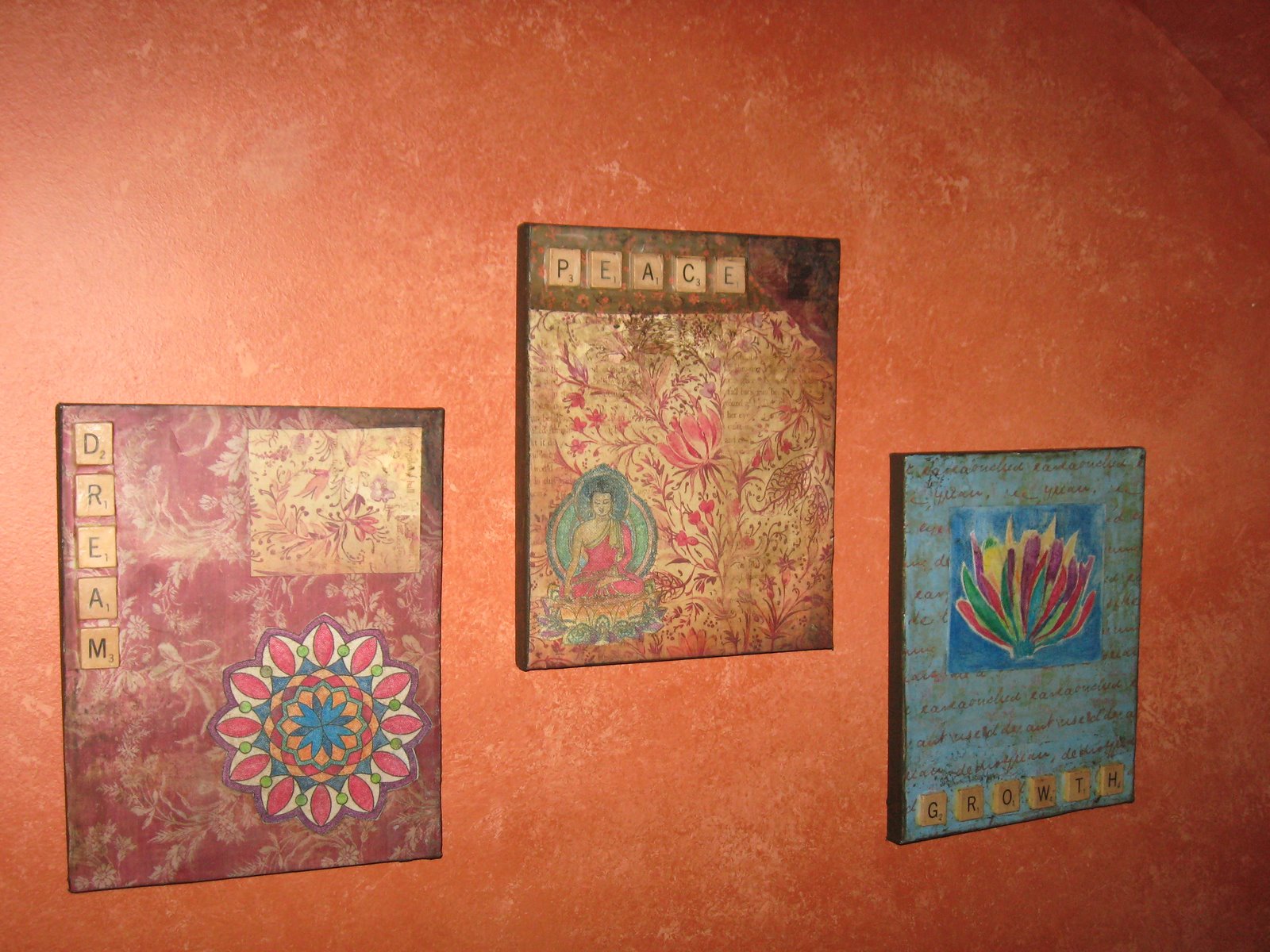
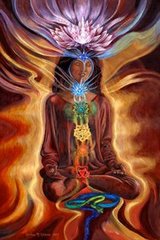
yoga art by sweetmango. sweetmango was surrounded by the fires in Australia. buy her art!


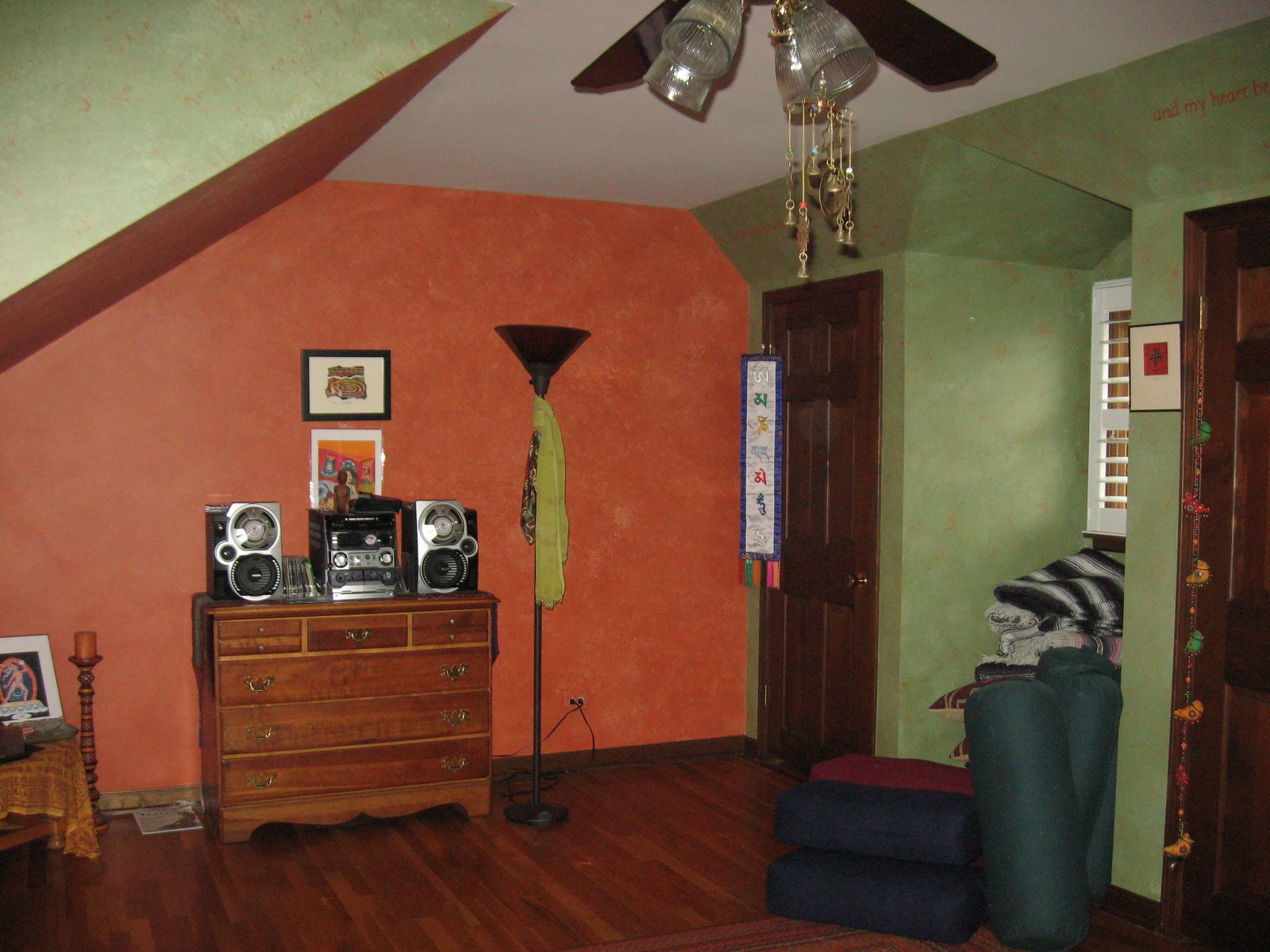
a place to teach, a place for props


a place to sit


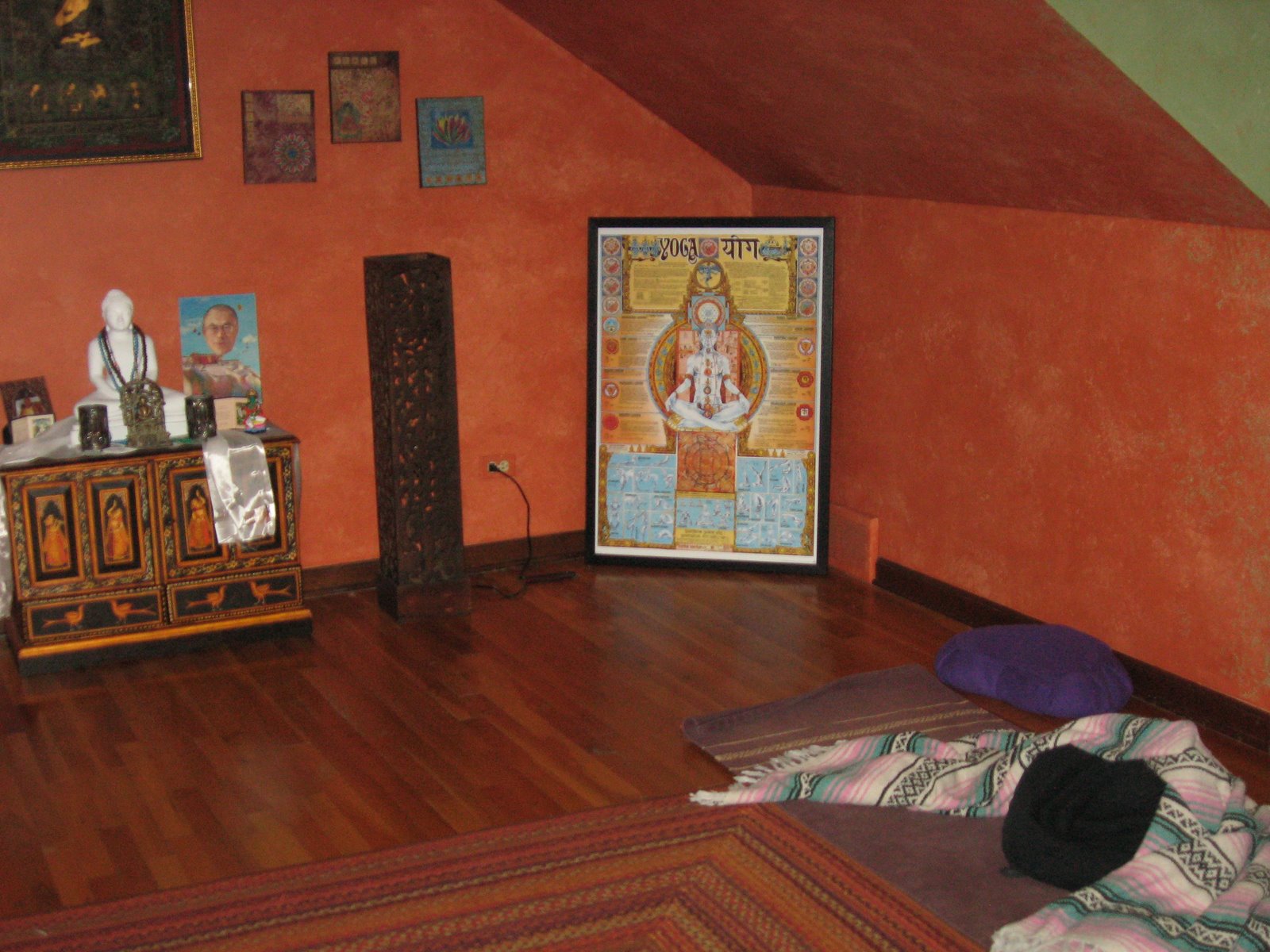
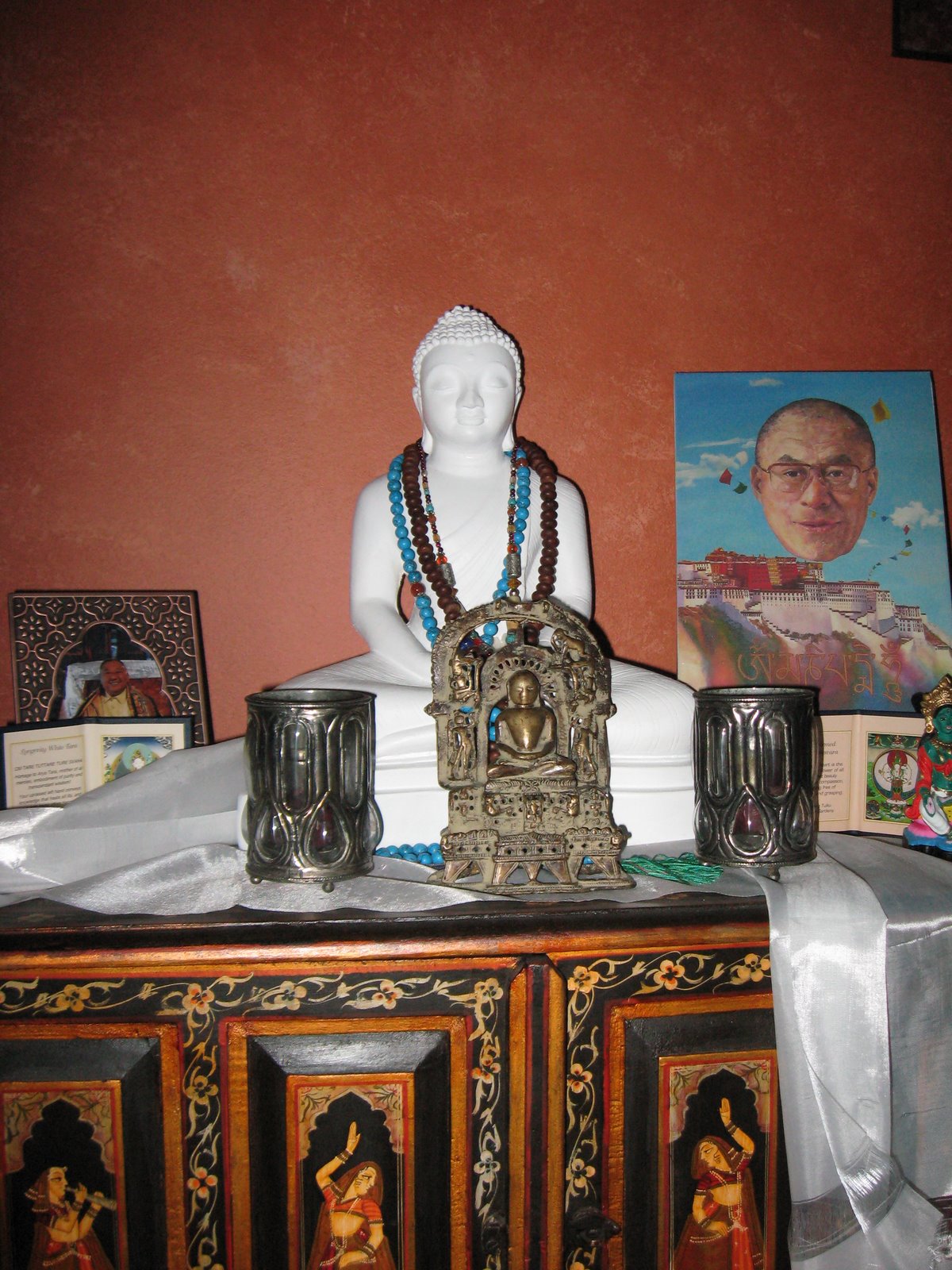
Buddhist altar with Buddha statue given to me when I first took the Five Precepts; giclee of the Dalai Lama bought in Santa Fe, New Mexico; framed picture of my teacher Gelek Rimpoche; antique bronze Buddha bought in Chennai, India


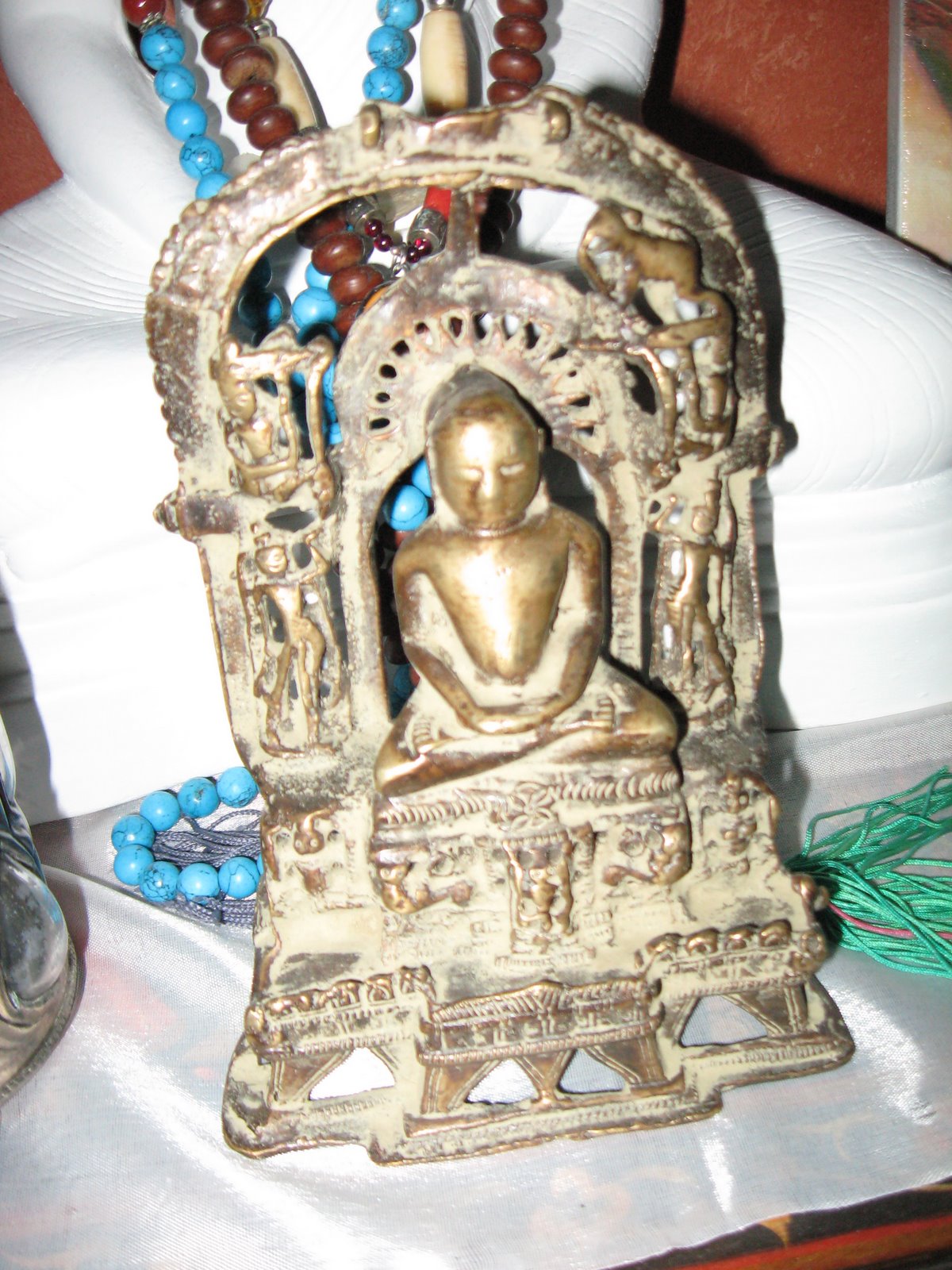
close-up of antique Buddha — it’s heavy!


Hindu altar with bronze statue of Kali standing on Shiva, bought in Chennai, India. It is rare to find a statue of Kali in Tamil Nadu. Front row left to right: bronze statue of Parvati, bought in Pondicherry antique store; wooden statue of Kali bought in Varanasi, sent to me by a friend; picture of Shiva and Parvati; clay statue of Ganesha; mala on Kali bronze is over 30 years old, given to me by a dear friend.

These words from the Taittiriya Brahmana are painted on the walls:

“Let my life force be linked to my heart,
and my heart be linked to the Truth that lies deep within me.
Let that Truth be linked to the Eternal
which is unending joy.”

********************

UPDATE:

When we came to look at the house I saw this room and said “this is my yoga room.” I also immediately “saw” those colors — I wanted a deep orange (since I’m a second chakra gal) and grass green. You can’t see it very well, but on some of the walls there’s a “plastic bag technique” with the paint. The only down side to the room is how the roof slants — I can only fit so many people for a vinyasa class, not good for raising the arms overhead!

But I love the space, it has good energy, all the time.

addthis_pub = ‘yogagal60510’;

books to start your yoga journey


Sandra, a new reader, wrote:

“I want to thank you for a great blog. It is truly an inspiration. I hope you are rid of your trolls. They are a pain.

I am wondering if you could recommend two books as I stand here in the beginning of my yoga journey. I would have liked to email you but couldn’t find any email address on your blog (which is understandable considering your troll visits).”

Sandra, thanks so much for your wonderful compliment, I am blessed to receive such kind words from global readers. Yes, trolls are a pain; I’ve had to make my other blog by invitation only and I now see the same troll is skulking around this blog. This blog may also go the way of invited readers only.

Sandra, I will give you more than two books to help get you going on your yoga journey. Remember that these books may not resonate with you at this time — the operative words are “at this time.” When I got back on the yoga path I bought a ton of books some of which I put down after reading a few chapters. I picked them up again a few years later and I devoured them because I was at a different stage in my yoga development. You will find this true for you, too.

In no particular order, these are books I find invaluable. Remember that these are the books that shaped my teaching; someone on a different yoga path such as Iyengar or astanga will have their own favorite yoga books….

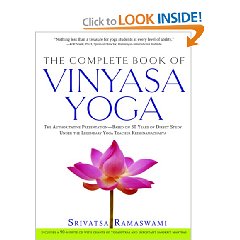
The Complete Book of Vinyasa Yoga — Srivatsa Ramaswami
Yoga Beneath the Surface — Srivatsa Ramaswami
Yoga For the Three Stages of Life — Srivatsa Ramawami
Bringing Yoga To Life — Donna Farhi
Enlighten Your Body: Yoga for Mind-Body Awareness — Linda Christy Weiler
Mindfulness Yoga — Frank Jude Boccio
Yoga of Heart — Mark Whitwell
Yoga for Transformation — Gary Kraftsow
Yoga for Wellness — Gary Kraftsow
Yoga and the Quest for the True Self — Stephen Cope
Yoga: The Spirit and Practice of Moving Into Stillness — Erich Schiffmann
Aligned, Relaxed, Resilient: The Physical Foundations of Mindfulness — Will Johnson
The Heart of Yoga — TKV Desikachar

Of course you must get a good translation of the Yoga Sutra-s and the ones I like are The Yoga-Sutra of Patanjali by Chip Hartranft and Reflections on Yoga Sutra-s of Patanjali by Desikachar, however, I don’t think this is available in the United States. Hartranft’s book blends Buddhist thought with the Sutras, writing from the perspective that it was impossible for Patanjali not to be influenced by Buddhism when he wrote the Sutra-s.

The ancient yoga texts are also not to be forgotten:

Hatha Yoga Pradipika — Swami Muktibodhananda
Pure Yoga (a translation of The Gherandasamhita) — Yogi Pranavanadna
Nathamuni’s Yoga Rahasya
Yogayajnavalkya Samhita: The Yoga Treatise of Yajnavalkya

The last book will most likely be the most difficult to find. It is one of the oldest texts on Yoga and it is a dialogue between the sage Yajnavalkya and his wife Gargi, who was considered one of the most learned women of all times. The book is dedicated to “all great women.”

Last but not least, The Bhagavad Gita, translation by Easwaran.

If you were in my teacher training, I would ask you to start off by reading these three books: Yoga Beneath the Surface; The Heart of Yoga; Yoga and the Quest for the True Self.

Happy reading!

addthis_pub = ‘yogagal60510’;

impermanence

Finally, I got it: a heart that is open to the world must be willing to be broken at any time. This brokenness produces the kind of grief that expands the heart so that it can love more and more.
–Stephen Cope

I had the great fortune of spending 10 days with Stephen Cope at my training retreat at Spirit Rock in 2007. I think he’s brilliant.

And this is a quote that rings so true for me.

addthis_pub = ‘yogagal60510’;

every picture tells a story

Thanks, YogaDawg!

and this is why I am not a yoga superstar like Shiva Rea, Seanne Corn, et. al.

That pup looks drugged. Have you ever seen such a lifeless puppy? And I hope Ms. Doga did not get that puppy from a pet store — pet stores buy puppies from puppy mills!

Please feed shelter animals! Click the link in the sidebar — my three former street cats thank you!

I also want to give a shout out to my new favorite yoga blog, Yoga Dork. Any yoga blogger who can hold Lululemon’s feet to the fire is OK in my book!

addthis_pub = ‘yogagal60510’;

yoga ink

BEFORE….

AFTER…

Forget about wacky yoga studio owners, about how much money yoga teachers don’t make (my yoga money goes towards yoga, India trips, and more tattoos, not necessarily in that order), about yoga career changes, hell, even forget about the yamas and the niyamas…let’s talk skin art, baby!

We all know that tattoos are trendy and lots of yoga teachers have all types of tattoos. The “tramp stamp” — and don’t act shocked, y’all know that’s what a lower back tattoo is called in some milieus — is ubiquitous on the lower backs of yoga teachers whether it’s an OM or a lotus or a tribal thingy. My lower back tattoo is a large sun and moon combination (orange sun/blue moon with pretty eyes) with the Tibetan OM. Read all about how Indian women loved my tattoos.

My first ink was back in the late 1970s before there was AIDS, before tattoo artists starting using a fresh needle for every person. My first tattoo artist was a biker named Snake and he put a little flower on my shoulder (the small flower next to the butterfly in the top photo, the butterfly was added later.) I was so worried about the pain I took a few Tylenols with codeine, but the flower was so small it took less than 15 minutes. By the time the codeine kicked in I was already home. After that flower, I was hooked. Not on the codeine but on getting inked.

I’ve always loved tats and consider them true art. That is, good tattoos are art, not the bad, ugly, funky looking ones that look like no thought was put into them. Besides the half-sleeve and my lower back, I have a tattoo on each ankle (both Native American inspired) and one on my right wrist — flowers with a vine and a Sanskrit OM. That OM has been kissed in India. I’m going to add on to that tattoo in March, adding the OM MANI PEDME HUM mantra in Tibetan script swirling around and underneath to meet with a red lotus. The visual perspective will look down into the lotus showing the golden “jewel” — “the jewel is in the lotus.”

One day I want to go to Angkor Wat in Cambodia and then to Thailand where I will get a sacred Sak Yant traditional Thai tattoo on my back. One day.

My tattoos are custom now and I go to Serena Lander when she comes to Chicago. She did my half-sleeve in four sittings and I think she did a beautiful job of connecting the new work with the old work to make it look like one piece. The half-sleeve was not even finished yet when I was in California last June and people literally stopped me on the street to admire it. I know you’re wondering about the eye — Kali’s eyes and third eye are peeking out from the vines.

Some of the old work (the red cardinal flowers, the tiger lilies, and the hummingbird) was done by one of the female artists on LA Ink. I won’t say who because once she told me she was leaving Chicago to be on LA Ink she never returned my calls or my emails about getting more ink and that certainly isn’t very professional. One of my yoga students was even going to pay for my flight to LA. Good for her that she is so successful now, but she went all Hollywood and obviously can’t be bothered by her old Chicago clients who knew her before she hit the big-time. No matter, I found someone whose work I like much better.

Tattoos are like plastic surgery — you just can’t stop at one!

addthis_pub = ‘yogagal60510’;

my next yoga career move


It’s the beginning of 2009 and I’ve pretty much decided that I will not teach in yoga studios anymore. Those of you who are regular readers of this blog know why. I should never say never, things can always change, but as of this moment it’s a better idea to run my own workshops and classes and not teach for anyone else. My yoga persona is not conducive to teaching in gyms or health clubs. I’m not saying that there aren’t good teachers in those venues, but it ain’t me, babe. I can’t teach to someone who is looking for a “work out” in yoga. I mean, I can, but I don’t want to. I can kick your yoga ass and leave you dripping with sweat if that’s what you think makes a great yoga class, but I don’t want to. It’s good to know that because knowing who you are in the yoga world saves you a lot of hassle and heartache. Advice to newbie teachers: don’t try to be someone you’re not. Teach what you know, not what you THINK you know. It’s a gift to know who you are.

With the experiences I’ve had in the last two years with studio owners, I’ve paid my dues. I’ve been teaching for 7 years. I’ve studied three times at one of the most prestigious yoga schools in the world and I am an ongoing student of three yoga masters. I’ve been a student of Buddhism for 30+ years. The next logical step for me, as it has been for other long-time teachers I know, is training yoga teachers. Maybe that’s not the next step for some of you reading this, but I have moved on from teaching group classes. I have private students and I only teach two group classes where I teach for other entities. I call the shots in the rest of my classes.

Many yoga studios in the Chicago area run their own teacher trainings. I have no idea where all these new teachers are going to teach because there are more teachers than there are students, but yoga studios keep cranking out the yoga teachers. Any yoga studio that wants to make a buck comes up with a teacher training program. Let’s be honest — the yoga bucks aren’t in teaching group classes. As I was taught in India, personal transformation for a student only begins in a group class; it is accomplished by working one-on-one with a teacher, in the traditional way. At a yoga conference workshop I heard a show-biz yogini say (and I’ve learned better than to name names anymore in this blog) that she’d rather teach to the two students who get it than to the 10 who don’t. I feel the same way. Her statement was honest and real.

For the last six months I’ve been going back and forth about doing my own teacher training. Frankly I think my training would be unique because it would include Buddhism. Not one training in my area includes that subject. Nor does any teacher training include yin yoga. I’ve studied with the two American yin yoga masters for the last 5 years.

But first I have to get it on with the Yoga Alliance. Yee-ha. I’d love to know what the Yoga Alliance does for yoga teachers other than take their money, but this culture being what it is, everyone looks for that seal of approval to study with. Five years ago I registered at the 200 level and I now have enough hours to be an “E-500” level, that is, an “experienced” yoga teacher. I never wanted to play the game of getting a higher registration, the mere thought of filling out their form gave me hives, but now that I’m thinking of training teachers it’s almost a requirement, future students look for it.

I emailed the YA and asked whether I could apply for E-500 instead of being a plain ol’ 500 hour level yoga teacher. The answer was no, I have to be a 500 hour first, for FOUR YEARS (WTF?!?), before I can apply for E-500. I totaled all my teaching hours since 2004 and according to their own rules, I’m already E-500. As far as I’m concerned, this is just a scam to get more of my money. And for what? The Yoga Alliance does nothing for me. As they say in Texas, that ol’ dog won’t hunt.

So what’s the big deal about being registered with Yoga Alliance in order to train teachers? Unfortunately, for the sole reason that people think Yoga Alliance registration really means something. It’s all about marketing, nothing more, nothing less.

The master teacher I trained with 7 years ago was not, at that time, registered with the Yoga Alliance, but he trained with Pattabhi Jois twice and at an Iyengar institute and lived with his guru for almost 10 years. When I trained with him he didn’t care about being anointed by the Yoga Alliance. As ridiculous as it was he was not an “approved” school when I registered with YA. But over the years he grandfathered into the Yoga Alliance registration — only because people think it really means something. My teacher Ramaswami who studied with Krishnamacharya for 30 years has recently become Yoga Alliance registered — as if someone would not study with him because he wasn’t.

One year from now I’ll be living in an ashram in India studying yoga therapy under the personal guidance of a a swami, after which I will receive a yoga diploma certified by the Indian government. I really think that trumps anything the Yoga Alliance can give me.

I will look to training yoga teachers in the near future. But not in America. In India. I can do a 200 hour training, 8 hours a day, in 5 weeks. People study astanga in Mysore, Iyengar in Pune, viniyoga in Chennai, and travel to Rishikesh all the time to study yoga in general. British ex-pats run yoga teacher training programs in Goa. Why should I not teach yoga and yoga teachers in my beloved Tamil Nadu, India? I’ve been told that with my India experience I should do “sacred temple tours.” That would be a perfect thing to do after a teacher training — a temple puja blessing the new teachers.

I must finish some of my own training first because then I will be fully seasoned. A good cook knows when the seasoning is just right and a smart vintner knows when the wine is aged to perfection ready to be uncorked.

My time has come. The events of the last few years have certainly been in tune with what my vedic and western astrologers have said, both have been right on. So I’m putting it out there and I’ll go with the flow. Buddhism teaches me to detach from the outcome, not to cling but to let go — if it happens it happens. I’m giving it up to something that is greater outside myself.

If you want to study with me, tell me your interest. Just because you take a teacher training doesn’t mean you must teach. Many yogi practitioners take teacher trainings only for the deeper knowledge. I already teach workshops, so doing a teacher training is merely taking it a step further.

Besides…my teachers in India told us that if we do not teach what we have learned and take it out into the world we are nothing more but thieves.

addthis_pub = ‘yogagal60510’;

upon first seeing the temple

Brihadisvara Temple, Gangaikondacholapuram, Tamil Nadu, India, January 2008

“Yoga is a generic name for any discipline by which one attempts to pass out of the limits of one’s ordinary mental consciousness into a greater spiritual consciousness.”
–Sri Aurobindo


addthis_pub = ‘yogagal60510’;

yin yoga Q & A

After reading this post, Anonymous asked:

“How can it be a good thing to stretch ligaments? Fascia, I understand; I learned a lot about it in anatomy courses & totally get why it needs to be flexible. But I’m not clear on ligaments: don’t they hold bones in place, as in joints? Don’t people have problems with hyperextending in, for example, knees & ankles, when the ligaments are too stretched out & the bones “wiggle” all over the place? If stretching can cause this, can’t yoga also? Thanks for any clarification you can bring to this issue.”

Good questions, Anonymous, I will try to answer.

Your first misconception is that somehow ligaments are different from fascia. No; for the purpose of yin yoga “connective tissue” refers to ligaments and fascia, i.e, the broad bands of connective tissue that even extends into the innermost parts of each cell. I direct your attention to the website of the First International Fascia Research Conference that took place in 2007. My teacher, Paul Grilley, was invited to speak at this conference but did not attend. He believes that once this fascia research gets into the “mainstream” medical community, it will revolutionize medicine. From the fascia research website:

“Fascia, or dense fibrous connective tissues, nevertheless potentially plays a major and still poorly understood role in joint stability, in general movement coordination, as well as in back pain and many other pathologies. One reason why fascia has not received adequate scientific attention in the past decades is that this tissue is so pervasive and interconnected that it easily frustrates the common ambition of researchers to divide it into a discrete number of subunits which can be classified and separately described. In anatomic displays the fascia is generally removed, so the viewer can see the organs nerves and vessels but fails to appreciate the fascia which connects, and separates, these structures.”

In other words, Anonymous, don’t believe everything in your anatomy courses. Medical books sometimes are not updated for 20 years. Why? Too expensive.

“Don’t people have problems with hyperextending?”

If Mark Spitz could not hyperextend his knees by about 30 degrees, he would not have won 7 Olympic gold medals for swimming. If Michael Phelps could not hyperextend his joints, he would not have beaten Spitz’s record. If contortionists could not hyperextend their joints, there would be no Cirque de Soleil. You are believing an anatomical cultural myth that somehow hyperextension of joints is always inherently dangerous, and that’s just not true.

“when the ligaments are too stretched out…”

Your second misconception is that somehow a ligament is “inert”, that once “stretched” it will not return to it’s usual length. Many anatomists, doctors, and medical researchers still believe that connective tissue is not “alive” in the same sense that a muscle is “alive.” This is simply not true. It IS true that injured ligaments take a longer time to heal but that is not because they are “too stretched out”; it’s because they have less blood supply than, for example, a muscle.

So I would ask you, if ligaments get “too stretched out”, then why do people get so stiff in their old age? Stiff hips, stiff backs, stiff knees? Would that not suggest that the connective tissue is NOT inert, that it actually does continually lengthen and shorten, and in old age it can literally shrink wrap the joints if not therapeutically stressed as one therapeutically stresses their heart doing aerobics or the way you therapeutically stress your muscles when you lift weights? But don’t believe me — go ask an 85 year old in a nursing home how flexible they feel.

Here is an excerpt from the chapter “Isn’t Stretching the Joints Bad?” from Paul Grilley’s book, Yin Yoga: A Quiet Practice:

“Moderately stretching the joints is not injuring them any more than lifting a barbell is injuring the muscles. Both forms of exercise can be done recklessly but neither one is innately wrong or dangerous. Of course, if someone bounces into their joints they will hurt themselves sooner or later, but that is Yang activity and Yin connective tissue shouldn’t be trained that way.

Yin forms of exercise seem new to our way of thinking. People accept the fact that muscle tissue shrinks or grows in rsponse to exercise, but imagine that the connective tissue of the body is insert and unchanging. This is not true. All the tissues of our body are changing and adapting to the stresses put upon them, even our bones.

If we didn’t exercise them, our muscles would atrophy and weaken and as a consequence so would our bones. Not as obvious to us but just as undesirable is the slow shortening and stiffening of connective tissue throughout our body due to injuries, neglect and aging. If we never bend our knees or stretch our spines, then the connective tissue is going to slowly shorten to the minimum length needed to accommodate our activities. If we want to maintain our joint flexibilities, we must exercise them, but we cannot exercise them like muscles, we must exercise them Yin fashion.”

“If stretching can cause this, can’t yoga also?”

Anonymous, you must first understand the difference between yin yoga and other forms of yoga which are considered yang.

The fundamental difference between yin yoga and astanga or vinyasa, for example, which are “yang” forms of yoga, is that the poses in yin yoga are done on the floor and held for 3 to 5 minutes minimum (poses like pigeon, child’s pose, cobbler’s pose, forward fold, among others.) Connective tissue does not respond to rhythmical stretches the way muscles do, in fact, you would injure your CT if you worked CT like muscles. Connective tissue is tough and fibrous and stretches best when pulled like taffy, slowly and gently.

A football player tears his ACL because his knee snaps — that’s a yang movement, that is a hard and fast movement that certainly injures connective tissue.

Holding yin yoga postures for a few minutes with moderate stress is not going to pull the connective tissue to the breaking point. The CT is only going to stretch minutely and if you are consistent with a yin yoga practice, the body responds by growing CT a little longer and thicker, which is what you want for the health of your joints.

Thanks for reading this blog and for asking your question.

addthis_pub = ‘yogagal60510’;

this and that

I’ve been writing this blog since 2005. Blogging is the new journaling and I started this blog as a way of recording my thoughts, first, about my initial trip to India in 2005 — and at that time I never expected to be planning my fourth trip to India at the end of this year — and second, as a means of chronicling my own personal yoga journey. As the Grateful Dead sang, what a long, strange trip it’s been.

The blogosphere, and indeed the internet itself, is still a strange place to me — you make “friends” whom you never expect to meet, but if you really meet them, it’s a beautiful thing.

I used to be a moderator of an India travel website, through which the Universe has granted me two dear friends who I love to death — one is a woman in Chennai who calls me her older sister, akka in Tamil, and another woman in California with whom I will travel to the Kumbh Mela next year. A faithful reader who I have never met but consider a yoga friend has paid for my deposit at the ashram where I will study yoga therapy next year. Another reader has thrown it out into the Universe that maybe I should come teach at his holistic center in Taiwan that he is planning for some time in the future. If it happens, it happens, I am not attached. It’s all good, that’s the wonder of this thing we call the blogosphere.

And it always amazes how many people read this yoga blog. I post something and I can see on my sitemeter who logs on almost immediately to read my words, always the same cities. Y’all must not be too busy at work, so stop lurking and leave some comments! I also want to thank all the readers who have left comments of support regarding the trials and tribulations I’ve had with the yoga studios where I’ve taught in the past two years. I received more support from people in the global yoga community who don’t know me and will probably never meet me than from yoga peeps in my yoga world. Astounding.

I’ve received my share of blog awards from people who I consider my blog buddies. I’ve just received another one from Fernanda Lima who writes her blog All of Om or Tudo de Om from Sao Paulo, Brazil. Call me a simpleton, but I’m impressed that someone from Brazil loves my blog. A 17 year old girl from Uganda loves my other blog. It just amazes me.

Fernanda writes about India, yoga, ayurveda, and all things in between. Who knows? Maybe we’ll meet one day, either in Brazil or India. It’s obvious from her blog that Fernanda loves India as much as I do. How about it, Fernanda, mi hermana? Sorry, I know Spanish, not Portugues! Muchas gracias, Fernanda!

And then there are the phrases that people google and end up on this blog. According to my site meter, the most searched for phrases are:

Mark Whitwell

St. Theresa’s Prayer

and anything having to do with “hot yoga chicks”, “naked yoga”, “hot yoga babes”, “skinny yoga chicks”, etc. etc. etc.

Eeeeuuuuu.

But it’s all good. And I’m glad you like what you read.

I’m giving the Fabulous Blog award to non-yoga blogs:

my sister from a different mother, Utah Savage

another sister from a different mother, Liberality

new found sisters, Evil Slutopia

the woman formerly known as DCup

and one yoga/mind/body/spirit blog:

Svasti, for her courage.

addthis_pub = ‘yogagal60510’;

Srivatsa Ramaswami: The Three Gunas


I received the following in an email from my teacher, Srivatsa Ramaswami.

I began studying with Ramaswami in 2004 at the Chicago Yoga Center (where he comes very year to teach) and I was hooked the first night. He is considered a chant master in India and the first night’s workshop was the “Yoga of Sound”, all about mantras. I drove home crying because his chanting and the mantras touched my heart. Ramaswami is the teacher who inspired me to go to the heart of yoga, India.

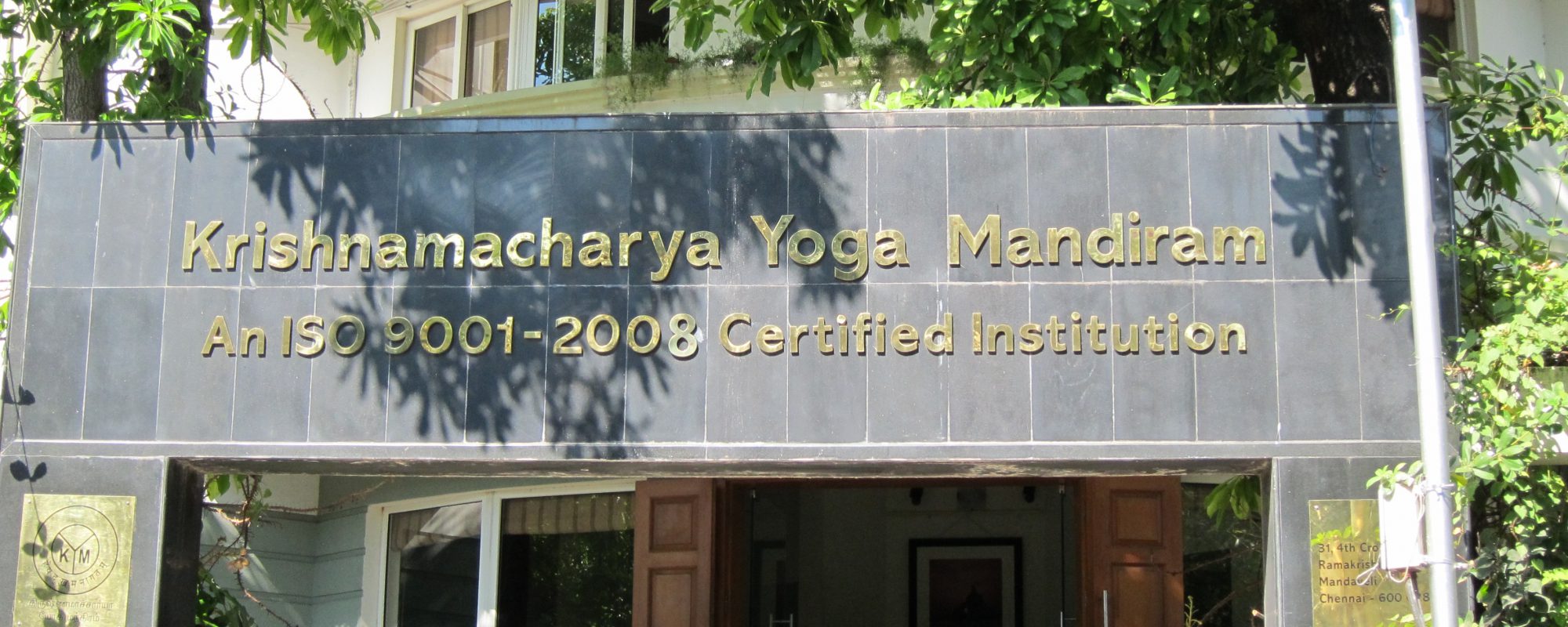
Ramaswami is the longest standing student of T. Krishnamacharya outside of Krishnamacharya’s immediate family. When I started studying with him, Ramaswami was not as well-known as Krishnamacharya’s other students, BKS Iyengar, Pattabhi Jois, and Desikachar, Krishnamacharya’s son. When I told people that I studied with Ramaswami they asked “who?”, but Ramaswami studied with Krishnamacharya longer than any of the Big Three. He was an original trustee of the Krishnmacharya Yoga Mandiram in Chennai, India where I have studied three times. It is certainly not the habit of American yoga students as it is in India to touch their teacher’s feet to show respect, but I would not hesitate, that is how much respect I have for Ramaswami-ji.

When I bought Ramaswami’s book The Complete Book of Vinyasa Yoga and got toward the end of the Acknowledgement, I began to cry because I saw my name. He mentioned me (and others) as “one of the teachers who has incorporated essentials of vinyasa krama into their teaching and practice even from Day 1.” I was stunned because I did not think he even knew my name. Now every year when he sees me he smiles and asks, “when are you going back to Madras?”, Madras being the old name for Chennai.

I give you the writing of a true yoga master and a true yogi.

Shanti.

The Three Gunas (Triguna) and the Four Human Goals (Purusharthas)

According to Yoga and other sibling philosophies, the entire universe is made of the three Gunas, Satwa, Rajas and Tamas, and these permeate everything (including all of us) everywhere in dominating everything in varying degrees. Due to the preponderance of one of these Gunas, in every individual, different human beings follow different goals. Even as everyone’s desire is to get happiness and get rid of unhappiness, each one, depending upon his or her guna temperament, pursues different means and goals (arthas) for one’s satisfaction or happiness. The three gunas are satwa, rajas and tamas. The four purushartas or human goals are dharma (order), artha (material possession), kama (sensual desires), and moksha (spiritual freedom.) A satwic person is inclined towards dharma, while the rajasic, tamasic and the one who is able to go beyond the influence of all the gunas (gunaateeta) are attracted respectively towards artha, kama and moksha. These four are called purusharthas or chatur-vidha-purushartha (four different human endeavors/goals.)

Persons whose personality is predominantly satwic follow ‘dharma’ as a goal of their lives for happiness. Dharma is the Law of Piety, Compassion, and orderly life. They follow the benevolent dictates of the scriptures, the laws of the land, leading a life consistent with the gods of nature. It is anathema for them to cross the Laws of Dharma. Such Dharmis are said to lead a very peaceful life here and hereafter, as they, who are said to be in a small minority, do and accumulate good karmas.

The Rajasic people are like the proverbial “A” type personalities. Highly energetic and mostly restless, they pursue very down to earth policies and follow the goal of artha or material possessions. More wealth and more power give them happiness and the means are less important than the goals. Only a few who follow this life-long pursuit of possessions and power ever succeed and sustain, leading to collective unhappiness of this lot. The happiness of the majority of them rises with the tide of increasing possessions and ebbs with the loss of wealth and power.

We have then the third group of people who are dominated by tamas. It is said Tamas, because it veils the intellect, makes such people short sighted. Their happiness lies in sensual gratification. Tasty food, frequent tactile stimulus, attractive visual objects and captivating sounds dominate their life. When the senses over a period of time lose their acuity, they have less room to be happy and fall into a state of depression as they get older.

Then there are the spiritual Yogis who relentlessly follow the path of spiritual wisdom and intuitively understand the nature of the ever present, nonchanging nature of their own Self and reach a state of Kaivalya or Moksha or spiritual Freedom. In that state, according to Yogis, the three Gunas reach a state of equilibrium. This, the yogis call a state of Nirodha of the mind, or a state the Lord in the Gita calls Gunateeta or beyond the dominance of the Gunas. This state leads to a permanent and irrevocable state of peace of mind and the yogis aver that it is superior to the other variable and unstable states of happiness; superior to that attained by sensual gratification of the tamasic personality or the happiness arising out of possessions of the Rajasic, or even the dharmic life of a Satwic person. Though the satwic state of happiness is superior to the other two, even that is said to be impermanent. Hence the Lord urges everyone, through His disciple Arjuna in the Gita, to go from Tamas to Rajas and then to Satwa and ultimately transcend all the Gunas. It is easier said then done.

But how is it done? Only Yoga comes with specific measures to change the individual personalities. One can transform a Tamasic mind to a Rajasic bent by practice of Pranayama, in addition to the observance of Yamaniyamas. The observance of a well designed practice of asanas will reduce the addictive influence of Rajas and hence a yogi who practices asana and pranayama will become more and more Satwic, thanks the reduction of Tamas and Rajas. And by spiritual meditation one will be able to transcend all the three Gunas.

So as Lord Krishna says, “Tatha yogi bhava Arjuna”, (Therefore become a Yogi). One should practice Yoga. You will agree?

Best New Year wishes,

Srivatsa Ramaswami

addthis_pub = ‘yogagal60510’;