smooth operator

He was a smooth operator the way he showed up just at the time I was going to leave to walk to the great temple.

Kannan told me that he speaks 5 or 6 languages and he has a sister in Germany, so he is smoother and savvier than most of the men of his type that I met. He is also married and has children, and acting as Rameswaram’s official unofficial tour guide is all he does. He has carved out a niche for himself, a good enough niche to be mentioned in the popular India travel guide, the Rough Guide.

I was exhausted by the time we got back from watching the children dance. Kannen and I had been out for about four hours, and this was after a day of traveling seven hours from Kodaikanal up in the Palani Hills to a place that was only five miles from Sri Lanka. We walked to the hotel’s restaurant and Kannen started to tell me about where we were going the next day, how much the bucket ceremony would cost me on the morning of the third day, how much I should pay the rickshaw driver he used, and all I heard yet again was how much money another Indian wanted from me.

So I did what I rarely do in front of anyone — I started to cry. If I was a child I would have been told that I was over-tired and cranky. I was almost shaking and I yelled at Kannen that I was not made of money, that despite the fact that I could afford to go to India, yoga teachers don’t make much money, that I was tired of Indians looking at me and seeing only dollar bills and I hated that. He looked shocked and hurt and his eyes got very wide. He put his hands to his ears, then to his forehead as if he had a headache, and started to shake his head and say “no no no no no no….”, a low murmur at first, then gradually louder. He looked like he was going to cry. Suddenly he put his hands on my cheeks, pulled me close, and kissed me. Not a passionate kiss, not even on the lips, but close enough. Remembering what I had been told about South Indian culture, and especially about Indian men, I stood there amazed. “Tomorrow,” was all he said.

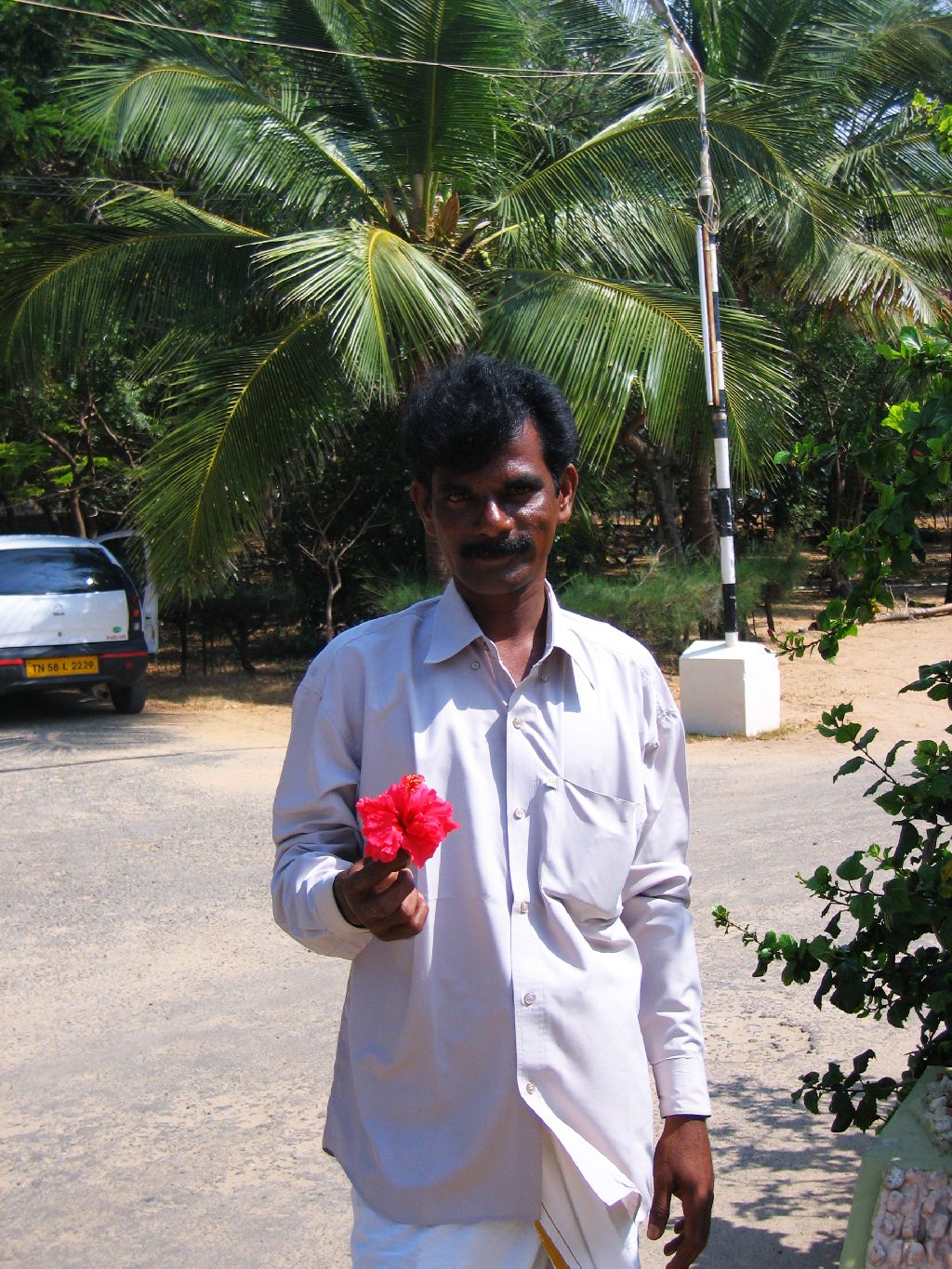
He smiled and said I should get some sleep because we had a long day tomorrow, walking the beach to Danushkodi. Still speechless I walked into the restaurant to relax, and ordered black tea, not chai. I wanted comfort from something familiar from home. I closed my eyes, started to take long, deep, calming breaths, and felt someone behind me. I did not turn around because I knew it was Kannen. I opened my eyes and his hand was in front of my face, holding some flowers. I slowly turned around, looked at him out of the corner of my eye, and half-smiled. “From the bush outside,” he said, “I could not leave you sad.”

Smooth.

buying your way toward enlightenment

Isn’t this great? I can’t wait to get my new VISA card that has an AUM or Buddha’s face on it!

I don’t know about anyone else, but when I saw an ad for this I let out a groan. Using Buddha or the AUM symbol to market something that is the epitome of a capitalist society just rubs me the wrong way. Sort of like when I see the images of Hindu gods and goddesses on underwear or see a cocktail called the “Buddha Bomb” on a menu — a tad distasteful to me, but maybe I’m just overly sensitive to things like that.

While I commend VISA for the concept of the card holders’ points going toward socially conscious projects such as Youth Aids or Rainforest Action Netork, there is also something about using these images to promote accumulating more unnecessary junk in our lives that is disingenuous to me.

To me, yoga and the spiritual path are about downsizing. Ridding our lives of clutter, both physical and emotional, in order to strip us down to our bare essence, to our True Nature. I know for myself that the longer I walk along the yoga path, the less I “need”. I may want things — who wouldn’t want a pair of $90 yoga pants with handpainted chakra symbols flowing down the legs? — but more times than not I ask myself, yeah, but do I really need them?

I could charge my next yoga retreat with this credit card, but when it comes right down to it, I don’t need a credit card with an AUM symbol on it to remind me to think globally and act locally.

A few weeks ago I taught a yoga class as a benefit for a local domestic violence shelter. I had a donation box set out in the yoga studio where I teach for about two weeks before the fundraiser. I raised a lot money, but I found it amusing when a student wrote a check for $120 for a class pass, and then could not even put $1 into the donation box. That’s OK — maybe she was still paying off her credit card bill that included those chakra pants, with the matching $150 Swarovski crystal sacred energy Shakti necklace, and the $80 eco-yoga mat that she carried in the $200 real leather yoga mat bag. Later I saw the same student buying a $4 cup of coffee at the Starbucks down the street.

Hmmmm…I wonder if she used that AUM card to charge that latte?

Lindia’s India

“There is a fundamental difference between a tourist and a traveler. One of my favorite travel writers, my friend Rolf Potts, said, “Tourists leave home to escape the world, while travelers leave home to experience it.” Many people who think they are travelers really are no such thing – they might travel the world but they experience very little. The beauty of real travel is that everything is new, nothing is familiar – the people, the landscapes, the language, the culture, the food – the way of life as a whole. And true travelers embrace it all, taking off their personal blinders of habit, experience, bias, perspective and expectations to fully embrace this different new world they joyously find themselves in.”

So Shelley Seale writes in her post entitled “A Traveler in India” from the awesome Weight of Silence blog that I discovered today. I could not agree more. Some of you may have read my very first post in this blog about how when I was planning my first trip to India I endured a lot of what I call FearTalk from many people. FearTalk about India, about what might happen to me — FearTalk because most people, I believe, live their lives in fear. I listened politely but in my mind my hands were up to my ears and I kept repeating my mantra of “la la la la la la la la…..” I ignored their noise and booked my flights anyway.

I am currently planning my third trip to India for the end of this year and into 2008, for a mere three weeks. I am finding this trip harder to plan than my first two and I was not sure exactly why until I read the above quote — because I want to EXPERIENCE so much and I won’t have enough time. This woman of a certain age realizes that I have less years ahead of me than I have behind me, and I look at India as an endless buffet laid out before me where I won’t be satisfied until I gorge myself completely. I want to experience every morsel, the sweet and the sour, the delicious, and even what needs to be spit out immediately. I have two more trips to different parts of India percolating in the back of my mind to be taken within the next five years or so. I know in my bones that a time will come when I will have to take six months off to travel India. Six months will be a good start. My gal pal in India, sirensongs, says, “Why do people go to India to find themselves? India is where you go to lose yourself.” Why, indeed?

I have a friend who now calls me Lindia…I love the way my name combined with India rolls so easily off the tongue.

I heart Rameswaram

I arrived in Rameswaram about 3 pm on a Saturday after a 7 hour car ride from Kodaikanal. The ride was interesting as I watched India flash by. . .being caught in a “cattle crossing”, eating lunch for 10 rupees at a tiny restaurant in the middle of nowhere where the proprietor took me in his kitchen to show me what he was cooking since he did not speak English. I can’t remember what it was called, all I remember is that it was delicious. I was famished and scarfed it down as all four people in the restaurant stood around my table with big smiles and watched me eat.

Got to the Hotel Tamil Nadu in Rameswaram, showered, and took a nap. Woke up about 5 pm and was going to walk to the temple and find dinner somewhere. The phone rang — being alone in India, getting a call in my hotel room was shocking — and a man told me “if you want to see the temple, I can take you.” Still groggy from my nap, I thought how did he know that’s what I’m going to do? I babbled something like who are you, who’s calling, where are you, what….? The man said he was downstairs at the desk, and I said, yeah, whatever, and hung up.

I got downstairs, still trying to wake up, and there was the clerk behind the desk and another man waiting, as if just for me. I had my torn out page from the Rough Guide that said “R. Kannen, who can also be contacted through the Hotel Tamil Nadu, happily gives foreigners advice, even if they do not use his services.” I asked the hotel clerk if he knew R. Kannen, and he pointed to the man who appeared to be waiting for me and said, “this is Kannen”. Wow. He materialized out of nowhere. But how did he know exactly what time I was going to leave? Ah…delicious serendipity. No….most likely he got the call, “foreigner in da house, come on over!” I stood there, thinking go with the flow, whatever happens tonight, happens…

As it turned out, I spent about 4 hours with Kannen that night. We went to the Gandhamadana Parvatam, where I took pictures of a beautful sunset, and to the Nambunayagi Amman Kali Temple, where I saw a man with a pet egret, and sat with him as he fed it worms he dug for in the sand. Kannen and I planned my weekend all within one hour — I was to spend it with him.

As we were driving back, Kannen asked me if I wanted to see the children dance — of course I did! We stopped at what looked like a school, the yard filled to the brim with people — local business people, politicians, parents, and children. The little girls were dressed in their beautiful South Indian dance attire, their hair and makeup perfect. One little girl was so beautiful I wanted to take her picture, but there were so many people, I got pushed along with the crowd. We ended up at the back of a long, narrow lot.

So many people, and me, the only westerner, once again. But the difference between where I was now and where I had been in the morning, Kodaikanal, was amazing. The energy, the attitude, the graciousness, was totally different from Kodaikanal. I did not feel claustrophobic here, even in this crowd of people.

We sat down and after a number of speeches, the show began. Little girls and boys dancing beautifully, carefully, with a few missteps that added to the charm, music that blasted my ears. Unfortunately I was sitting too far back to take any decent pictures. Then one group of kids dressed in street clothes started dancing to music I recognized from a Vijay movie. The only Vijay movies I had seen were on the Lufthansa flights from Germany to Chennai, but I know who Vijay is — a very popular Tamil actor. You’ve heard of Bollywood? Tamil movies are Tollywood with their own set of popular stars.

There was a group of boys sitting behind me and as soon as the Vijay music started, they got up on their chairs, and started clapping and dancing, hooting and hollering. I got up and started to take pictures. Of course that started a riot! “Madam, Madam, take me, take me!” I yelled “dance like Vijay!”, and put my hand to my forehead in the gesture Vijay uses in his movies. All their eyes got wide and suddenly I was in the midst of hip shaking, pelvic thrusting Vijays. It could not have been choregraphed any better. As soon as I took a picture, they all ran over to me wanting to see it, then ran back to start dancing again. I loved it. Kodaikanal was already a distant memory. The people in the immediate area weren’t watching the stage anymore, they were watching all this commotion and laughing.

We all sat down again to watch the show, and by this time of night, I was exhausted. Kannen asked me if I was OK, and I said we should go back, since I was dead on my feet, and we had an early morning walk to Danushkodi the next day. We started walking toward the front, but people were sitting on the ground, shoulder to shoulder. It was packed and not an inch of space between them. There was no way we could walk out through the front without doing major damage to someone’s hand or foot on the ground. It was also hard to see because it was pitch black with only the lights on the stage.

We turned around and Kannen asked “can you jump?” “Jump?” “Yes, climb and jump,” and he pointed to the brick wall topped with three strands of barbed wire that was our enclosure. “Sure, why not, what choice do we have?”

Kannen jumped over the wall and I threw him my camera. The wall was about four feet high, barbed wire on top. This woman of a certain age is very flexible so I put one foot on top of the wall. Suddenly I heard a low “ooooohhhhh” coming from all the young Vijays. I grabbed a corner pole as I pulled myself up and put the other foot on top of the wall, straddling the barbed wire. A louder “ooooooohhhhh” now, mass rumbling coming from the Vijays. Louder and louder whispers in Tamil. Now how often do these boys see an American woman straddling barbed wire on top of a brick wall? Making sure my salwar would not catch on the barbed wire, remembering that I had my tetanus shot, and hoping that I would not land in a big pile of whatever, I lept over and landed on my feet in a beautiful squat on the other side.

The young Vijays exploded! Laughing, clapping, cheering me on, fists pumping in the air yelling “Yes, madam!”, as the music blared and the little girls danced on stage, furious swirls of rainbow colors.

I turned around, curtsied, and ran into the Rameswaram night.
kodaikanal, part 2


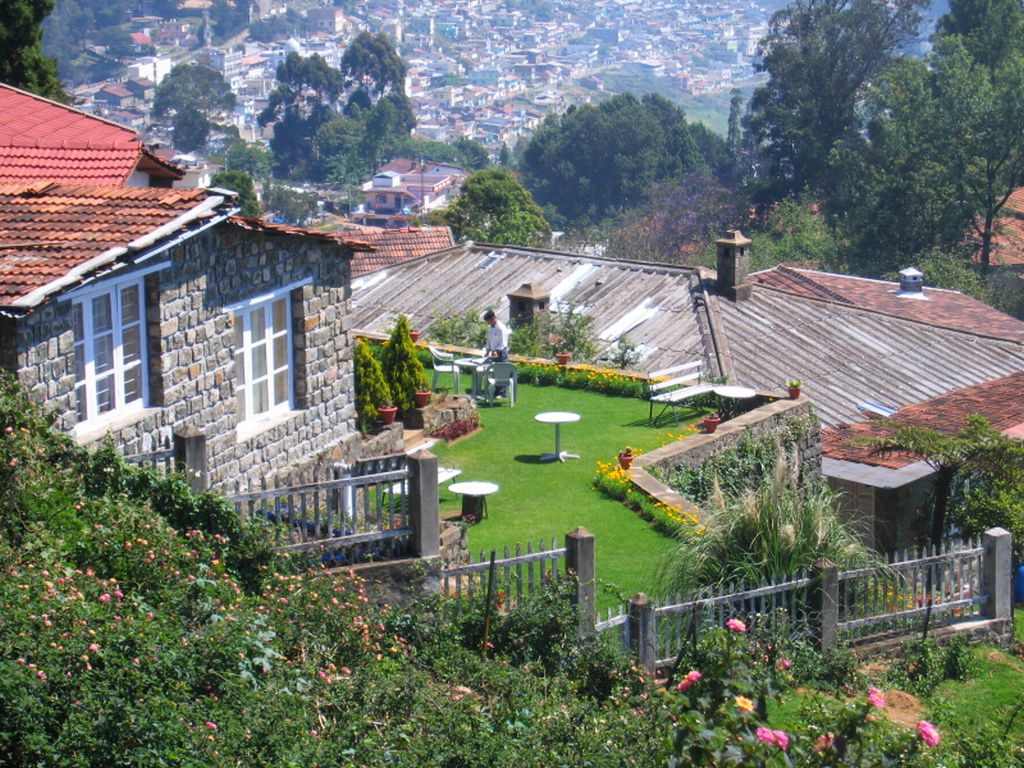
View from Coaker’s Walk

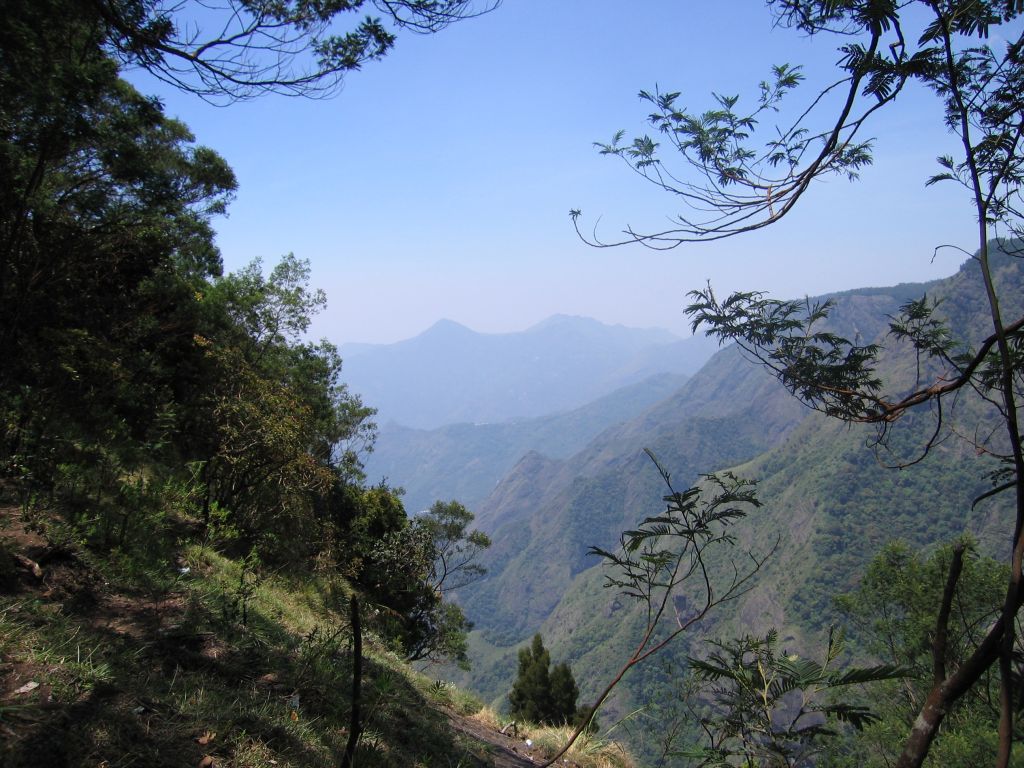
Palani Hills

I hired a car to tour the local sights on my second day in Kodai. I can’t remember the names of where we drove, but most of the spots would be called “scenic overlooks” or “nature viewing areas” here in the US – and also one golf course, where the only golfers I saw were the monkeys cavorting on the greens. I thought it was interesting that a golf course would be a feature included in a sightseeing tour. At least I was impressed with how lush the grass looked and they probably did not douse it with lawn chemicals like in the US. Unfortunately this little sight-seeing expedition was where I experienced my first taste of Indian nastiness.

The driver dropped me off at Coaker’s Walk, a path that winds up and around a hill where on a clear day you can see all the way to Madurai. My driver said he would meet me on the other end. It was a beautiful day and I started walking slowly, enjoying the views, stopping to take pictures. The view was fabulous and the air smelled fresh and green, really the first time I smelled “green” in the air in India. Couples and families were walking around, and as usual, I was the only westerner. About half way through my walk, two youngish couples walked toward me, they were maybe mid to late 20s. They slowed down, stared at me, then pointed and started to laugh – at me. I stopped and looked behind me, thinking someone behind me was acting goofy. It never dawned on me that I was the one they were laughing at. It wasn’t just a guffaw or two, it was a steady stream of laughter and talk amongst themselves.

I knew that Indians stared at foreigners especially ones dressed like a “typical tourist” (imagine a man with snow white legs sticking out of khaki shorts wearing white socks with sandals or a woman wearing tight, revealing clothes), but I was wearing loose cargo pants with a traditional kurti, nothing strange about my clothes at all, I wasn’t showing any ankle or shoulder. At first I thought the way these people were acting was strange, then my blood began to boil. I walked past them, then turned around and confronted them. If you ever saw the movie Taxi Driver, I did a Travis Bickle. I yelled, “You talking to me? I said, ARE YOU TALKING TO ME?” They stopped pointing and laughing and just stared. “What’s your problem? You got a problem? The hell you looking at? Why don’t you take a picture? You want a picture? Here I am!”, I continued to yell non-stop. They turned around and walked away, probably grimacing when my south side Chicago accent hit their ears. I truly hoped they thought I was a crazy American woman and would tell all their friends about me.

My equanimity immediately flew out the window which told me how much farther I have to go on the Path. Calm down, I told myself, but I was almost in a rage because I could not believe people could be so cruel and ignorant for no reason. How dare they. What the hell did I do to deserve that treatment and who the hell did they think they were? In my old neighborhood on the south side of Chicago their behavior would have gotten them a rightous ass-kicking, including the women. The same IndiaMiker who told me about the Kodai tribals told me that “Kodai gets a lot of young tourists, who now have lots of money and lots of confidence. I imagine that the people who were rude to you were the young smug newcomers to India’s middle class–software, call center types, trying to impress their girlfriends/wives. Rather like the jaded Upper West Siders of New York sneering at the tourists in Times Square.”

Their actions (well…my reactions to their actions) totally put me off the rest of my walk and when I got back to the car I took it out on my driver. I asked him if it was common for Kodai Indians to treat tourists like I was just treated. I asked him if people here were always so mean. “What’s wrong with you people?”, I asked him. He acted like he did not understand me, but I knew he did, and we drove to the next stop.

I started feeling better when we drove to waterfalls and into some pine forests. Nature has always been my church and sanctuary. I’ve hiked the Rocky Mountains in Colorado and the Sangre de Cristo Mountains in New Mexico, canoed in northern Minnesota. But when I got out of the car and started walking with other tourists in these natural areas, I was struck by how the Indians treated these areas as if they were in an amusement park. These were the most pristine areas I had seen during my India trips, but the ground was littered with empty film canisters, film boxes, and other non-biodegradable trash. I didn’t understand it at all. These hills were beautiful, but there was no awareness or care whatsoever.

We drove to another overlook where there were lots of monkeys and lots of people because tour buses were dropping off their passengers. The monkeys – well-trained to get close because people would throw them whatever food they had – were running all over, but as soon as they got close, someone would throw a rock and then run away – yeah, real macho guys. I almost got knocked over some boulders by idiots throwing rocks at the monkeys and then running away from them. The women would also run away from the monkeys, screaming. What was wrong with these people, why don’t they shut up and enjoy the view, why are they hassling monkeys? The eyes of the monkey in my photo in the previous post say it all. I would try to take a close-up picture of a monkey and some moron would walk in front of me, totally clueless. I finally got so sick of what was going on around me, I sat on a rock and started to egg the monkeys on, out loud – “go ahead, get him; go ahead, bite him, bite his hand”. I knew that some people could understand English and I didn’t care. I was hoping that a monkey would get really pissed about getting hit with a rock and just go ape shit on somebody (sorry, just had to say that.) I was out of there – the whole day made me wonder why I ever wanted to go to Kodaikanal. There was nothing here for me, and my claustrophobia crept in again. It was the first time that I truly felt alone in India.

There were a few more stops and the driver left me at the hotel. I beat myself up for not going to Palani instead to visit the great Murugan temple. I spent the evening wandering around Kodai, eating Tibetan food, drinking chai, going into all the stores. I slowly walked the 3k around the lake back to the hotel. I could not wait to get out of Kodai.

Early the next day I left for Rameswaram, where I would lose my heart to India all over again.

kodaikanal, part 1

two of the friendlier citizens of Kodaikanal…

I arrived in Kodaikanal and the bus dropped me off in the middle of town. My two old Brahmin friends who discussed yoga philosophy with me bowed their heads and placed their hands in anjali mudra and told me that these “two old jivans” (jivan is a living being – the individual soul which in essence is one with the Universal Soul) were honored to sit next to me and they hoped I would be blessed for the remainder of my trip.

One of the scenarios the old jivan presented to me was this: he looked out the window and waved his hand at the poor people along the way. He said, “what do you think, madam? Why is one man born a king and the other born a beggar? Is that not fate?” I shrugged and said that karma is not fate, it is cause and effect, that karma is karma, no more, no less. I told him that the beggar could very well have been a king in a previous life, and because of his past actions was reborn a beggar, maybe because he treated beggars very poorly when he was a king. A man sitting in front of us turned around and said loudly, “She is right! Karma is karma!”, then said nothing more for the rest of the trip. I smiled because I loved these little Indian vignettes. The two old jivans laughed and discussed karma between themselves, maybe discussing how it was their karma to sit next to an American woman of a certain age who was dressed like an old hippie chick and who was reading an Indian book on meditation.

I was in Kodai only for two nights and I admit that maybe this was too short a time to form a proper opinion. But as of right now, I would not return to Kodai, at least as a solo traveler. I believe Kodai is best visited with other people, unlike the other cities I visited. Despite the beauty of the surroundings compared to the dry Tamil Nadu I was accustomed to, I felt claustrophobic in Kodai, I felt trapped. This was the first city where I felt bored and antsy. One thing that was remarkably different was that I was never besieged by touts or beggars in Kodai – that was a refreshing change! It was interesting how I was in a relatively clean, quiet town with the least amount of people so far, not hassled by touts or beggars, but I felt uncomfortable, and I did not feel that way in maddening Madurai or busy Chennai…maybe it was a past life thing….

The place where I stayed was considered a “resort” and was more for tourist groups or for families. Kodai is known for hiking trails, but I knew I would not feel safe hiking in the hills alone, as I did in the US. The center of town is small and there’s not much to do or see. The connections at the two internet cafes were exceedingly slow. Walking around town I found an ayurvedic store and made an appointment for another ayurvedic massage, hoping it would as wonderful as the one I had in Chennai. I thought it might even be better since the store was run by an ashram – they had a convincing brochure about their services but I should have relied on the old adage about not judging the book by its cover.

When I arrived for my massage, I was taken into the basement of a nearby hotel and was shocked. The basement was cold, damp, and scary, and it really looked like…an unfinished basement. I was taken into a small, dark room that was literally freezing, the first time I had ever felt that sensation in India. I looked around, disgusted. The “masseuse” put an old, ratty towel on the table that was a duplicate version of the one in Chennai, like a doctor’s exam table from the 1950s. Only this time the towel was greasy looking. No way was I going to go through with this massage. This room looked like the photos I remember pre-Roe v. Wade of where a back-alley abortionist would meet his customers.

I told the woman who brought me that the room was disgusting and cold. She turned on a heater that looked like it couldn’t heat up a closet much less a room, and she changed the towel to one that had smaller grease stains. I shook my head and told her in no uncertain terms that I wanted my deposit back NOW. She shrugged, didn’t try to argue, said no problem, and I left. So much for my wonderful ayurvedic massage.

Walking around town introduced me to Tibetans for the first time. The ones I met were open and friendly, very different from the Indians I experienced in Kodai. I found a wonderful Tibetan restaurant where I would hang out enjoying the “warmth”, and I’m not talking about the temperature. Fabulous steamed momos and an awesome soup that was so thick I ate it with a fork, all for less than $1.

As for the general atmosphere of Kodai, I felt an underlying tension, an almost imperceptible violence that was waiting to explode. This was a feeling that I never felt before in my travels and I’m a good one for picking up the “energies” of a place.

An IndiaMiker told me this when I told him my feelings about being in Kodai:

“Most of those people selling fruit and trinkets to tourists in Kodai are tribals. The only other source of employment in the area is the coffee and tea plantations, and the contracts are usually indenture. So they are bonded laborers who try to scrape together a little cash when they aren’t picking leaves or beans–it’s either that or starve. They live with all the caste discrimination and violence you would expect. They’re even included in Human Rights Watch reports. It’s genuinely cold in winter, at which time it also get the monsoon. Roads wash out. Living in a thatched shack isn’t easy.

There are also plenty of monied interests–hotels, property development and luxury real estate, the plantation owners, etc.–that keep a firm hand on Kodai with bribes, violence, and other incentives. The place is really a cesspool of corruption and environmental waste, with the people at the bottom little better than slaves…”

And here I was…

for your consideration: Tibet


I’ll take a break from my India travelog and give you a little heads up about Tibet.

I’ve always had a BA – Buddhist Attitude – but it hasn’t been until the last few years when someone asks “what are you?” that I do not hesitate to say “Buddhist”. My dharma name is Sama (meaning “harmony”, and the hard part is living up to that ideal), that I received when I participated in my Five Precepts Ceremony — or as my husband called it, my Buddhist confirmation. Back in the day I read many books on the Eastern wisdom traditions, but it was not until I dove deeper into Tibetan Buddhism and wrapped the teachings around me like a cozy shawl that I felt comfortable. For some reason Tibetan Buddhism resonated with me more than any other form, such as Zen for example, and I don’t try to analyze why, because what’s the point? It just is. After all these years I finally found my spiritual teacher in Gehlek Rimpoche. I would give up all my future yoga trainings to study with him, no second thoughts, no hesitation. I also have fourth row seats when HH the Dalai Lama comes to Madison, Wisconsin to give his teachings and empowerment — sweet! By the way, the Dalai Lama is not allowed into Kenya or Cambodia, just so ya know…

Gehlek Rimpoche grew up in one of the most upper-crust families in Tibet, being the grand-nephew of the 13th Dalai Lama. At the age of four he was recognized as the reincarnation of an important lama, so he was taken from his comfortable life to the harsh life of training as an incarnate lama. The Communist Chinese invaded Tibet in 1950 and finally overran Lhasa in 1959. During those years hundreds of thousands of Tibetans were killed, imprisoned, and tortured, and monasteries were destroyed. Rimpoche lost his family, his teachers, his society, his country. His stories about his escape from Tibet are powerful lessons on impermanence and suffering, on how our lives can change in the blink of an eye or at the end of a gun.

At his last workshop he spoke about standing chest deep in a freezing swamp all night long, holding hands with the other Tibetans who escaped with him. He pointed to a man sitting in the back row and said that when they escaped, that man was a baby on his mother’s back on that dark night in the swamp, hiding from the Chinese invaders. His group eventually crossed the Himalayas into India, escaping the bullets of the Chinese planes that were strafing them. Rimpoche painted a potent image with his words.

The Chinese are still in Tibet, and many more have come since 1959. The US has never sent troops into Tibet to save anyone as we “saved” the Iraqis from Saddam. Rimpoche told us how when he took a group with him to visit Tibet last year, they could only visit the monastaries – the few that the Chinese left standing – in the morning because the afternoons are dedicated to the “re-education” of the monks – in other words, listening to Chinese propaganda. He told us how the monks accept what is, because no matter how much propaganda they listen to, the Chinese can’t really change what is in a monk’s mind or heart. What is the Chinese word for “blah blah blah”? If you look over at the global meter at how many visitors from different countries have viewed this blog, you will see that China is number 3. Maybe one of those visitors can tell us….

As my Buddhism deepened, I began to really notice how much of what we buy here says “made in China.” Almost everything. I am one of those weirdos who reads every label on everything I buy, and it just doesn’t feel right to me to buy Chinese, but it’s very difficult to find something that doesn’t have a Chinese label. It’s my own little one person boycott, but change starts with one person. Yeah, I’m just an old hippie who still believes that if you’re not part of the solution, you’re part of the problem, so go ahead, call me stupid, I don’t care…but maybe you might want to start noticing, too.

I know more than a few people who have visited China. When they hear I’ve been to India, they tell me that they’ve been to China or that they are planning a trip to China. I know that one can’t blame the people of a country for what their government does – I heard plenty of Bush-bashing in India and felt compelled to tell people “but I didn’t vote for him, twice! You can’t blame me!!” – but something in me just wants to tell them please don’t go, can I tell you about Tibet?

You don’t have to believe me…you can read this story, The End of Tibet, from Rolling Stone magazine. The opening sentences describe a young woman who is a former Buddhist nun, as she vomits blood in a concrete room that smells of urine. She’s recovering from an operation on her stomach, an operation to repair the injuries inflicted on her by her Chinese guards.

Rimpoche told us about a monk he knows who was imprisoned and tortured, but is now free. He said he asked him if he was ever afraid. Yes, the monk told him, he was afraid. But not afraid of his captors or the tortures they put him through, after all, the body is impermanent…he was afraid that he would develop hatred for them.

Click the links that I have provided for the Tibet news forum and the International Campaign for Tibet. And think about where your next T-shirt comes from.

om mani pedme hum

may all beings be free from suffering

on to Kodaikanal

I moved on to Kodaikanal after Madurai. Perched atop the Palani range, about 120km from Madurai, Kodaikanal is what is called a “hill station” surrounded by temperate forests of pines and deciduous trees. Kodai’s wooded – and not so wooded anymore – slopes contain waterfalls and rocky outcroppings. According to the Lonely Planet travel guide, it’s the only hill station in India that was established by American missionaries. I had read about the greenery, the different climate, the different geography, and I was looking forward to a change of scenery from the dry, dusty Tamil Nadu I had become accustomed to.

The bus ride itself was once again an adventure. I got on and the few seats left were in the back, along the long row. I have long legs and did not want to spend hours with my knees up around my chin sitting behind one of the back seats, so I parked myself right in the middle of the long seat, my legs out in the aisle. We picked up more people and two older men came toward me, I could tell they expected me to move over to the window. Not a chance. They shrugged and proceeded to squeeze past me. One sat next to the window, the other was trying to squeeze in next to me, on my left, next to his friend. He had a hard time doing so because the person next to me on my right wouldn’t budge. I got up a little, and as the man was squeezing in between me and his friend, I pushed him in next to me, like shoving someone through a door. “Thank you, madam!”, he said with a big smile.

Within 15 minutes they start talking to me, the first question always being “what country, madam?” and then “what job, madam?”. “America.” “Yoga teacher.” The man next to me translated that for his friend next to the window. Big smiles all around. “We also do yoga, every day,” and my friend told me that just that morning he had done headstand AND shoulderstand. These men appeared to be in their 60s, by the way…. They also made sure to tell me that they were Brahmins, the highest caste. I found it interesting, that people, always men I realized, would tell me that.

Then my friend told me that his friend (the one next to the window) has a brother living in the ashram of Swami Nirgunananda in Chandigarh, which is close to Delhi. Before I know it, an address book is pulled out, and I have the Swami’s cell phone number! Outstanding! Life is all about the connections we make…seems so especially in India. You can bet that I have that scrap of paper with the Swami’s phone number tucked away in a safe place. I googled his name, and to my relief, not much came up, which to me means he’s the real deal. That tells me he’s not a show biz guru or rock ‘n roll yogi. Another time, another trip, I have the rest of my life….

We settled in for the three hour bus ride to Kodai. I pulled out a book I had bought at the Ramakrishna Math in Chennai, Meditation According To Yoga Vedanta. After a while, my friend next to me saw the book and asked to look at it. He showed it to his friend. I never got to read another page because for the next two hours, I was grilled like a school girl before her school masters…

what about me, what about you?

What about me?

Don’t we go through our days with that mantra constantly playing in our head? We’re stuck in a line…hey, what about me?!? The kid at Starbucks messes up our order…hey, what about me?!? I wanted a DOUBLE SHOT, you idiot! We’ve been sitting in the doctor’s waiting area for 45 minutes and a mom runs in with a screaming two year old with a peanut stuck up his nose…hey, what about me?!? We’re stuck in a traffic jam…hey, what about me?!?

“We are all on this planet together. We are all brothers and sisters with the same physical and mental faculties, the same problems, the same needs. We must all contribute to the fulfillment of the human potential and the improvement of the quality of life as much as we are able. Mankind is crying out for help. Ours is a desperate time. Those who have something to offer should come forward. Now is the time.” HH Dalai Lama

What about us?

Mipham records albums, runs marathons and oh yeah….just happens to be a Tibetan Buddhist Lama. He is the dharma heir of his father, Chögyam Trungpa Rinpoche, who was instrumental in bringing Buddhism and Shambhala to the West.

The Shambhala tradition believes in the inherent wisdom, compassion, and courage of all beings. It holds that these qualities are ultimately more stable than aggression and greed, and shows us how to use this worldly life as a means to ripen our spiritual potential.

become a spiritual warrior….

om muruga, goodbye madurai

The last stop on the Madurai tour was the Thirupparamkunram Murugan temple, about five miles outside of Madurai. Unfortunately this was much later at night when everyone was tired, hungry, and complaining. Most of the people did not even get off the bus to walk to the temple.

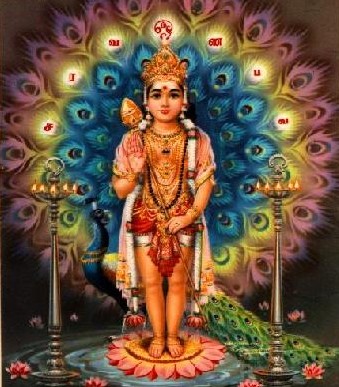
The temple would have been the highlight of my day had it not been the last stop because it is a very important temple, one of the six abodes of Lord Muruga, an important South Indian Tamil god. Many people in the west are familiar with Ganesha, the god with the elephant head who is the son of Shiva and Parvati, but few know that Muruga is his brother. His temple is huge, carved in rock, and it is where Muruga married Deivanai, the divine daughter of Indra. In the main shrine, besides Muruga, the murthis of Shiva, Vishnu, Ganesha, and Durga are housed. There was no way I could have explored it in the time that was alloted to us, so I had to be satisfied with a quick walk-through. This made me a bit sad because for reasons having to do with someone in my life, I had promised myself that on this trip I would spend time at an important Murugan temple, maybe go to Palani, a town near Kodaikanal. I realized that instead of the bus tour, I should have hired a driver and gone out by myself to spend the better part of a day here. I should have planned my last day more carefully, but I was tired and wanted to rest my brain and leave the planning to someone else, even if it was a bus driver who did not speak English. Oh well…go with the flow, there will be a next time….

Less than 30 minutes was not enough time to explore this temple, so we piled back on the bus and headed back to Madurai, everyone quiet now for the ride home. Despite the heat, the dust, the migraine, the incessant touts that I experienced over these last few days, I again felt at peace here on a bus with strangers in a strange city in a strange land, and I almost fell completely asleep, dozing in and out of yogini dreams.

I woke up to people yelling. We were back in Madurai and people were yelling at the driver again. Apparently he wasn’t dropping people off at their hotels, he was dropping people off wherever he felt like it. It was late, and the streets were crowded with people walking to the Meenakshi Temple so the bus driver had trouble getting through the streets. I watched everything with detachment, as I usually did, a half smile on my face — watching group dynamics and mentally placing bets on who would win, on what the outcome would be.

Every few blocks he would kick people off the bus, and the people would complain as they tried to get autorickshaws to pick them up. Finally it came down to me and an older couple. I started to get off the bus and the husband started arguing with the driver. I assumed he was complaining about not being taken to their hotel, being dropped off in the middle of the street. They got in each others’ faces with much hand waving and head wobbling. It was just another Indian adventure for me. The husband finally got off the bus, the bus left, and the three of us stood in the middle of the street. Suddenly they start speaking to me, perfect English, complaining about the bus and driver. How funny, I thought, that they never said a word to me all the day, yet we had sat across the aisle from each other.

As we commiserated about the driver’s rudeness, the wife gave me their business card. They were from Andra Pradesh, a state north of Tamil Nadu. She was an artist, he ran some type of nature preserve. Two people whom I would haved loved to talk to during the day about two of my favorite subjects, art and nature. They told me to come for a visit…maybe one day…it is these chance encounters with people that I treasure the most from my trips.

They asked if I wanted to share a rickshaw with them, but we were going in opposite directions. I got back to my hotel and spent the rest of the evening in the roof-top restaurant, looking out over the temple complex, digesting not only my dinner, but also what India had taught me so far….more patience, being more present, and detaching from the outcome. Anyone on the yoga path knows that these are qualities that sink a little bit deeper into the consciousness the longer one does the work. But somehow, being here, my heart could open more fully, just as a lotus rises out of the mud and into the light.

Goodbye Madurai, hello Kodaikanal. Om Muruga…lead me from the darkness and into the light….