UPDATE: who wants to go to India?

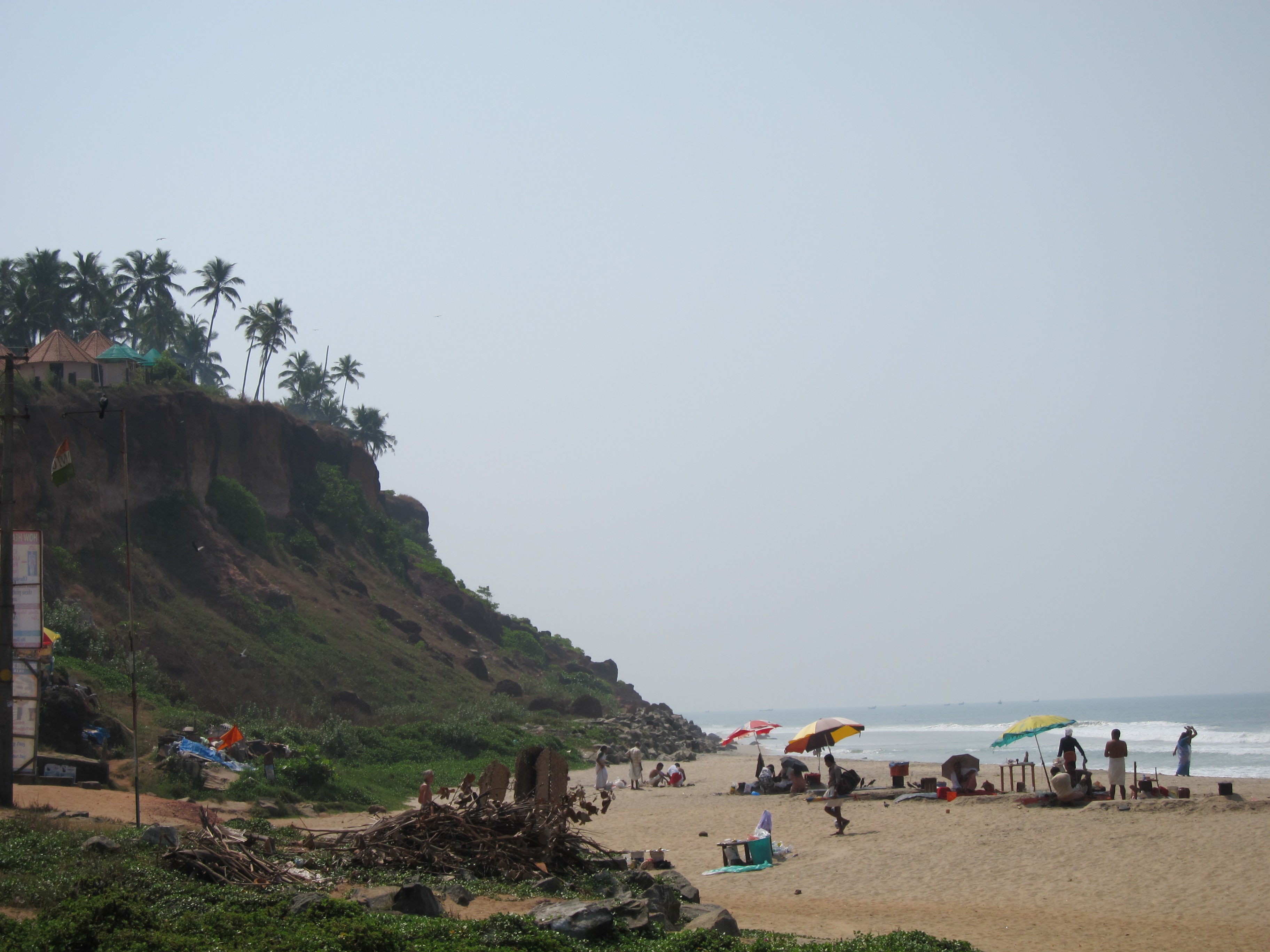
looking toward south cliff, Varkala, Kerala
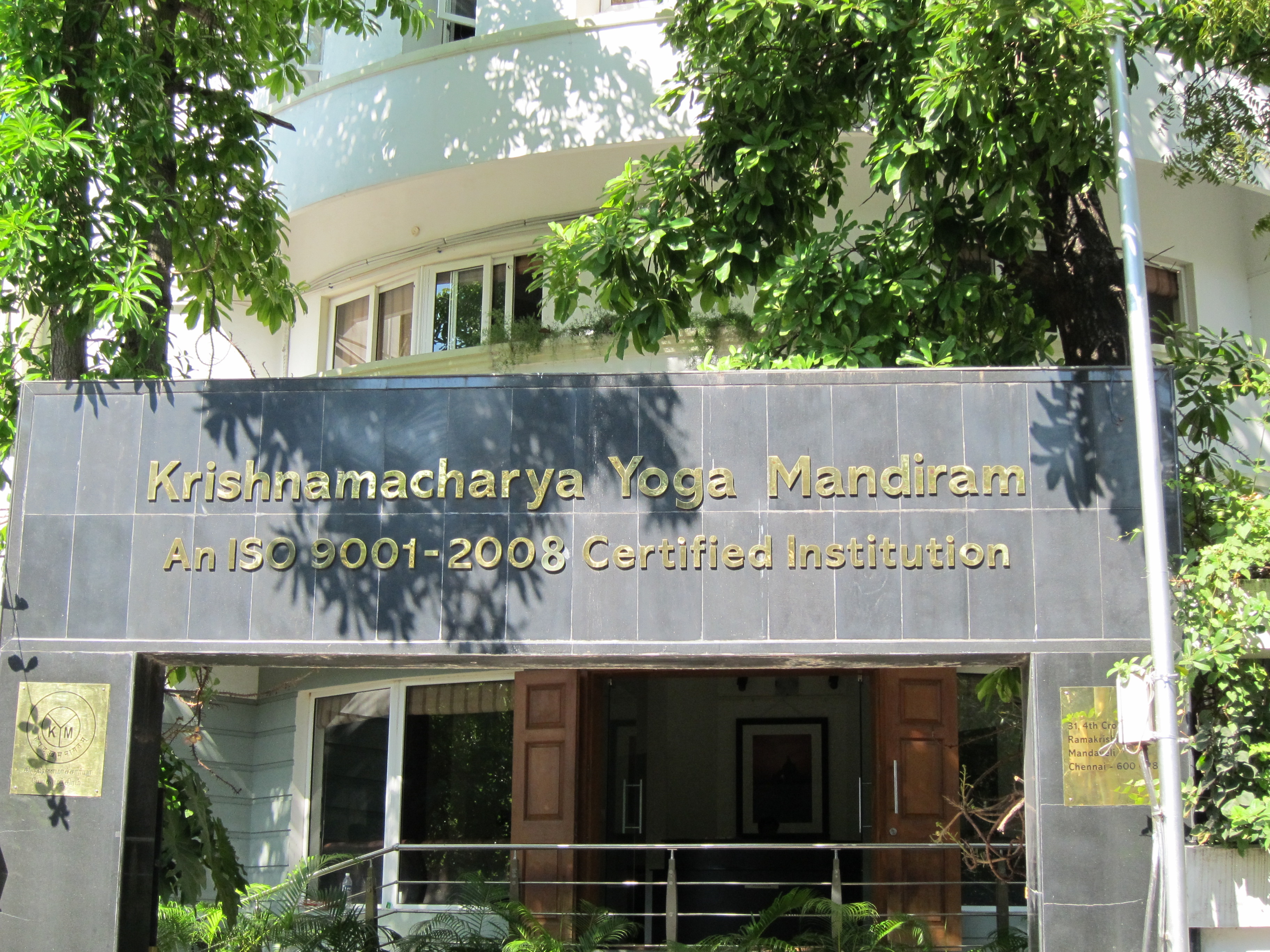
the Heart of Yoga, Chennai

That’s a serious question.

Long time readers know that I started studying at the Krishnamacharya Yoga Mandiram in 2005.  I thought back then that I would never return to KYM or to India, I thought it was a one-time thing.  Little did I know that I would return to KYM only 6 months later in 2006 and that I would be blessed enough to return there yearly.   Who knew what a grip India would have on my heart?  Who knew that the longer I study in this lineage the more I know that I can study here the rest of my life?  It is an honor and a responsibility to be a representative of this lineage.

The senior teachers know me by name now.  When I walked into the building on the first day of training this year I was greeted like an old friend and it did my heart good.   The intensive, “Discover Yoga Anatomy”, was amazing.  It truly was an advanced training, beyond asana, on a deeper level.  Although the teachers have studied with Desikachar for years and years, they are still students of yoga.  One of my favorite teachers said she is still learning, that they learn from us and from each other.  They are humble.  One touches the feet of Krishnamacharya in his photo portrait that is the classroom.  They are not afraid to use the word “guru.”

I have scheduled the week of March 11-15, 2013 for taking a group for private classes.  I have scheduled an asana class; theory and practice of pranayama; chanting; meditation; class on the Sutras; and an introductory class on the Bhagavad Gita, 6 classes daily for five days.   The classes will be geared toward the students’  yoga experience.  When I was there an American yoga teacher had brought 18 people with her.  My group will be limited to 12, and I need a minimum of 6 people for the trip to happen.

After that week, I will lead a yin-yang yoga retreat March 16-24 in Varkala, Kerala.  In between my trainings, before I went to KYM, I spent 15 days in Varkala, a place where I had never been.   In fact, I spent 10 days, returned to Chennai, and then flew back to Varkala because I missed the vibe and the friends I had made so much.  They did not want me to leave.

Varkala has a chill vibe, as people there say, and I thought I would be put off by all the westerners.  I must say I had some culture shock when I arrived because I had never been with so many westerners before in my travels (apart from KYM.)  But I grew to love it.  The place is a mix of backpackers, package tourist groups, retirees, old hippies, young hippies, and families with children.  It’s easy.  Real easy.  And it would be a great place to chill after the cacophony of Chennai.  Besides which, ladies, you can get some great yoga pants made for about $10 by the tailors on the clifftop, pants that sell in the US for 7 times the price — I had 4 made.

The retreat — where I will teach one class in the morning — will be here.  I have already booked all the cottages facing the pool.  Double occupancy only so bring a friend!

I had energy work done by an amazing energy worker so a session with her and a dinner party in her garden on our last night are included in the price.  Ayurvedic consulations are available as well.  I had a back issue for five years (thanks to being Miss Gumby all my life) and after doing the yoga therapy practice every day that I learned in my first training and having medical ayurvedic treatments for 7 days at this place, I now wake up pain free — and I still do my yoga therapy practice.  The Varkala resort has its own ayurvedic doctor or there are many choices in Varkala.

Other activities are available if you want to run around, but I guarantee that chilling on the beach, eating fresh food every day, and meeting great people will be enough for some.

You will arrange the domestic RT flight from Chennai-Trivandrum and the 5 star hotel in Chennai before flying home on March 25 (very early morning) with my travel agent.  Those prices are NOT included in my package price.

PACKAGE PRICE IS $1,950.00 (OR $1,925.00 for one garden view cottage at Varkala resort) WITH A PORTION OF YOUR PAYMENT GOING TO THE BANYAN, A WOMEN’S SHELTER IN CHENNAI.

THE BEST PART IS THAT I AM GIVING A $100 DISCOUNT IF YOU MAKE ONE PAYMENT IN FULL BY JANUARY 1, 2013!

YOU CAN REGISTER AND PAY NOW ON MY WEBSITE PAGE.

ASK ME ABOUT THE “NO YOGA” RATE IF YOUR FRIEND/PARTNER WANTS TO ACCOMPANY YOU BUT DOESN’T WANT TO PARTAKE IN YOGA.

You are responsible for your international and domestic flights, one day/night stay your last 24 hours in Chennai, your Indian visa, food other than breakfast, sight-seeing, ayurvedic treatments in Kerala (if so desired), tips, and ground transportation in Chennai and Varkala.  Please be aware that your India visa starts on the day it is issued, NOT when you land in India.

This trip will be geared toward yoga teachers, serious practitioners, and those who are independent travelers and who can go with the flow.  I won’t sugar-coat it:  Ma India can kick your ass but good.  It did mine the beginning of this trip, my 6th, and then I surrendered and let go.  Once I did that, all was good.

The entire trip will be from March 10-March 24 (arrange  your flight to leave Monday, March 25 or thereafter.)  You must spend a day decompressing from your flight to India and acclimating a bit before KYM classes start on Monday, March 11.  However, I can tell you that after 6 trips with 16+ hour flights to India, I do not have jet lag when I arrive — I hit the ground running.

I’m throwing this out to the Universe.  Doing the best I can and letting the rest go.

Let me know your interest.

not where I had my treatment — I liked the sign!
looking healthy and happy in Varkala

“Personality According to Ancient Indian Teachings”

Patanjali

Written by S SRIDHARAN, TRUSTEE, KRISHNAMACHARYA YOGA MANDIRAM, CHENNAI — from KYM Newsletter, April 2012

The ancient Indian model of human beings. “Personality”, given in the Upanishads, consists of the ‘five’ sheaths.  They are ‘Annamaya’, ‘Pranamaya’, ‘Manomaya’, ‘Vijnanamaya’, and ‘Anandamaya’.   ‘Annamaya’ represents that segment of the human system which is nourished by ‘anna’, i.e. food.   ‘Pranamaya’ is that segment which is nourished by ‘prana’, i.e. ‘bio-energy’.   ‘Manomaya’ is the segment nourished by ‘education’.   ‘Vijnanamaya’ is nourished by ‘ego’ and ‘Anandamaya’ is the segment nourished by ‘emotions’.

[NOTE:  THE WORD “KOSHAS” IS NOT USED TO REFERENCE TO THE SHEATHS  BECAUSE KRISHNAMACHARYA DID NOT BELIEVE THAT THE BODY COULD BE REPRESENTED AS “BAGS”, WHICH IS WHAT KOSHAS MEANS]

Each of these five segments has a head, two wings, a body and a tail.   ‘Vijnanamaya’ which represent our ‘individual personality’ has ‘shraddha (faith)’ as head, ‘rtham (righteousness)’ as right wing, ‘satyam (truth)’ as left wing, ‘yoga (meditation)’ as body, and ‘mahat (source of all knowledge)’ as the tail.   “Vijnanamaya” represents ‘Buddhi’ which is the ‘determinative knowledge’ or ‘intelligence’ of what has been learnt through the ‘Manomaya’.

This ‘Vijnanamaya’ is different from one person to another and that is why the textual knowledge learnt is interpreted and practiced differently by different people.  However, for the ‘Vijnanamaya’ to lead towards the right path, the most important factor is ‘Shraddha’, the faith in what one has learnt.   It should be backed up with righteousness and truth in practice.   For these to be firmly imbibed one should take to ‘Yoga’.

Development

While the words ‘Development’ and ‘Evolution’ are considered as one, there are differences.   Upanishads talk of ‘Evolution’ rather than simple ‘Development’.   Evolution involves ‘discovery of the divine’ in us and everyone.   While ‘Development’ calls for sharpening skills and adding certain traits, etc., ‘Evolution’ calls for removal of impediments in the ‘realisation of Self’.   The major impediment in ‘Evolution’ is the ‘Klesas’ which consist of ‘Avidya’ (Wrong knowledge), ‘Asmita’ (Ego).  ‘Raaga’ (Lust).  ‘Dvesha’ (Hatred).  and ‘Abhinivasa” (Fear).   ‘Evolution’ is continuous process till the goal is reached.   It does not stop with simple ‘recognitions’ by Society or Institutions.

Modern day ills

In the modern day context, Personality Development is the sum total of the achievements of the individual in academic, art, sports, business or other areas.   Often a successful person is considered to be a totally developed person.   However, the moral and ethical aspects of life are not given importance.   Today’s ills are on account of the fact that textual knowledge is segregated from the practice of ‘truth’.   The university education lacks ‘Shraddha’ and that causes the mind to act in ‘sinful’ ways.   It has become a common scene to see how highly educated individuals take to violence and deceitful ways.   To put it in terms of the ancient Indian model, the development is just up to the “Manomaya” level.

Holistic approach

A holistic approach in personality development, in this context, therefore, would mean a proper development in all the five maya-s.   Any practice should aim at developing the maya-s simultaneously well and work in harmony.   “Personality Development” is “Evolution” towards reaching the ‘Divine’ in the individual which is at the ‘Anandamaya’ level.

Message from Bhagavad Gita

The first and foremost message of Bhagavad Gita in the context of Personality Development is that even the most learned, highly successful and fearless can suddenly enter into a state of ‘despondency’ leading to ‘inaction’.   Arjuna represents the state of normal human beings, even though achieving greater heights have a chance to ‘fall’ if they don’t take to the path of ‘divinity’ and achieve the goal.

The ‘Divine’ qualities one should aim to possess are given in the Sixteenth Chapter and are as follows:

Abhayam:  Fearlessness
Sattva samsuddhi:  Purity of Mind
Jnanayogavyavasthitam:  Practice of Yoga for Self-realisation
Danam:  Charity
Damam:  Control of Senses
Yajnam:  Performance of Sacrifice
Svadhyayam:  Study of texts for ‘Self-realisation’
Tapas:  Austerity
Aarjavam:  Straightforwardness
Ahimsa:  Nonviolence
Satyam:  Truthfulness
Akrodham:  Absence of anger
Thyagam:  Renunciation
Shanti:  Tranquility
Apaishunam:   Aversion to faultfinding
Daya:  Compassion
Bhuteshvaloluptvam:  Freedom from covetousness
Mardavam:  Modesty
Hri:  Shame in doing unrighteous deeds
Achapalam:  Absence of craving
Tejas:  Vigour
Kshama:   Forgiveness
Dhriti:  Fortitude
Soucham:  Cleanliness
Adroham:  Freedom from envy
Natimanita:  Absence of self esteem

The ‘demonic’ qualities one should aim to get rid of are:
Dhamba:  Pride
Darpa:  Arrogance
Abhimanam:  Conceit
Krodha:  Anger
Parushyam:  Sternness
Ajnanam:  Ignorance

Yoga the best tool for Personality Deveopment

Yoga is aptly fitted, for holistic personality development, because its tools are varied and integrated.   ‘Asana’ practice for ‘Annamaya’, ‘Pranayama’ for ‘Pranamaya’, ‘Svadhyaya’ or Study of scriptures for ‘Manomaya’,  and ‘Vigyanamaya’ and ‘Isvarapranidhana’ for ‘Anandamaya’.

While the practice for everyone could differ from one to another, there are some ancient methods which have been handed over from time immemorial.  One such practice, which aims at ‘holistic personality development’, is the ‘Sandhyavandanam’, the prayer to Sun.

The word ‘Sandhyavandanam’ is split as ‘sandhya+vandanam’.   ‘Sandhya” is the name of ‘Sun God’ and ‘Vandanam’ means to ‘prostrate’.   There are at least 22 steps, which has ‘asana’, ‘pranayama’, ‘nyasa’.  ‘mudra’,  and ‘japa’.

There are a number of vedic mantras used in the ‘Sandhyavandanam’, but the main mantra which is used for ‘japa’ is ‘Gayatri Mantra’.

The ‘Gayatri Mantra’ is:

“Om hurbhuvassuvah tatsaviturvareniyam bhargodevasyadeemahi dhiyoyonapprachodayat”

The brief meaning is:

“Let me meditate on the effulgence of the Supreme Being in the Sun, which kindles our intellect.”

The concept behind this Mantra meaning is that all our actions lead us to happiness or sorrow and behind the actions is the intellect.   If the intellect is clear and is bereft of the impurities of selfishness, greed and lust, our actions will always lead us to happiness.

Sun is considered as the ‘visible God’ (pratyaksha devata) the provider of life to the Universe.   Sun is responsible for all the development in the Universe.

The highest knowledge is that which takes one towards the Supreme Being and that is ‘Brahma Vidya’.   The best form of meditation which qualifies one for enquiry into the Supreme Being is Sandhyavandanam.

The holistic development should aim at making human being divine.   Such a development will make one realize divinity in the ‘self’ and in every aspect of the Universe at large.   There is total love and that brings the eternal peace.

“Mechanism of Meditation” — lecture by Kausthub Desikachar, 3/15/12

The second of Kausthub’s lectures at the “Discover Yoga Anatomy” intensive at the Krishnamacharya Yoga Mandiram, March 2012….

############

Many people make claims about meditation, but still don’t  understand it.  They assume that TECHNIQUES are meditation. 

What is happening in modern day science and medicine is that they say meditation works, but we don’t want to understand WHY it works.  Books on this subject are merely guidebooks, they give no explanation as to HOW meditation works.  If we take a tool like meditation and become attached to it, there is no understanding.

WHY is more important than WHAT.

There are three domains of meditation in yoga, but modern yogis are concerned with bendy bodies, fancy clothes, and taking their pictures in front of waterfalls.  They should be applying for jobs in Hollywood, not in yoga.  Yoga is meant to be done as a meditative practice.

The first domain is that meditation is about helping us live our lives better.  We have daily activities, actions concerning the world, we’re part of a social eco-system.  Many times we do not deal appropriately with this eco-system because of our klesas — we make mistakes.  To help us see clearly, to improve our actions, meditation is done.

The second domain of meditation is to improve or regain our health because we get sick, whether it is body, mind, emotions, or spirit.

The third domain has to do with self-realization.  The difference between animals and us is that we are not only interested in eating and sex, but as humans we have the potential for self-realization.  We have the ability to question the meaning of life and our role in it, what we can give back.

It is my hope that there will be enough sanity in future yogis to move beyond the body and go inward.

So how does meditation work in these three domains, because it does not work the same in each.

For the first domain, yoga philosophy says that there is a process in which an action begets another action.  We hear or read something (knowledge) and that awareness creates a desire.  That desire creates an action, so we act from a place of desire.  The action is not the end of the cycle because there is a consequence.  The consequence leaves an impression on us, good or bad.  This is where mistakes happen.

Meditation works here by addressing the source:  is your awareness right or wrong?  Our knowledge is not based on a fact but what we are drawn to.  We have the illusion of clarity, we see what we want to see, not what is really in front of us.

In meditation for this domain, the practice is designed in such a way in order to give us clarity of perception.  It takes us to a neutral space, not from a bias.  Meditation can influence how we see things, i.e. with greater perception of clarity.  In that way, our responses in life become more appropriate — this is the opposite of what we usually do, how we usually react in and to life.

In the second domain, it is given that the mind controls the body.  For example, we have a nightmare and truly believe that whatever is happening in the nightmare is actually happening to us, we have a physical reaction to the nightmare  — that is how strong the mind is over the body.   In the same way our mind can influence us in a positive way.  Modern science is finally seeing this.  When the mind moves into nirodha samskara (YS Ch. 3), the mind becomes stable.  Meditation helps us change the patterns of the mind which can thereby change the patterns of the body.   In yoga philosophy, diseases and health are seen as nothing other than a set of patterns.   Patanjali introduces the concept of yoga therapy in the second and third chapters of the Sutra-s.   The mind is very powerful — there is a reason why it is said “mind over matter” — because the mind can literally change matter.   This seems paranormal, but it is not.

The trouble is that we always want things to change quickly, but change takes time.  The mind is linked with the senses which are linked to matter.  What is held in the mind moves towards what holds the senses.   We have seen what could be called miracles at the Mandiram, when all we do is show a person how to breath, how to meditate, when they came here and could not even lift an arm.

However, the same thing won’t work the same way with everyone.  The stupidity of modern times is that everyone is the same — we want the same prescriptions.  The same focus will be different with everyone.  A metaphor for this is that the same food will be cooked differently whether it is cooked in an electric oven or a traditional tandoor — same food, different result.  How your mind is will affect what the change is.  Giving the same medicine to everyone and expecting the same results is ridiculous.

Patanjali said that each of us has different kinds of mind — which mind that holds the object of meditation will affect the change.  The standardization of meditative practices is rubbish.

The third domain is the spiritual domain.  The exploration of our potential is the spirituality contained in the Yoga Sutra-s.

We all have within us seeds that are dormant, seeds that will grow.  Meditation in the spiritual domain is like a dry field with seeds — prana is equivalent to water for that field.   The prana will irrigate that mind field so that our seeds will sprout.

But we trap ourselves.  We are ignorant of our seeds.  We don’t nourish them because we don’t have the patience.

We don’t want to be who we are, we want to be someone else.  We think being different is somehow better.  This is where acceptance of ourselves is so important — a mango can never be a papaya.  We have to start accepting who were are and stop rejecting who we are.

The river of prana must water the deep levels of the mind, but remember that we also have negative seeds.  Besides the beneficial seeds, a field also has poison seeds, weed seeds — we have to accept both.  We do not have authority to judge ourselves or others.

If prana is remaining in you, it finds you worthy of something — look at the positive, not the negative, because no one is perfect.

“Transformation in Yoga Philosophy” – a lecture by Kausthub Desikachar, 3/7/12

Krishnamacharya

This is the first of four posts on lectures given by Kausthub Desikachar and A.G. Mohan during my two trainings in India during February and March.  I will say, yet again, that I have been blessed beyond belief to have been introduced into the Krishnamacharya lineage as early as I was in my teaching career.  Even after 10 years of teaching, these last two trainings confirmed (again) how vast yoga is, that no matter how many people I have studied with, there is always so much more to learn.  I will never call myself an expert.  It is an honor and a responsibility to be a representative of this lineage.  I hope I can always convey as authentically as possible what I have learned via my trainings in this tradition.

For those who don’t know, Kausthub is the son of T.K.V.  Desikachar, who is the son of Krishnamacharya, the grandfather of modern yoga.

************

Transformation begins with a serious practice of yoga.  Throughout the lecture Kausthub emphasized a serious practice of yoga — yoga beyond asana, yoga that is more than skin deep.  He said that according to some ancient texts there are four stages of transformation, other texts talk about 7 stages.   In his lecture he dealt with the Upanisads and the Hatha Yoga Pradipika that talk about our personal transformation having four stages.

It is Kausthub’s belief that not even 5% of people practicing yoga today are in the first stage of transformation, i.e , the state where prana begins to move fluidly in the body (prana being the life force, not merely the breath as is frequently taught in modern yoga.)   He said that most yoga practitioners don’t know what prana really is because they only know asana.  This knowledge of prana does not come from a casual yoga practice; it does not come from a practice that is only about the physical.  Transformation begins when your yoga transcends the body.

The first stage of transformation is when prana flows smoothly throughout the body.  Our perception become very sensitive.  Patanjali speaks to this in YS 3.36.  Our senses change, everything heightens, our sensations are beyond memory and all these happenings really can’t be explained in tangible terms.

At this stage it is very common for people to stop their yoga practice because their entity is so different now, it is discomforting, it is out of the norm.  Our perceptions are altered on a deeper level and this changes our relationships with people, with partners, and sometimes people want to change jobs.  However, Kausthub said that this is not the time to make dramatic decisions.

At the second stage of transformation, there is an identity crisis.  We start feeling like crap.  Our internal drums are beating and there is a loud noise inside us that disturbs our structural foundation, the way we have been accustomed to for so many years.  Our mental patterns are challlenged, our outlook changes, but again, try to make no changes….yet.

This is another stage where people leave their practice, we want to continue but we can’t because things are even more discomforting.  This is the time to especially sustain the practice.  Kausthub said that it is at the end of this second stage that collapse often happens and depression can set in.  The ancient yogis said LET IT COLLAPSE.  Just as an old building starts to collapse, no matter how much you try to prop it up, it’s not the same.  Let it collapse and then build a new foundation for a new building.  This is progress.

The third stage is when new patterns start to manifest, the new structures are built.  Let whatever is new come up slowly, don’t grasp.  It is only by not grasping do these patterns sustain themselves.

The fourth stage is freedom, not bound by any patterns, but this is a stage that few people reach.  It is difficult in modern times because we are still attached to so many things.

There was a different teacher-student role in every stage of transformation.  That is the way it was in the olden days as my teacher Ramaswami calls the ancient times which is very different from now.   In the olden days, yoga was taught one-on-one, teachers did not teach to 300 at a yoga conference.  There was absolute trust between teacher and student and the teacher was the platform of support for the student when the student’s structure was changing.

Kausthub believes that model is seriously lacking in modern yoga.  Back in the day this teacher-student model was taken for granted but nowadays it is not consistent because there are too many styles of yoga and many of the giants of yoga who could lead people in these transformations are now dead.  As for yoga teachers nowadays, Kausthub said that if anyone tells you something is absolute, like “this pose will always help X”, “this pose will cure X”, “X pranayama will change this”, know that it’s bullshit because nothing is absolute.  Every mind, every body, every day is different.

  The tools of yoga (asana, pranayama, meditation) don’t have power on their own; their power comes from the way they are practiced.  He gave an example of child’s pose:  it’s called child’s pose because it’s so easy a child can do.  Do it over and over without any emphasis on the breath or mental awareness and it’s just movement.  But taking 15 seconds to do it with emphasis on the breath and mental awareness has power because you are releasing your prana in a totally different way.

Don’t evaluate your yoga by your level of flexibility or your ability to get into a pretzel pose — only evaluate your yoga by the transformative effect it has on you.  When someone asked Kausthub “how do I find a teacher like you are talking about?”, he said “instead of looking for a teacher, ask if YOU are ready to be a student.  Seek to be a student first, then you will you find your teacher.”

Referencing current problems in modern  yoga, Kausthub said the main problem, in his opinion, is that anyone can be a yoga teacher nowadays.  Everyone wants to be a teacher but there is no accountability.  Of course training is important, but being a good teacher is not about how much you know but is about your transformation.  A serious question to ask is:  if someone is going through these stages of transformation, and their teacher just graduated from a 200 hour training, how in the world can a newbie teacher cope with the questions that student will ask if the teacher herself has not experienced those stages yet?  In the olden days, a teacher always needed their own teacher before they could call themselves an ACHARYA, and that practice no longer exists in modern yoga.  Because anyone can call themselves anything nowadays!  Look for a teacher who has a current relationship with a teacher, but focus on the teachings, not the teacher.  Kausthub said his father and grandfather were not perfect men, they were not perfect teachers, but they had a passion for the teachings.  That is what makes a great teacher.  Freedom is not about being perfect, it’s about making friends with your imperfections.

Making a veiled reference to Friendgate, Kausthub said this is not the first time yoga has faced difficulties.  If the spiritual teachings are valid, yoga will sustain; if yoga is merely a fashion, it will not sustain.   The teachings are much larger than any crisis modern yoga is currently experiencing.

back in the U.S.A.

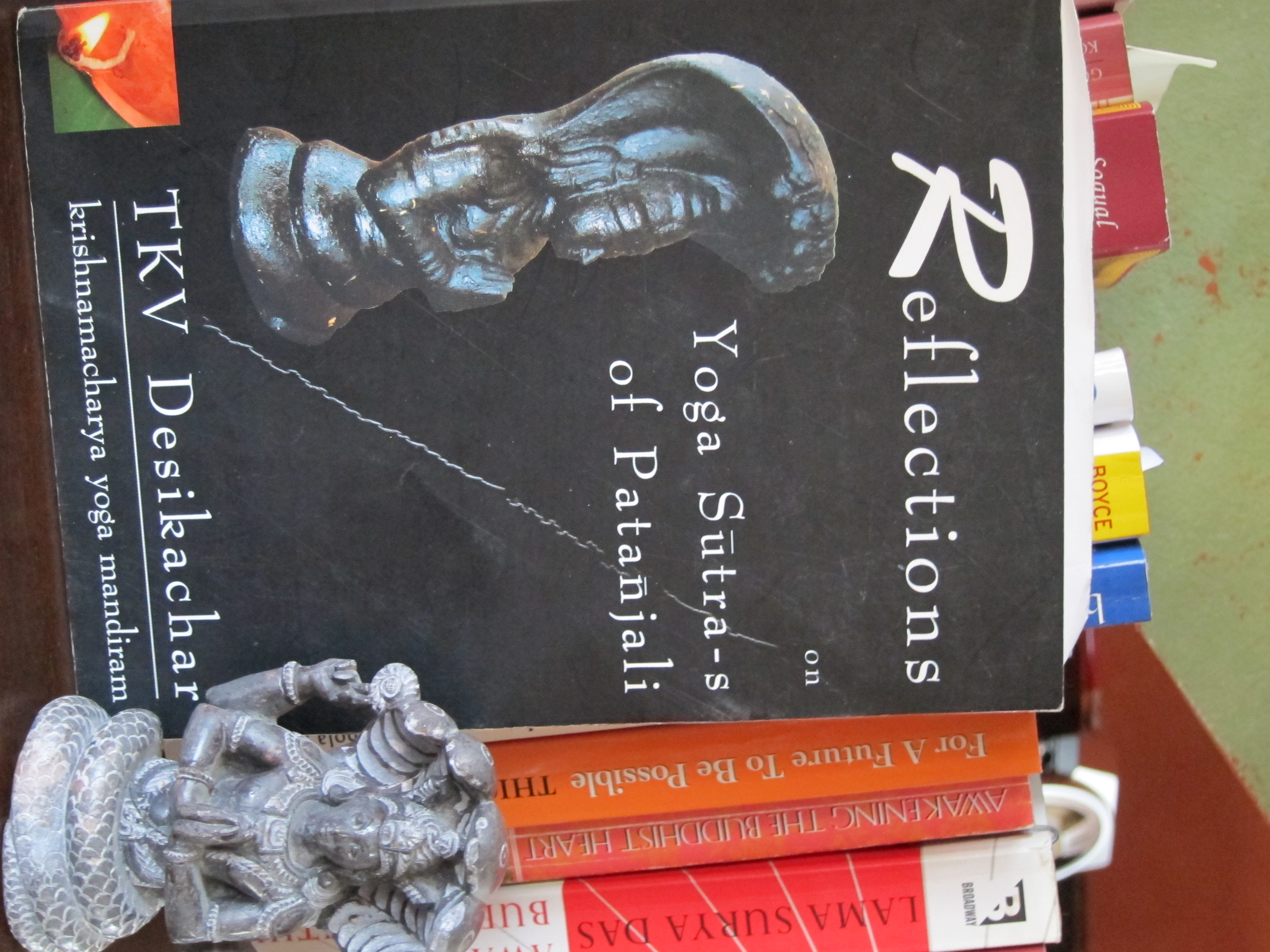
with statue of Patnajali, finally bought after 7 years of going to KYM

Back from India with a good case of reverse culture shock.  It’s not fun, I feel like hiding in a closet for about a month, besides which I have a horrible cold from breathing the recycled air of 500+ hacking, sneezing people for 18 hours flying over 2.5 continents and an ocean.   But I’m already planning my 7th trip so stay tuned for details — I have already booked March 11-15, 2013 at the Krishnamacharya Yoga Mandiram to bring people for private classes — 5 minimum, 8 maximum.  Let me know if you’re interested because after that week I am planning to teach a yoga retreat in Varkala, Kerala.  Throwing it out to the Universe and we’ll see what gets thrown back.

My yoga trainings were amazing.  I completed Modules 1 and 2 of Ganesh Mohan’s yoga therapy training and because he’s such an amazing teacher that combines the best of East and West modalities, I’ve decided to complete all his modules.  I will take Module 3 here then return to India next year for Module 4.

The course at KYM, “Discover Yoga Anatomy”, was equally amazing.  After going to KYM since 2005, the senior teachers know me and I can no longer hide in class — I get called on now!  The course drained my brain because it definitely was an “advanced” training.  For example, we had a course on “Yoga Anatomy in the Classical Texts”, a course where we discussed various aspects of Chapter 3 of the Sutra-s (among other texts).  We tore apart YS 3.26-27-28:  what was Patanjali really speaking to?  Do you take what he said literally or is the north star a metaphoric reference?  Where is the north star in our body, what does it represent?  Loved it — yoga more than skin deep.  I feel grateful and blessed to have been introduced to the Krishnamacharya lineage via Srivatsa Ramaswami when I first started teaching — it is both an honor and responsibility to be a representative of this tradition.  SRI GURUBHYO NAMAH.

Yoga more than skin deep, beyond asana… what a concept.  I realized in India that the more I study in this lineage, the more I am a yoga freak at home.  A stranger in a yoga strange land.  As hippies were called “freaks” back in the day, I feel even more so like a yoga freak now.   It contributes immensely to my reverse culture shock.  I was happy to be in India when the John Friend story broke and was amused by all the blahblahblah about it.  I spoke with a KYM teacher about what is called yoga in America and she just shook her head.

In Kerala I was offered a house and garden to convert into “Sama’s Yoga Garden” — “you could do whatever you wanted, let me get that house cleaned up for you, Shakti”, as a new friend called me and reminded me of my essence, daily.  Sigh.  I could have stayed for at least three more months.  A teaching in attachment and letting go.  I saw for the first time in 6 trips that I could very well split my time equally during the year between India and here.  Yes, it is possible because it feels so right in spite of Ma India’s warts — my trip started out a bit rough, but I eventually realized it was me, not India.  Another teaching on having no expectations and letting it all go.  I think once I learned that, that set up the scenario for the rest of my trip, things I experienced and who was brought into my life.  Serendipity is a wonderful thing.

I actually cut my trip short, changing my flight to return 9 days earlier.  I was supposed to end my trip in Varanasi but one day I had a major epiphany that I don’t need to go there because everything that is there in that holy city is already inside me.  Stop searching.  Just.  Stop.  “You know your dharma,” the Voice told me.  Shut up and do your practice.

That was one lesson Bharat Ma taught me on this trip….know your dharma.  “Do your best and let the rest go” was something Ganesh told us.  It became my new mantra.  And as it turned out, I received an email from someone who has offered to help me find a place to bring yoga to the underserved.  My dharma.  We’ll see what transpires.  Things happen when you let it all go.  As I said, we shall see what the Universe decides to throw back at me.

Ganesh’s delightful father, A.G. Mohan, came to talk to us twice and Kausthub Desikchar gave us two lectures.   I took lots of notes and will blog about their talks.

But for right now, this yoga freak is getting back into my closet.

************

PRODUCT REVIEW

Hugger Mugger sent me the Earth Elements Mat to road-test in India.  I wanted a thin travel mat that could hold up to my sweaty hands and I am happy to report that it fit the bill.

I thought it would be problematic because when I first started to use it my hands were sliding.  But the longer I used it, the surface “roughed up” a bit after which I had no problems whatsoever (and I was in weather that was over 90 degrees every day and very humid….with daily power cuts so no AC, no fans.)  I have the 3mm mat and although it is thin, it still cushions my bones.  It is thin enough to fold up and put inside a backpack for traveling, which I did more than a few times.  It is so light you can hold it with one finger.

If you want a great travel mat without paying a huge amount, check out this mat.  It gets a ringing endorsement from Metta Yoga, as did their Sattva Jute Mat I used last year.

my vinyasa root guru

In Mahayana Buddhism there is the tradition of the “root guru”, someone from whom we receive the teachings directly.  My root guru in Mahayana Buddhism is Gelek Rimpoche.  I will always consider Srivatsa Ramaswami my root guru in vinyasa krama yoga.

I first met Ramaswamiji in 2003 or 2004 at the Chicago studio where I certified as a teacher.  I was a very newbie teacher and he was teaching a weekend workshop, his first time in Chicago.  The Friday night was the “Yoga of Sound” and it was advertised that over the weekend he would teach special vinyasa sequences that had not been taught in America.  I was intrigued because even that early in my teaching I had started to research places to study yoga in India.

Ramaswamiji is considered a chant master in India and the Friday night Yoga of Sound was all about chanting.  It was the first time I heard vedic chants sung in the traditional way and it cracked open my heart in a way that Krishna Das or Jai Uttal could never do, and still don’t.  I drove home weeping all the way.  I knew I had found my teacher and Ramaswamiji put me on the path to study at the Krishnamacharya Yoga Madiram.   When I saw my name in the Acknowledgement of his book The Complete Book of Vinyasa Yoga  I cried again because I did not even think he knew my name,

For me, Ramaswamiji is a true yogi, nothing more needs to be said.  In 2011 he is much more well known than he was when I first met him when barely anyone knew the name of the student who studied the longest with Krishnamacharya.  He now teaches a 200 hour teacher training at Loyola Marymount in Los Angeles and the video below is about the training.  In the beginning you will hear his wonderful chanting and there is a short interview with him.  The rest of the video consists of students giving their impressions of Ramaswami and the training.

I thought it interesting towards the end of the video when a student said that she had been doing yoga for a few years but had never done yoga that had such a complete emphasis on the breath.  When a new student comes to me that is also usually the first thing they say to me after the first class, how emphasis on the breath totally changed their practice.  I have studied in this lineage for a long time so comments like that always make me go hmmmmmmm…….because what exactly is being taught in teacher trainings nowadays?  Is emphasis on the breath considered an “advanced” practice to be taught in a 300 hour training because if that is the case I have to wonder about that.  Breathing is basic, from Class #1, as soon as you step on the mat.  Every movement is initiated with an inhale or an exhale, mindfully, I don’t know any other way to teach.  Conscious breathing IS pranayama.  When I hear comments like that student’s it confirms my belief that yoga in American IS different compared to where I study in India.

Maybe I should try teaching my “Yoga of Krishnamacharya” workshop again.  Years ago when I taught at a studio I offered it for yoga teachers and well-seasoned practitioners only.  I was going to talk about the vinyasa krama method and offer a practice for shoulderstand.  I thought at least teachers would be interested in learning about the Source Scholar of Yoga, the teacher of Iyengar, Jois, and Desikachar.  No one signed up.

Just call me old-school.

“Asanas are yogic postures – stable and comfortable. Vinyasas are aesthetic breath oriented movements within those exquisite yoga poses.” — Srivatsa Ramaswami

“Asana will make the body light.
Pranayama strengthens prana.
Dharana purifies the intellect.
Meditation purifies the mind.” — Sri T. Krishnamacharya

“Nowadays, the practice of yoga stops with just asanas.  Very few even attempt dharana and dhyana [deeper meditation] with seriousness.  There is a need to search once more and reestablish the practice and value of yoga in modern times.” — Sri T. Krishnamacharya (excerpt from “Krishnamacharya: His Life and Teachings” by A. G. Mohan)

yoga in OMerika: what $95 buys

The Official Blessing

$95 bought that logo.

I don’t consider my posts about the Yoga Alliance as rants, although I am sure some would consider them as such.  I consider them a public yoga education.  I am reporting my own experience in order to help any newbie teachers make their own informed decisions.

I gave my reasons in this post as to why I renewed my registration with Yoga Alliance.  $150 later I am now officially an E-RYT 200 — “EXPERIENCED REGISTERED YOGA TEACHER.”  I know, I was such a hack before YA’s official blessing.  I can now conduct a 200 hour yoga teacher training after YA’s approval of my curriculum, of course.  After paying the requisite fees.  Of course.

I decided to upload more teaching and training hours to the YA site, so I pulled out my four inch thick folder with my teaching and training records.  I was amazed to finally see it all laid out in black and white, all the time and effort I’ve put into my yoga teaching since 2004 when I first registered with YA  — over 2000 hours of teaching and almost 900 hours of advanced training.  I did not even count each and every three hour workshop.

I thought what the hell, I will try to upgrade to E RYT 500 – 500 because one day I might want to conduct a 500 hour training.  The upgrade is another $95.  Piece of cake with all my hours, right?  Wrong, wrong, and WRONG.   This is the email I received from YA:

“In order to upgrade to an ERYT 500, one must first meet the criteria for an RYT 500, having graduated either from a YA registered advanced 300 or complete 500 hour program  (please see standards below).  

RYT 500-
A yoga teacher with a minimum of 500 hours of yoga teacher training, either:

o   500 hours from one school, or
o   200 hours plus 300 hours of advanced training from one school (training that requires participants to have a 200-Hour certification.

As you have not completed a YA registered training, but  have spent many hours of in depth study with Sri Desikachar, I would recommend that you complete the “graduate of a non-registered school”  application (attached) for your RYT 500 upgrade.”

Out of my 800+ hours of training, my three intensives at KYM plus private classes with Desikachar’s senior teachers total 300 hours of advanced training.  Apparently the Krishnamacharya Yoga Mandiram is NOT a registered school with YA.  AS IF that would stop me from studying there.

I am sure Sri Desikachar stays up at night wondering whether the school he started to honor his father, the Source Scholar of Yoga, the Grandfather of Modern Yoga, should be registered with the Yoga Alliance.  Please.  Really?  The YA can’t cut KYM any slack?  Let them “grandfather” in as a registered school?  Seriously?  By the way, someone who certifies you in “Goddess Yoga” IS an approved school of the YA.  Right.

Here’s the kicker:  in order for me to upgrade to a 500 level teacher, the “graduate of a non-registered school” application costs $150 together with the $95 to upgrade to E RYT 500.  So another $245 over and above the $150 I already paid to renew and upgrade to E RYT 200.

Oh my Goddess, I am in the wrong business.  I need to be in the certification game.  And can someone tell me why YA is officially a non-profit organization?  I said “no thanks.”  I don’t want to pay another dime to YA especially considering all that dough is a lot of rupees in India which I will need starting in January.  But eventually I will have to pay it if I ever want to conduct a 500 hour level training in the future.  AS IF I could not do that RIGHT NOW.

Of course I can conduct teacher trainings without being “Yoga Alliance approved” but how realistic is that?  With the current mentality of yoga in OMerika, would anyone sign up for my trainings?  I doubt it, because even the most staunchly anti-YA teachers (Ganga White – a must read; Lex Gillan; and my teacher in Chicago, to name a few), ALL ended up registering their schools with YA.  Because that is what people look for.

So here is my question, good readers:  the curriculum being equal, if you had a choice of a non-YA approved 200 hour teacher training with someone like me, with all my hours, 5 times at KYM OR with someone who is YA approved but does not have the hours of training and teaching experience that I have, which would you pick?

And I will say this before anyone else does:  yes, I know hours of training does not automatically make one a “good” teacher, the same way inexperience does not automatically make one a “bad” teacher.  There are always variables.

Yoga in OMerika.  Travel at your own risk.

f*@k YOGA

“It is about being here, present, being the real you, and choosing to offer up that soft vulnerable you instead of some fake mock-up to the world with every breath and every movement. It’s about taking the harder path through troubled country that leads to honesty and true connection between souls on a basis of honesty and integrity that comes from the kernel of your being and not some idea of what Patanjali wants you to do or your guru wants you to do or what the crowd wants you to do, or even worse what you think they want you to do. It’s about questioning every concept in your mind and even when you use such limited restricted tools as concepts doing so with awareness that they present a map and not the territory.”

And people thought I was snarky when I wrote about Tara Stiles.  Not quite.

You can read Scott’s entire catharsis here.

I “met” Scott via the India travel website Indiamike when I was planning my first trip in 2005.  The Krishnamacharya Yoga Mandiram used to do their month long intensives twice a year back then, calling it “Universal Yet Personal.”  Scott attended the one before mine and he gave me the telephone number of the rickshaw driver he used, Suresh, whom I still use to this day.

Namaste and love and lite, y’all.

yoga miscellaneous: healing

A letter from Sri.K. Pattabhi Jois to Yoga Journal, Nov. 1995

“It is unfortunate that students who have not yet matured in their own practice have changed the method and have cut out teh [sic] essence of an ancient lineage to accommodate their own limitations.”

“Spiritual Madness and Compassionate Presence” — healing of mental suffering through the philosophy and practice of Yoga

“One of my patients had severe post-traumatic stress disorder. His experience of isolation and helplessness sent shockwaves through his day-to-day life. He had flashbacks and significant difficulty relating to others.

We began his treatment with daily pranayama. We added meditation on both the destructive and creative aspects of the mother goddess Kali. Finally, he began to meditate on his own eternal nature: “I am that I am” (Hum So). Slowly but surely, this healed his illness…”

I worked with a private student today and after 10 years of teaching I am still amazed at how transformative the breath is. She is a relative newbie to yoga and in her classes at various venues from health clubs to studios, teachers have told her to “focus on the breath” but apparently no one has ever TAUGHT her how.

I could see how tight her belly and shoulders were. We did conscious breathwork just like Mark Whitwell or Ramaswami or my teachers at the Krishnamacharya Yoga Mandiram teach.  A light bulb went off over her head. Her entire body visibly relaxed and she left my house looking lighter and brighter. In a word, transformed.

She’s returning for more instruction on the breath and wants to work with me in the vinyasa krama method:

“By integrating the functions of mind, body, and breath…a practitioner will experience the real joy of yoga practice. . .Vinyasa krama yoga strictly follows the most complete definition of classical yoga.” – Srivatsa Ramaswami, The Complete Book of Vinyasa Yoga

Breath + yoga = healing.

how yoga heals: yin yoga and ulcerative colitis

I believe that all yoga is healing if applied in the right manner. No one called Krishnamacharya a “yoga therapist” and you were surely not able to become certified as one back in his day. When I took my first two courses of study at the Krishnamacharya Yoga Mandiram, we listened every day to the stories of private students about how the particular style of yoga that is taught at KYM is a healing path. I have experienced my own healing at KYM with the private yoga therapy that was prescribed for me, certain asanas that I still do.

My work with private students is a mixed bag, but I always use what I learned, and continue to learn, at KYM. I have heard that style of yoga called “old ladies yoga” because it is a slow, deliberate practice, breath-based and heart centered. Some believe that “the kind of yoga he [Desikachar] espouses is becoming, like the polar bear, something of an endangered species.” I can tell you that I met more than few astangis at KYM, some of whom studied directly with Jois in Mysore, who came to KYM to heal their bodies. They told me that the yoga practiced at KYM was like a light bulb going off over their head. As for myself, after my first month-long intensive in 2005, my practice and my teaching changed forever.

So I am never surprised when my students tell me their stories of healing. Below is a story written by one of my students who is only 22 and no longer has a large intestine. I felt that a yin yoga practice would be extremely beneficial for her condition and my intuition was right-on — as I said, I believe all yoga is healing if applied correctly, it does not matter what the style is. I asked her to write her story so that others can read about the true power of yoga. However, please remember that yoga is not one size fits all — your body is different from this student’s, so your mileage may vary…;)

This is why I teach, and I am blessed to have students like this. I couldn’t get a better Christmas present than that.

*************************************

“For the past seven years I have been dealing with ulcerative colitis, an autoimmune disorder of the large intestine. During these years I have been hospitalized and medicated to keep my symptoms under control. Since the doctors could not find a medication or therapy that would be sustainable for my treatment over the long term a full colectomy, the removal of the large intestine, was performed on me in May of 2008. After some complications, I had my second surgery in July of 2008 and was considered “cured.” I was doing well until May of 2009 when I developed autoimmune pancreatitis. Twice in two months I was hospitalized for this condition, the doctors supplied me with pancreatic enzymes to take whenever I ate. Because I developed another autoimmune disorder, I decided that it was time for a change in my lifestyle and mindset, time to learn how to deal with the stress that life brings. For me, that step was to start taking a yoga class.

It was the last semester of my associates degree and I needed one more P.E. credit and since yoga was an option, my counselor and I decided that it would be a great class for me to take. This was not a decision based on physical fitness, it was a decision based on a need for a new mindset. So, I bought my textbook, leafed through it, and went to my first day of yoga. I walked in exhausted, nauseous, and in pain from my latest autoimmune disorder of my pancreas. That class we went over the syllabus and did some breath work. Before class ended, Linda announced that if you had any physical conditions, to stay and talk with her after class, little did I know that the conversation we would have would end up being my cure.

So I stayed afterward, waiting for the people with bad backs and knees to let Linda know about their issues that could affect the different poses that we might be doing in class. I explained to Linda what I had been through and that my surgery scars bothered me when doing core work because of scar tissue issues I had. We delved into my ailments, and she had a thought. Linda explained a little to me about what yin yoga is and that she had a class that I could join. She thought that yin might be more beneficial to my issues than only doing the regular yoga. I was on a mission for change in my life and yin sounded like the idea that might help me.

The next Wednesday night I went to Linda’s house for my first yin yoga class. When I arrived I was terribly nauseous, so badly that I almost did not go that night. Linda decided to do a stress practice that focused on the stomach meridians. By the time I left that yin class, my nausea had dropped by about 80%. It was absolutely incredible to leave feeling as I was, I hadn’t had that lack of nausea for about 4 months. I was excited, but nervous that this might be a temporary fix and not long term. I left open minded and with anticipation for the next class. Reading my yoga text and taking that class simultaneously with my yin class was another benefit of the last 5 months. It was interesting to see how I felt if I missed a yin class one week, but still had my regular yoga class.

After a month of doing yoga, especially the yin, my symptoms had improved so much that I was able to stop taking my pancreatic enzymes. Also, I started to do my own yin practice on a daily basis. Everyday, whenever I could fit it in morning or evening, I do a full hero [supta virasana] for 10 to 20 minutes, then child’s pose for 5 to 10 minutes, and the downward facing dog for 10 to 12 breaths. This daily practice has given me days, and now months, free of nausea and pain. Accepting the realization that reality is reality and it is always changing and out of my control along with watching my breath, which has brought my mindfulness to a better level, has truly been a life-changing process and I can’t wait to continue on this journey. [emphasis supplied.]

From my first yin classes where I could feel my insides unwinding, to now where I can still feel my meridians winding out, I am 100% positive that yin has benefited my health in ways that I would have never imagined. I love doing my yoga practices, but my daily yin practices, focus on breath work, and the realization of what reality is, has been the most beneficial milestone is my life thus far. I am always looking forward to my yoga time and what I learn from it, and encourage anyone with autoimmune disorders to give it a chance, because such a simple thing can be so life-changing.”