wisdom from my teacher: "Statics and Dynamics of Asana"

Another newsletter from Srivatsa Ramaswami….enjoy

When I was a student I had to study a course in Mathematics (or was it Physics or Engineering?) titled, “Statics and Dynamics.”  That was the time Mathematics left me but I liked the name of the course which I am using as the title of the article.

When I was young I used to be called “Soni Ramaswami” by many relatives, friends and many who were not very friendly.  “Soni” means puny.  I used to be very thin, even so I used to be very interested in outdoor sports activities. I managed to get onto the college/school teams in Tennis and Cricket.  In fact, I was coached for several years by the father of the National Tennis Champion in India at the time and the father had coached the champion.  I thought I did well in spite of a lack of the required physique and stamina.  I was the college champion in Tennis for three years and also won the district championship for college students.  My best moment was the match I played against the All India number 3 ranked player at that time.

Barely 18, I came close to beating him.  In the close match, in the final set I could not cope with the physical demands.  My coach told me later that I had a good ball sense and talent (please bear with me on this, old men like me need some bragging for sustenance), but with my kind of physique and lack of stamina I had little chance of making the grade.

Much earlier I had started learning Yoga from my guru, Sri Krishnamacharya.  Prior to that I had learned some Yoga asanas from my father, several people in my school and a few other teachers.  In my school the physical education teacher usually doubled as a yoga master as well and several students were familiar with yogasanas and many were able to do several poses like sarvangsana, padmasana, etc.  I used to do asanas randomly, no coordinated breathing, no pranayama, more interested in the form alone.

But when I started the studies with my guru the whole picture was different.  Slow synchronous breathing, the counter-poses, the sequencing, the adaptations, pranayama, chanting, text studies were all new and it was astounding studying with him.  Initially I was continuing to engage in outdoor sports which he was aware of, but did not ask me to choose between the two.  One day he said that the philosophy of Yoga and outdoor sports were very different.  He would say that while Yoga is considered as a sarvanga sadhana or practice for all parts of the body (and mind) modern sporting activities were anga bhanga sadhana as they affect different parts of the body differently producing disequilibrium and asymmetry.  I remembered at that time I came across a story in a sports magazine about the left wrist of Rod Laver an outstanding Australian Tennis player. It was said that the wrist size of his playing left hand was twice as large as the right one.

Sri Krishnamacharya also used to say very interesting things during the rest pauses between different asanas and sequences. Once he said that the Yogi should be thin or krisa. One should not be overweight….  Carelessly developed fat bellies and cultivated oversized biceps one should guard against.  It suited me as I refused to put on weight when I was a young adult.  After I became a senior citizen, of course I started putting on weight growing sidewards.

He also emphasized individual home practice. Merely studying with the teacher may not be sufficient. Regular comprehensive practice was emphasized. He would quote the following sloka:

anabhyase visa ham vidya
ajirne bhojanam visham
Visham sabha daridrasya
Vridhddhasys taruni visham

“Knowledge without practice (application) is toxic.  Food during indigestion is poison.  Partying is poison (ruinous) to the poor, while to the old a young spouse is disaster indeed.”

By then I had a copy of his Yoga Makaranda, the Tamil version.  Fortunately this book, a treasure of information and instructions for everyone who wants to know the Krishnamacharya system is now at everybody’s fingertips, literally…..

Modern day yoga asana practice follows two different streams.  There are old schools which teach different asanas and require the participants to stay in the pose for a long time, no appreciable movements or breathing but just stay in the pose for a long time.  They emphasis the steadiness definition of yoga even though many find long stay in the poses painful and boring.  There is no ‘sukha’ in it.  Then there is another stream, more modern, in which the asana practice is a continuous flow of movements like a train going at breakneck speed not stopping and looking at at any of the beautiful stations and places called asanas in between.  A set of regimented routines on a graded scale of difficulty is done at a hurried pace without coordination with slow breathing day in and day out.

In the Yoga Makaranda of Krishnamacharya and the way I learnt Yoga from my Guru, the asanas are described in two perspectives.  The book contains pictures of a number of asanas. Krishnamacharya also in most cases mentions that one should stay in these poses for a long time:

Chaturanga dandasana (10mts),
Adhomukhasvanasana (15mts),
Urdhwamukhaswanasana(15 mts)
Mahamudra/Janusirsasana (15 mts),
sarvangasana (niralamba)10mts, etc.

It is clear that many of the static poses require time to confer the intended benefits to the abhyasi.  He also details the benefits that accrue from the long stay in these classic poses.

One also finds that Krishnamacharya has described in the Makranda a number of Vinyasas leading to an asana and then the return sequence.  These are not illustrated though.  It it is gratifying to know that Yoga Makaranda’s English version published by Krishnamacharya Yoga Mandiram has sketches to illustrate most of the Vinyasas which along with the beautiful asana pictures of Krishnamacharya makes it a very useful companion to understand the Krishnamacharya system of asana practice.  Further the required breathing also is described in the Makaranda, whether a particular movement is to be done on inhalation or exhalation or occasionally holding the breath.  However, the book does not contain the several vinyasas done in the asanas or ‘in situ’ vinyasas mainly because the book is a small one.  He has though mentioned that several of the asanas like sarvangasana, sirsasana, padmasana, etc. have a number of vinyasas emanating from the basic
poses.  These vinyasas, as many and as varied as possible, should be done.  These vinyasas make the system of yoga a sarvanga sadhana as my Guru mentions in the Makaranda. In my book. Complete Book of Vinyasa Yoga, I have attempted to include almost the complete range of vinyasas in all the major asanas as I had learnt frm my guru.  When one exercises the body with deep vinyasas one is able to squeeze as much of the venous blood as possible from the various tissues and thus enhance the muscle pump effect.  Then the deep associated breathing used in Krishnamacharya’s system helps to enhance the respiratory suction pump effect on the heart thereby increasing the rakta sanchara or blood circulation especially the venous blood return to the heart. More and more vinyasas help to stretch the blood vessels as well keeping them more elastic.

The practice of vinyasas itself is made very interesting by my Guru.  Each expansive vinyasa would be done on slow ujjayi inhalation and every contraction movement would be done on slow smooth exhalation.  What should be the length of the inhalation and exhalation as compared to our normal breathing of about 2 seconds of inhalation and 2 seconds of exhalation?  He would ask us to take a slow inhalation, say about 5 seconds and another 5 seconds for exhalation.  It is the minimum.  One could slowly increase the time for inhalation from 5 to 6 and even up to 10 or twelve seconds.  The vinyasas were never done at the breakneck speed with which they are done these days. The slower the movements the better and more beneficial it is. A rate of five to six breaths per minute in vinyasakrama is in order.  At this rate the suryanamaskara routine of 12 Vinyasas would take about 2 to 3 minutes.  By studying Yoga with him one could realize how different Yoga is from workouts, aerobics, outdoor sport activities and even fast paced Yoga where the slow, mindful breathing is compromised.

So Sri Krishnamacharya’s system of asana practice, as evident from the Makaranda and also from how I have studied with him, is a judicious combination of dynamic Vinyasas and classic asanas. Vinyasas also help to achieve perfection in poses.  A few years ago when I was conducting the teacher training program, we went through the entire gamut of vinyasas centered around Padmasana.  We continued the practice for several days gradually adding more and more vinyasas.  Then we did a number of movements staying in Padmasana. At the end of it all, a participant came to me and said that it was the first time he could do padmasana even though he was a yoga practitioner for morethan ten years. The quality of his padmasana improved day by day as he started practicing more and more vinyasas in padmasana which all helped to make the final posture more secure. And he could stay in the posture for a longer period of time, say 10 or 15 mts, as Sri Krishnamacharya would want the abhyasis to be able to do.

How can one stay in postures like paschimatanasana, sarvangasana, sirsasana, etc. for 10 to 15 mts or even 30 mts as some yogabhyasis do? Will it not be painful, won’t the limbs go to sleep and what about the mind, does it not get bored? It will be interesting to know the way Sri Krishnamacharya taught Sarvangasana to me.

First do the preliminary poses like desk pose, apanasana and urdwa prasarita pada hastasana, slowly with the appropriate breathing.  Then get into the more relaxed viparitakarani position.  Keep the legs relaxed -even limp- for a while watching the unhurried breathing.  Then come down.

Do it for a few days and then after getting into the viparitakarani position straighten the body, support the back behind the ribcage with the palms placed close to each other. Stay for a few minutes, come down, do an appropriate counterpose and do the routine a few more times for a total of about 10 minutes. From then on try to increase the duration of stay in the pose until you are able to stay for 10 mts in one try. After a few days of comfortable steady stay in sarvangasana, increase the stay to about 15 minutes the ideal duration in sarvangasana. Now start concentrating on the breath. Your inhalation can be short say 3 seconds or so in this pose as the inhalation is a bit more difficult because of the cramped nature of the chest. But one can have a very long exhalation. After a few days practice try to introduce the bandhas as you start your slow exhalation. Start drawing in the rectum and the abdomen in tandem as you exhale finishing the exhalation with mulabandha and uddiyana bandha in place. Hold the breath out and maintain the bandhas for about 5 seconds. Then release the bandhas and start the next slow inhalation.

After a few days practice count the number of breaths that you take for the entire duration of your stay in the posture. Then try to reduce the number of breaths you take for the same 15 minutes stay. The aim is to reduce this number until you reach a steady state that you can maintain consistently. There are people who are able to maintain a breath rate of about 4, 3, 2, or even one breath per minute staying in a static yoga posture as sarvangasana. It is better to learn these procedures from a teacher.

Many years back I used to teach in Houston for several weeks at a time. It was a time when asanas like sarvangasana and pranayama were taboo and padmasana was a dreaded asana. I tried to encourage the class to practice sarvangasana, learning it an orderly fashion through preparatory Vinyasas and finally the posture. It took a while and then the participants were encouraged to try to stay in the asana for a while doing slow smooth breathing. They were able to stay for longer and longer duration and towards the end of the program more than half of the class could stay for the full fifteen minutes maintaining at best a breath rate of 3 or 4 per minute. In my teacher training programs the participants are encouraged to develop endurance to stay in some of the important poses like the inversions, paschimatanasana, mahamudra, etc. even as they learn several hundred Vinyasas in the course.

Further, while asanas are a necessary routine for a yogabhyasi it is not sufficient. A well rounded yoga practice should contain other angas of yoga like pranayama because they between them help to reduce the systemic excess of rajas and tamas.  Day’s yoga practice should consist of a proper combination of dynamic vinyasas and static asanas. Add a stint of pranayama practice and some meditation or chanting, and you have a wholesome daily yoga practice.

wisdom from my teacher

Yes, even my yoga guru shuts up to do his practice:

“…[the] English translation of my Guru Sri Krishnamacharya’s Yoga Makaranda (I have the Tamil translation of the book for over 45 years and refer to it even today whenever I want to just shut up and listen to my Guru, Sri Krishnamacharya.)”

Note:  that’s called humility…one of the aspects of a true yogi.

Click here if you want to download Krishnamacharya’s “essence of yoga.” This is a priceless gift. 

Ramiswamiji’s May newsletter on Advaita….

“My teacher Sri Krishnamacharya took considerable pains to teach the Yoga Sutras to his students. He also wanted his students to study and be familiar with other orthodox philosophies like Samkhya, and Vedanta. The several Upanishads, the Gita and Brahma sutra he taught to explain the rather tricky, involved vedanta philosophy, usually following the visishta-advaita approach, though he also was adept in advaita philosophy. He once said in the Brahma Sutra class to the effect that while Advaita could be intellectually stimulating it is visishta advaita that will be emotionally satisfying.

Perhaps the most widely read orthodox Indian Philosophy is Vedanta and especially the Advaita school. There are tons of material available on this philosophy and many people interested in vedic thought study this and gradually become lifelong students of Vedanta. Many long time Hatha Yoga practitioners have taken up the study of Yoga as a philosophical system and considerable material is available from both old and contemporary writers in different languages especially English. And some among the the yoga practitioners have taken an interest in studying the vedanta philosophy also especially the advaitic interpretation. In this however, the published material on Advaita Vedanta available is so technical and involved that the difficult subject is made more inaccessible by several portions which are very technical. Profound and daring, albeit very ancient, this philosophy stands out among all the vedic philosophies. I thought I could write very briefly on the basic tenets of this thought process.

There are at least two things we need to have an experience, a subject and an object. When you and I sit at a table over a cup of coffee or a can of beer or a more yogic glass of goat’s or cow’s milk, I am the subject and you are the object and it is the other way from your point of view. We are two different entities and what does advaita say about our relationship? Advaita says that there is only one principle, the observer which is pure consciousness. It implies that there is only one principle or entity that is pure consciousness that can be termed as one having “Existance” (satya).  Nothing else qualifies to be termed “It exists“. So the term advaita refers to that one principle that alone exists. Of course it appears to contradict our experience as we converse as you and I.

Many Indian philosophies both vedic and non Vedic, endeavor to explain the absolute beginning (aarambha) of the creation of the universe. The several puranas have the narration of creation as an essential aspect of purana. They explain how God created the Universe. There are other views like those of the Samkhyas and Yogis who say the evolution of the Universe began with the disequilibrium of the gunas in the dimensionless mulaprakriti. They do not see the need for a God to create the Universe. The vaiseshika philosophy says that the universe came about by the combination of various atoms of earth, of water, etc. and the atoms or paramanus are the basic building blocks of the Universe. Further all these vedic darsanas are careful to point out that there is also the individual self that is distinct and different from the material universe created. Because they suggest two different principles– the consciousness and matter– these philosophies came to be called dwaita or dualistic. They also differ from the modern scientific view which says that the universe started by the evolution from a tiny but hugely dense entity called singularity, but seems to imply that individual consciousness is a product of matter and not an independent entity—contrary to the vedic philosophies.

Advaita as the name implies indicates that there is only one principle and none else . That principle is pure non changing(sat) consciousness(chit) which they call Brahman. How do they explain the existence of the evolved Universe? Since there is only one principle which itself does not undergo any change with time (avakasa) or place (akasa) the evolved universe is not real but only an illusion and not independent. When we attempt to find out the beginning of the evolution we go back from the present. The classic examples of the chicken and the egg or the seed and the tree are mentioned to indicate the impossibility of finding out the beginning of the evolution. One school of advaitins says that since the chicken-egg phenomenon involves an unending chain of changes the beginning of which can not be determined , so the very exercise of finding out how the universe started (Aaramba vaada) is futile and all views about how the universe began are wrong. In fact, accordingly, the several theories about the beginning of the Universe cancel one another. The impossibility of finding the absolute beginning also could open the possibility that there is no real beginning and that the evolution of the universe itself is not real- the world is not rock solid as we see- and at best it is virtual. They assert that there was no real creation. Gaudapada in his commentary of Mandukya Upanishad states “nobody is ever born.”

In this context I remember a movie I saw when I was young (I was hardly sixty at that time). In the mystery movie, the young detective was trying to find out who murdered “Victim X”. After two years of painstaking investigations (and two hours of my painful viewing) the detective is unable to find the killer, only because “Victim X” did not die in the first place. Our detective started with a wrong premise. I have been trying like crazy for 72 years to understand how the world was created, poring over orthodox and contemporary dissertations on the origin of the Universe and now some Advaitin says that I can not find it because the world was never really created.

Advaita also asserts that a non-changing pure consciousness can not produce a ‘real’ material world nor can a non-conscious prakriti, paramanus or singularity produce non-changing consciousness which is the nature of our true self. So in our dualistic world the advaitin’s view is that only the consciousness is real while the persistent world is unreal. In this context one may consider the statement of Einstein, “Reality is merely an illusion albeit is a persistent one”. Reality here refers to the universe which we experience as real. And advaita rubbishes the general perception that the Universe was really created (sat karya), a universal, taken-for-granted view. The advaitins give several examples to explain the ‘virtuality’ of the observed universe. They compare it to the space that we see in a mirror; though the space that we see in the mirror may be considered to be within the two dimensional mirror surface, it appears to be outside (beyond and behind) of it. The other example is that of the dream experience. In the dream, the space, the objects and the other beings and even our own dream self can be considered to be taking place within the dreamer’s head but they all appear to be real and outside, during the dream state. The third example they give is that of the work of a magician who is able to create an illusion of space and objects. At a higher level is the world created by Siddha yogis.  There is a story of sage Viswamitra creating an illusory heaven to accommodate one of his disciples, King Trisanku. And the Lord who created this virtual ‘universe of illusion’ is the most consummate magician of all.

The Brahman, the only one existing – the advaita -, is pictured as even smaller than an atom (anoraneeyan) but is immensely dense consciousness (prajnana ghana). Within it, due to the inexplicable Maya the beginning less universe appears, only appears, to evolve and exist and persist. Further even though the universe is within the Brahman, it appears to be outside it. And that is the grand illusion.

There is an interesting episode about Lord Krishna as a toddler. Krishan was a purna ‘avatar’ or complete incarnation of Para Brahman or the supreme being. He was raised by his foster parents Yasodha and Nandan in Gokulam. One day he was playing and his mother saw him taking some dirt from the floor and putting it in his mouth. Concerned the mother lifted him and asked him if he put dirt into his mouth.  Without opening his mouth the child shook his head. The mother now more concerned asked him to open his mouth. The child opened the mouth wide and lo and behold! Yasodha saw the entire Universe in his mouth. She had a bird’s eye view, rather an eagle’s eye view (or a Google view) of the Universe including her holding the open mouthed divine child in her arms. She realized that the child was para brahman (the supreme being). The entire universe was within Him even as He appeared as a child, within the vast universe, like all of us. The Lord says in the Bhagavadgita “Everything is in Me but I am not in everything.”

I, as I know myself, wrapped in this maya (maya=that which really is not: the trickster), even though I am within the supreme consciousness, the individual I, as part of the Universe appear to be outside of it, engulfing It, the Brahman. And consequently the supreme consciousness, Brahman, appears to be within this physical me as the Atman or the individual Self ,in my heart cave (dahara). Now, though I am in It, It (Brahman) appears to be within me as my Self or Atman. The Upanishads tell us the means of finding It, within each one of us. The pancha maya model is one such vidya or practice by which each one can find the self within oneself, within the five kosas. It is an exercise by which one knows the only real principle that exists, the Brahman, the pure consciousness as one‘s self or Atman. The Self that resides in my heart lotus (dahara) and the Self that you, sitting across the coffee table , find in your heart lotus are one and the same, the same Brahman. That is advaita. Advaita does not mean all the varied objects like you and I are one and the same, but the Self within us are one and the same, even as they appear to be distinct and different, shrouded by illusion.

There is a considerable amount of source material available on this advaita pilosophy. The ten major Upanishads are the main source followed by the Brahma Sutra and the Bhagavat Gita. In the Upanishads the Vedanta philosophy is presented succinctly through anecdotes, dissertations and dialogues between parent and offspring, teacher and pupil, spouse and spouse, God and devotee, saint and sinner and friend and friend. The advaitic interpretation is chiefly presented by Sri Sankara through detailed commentaries on these major Upanishads, Bhagavat Gita and also the Brahma Sutras. Sankara and some of his pupils have also written several easily accessible texts on advaita called prakrana granthas, like Atma bodha, Vivekachudamani and others.

Many of his works with some translations are available online. The Upanishads themselves explain the philosophy in detail from several viewpoints answering multitude of questions that may arise in the followers’ mind. Several vidyas or dissertations help to have a clear understanding of this old, unusual philosophy. They also contain some very pithy statements which are used as mantras or memory aids and are tellingly direct. Aham Brahmasmi (I am Brahman), Pragnyanam Brahma (Absolute consciousness in Brahman), tat tvam asi (You are That, the Brahman) ayam atma brahma (this individual Self is Brahman) are the most famous. Further there are other equally powerful statements like Brahma satyam, Jagan mitya (Brahman is real/ existence, the Universe is myth –mythya–illusion). Jiva brahmaiva na aparah (The individual Self is definitely Brahman and none other.)

What is the benefit of this kind of inquiry, especially to the majority of us who muddle through life rising with the tide and rolling with the punches? The advaitins say that knowing the truth about ourselves and the Universe is essential and they aver that this is the truth. Truth should be known whether it is sweet, bitter or insipid. Once we know the truth about ourselves and the universe around us our interaction with the outside world could drastically change. The Yogis say that the external world ,predominantly, is a constant source of threefold sorrow (duhkha). So say the Samkhyas. But the advaitin goes a step further and says that to a discerning mind the external world is not only a source of duhkha (barring individual variations, look at the enormity of the threefold collective duhkha in the world–self created, caused by other beings and by nature’s fury) but is itself an illusion. How much importance do I give to the dream experience during dream time and then when I wake up? One tends to shrug off the dream experience as ‘just a dream’ on waking up.

Likewise when my mind after study, contemplation and determination finds that the world after all is virtual like a dream, I may not take my transient worldly life with so much anxiety, expectation and remorse as I seem to be doing all my life. An enormous amount of psychological burden that I unnecessarily carry may be taken off my mind then, and make me peaceful, hopefully. Furthermore, the thought or realization that I am the non-changing majestic reality, the one and only eternal Brahman, is just cool!”

Advaita Pranayama

While slowly inhaling, meditate that the virtual external world is being withdrawn into the source, the Brahman in one’s heart.  Next during the breath holding (antah Kambhatka), meditate on the fact that the Universe is within the Brahman and has no independent real existence.  Then while doing the exhalation meditate that the
illusionary universe is being renounced.  And in Bahya Kambhaka the meditation is on the pure Brahman that alone exists as advaita (based on Sankara’s work and Tejobindu Upanishad.)

A Sanskrit prayer

Death without distress
Life without dependence
Grant me, Oh! compassionate Lord Sambhu (Siva)
In Thee are established all.

addthis_pub = ‘yogagal60510’;

Krishnamarcharya and those British gymnastics

“Sir” and his father, KYM, 2005

2010 has been the year of scholarly yoga books such as Mark Singleton’s Yoga Body: The Origins of Modern Posture and Stefanie Syman’s The Subtle Body: The Story of Yoga in America. Both authors have written that Krishnamacharya’s yoga was derived in part from British gymnastics and military training exercises.

Even the eminent yoga scholar Georg Feurstein recently wrote that:

“The Hatha-Yoga tradition espoused by Sri Krishnamacharya, who taught at the Mysore Palace for many years, derived many of its yogic postures from gymnastics. This has recently been highlighted by a number of authors inquiring into the beginning of modern Yoga. See, for instance, Mark Singleton’s Yoga Body: The Origins of Modern Posture Practice (2010). He and other researchers have shown that what we in the West consider as Hatha-Yoga is chiefly a nineteenth-century invention, which was once closely associated with nationalism: Foster healthy people for the country’s defence or, in the case, of some nations for their military expansion. We know that in Europe and North America the same attitude has led to gymnastics and body-building and then the modern body cult.”

I don’t know if Mr. Feurstein has ever spoken with Srivatsa Ramaswami about his guru Sri Krishnmacharya, but I do know that there is not one mention of Ramaswamiji in either of the above-mentioned books (I looked.) Neither is he mentioned in Feurstein’s book, The Yoga Tradition, first published in 2001.

Those of you who know me know that I am an ongoing student of Ramaswamiji, having studied with him now for about 7 years. Ramaswamiji studied with Sri Krishnamacharya for 30+ years, longer than his own son Desikachar, and longer than Jois and Iyengar ever did.

So I was glad to see Ramaswamiji address the question of his guru deriving his yoga from gymnastic exercises. If anyone would know, I would think it would be someone who studied with Sri Krishnamacharya for 30 years.

Knowledge from a book is valuable of course, but it can not replace wisdom from an ongoing relationship with a teacher. That is one yoga jewel that has stayed with me from my first training at the Krishnamacharya Yoga Mandiram: the teachers said that personal transformation can only begin in a group class; it is achieved by working one on one consistently with a teacher over a period of time. I truly believe this as I have seen the differences with private students v. group classes.

The following is from Ramaswamiji’s newsletter, unedited but for the the addition of paragraphs and an [emphasis supplied.]

Maybe this will answer the scholars’ questions.

##########

Yoga Gymnastique — Srivatsa Ramaswami

Some eight years back I wangled a presenter assignment at a Yoga Conference in Texas. I was never invited again because, among all the presenters, I had the dubious distinction of attracting the least number of participants for every one of my presentations.

During one of the breaks a well known yoga teacher in US came and sat by my side and inquired about me, about where I was from, etc. I mentioned that I was a student of Pandit Krishnamcharya for three decades. With a quizzical look he asked, “What were you doing for 30 years with him?’, and with a wry smile he said, “Oh, you must have been doing your daily practice at his school”. He left before I could start my long answer. “How can anyone study Yoga for such a long period when there are just a half a dozen sequences or just a little over a score of asanas?,” he must have wondered.

Krishnamacharya as I have mentioned earlier was like a many splendoured diamond each facet brilliant in its own way. He taught yogasanas following the Vinyasakrama, the art form. He also used yogasanas, pranayama and meditation for chikitsa or therapeutic applications. He taught a vast range of Sanskrit chants from the Vedas and also from smritis. He taught several traditional texts like the Yoga Sutras and the sibling philosophies including the several Upanishads, following mainly the Visishtadwaita approach. He taught Vaishnava religious texts as well to a number of his Vaishnava followers. He was a well rounded Yogi and he could make every class absorbing. There would always be something new and insightful. One could never get bored in his classes whether it be the asanas, chanting or textual studies. I wanted to explain these to my celebrity friend but he was too busy to stay and listen.

Some research scholars have mentioned that Krishnamacharya’s vinyasa approach to yoga has a considerable dose of physical exercise systems prevalent at that time in India like the drills and also gymnastics imported into it. But my experience with Krishnamacharya’s asana practice is somewhat different.

It is true that some of the vinyasas and vinyasa sequences like part of Surya Namaskra, the handstands, the jump throughs, jump arounds, push ups (utplutis) may appear to mimic floor exercises in gymnastics. Perhaps there are some asanas and vinyasas Sri Krishnamacharya taught that had some resemblance to drills or gymnastics. But he taught to me almost 1000 vinyasas making up close to 150 asana subroutines. The head stand, the sarvangasana, padmasana are distinctly different from gymnastics and each one of them has scores of vinyasas that are uniquely yogic and no other system seems to have anything like that.

Further, yoga as a physical culture is very old. We may not have records because in ancient times most of instructions were oral and the transmission of knowledge was from teacher to student and the only way to learn was to go to a teacher and learn, practice and internalize. Later on a few texts were written as scripts were developed but they were written in easily perishable palm leaves — like the Yoga Kuranta — and barely one manuscript, no xerox copies, no electronic books were available. So in these matters we have to rely upon authorities/tradition or as the Vedas would call it “aitihya” or firmly held belief.

Even from the available texts like the Puranas one can glean a lot of reference to yoga practice including asana practice. The Brahma Sutras mention that a seated asana is a necessity for meditation. Works written hundreds or even a thousand years back contain sections on Yoga including asanas. Thirumular, a yogi said to have lived 3000 years back wrote about several asanas in his Tamil classic Thirumandiram. Puranas, smritis and several later day Upanishads have sections on asana practice.

There is a dhyanasloka pertaining to the Ramayana which mentions that Sri Rama was in Vajrasana while seated in his flowered bedecked, jeweled throne. In fact from time immemorial many people in India, as a religious practice, have been doing sandhya or morning worship of the sun with specific sun worship mantras and physical movements and gestures. It includes mantras like the Gayatri, pranayama and many postures like tadasana, uttanasana, utkatakaasana, and danda namaskara and utakatasana are specifically mentioned in the smritis.

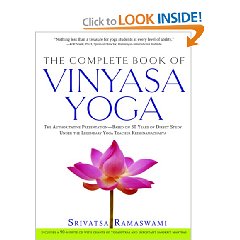
So in a way we may say that suryanamaskara with mantras and the physical exercise has been a very old practice. The word Yoga is indeed a vedic word. You may check with my book “The Complete book of Vinyasa Yoga” (here no commercial intended) based on my studies with my guru and I do not think it in any way resembles a book of gymnastics. Yogasanas have their own distinct nicety. Gymnastics of course has its own charm. Gymnastics was one my favourite programs while watching the Olympics. I do not know if I would enjoy Yoga Olympiad.

My guru had mentioned on a couple of occasions that physical yoga had been the core system of physical exercises in India. It had technically influenced several ancient systems like wrestling, archery, fencing etc., very physically demanding disciplines, requiring a high degree of strength, dexterity and focus. Yoga is called a sarvanga sadhana as it is helpful for all parts of the body, including the internal organs. There were other indigenous circus-like practices such as malcam, kazhakkoothu where they use ropes or poles and do routines very similar to asanas. He had also mentioned that almost all the physical systems of the world, including gymnastics, had borrowed heavily from Yoga, because the asana portion of Yoga was the most ancient and developed physical culture system. Therefore it could be that there were a few similarities between asanas and some obscure gymnastic systems in different parts of the world at different times. Then one has to investigate the origin of those obscure systems, whether they were older than Yoga, or if they themselves borrowed from ancient yoga practices.

My Guru himself was a passionate researcher. He would always be looking for works on yoga and other systems. He even would advise us to go to different agraharams (small cluster of homes of scholars in certain villages) and look for works on Yoga available with such scholars. He would say that we should visit the hundreds of temples in India, especially South India, and observe the sculptures and idols all over the temples for study of yoga postures. And because of the oral tradition and relying on degradable palm leaves, Yoga itself had a checkered progression, in the limelight during some time in history and obscure at some other times. It then becomes a futile exercise to try to determine which among the physical exercise regimens came first, the seed or the tree or the better known example of the chicken and the egg.

There are distinct differences between the yoga I learned from Sri Krishnamacharya for a long period of time and some of the aerobic exercises like gymnastics. In the vinyasa krama asana practice, the breathing is synchronized with the movements at the rate of anywhere between 5 to 10 seconds for inhalation and exhalation thereby reducing the breath rate to about 3 to 5 per minute, whereas in contemporary aerobic exercises including gymnastics and gym workouts, the breath rate increases to much beyond the normal breathing rate of about 15 or so. This alone makes yoga practice of Sri Krishnamacharya distinctly different from other drills.

The variety of movements in Vinyasa asana practice is said to be designed to exercise all parts of the body including the internal organs. We do not find deep movement, synchronized breathing, and the significantly profound exercises like the bandhas — which are an integral part of Sri Krishnamacharya’s asana practice — in other forms of physical exercises, especially gymnastics. Look at the 1930’s videos, the bandhas of my Guru, they are not a gymnast’s cup of chai.

When I was young, some exercises were very popular. They were outside the pale of yogasanas. One was known as “dandal”, which would look very much like a repetitive movement between caturanga dandasana and the plank or a simpler version of urdhwa mukha swanasana. The other was known as, if I remember right, ‘bhaski’. It involved standing up and doing repeated squats. The first one, ‘dandal’ looks very similar to part of Surya namaskara. Baski resembles a very popular ritual that is done by thousands even today and is known as “toppukaranam” in Tamil and “dorbhyam karanam” in Sanskrit. One holds the lobes of the opposite ears with one’s hands and squats usually in front of the idol of Lord Ganesha. It could be 12 times or 108 times. It is both a good physical exercise and a loving devotional practice to the charming Lord Ganesha.

Are these physical drills, yoga exercises, or devotional practices? Which came first? God knows, Lord Ganesa knows.

Then there is the question of whether Suryanamaskara is old, from the Vedic times. The Surya namaskara can be considered from two views; one is the mantra portion the other is vyayama or the physical part. Certainly Suryanamaskara mantras are from the Vedas. In fact, there is a complete chapter of Suryanamaskra mantras from the Veda which takes about an hour to chant. Again, the other important Surya mantra, Gayatri, is also a Vedic mantra. The Vedas exhort using Gayatri as a mantra to worship the sun daily.

Worship of the sun is considered a daily obligatory duty for the orthodox in India. We have a procedure called Sandhya vandana which is supposed to be done thrice a day, but definitely once a day. This Sandhya procedure is a kind of a worship ritual, towards the end of which one prostrates towards the Sun. While the Gayatri japa portion is done sitting in a yogic posture after required number of pranayama, the upasthana or the second part is done standing. Towards the conclusion the worshipper of the sun has to do a namaskara, a prostration. So from the standing position, usually one bends forward, half squats, places the palms on the floor, takes the legs back by jumping or taking one leg after the other and does an saashtanga namaskara or the danda namaskara prostration). One has to go through these steps (from standing to prostration) and if the steps are properly organized we get the surya namaskara vyayama, a sequence, a vinyasakrama. So, since one has to do sandhya daily and has to do the namaskara startig from standing and since the sandhya is mentioned as an obligatory duty, it will be correct to say that suryanamaskara, both the mantra portion and physical namaskara portion, are from the Vedic times. The actual steps may vary but the physical namaskara to the sun is a procedure practiced from ancient Vedic times.

Further, in India you can see many people who do not practice yoga or the formal ritualistic sandhyavandana, standing on the terrace or on the beach, facing East early in the morning, and doing prostrations a few times, returning to the standing position every time. They do not call it Yoga but suryanamaskara. Some of the present day yoga enthusiasts however do the suryanamaskara, probably at night, in any direction or directionless, do not use the mantras or the devotional bhavana associated with it, but as a mere workout.

I had chanted the suyanamaskara mantra almost on every Sunday with my guru for several years. Namarupa also published my article on Sandhya vandana with pictures of the steps some time back. I also have the one hour long Suryanamaskara mantra chant from the Yajur Veda (which I learned from Sri Krishnamacharya) recorded in mid ’80s and the CDs are still made available in India.

Sri Krishnamacharya’s range of teaching was sweeping. I have mentioned about the asana teaching, his chikitsa krama and vinyasa krama. His chanting of vedas was beautiful and very engaging. I do not know of any yoga teacher during his times who could chant as well as he could from memory. He earned the title “Veda Kesari” or Lion of Vedas. He was a Sanskrit scholar, a Sanskrit Pandit. He taught the vedanta philosophy, the prastana trayas, the Upanishads, the Brahma sutra and the Bhagavad Gita in the visishtadvaita tradition. He was given the title “Vedanta Vageesa”. He was also quite familiar with the advaitic interpretation. He once said while doing the sutra on Anandamaya “Anandamaya abhyasat” in which the two interpretations, advaita and visistadwaita differ from each other, “If you want I can teach you the advaitic interpretation, but advaita may be intellectually challenging but does not give the emotional satisfaction one gets from the visishtadvaitic approach”. He also taught us several important Upanishads. I studied with him several Upanishad vidyas from the major Upanishads, like Brahadaranyaka, Chandogya, Taittiriya, Kaushitaki and others. Some of the vidyas he taught include Pancha kosa Vidya, panchagni, pranava, madhu, Sandilya, Dahara Pratardana and many others.

Once I asked him why if the goal is the same, understanding Brahman the ultimate Reality, then there are so many Upanishads, why so many vidyas. He would say that pupils have different questions about the ultimate reality and these vidyas take you from the known to the unknown.

Supposing fifty people, strangers from different places, go to an unknown country, Pineland, and take a picture with the leader of the country, Mr Pineman. Every one sends home a copy of the picture by email. The way they would point to the unknown leader, Mr Pineman, to those back home would be to start from the known. The known entity in the picture will be the one who sends the picture. He may tell his son/daughter, ”the leader is three rows in front and eight to the right of me.” Another person would start first by asking his kid to identify him/her first in the picture and may say the leader is three rows behind and five seats to the left. Likewise, all the various vidyas of the Upanishads try to help the aspirants to realize the ultimate truth, starting from a known tatwa. I had the privilege of studying several Upanishd vidyas from my guru Sri Krishnamacharya.

He also taught many of the sibling philosophies so that one’s understanding of Yoga and Vedanta will be on firm grounds. He taught Samkhya philosophy by explaining the Samkhya karika with the commentary of Gaudapada. He also taught Yoga Sutra in considerable detail. He had obtained the titles “Yogacharya” and “Samkhya Siromani”. He also was an expert in another profound philosophy called Nyaya and had been conferred the title “Nyayacharya”. He also taught smaller or easier works like Tarka Sangraha to introduce the difficult Nyaya philosophy.

His religious studies were outstanding. He was such an expert in the Vaishnava philosophy, that he was in consideration to head a well known Vaishnava Mutt. He was truly a devotional person. As he practiced yoga he performed his daily puja with great devotion. He had several students who studied the Vaishnava religion in considerable detail. He could quote from the epics, Ramayana, Mahabharata and several other puranas like Vishnu Purana, Bhagavata Purana, etc.

I do not know of any person who was so well versed in the sastras and also at the same time an outstanding practising Yogi. Sri Krishnamacharya is well known, it is almost exclusively due to his yogasana teachings. But his scholarship and teachings were enormous. I feel a bit sad when he is portrayed as a hatha yoga teacher who plagiarized some exercises from gymnastics and called it yoga to make a living, and nothing more. [emphasis supplied.]

Maybe there is some common ground between these two different physical disciplines. I continue to remain in awe of his enormous scholarship, practice and teachings and kindness towards his students. He was a teacher who would uplift you, a true Acharya. When you study with him, you get an unmistakable feeling that his only goal in life was to transmit the traditional knowledge and make it accessible to the student. He was a unique Yogi, a unique teacher, a unique individual. Twenty years after his passing away, I remember him everyday, while practicing, studying or teaching, sometimes in dreams — fondly.”

If you want to study with a true yogi, a true yoga scholar, and a vedic chant master, Ramaswamiji will teach at the Chicago Yoga Center September 17-26.

Krishnamacharya, Desikachar, Indra Devi

Here is an amazing video of Krishnamacharya, his son Desikachar, and Indra Devi from 1988. Sri Krishnamacharya was 100 years old in this video.

When I am at the Mandiram I love listening to Desikachar’s stories about his father’s students. Desikachar told us a story about how perturbed he was when he saw his father hugging a western woman, on the street no less. If you know anything about South Indian culture, especially Brahmin culture, that is absolutely not done! Then his father told him it was Indra Devi, his student.

Desikachar told us how when he was growing up he was not interested in learning yoga. He was not like Jois or Iyengar who started their studies when they were young. Desikachar was an engineer, he wanted to make money. Then one day he saw his father stop his pulse for two minutes, he had such control over his body. He told us when that happened he fell to his knees and asked his father to teach him everything he knew about yoga. The rest is history.

I am honored and blessed to have such a close connection to the source, to the heart of yoga.

Sixty-four more days and I am back in Ma India’s arms. My friends keep asking me if I am going to come back. Studying yoga at the source, climbing Mt. Arunachala, Kali temples in Kolkata, the Temple of the 64 Yoginis in Bhubaneswar, culminating my India trip at the largest spiritual gathering in the world, the Kumbh Mela….

A few years ago an akashic record reader told me (before the Mela was even a thought in my mind) that what I experience on one of my India trips will be so profound that I will have to go to a “place with palm trees” to recoup.

I am. Zanzibar has palm trees.

addthis_pub = ‘yogagal60510’;

Sri Ramaswami on P. Jois and birth and death


(AUM written in Tamil)

I am an ongoing student of Srivatsa Ramaswami and this is what Ramaswamiji had to say in an email about the passing of Pattabhi Jois and birth and death.

Sri Ramaswami was Krishnamacharya’s longest standing student outside of Krishnamacharya’s family. He studied with Krishnamacharya for some 30 years, longer than P. Jois, Iyengar, and Desikachar.

SRI PATTABHI JOIS

Three of the disciples of my Guru, Sri Pattabhi Jois, Sri B K S Iyengar and Sri T K V Desikachar, propagated Yoga in the modern times and their influences have been phenomenal. The oldest of them, Sri Pattabhi Jois, taught the unique adaptation of my Acharya’s asana teaching, christened Ashtanga Vinyasa Yoga. It has caught the imagination of hundreds of thousands of Yogis all over the world and is practiced with tremendous enthusiasm. His passing away at the ripe old age of 94 leaves a void in the Yoga World. A tremendous teacher, Guruji was dearly loved and highly respected in the Yoga world. I had not met him but am aware that he was an ideal student of my Guru. The debt to a father is repaid by the offspring by exemplary conduct. “What good karmas the father should have done to get such a wonderful offspring”, people should say of the son/daughter. Likewise it is said that a student should bring out the glory of the teacher by his teachings — “Acharyam praksayeth.” People should wonder, “Who was his teacher?”

Sri Jois by his relentless and pioneering work on Yoga brought name, fame and respect to the legacy of his teacher Sri Krishnamacharya.

Om Shanti.

BETWEEN DEATH AND BIRTH

All the orthodox philosophies which accept the authority of the Vedas subscribe to the Theory of Karma, even as they have significant differences in the interpretation of the Vedas.

According to the Vedas, the individual soul surrounded by the vasanas or impressions of the past lives and also the remainder of the accumulated subtle karma bundle, gets attached to the subtle body of the individual. The subtle body itself, according to Sankhyas, is made of 18 aspects, the three internal organs of the chitta, viz., mind, ego and intellect, the ten indriyas and five tanmatras. When a person dies, the non-changing pure consciousness — the soul or self also known as purusha or jiva along with the subtle body undergoes the first transformation when it goes through ‘fire’, as the physical body is consigned to the fire after death. Then the subtle body goes up the sky space and approaches the heaven, but due to the avidya and the power of the accumulated karmas, stagnates and then is absorbed by the rain clouds, which is the second transformation due to the ‘fire’ of water. The subtle body then descends to earth with the drops of rain and is absorbed by a plant which is the third transformation through fire of earth. Then when the plant or the plant product is eaten by a being, it is absorbed and becomes the generative fluid of that person. This is the fourth transformation through the fire of the being, or gastric fire. Then when it is transferred to the female being, it undergoes another transformation through fire of the womb and becomes an embryo. Then according to Samkhyas the embryo has the subtle body and the genes/genetic body. The subtle body which went through five changes now gets the second body or the body given by the parents (mata pitruja sarira). This embryo then gets nourishment through the mother and develops another body known as bhuta sarira (the physical body) or a body made of the five elements — earth, water, fire, air, and space. And then one is born again. These five fire transformations is in the panchagni vidya of the Upanishads, and the Samkhyas talk about the subtle body, the genetic body, and the physical body to complete the story of the journey from death to birth. But those yogis who have attained Kaivalya or Moksha or Nirvana have their souls liberated and are able to shed the subtle body when they attain liberation and are able to break this cycle of samsara or transmigration. One who is able to clearly understand the process of transmigration through meditation and understanding of the panchagni vidya briefly narrated above are able to attain liberation (for better understanding, read the panchagni vidya from Chandogya Upanishad.) Such a person is able to see the distinction between the changing body going through all the transformation between birth and death and then between death and birth and the non-changing pure consciousness or the Self. Such a person is able to identify with the non-changing consciousness as ‘oneself’, the immortal self and becomes immortal. The rest, considering themselves to be mortal go through the cycle of samsara repeatedly and endlessly say the Upanishads.

Srivatsa Ramaswami: The Three Gunas


I received the following in an email from my teacher, Srivatsa Ramaswami.

I began studying with Ramaswami in 2004 at the Chicago Yoga Center (where he comes very year to teach) and I was hooked the first night. He is considered a chant master in India and the first night’s workshop was the “Yoga of Sound”, all about mantras. I drove home crying because his chanting and the mantras touched my heart. Ramaswami is the teacher who inspired me to go to the heart of yoga, India.

Ramaswami is the longest standing student of T. Krishnamacharya outside of Krishnamacharya’s immediate family. When I started studying with him, Ramaswami was not as well-known as Krishnamacharya’s other students, BKS Iyengar, Pattabhi Jois, and Desikachar, Krishnamacharya’s son. When I told people that I studied with Ramaswami they asked “who?”, but Ramaswami studied with Krishnamacharya longer than any of the Big Three. He was an original trustee of the Krishnmacharya Yoga Mandiram in Chennai, India where I have studied three times. It is certainly not the habit of American yoga students as it is in India to touch their teacher’s feet to show respect, but I would not hesitate, that is how much respect I have for Ramaswami-ji.

When I bought Ramaswami’s book The Complete Book of Vinyasa Yoga and got toward the end of the Acknowledgement, I began to cry because I saw my name. He mentioned me (and others) as “one of the teachers who has incorporated essentials of vinyasa krama into their teaching and practice even from Day 1.” I was stunned because I did not think he even knew my name. Now every year when he sees me he smiles and asks, “when are you going back to Madras?”, Madras being the old name for Chennai.

I give you the writing of a true yoga master and a true yogi.

Shanti.

The Three Gunas (Triguna) and the Four Human Goals (Purusharthas)

According to Yoga and other sibling philosophies, the entire universe is made of the three Gunas, Satwa, Rajas and Tamas, and these permeate everything (including all of us) everywhere in dominating everything in varying degrees. Due to the preponderance of one of these Gunas, in every individual, different human beings follow different goals. Even as everyone’s desire is to get happiness and get rid of unhappiness, each one, depending upon his or her guna temperament, pursues different means and goals (arthas) for one’s satisfaction or happiness. The three gunas are satwa, rajas and tamas. The four purushartas or human goals are dharma (order), artha (material possession), kama (sensual desires), and moksha (spiritual freedom.) A satwic person is inclined towards dharma, while the rajasic, tamasic and the one who is able to go beyond the influence of all the gunas (gunaateeta) are attracted respectively towards artha, kama and moksha. These four are called purusharthas or chatur-vidha-purushartha (four different human endeavors/goals.)

Persons whose personality is predominantly satwic follow ‘dharma’ as a goal of their lives for happiness. Dharma is the Law of Piety, Compassion, and orderly life. They follow the benevolent dictates of the scriptures, the laws of the land, leading a life consistent with the gods of nature. It is anathema for them to cross the Laws of Dharma. Such Dharmis are said to lead a very peaceful life here and hereafter, as they, who are said to be in a small minority, do and accumulate good karmas.

The Rajasic people are like the proverbial “A” type personalities. Highly energetic and mostly restless, they pursue very down to earth policies and follow the goal of artha or material possessions. More wealth and more power give them happiness and the means are less important than the goals. Only a few who follow this life-long pursuit of possessions and power ever succeed and sustain, leading to collective unhappiness of this lot. The happiness of the majority of them rises with the tide of increasing possessions and ebbs with the loss of wealth and power.

We have then the third group of people who are dominated by tamas. It is said Tamas, because it veils the intellect, makes such people short sighted. Their happiness lies in sensual gratification. Tasty food, frequent tactile stimulus, attractive visual objects and captivating sounds dominate their life. When the senses over a period of time lose their acuity, they have less room to be happy and fall into a state of depression as they get older.

Then there are the spiritual Yogis who relentlessly follow the path of spiritual wisdom and intuitively understand the nature of the ever present, nonchanging nature of their own Self and reach a state of Kaivalya or Moksha or spiritual Freedom. In that state, according to Yogis, the three Gunas reach a state of equilibrium. This, the yogis call a state of Nirodha of the mind, or a state the Lord in the Gita calls Gunateeta or beyond the dominance of the Gunas. This state leads to a permanent and irrevocable state of peace of mind and the yogis aver that it is superior to the other variable and unstable states of happiness; superior to that attained by sensual gratification of the tamasic personality or the happiness arising out of possessions of the Rajasic, or even the dharmic life of a Satwic person. Though the satwic state of happiness is superior to the other two, even that is said to be impermanent. Hence the Lord urges everyone, through His disciple Arjuna in the Gita, to go from Tamas to Rajas and then to Satwa and ultimately transcend all the Gunas. It is easier said then done.

But how is it done? Only Yoga comes with specific measures to change the individual personalities. One can transform a Tamasic mind to a Rajasic bent by practice of Pranayama, in addition to the observance of Yamaniyamas. The observance of a well designed practice of asanas will reduce the addictive influence of Rajas and hence a yogi who practices asana and pranayama will become more and more Satwic, thanks the reduction of Tamas and Rajas. And by spiritual meditation one will be able to transcend all the three Gunas.

So as Lord Krishna says, “Tatha yogi bhava Arjuna”, (Therefore become a Yogi). One should practice Yoga. You will agree?

Best New Year wishes,

Srivatsa Ramaswami

addthis_pub = ‘yogagal60510’;

interview with Desikachar

(photo original Chennai Online upload)

Chennai Online Interview with Desikachar

“Intro: Where is the delusion when truth is known? Where is the disease when the mind is clear? Where is death when the Breath is controlled? Therefore surrender to Yoga – T Krishnamacharya in Yoganjalisaram.

Yoga was in the family. Krishnamacharya was born in Karnataka in 1888 and belonged to a family of distinguished ancestry. Among his forebears was the 9th century teacher and sage Nathamuni, who was a great Teacher who created remarkable works….In his youth, Shri Krishnamacharya experienced insights around some of these teachings in a mystic dream whilst on a pilgrimage….

His son, TKV Desikachar, had the privilege of living and studying with his father. For over 45 years, TKV Desikachar has devoted himself to teaching yoga and making it relevant to people from all walks of life and with all kinds of abilities. His teaching method is based on Krishnamacharya’s fundamental principle that yoga must always be adapted to an individual’s changing needs in order to derive the maximum therapeutic benefit.”

Chennai Online link to Google video of Desikachar speaking about his father.

I have studied three times at the Krishnamacharya Yoga Mandiram in Chennai, India and I am transformed a bit more each time. It was during my first trip three years ago during the month long “Universal Yet Personal” intensive that I heard a teacher say that personal transformation in yoga can only begin in a group class but is accomplished in working one on one with a teacher, in the old way, the traditional way.

The longer I teach, the more I know this to be true.

I bow in gratitude to the teacher of teachers, Sri Krishnamacharya. I am honored and humbled that I am able to study with one of his long-time students (30+ years) Srivatsa Ramaswami, with whom I will spend a week in a teacher training next month. I touch his feet and thank him for showing me what pure yoga is and for inspiring me to go to India…to go home, to the heart of yoga.

addthis_pub = ‘yogagal60510’;

get real


I am recovering from a vicious upper respiratory infection and/or flu that I had for two weeks. I went to a yoga class today and we we were in Bow and I had to come down after only a few breaths because I still felt weak. I berated myself and then I told myself, get real. get real because what do I have to prove? I have/had a nasty infection that kicked my ass exactly one month after I had a vicious case of salmonella food poisoning that I brought back from India that also kicked my ass. My reality is that I will be 54 this year and maybe, just maybe, it takes me longer to recover from things than it did at 44 or 34 or 24. get real. be authentic.

If you are in your 40s or 50s or 60s, why are you still doing a yoga practice as if you were in your 20s? get real. be authentic.

“I am of the nature to grow old. There is no way to escape growing old.

I am of the nature to have ill health. There is no way to escape ill health.”

After the class a yoga teacher friend and I went to lunch and we kvetched about what else, problematic yoga students. ahem….yoga teachers talk about students as much as yoga students talk about teachers.

My friend told me about an older student whom she told not to return to her group class because it was not the right type of class for him, he had too many health issues. she told me his whole litany of physical ailments the worst of which was uncontrolled high blood pressure that gave him exploding ocular headaches. she wanted to teach a safe class but he was not honest about himself when she asked if anyone had any health issues. he wanted to do everything, even poses that were contraindicated for his conditions. All I said was, “ego.”

Ego. we’re conditioned to bully our way through a class, whether it’s a yoga class or anything else. no pain, no gain. even if it kills us.

My friend said just because people do yoga does not mean people can or should do every pose, the same way that because you can run three miles does not mean you should run a marathon. she felt that students truly do not understand this. she said that students think because we are yoga teachers we should be able to not only do every pose, but teach them every pose in any class they choose to attend, no matter what their physical limitations. she mused that maybe our calling as instructors is to help students realize that it is the nature of the body to grow old.

yes, we are dharma teachers on the nature of reality which is impermanence! I’m sorry, what did you say…you only came to this class because you read that Jennifer Aniston lost weight doing yoga?

If you are in your 40s or 50s or 60s, why are you still doing a yoga practice as if you were in your 20s? get real. be authentic.

“I am of the nature to grow old. There is no way to escape growing old.

I am of the nature to have ill health. There is no way to escape ill health.”

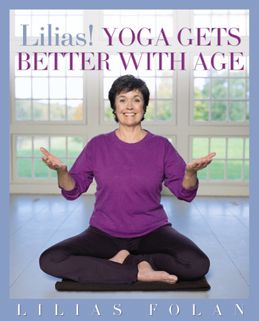
I’m taking a workshop with Lilias Folan next month. for those of you who don’t know Lilias (or who think yoga was invented by Madonna), Lilias introduced millions of Americans to yoga in 1972 with her television show “Lilias! Yoga and You.”

Her website says that “Lilias has found that her practice and her teaching have naturally and even necessarily changed over time [emphasis added] as she has physically transformed into having what she describes as her current middle-aged body. Lilias draws on her years of experience, along with living in a changing body. In her new book she describes how to adapt yoga for a body growing older.”

The workshop is advertised as “moving at an enjoyable pace we will prepare the body with interesting warm ups, salutation to the hips and more from her highly acclaimed book Lilias! Yoga Gets Better With Age”.

There is a video on her website called “It’s Not Easy Being Real.” She says that as yogis, we want to be authentic, and that our challenge is to be real and to be an authentic human being as we age. she says the realness is that we age and if there’s a glitch such as illness or maybe we don’t move like we once did, that we should accept it with the wisdom that we are not 21. she says she does not want to be 21 again but she wants to be a juicy 81 year old. hallelujah.

I don’t care anymore about learning a fancy arm balance. I choose to be a rasa devi.

If you are in your 40s or 50s or 60s, why are you still doing a yoga practice as if you were in your 20s? get real. be authentic.

“I am of the nature to grow old. There is no way to escape growing old.

I am of the nature to have ill health. There is no way to escape ill health.”

Stephen Cope is one of the teachers in my Mindfulness Yoga and Meditation training in California and I think he’s brilliant. I was googling some of his articles and I came across this video where he talks about how his practice has changed as he has gotten older. he says that he does not want to do the same practice now as he did when he was younger, that at 56 his practice is much more internal and meditative. in the video he advises how to adapt your yoga practice as you age.

yes, yogins, you are aging. every day. little by little. even those of you who can kick up into that perfect handstand will one day feel that crunchiness, that grinding of an arthritic shoulder and it will be your wake up call to your own impermanence. and it will scare the hell out of you because deep down it is your own fear of death. in this Botoxed, liposucked culture, many of us refuse to accept this, even yogis.

If you are in your 40s or 50s or 60s, why are you still doing a yoga practice as if you were in your 20s? get real. be authentic.

“I am of the nature to grow old. There is no way to escape growing old.

I am of the nature to have ill health. There is no way to escape ill health.”

In May, my teacher from Chennai, India, Srivatsa Ramaswami, is coming to do a training. he wrote the book Yoga for the Three Stages of Life. Ramaswami says that as we get older our practice SHOULD change, that the older we get our practice should become more meditative. this is the Krishnamacharya way.

If you are in your 40s or 50s or 60s, why are you still doing a yoga practice as if you were in your 20s? get real. be authentic.

“I am of the nature to grow old. There is no way to escape growing old.

I am of the nature to have ill health. There is no way to escape ill health.”

I find that the older I get, the more meditative I become, the slower I want to move, the deeper I want to go, the more I want to feel. I want to feel the juiciness of this seasoned body. I am not afraid to feel the aches and pains that crop up because I want to face them in order to move beyond them. I do not want to resist my pain because pain that is not resisted begins to soften. no matter how painful it is, it is a relief to feel.

Pain is not suffering.  Stephen Cope writes that suffering — duhkha — is the resistance to that pain. duhkha is the pain of pain. as a wise ass Buddhist once said, life is pain but suffering is optional.

***********************************************************

The Five Remembrances
(as offered by Thich Nhat Hanh in The Plum Village Chanting Book)

I am of the nature to grow old. There is no way to escape growing old.

I am of the nature to have ill health. There is no way to escape ill health.

I am of the nature to die. There is no way to escape death.

All that is dear to me and everyone I love are of the nature to change. There is no way to escape being separated from them.

My actions are my only true belongings. I cannot escape the consequences of my actions. My actions are the ground upon which I stand.
—Buddha


Never the spirit was born
The spirit shall cease to be never
Never was time it was not
End and beginning are dreams
Birthless and deathless and changeless
Abideth the spirit forever
Death does not touch it at all.
—The Bhagavad Gita


What is never born can never die.
—Sama


body consciousness: a discussion


There were so many comments posted to Body Consciousness that I thought I would turn them into an entirely new post. my readers’ comments are too insightful to be ignored.

talk amongst yourselves!

Steven:
Maybe it’s just wording, but I disagree with “Yoga was meditation and meditation was yoga, no duality.” If they were the same thing, there would be no need for two words. Also, from what I’ve learned, yoga has been a preparation for meditation, and thus separate. Obviously very interrelated, but separate nontheless. Your point remains, though, that the asana practice has become very separated from the meditation practice in the West, but still, even if some people never find or care about the non-physical part, many will, and that’s good. It sure would help if yoga instructors would stop yammering quasi-spiritual stuff through savasana and allow more than 1 minute of silence to clear the mind!

Sama:
asana + pranayama are prerequisites to meditation according to the lineage that I follow. not just asana. and is not asana practice a moving meditation? I suppose it depends on what your definition of meditation is.

come to one of my classes. I don’t yak during savasana. but even if I did, would you be able to observe the external sounds and not react to them, engaging in pratyhara with equanimity?

thinking more about your comment, steven….

have you ever done walking meditation? is the meditation separate from the action of walking? and if you are walking, are you JUST walking? or is your mind “in here” instead of “out there”?

gartenfische:
This is so insightful (and yeah, we’re thinking along the same lines!). I know that we Westerners—me included—are way too head-oriented. It’s why yoga and meditation are so important for us.

I think that yoga and meditation are different, but that yoga (asana, that is) can be a meditation.

I am not a teacher like you, but as I practice longer, I see how asana, breath, the bandhas, the driste, all lead one into a meditation. Presence is so, so important—inhabiting each pose, as Pattabhi Jois says (Iyengar says this, too, and I’m sure the other great teachers); otherwise, like you said, it’s just acrobatics.

Yoga is such a gift. I am so grateful for teachers, like you, who bring it to us here in the West—we so, so need it!

Sama:
the thing is, gartenfische, each time I come back from my studies in India, the more I feel like an outsider here, in the western yoga world.

Kate Holcombe, a teacher in San Francisco and who has studied extensively at the same school I do, has said that for a long time she hesitated calling what she does yoga because it was so different from what is practiced in the west.

I now know what she meant.

gartenfische:
So is there a way to bring more of the true yoga into the West, or is it hopeless?

Most of my teachers are, at least, trying to be very true to the Indian teaching (Annie Pace, especially).

Even if it is not yoga as it is supposed to be, I have known a lot of growth and healing as a result of my practice, and I am grateful for it. I don’t know—I may never get to India.

Sama:
gartenfische, I am in no way saying that the yoga I study is the way it’s “supposed to be”! that would be so autocratic! and no way am I saying that all yogins/yoga teachers have to go to India to study! HA! India is definitely not for everyone! however for me, the first time I put my foot on indian soil, I felt like I had come home.

I just know that what I study there resonates with me and it is a traditional style. for example, when I’m there I study chanting, pranayama, meditation, asana theory, etc. and from my teachings I’ve come to realize that (for example) pranayama is taught indiscriminately here in many classes I’ve been to, like an afterthought, or with no purpose. A teacher will announce “ok, let’s do kapalabhati” in the middle of the class. I can tell you after my first training, I immediately stopped teaching that pranayama in group classes. that’s just an example.

my classes are always asana/pranayama/meditation. of course, YOUR yoga is what resonates with YOU!

gartenfische:
I have the same hesitations about pranayama, but I think they came from reading something several years ago that warned that it should not be taken lightly and that beginning yoga students shouldn’t do it at all. I have heard of teachers teaching it indiscriminately (it seems) and I’ve wondered if they know what they are doing.

Earlier, I was reading about pranayama in Light on Yoga. He recommends Nadi Sodhana Pranayama for headaches, but elsewhere, he talks about supervision by a guru or teacher being necessary to practice pranayama. So I don’t know if it would be okay to try it as a remedy when I have a headache. Probably not. I have noticed that even ujjayi breathing helps, though

Sama:
yes, I agree about having a qualified teacher to teach pranayama. another thing that is never taken into consideration regarding pranayama in group classes is the dosha, or the body type, so to speak, of each student.

a certain pranayama might be appropriate for one student while it may completely agitate another student, in a group class. how does a teacher know the dosha of each student in a group class? just like yoga, pranayama is not one size fits all, so that is why I believe pranayama is indiscriminately taught in western yoga classes.

also, regarding the bandhas: Krishnamacharya believed that bandhas should not even begun to be taught unless the student can comfortably inhale 10 or 12 counts, and exhale 10 or 12 counts. now tell me how often a teacher in a group class will announce “engage mula bandha!” or whatever bandha as if every student knows what she/he is talking about!

this is why I have said time and again what I have been taught: personal transformation can begin in a group class but is accomplished in a one on one relationship with a teacher.

and THAT is the difference between east and west as I see it.

gartenfische:
Mula bandha is a common teaching in Ashtanga, including with the teachers who study in India. I am NOT saying you are wrong! There just seem to be different “rules” coming from different teachers.

But it is confusing for people, because we don’t know! All these teachers are teaching pranayama and then other teachers say they shouldn’t be. Then everybody’s teaching the bandhas and others say no.

Sama:
I know that mulabandha is common in astanga — altho I’m not an astangi, I did a workshop once with Manju Jois, Guruji’s son. what I am saying that things like pranayama and the bandhas sometimes are taught indiscriminately or not deeply enough. and Krishnamacharya was Iyengar’s teacher AND Patabhi Jois’ teacher, so how THEY interpreted his teachings was up to them!

Nadine:
I for one, totally agree with your post (as I would!)
I am so tired of that other yoga, that is in fact not-yoga.
And the hotpants/ flashy yoga gear that goes with it. Why are people so very very afraid to face themselves, unarmed, undressed (as it were)?

Sama:
yah, what’s up with the hot pants?

it’s the words, not the asanas

This is a video of a Chicago yoga teacher I know, Jim Bennitt. I’ve taken his workshops and he’s an excellent teacher — pure yoga and from the heart. Although he can twist his body into a pretzel, he is also humble. I need to see that humbleness first from a teacher in workshops — the showbiz yogis that are on all the yoga conference tours don’t impress me. Jim studies with Rod Stryker but I’ve told him that the way he teaches and what he talks about is right from Krishnamacharya, the Teacher of Teachers.

He has a beautiful practice in this video, but what he says about yoga is even more pertinent given the shootings at Northern Illinois University on Valentine’s Day.

peace
shanti
salaam aleikum
so shall it be