Krishnamarcharya and those British gymnastics

“Sir” and his father, KYM, 2005

2010 has been the year of scholarly yoga books such as Mark Singleton’s Yoga Body: The Origins of Modern Posture and Stefanie Syman’s The Subtle Body: The Story of Yoga in America. Both authors have written that Krishnamacharya’s yoga was derived in part from British gymnastics and military training exercises.

Even the eminent yoga scholar Georg Feurstein recently wrote that:

“The Hatha-Yoga tradition espoused by Sri Krishnamacharya, who taught at the Mysore Palace for many years, derived many of its yogic postures from gymnastics. This has recently been highlighted by a number of authors inquiring into the beginning of modern Yoga. See, for instance, Mark Singleton’s Yoga Body: The Origins of Modern Posture Practice (2010). He and other researchers have shown that what we in the West consider as Hatha-Yoga is chiefly a nineteenth-century invention, which was once closely associated with nationalism: Foster healthy people for the country’s defence or, in the case, of some nations for their military expansion. We know that in Europe and North America the same attitude has led to gymnastics and body-building and then the modern body cult.”

I don’t know if Mr. Feurstein has ever spoken with Srivatsa Ramaswami about his guru Sri Krishnmacharya, but I do know that there is not one mention of Ramaswamiji in either of the above-mentioned books (I looked.) Neither is he mentioned in Feurstein’s book, The Yoga Tradition, first published in 2001.

Those of you who know me know that I am an ongoing student of Ramaswamiji, having studied with him now for about 7 years. Ramaswamiji studied with Sri Krishnamacharya for 30+ years, longer than his own son Desikachar, and longer than Jois and Iyengar ever did.

So I was glad to see Ramaswamiji address the question of his guru deriving his yoga from gymnastic exercises. If anyone would know, I would think it would be someone who studied with Sri Krishnamacharya for 30 years.

Knowledge from a book is valuable of course, but it can not replace wisdom from an ongoing relationship with a teacher. That is one yoga jewel that has stayed with me from my first training at the Krishnamacharya Yoga Mandiram: the teachers said that personal transformation can only begin in a group class; it is achieved by working one on one consistently with a teacher over a period of time. I truly believe this as I have seen the differences with private students v. group classes.

The following is from Ramaswamiji’s newsletter, unedited but for the the addition of paragraphs and an [emphasis supplied.]

Maybe this will answer the scholars’ questions.

##########

Yoga Gymnastique — Srivatsa Ramaswami

Some eight years back I wangled a presenter assignment at a Yoga Conference in Texas. I was never invited again because, among all the presenters, I had the dubious distinction of attracting the least number of participants for every one of my presentations.

During one of the breaks a well known yoga teacher in US came and sat by my side and inquired about me, about where I was from, etc. I mentioned that I was a student of Pandit Krishnamcharya for three decades. With a quizzical look he asked, “What were you doing for 30 years with him?’, and with a wry smile he said, “Oh, you must have been doing your daily practice at his school”. He left before I could start my long answer. “How can anyone study Yoga for such a long period when there are just a half a dozen sequences or just a little over a score of asanas?,” he must have wondered.

Krishnamacharya as I have mentioned earlier was like a many splendoured diamond each facet brilliant in its own way. He taught yogasanas following the Vinyasakrama, the art form. He also used yogasanas, pranayama and meditation for chikitsa or therapeutic applications. He taught a vast range of Sanskrit chants from the Vedas and also from smritis. He taught several traditional texts like the Yoga Sutras and the sibling philosophies including the several Upanishads, following mainly the Visishtadwaita approach. He taught Vaishnava religious texts as well to a number of his Vaishnava followers. He was a well rounded Yogi and he could make every class absorbing. There would always be something new and insightful. One could never get bored in his classes whether it be the asanas, chanting or textual studies. I wanted to explain these to my celebrity friend but he was too busy to stay and listen.

Some research scholars have mentioned that Krishnamacharya’s vinyasa approach to yoga has a considerable dose of physical exercise systems prevalent at that time in India like the drills and also gymnastics imported into it. But my experience with Krishnamacharya’s asana practice is somewhat different.

It is true that some of the vinyasas and vinyasa sequences like part of Surya Namaskra, the handstands, the jump throughs, jump arounds, push ups (utplutis) may appear to mimic floor exercises in gymnastics. Perhaps there are some asanas and vinyasas Sri Krishnamacharya taught that had some resemblance to drills or gymnastics. But he taught to me almost 1000 vinyasas making up close to 150 asana subroutines. The head stand, the sarvangasana, padmasana are distinctly different from gymnastics and each one of them has scores of vinyasas that are uniquely yogic and no other system seems to have anything like that.

Further, yoga as a physical culture is very old. We may not have records because in ancient times most of instructions were oral and the transmission of knowledge was from teacher to student and the only way to learn was to go to a teacher and learn, practice and internalize. Later on a few texts were written as scripts were developed but they were written in easily perishable palm leaves — like the Yoga Kuranta — and barely one manuscript, no xerox copies, no electronic books were available. So in these matters we have to rely upon authorities/tradition or as the Vedas would call it “aitihya” or firmly held belief.

Even from the available texts like the Puranas one can glean a lot of reference to yoga practice including asana practice. The Brahma Sutras mention that a seated asana is a necessity for meditation. Works written hundreds or even a thousand years back contain sections on Yoga including asanas. Thirumular, a yogi said to have lived 3000 years back wrote about several asanas in his Tamil classic Thirumandiram. Puranas, smritis and several later day Upanishads have sections on asana practice.

There is a dhyanasloka pertaining to the Ramayana which mentions that Sri Rama was in Vajrasana while seated in his flowered bedecked, jeweled throne. In fact from time immemorial many people in India, as a religious practice, have been doing sandhya or morning worship of the sun with specific sun worship mantras and physical movements and gestures. It includes mantras like the Gayatri, pranayama and many postures like tadasana, uttanasana, utkatakaasana, and danda namaskara and utakatasana are specifically mentioned in the smritis.

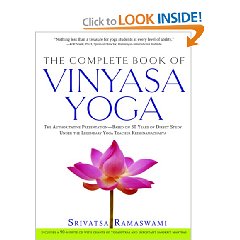
So in a way we may say that suryanamaskara with mantras and the physical exercise has been a very old practice. The word Yoga is indeed a vedic word. You may check with my book “The Complete book of Vinyasa Yoga” (here no commercial intended) based on my studies with my guru and I do not think it in any way resembles a book of gymnastics. Yogasanas have their own distinct nicety. Gymnastics of course has its own charm. Gymnastics was one my favourite programs while watching the Olympics. I do not know if I would enjoy Yoga Olympiad.

My guru had mentioned on a couple of occasions that physical yoga had been the core system of physical exercises in India. It had technically influenced several ancient systems like wrestling, archery, fencing etc., very physically demanding disciplines, requiring a high degree of strength, dexterity and focus. Yoga is called a sarvanga sadhana as it is helpful for all parts of the body, including the internal organs. There were other indigenous circus-like practices such as malcam, kazhakkoothu where they use ropes or poles and do routines very similar to asanas. He had also mentioned that almost all the physical systems of the world, including gymnastics, had borrowed heavily from Yoga, because the asana portion of Yoga was the most ancient and developed physical culture system. Therefore it could be that there were a few similarities between asanas and some obscure gymnastic systems in different parts of the world at different times. Then one has to investigate the origin of those obscure systems, whether they were older than Yoga, or if they themselves borrowed from ancient yoga practices.

My Guru himself was a passionate researcher. He would always be looking for works on yoga and other systems. He even would advise us to go to different agraharams (small cluster of homes of scholars in certain villages) and look for works on Yoga available with such scholars. He would say that we should visit the hundreds of temples in India, especially South India, and observe the sculptures and idols all over the temples for study of yoga postures. And because of the oral tradition and relying on degradable palm leaves, Yoga itself had a checkered progression, in the limelight during some time in history and obscure at some other times. It then becomes a futile exercise to try to determine which among the physical exercise regimens came first, the seed or the tree or the better known example of the chicken and the egg.

There are distinct differences between the yoga I learned from Sri Krishnamacharya for a long period of time and some of the aerobic exercises like gymnastics. In the vinyasa krama asana practice, the breathing is synchronized with the movements at the rate of anywhere between 5 to 10 seconds for inhalation and exhalation thereby reducing the breath rate to about 3 to 5 per minute, whereas in contemporary aerobic exercises including gymnastics and gym workouts, the breath rate increases to much beyond the normal breathing rate of about 15 or so. This alone makes yoga practice of Sri Krishnamacharya distinctly different from other drills.

The variety of movements in Vinyasa asana practice is said to be designed to exercise all parts of the body including the internal organs. We do not find deep movement, synchronized breathing, and the significantly profound exercises like the bandhas — which are an integral part of Sri Krishnamacharya’s asana practice — in other forms of physical exercises, especially gymnastics. Look at the 1930’s videos, the bandhas of my Guru, they are not a gymnast’s cup of chai.

When I was young, some exercises were very popular. They were outside the pale of yogasanas. One was known as “dandal”, which would look very much like a repetitive movement between caturanga dandasana and the plank or a simpler version of urdhwa mukha swanasana. The other was known as, if I remember right, ‘bhaski’. It involved standing up and doing repeated squats. The first one, ‘dandal’ looks very similar to part of Surya namaskara. Baski resembles a very popular ritual that is done by thousands even today and is known as “toppukaranam” in Tamil and “dorbhyam karanam” in Sanskrit. One holds the lobes of the opposite ears with one’s hands and squats usually in front of the idol of Lord Ganesha. It could be 12 times or 108 times. It is both a good physical exercise and a loving devotional practice to the charming Lord Ganesha.

Are these physical drills, yoga exercises, or devotional practices? Which came first? God knows, Lord Ganesa knows.

Then there is the question of whether Suryanamaskara is old, from the Vedic times. The Surya namaskara can be considered from two views; one is the mantra portion the other is vyayama or the physical part. Certainly Suryanamaskara mantras are from the Vedas. In fact, there is a complete chapter of Suryanamaskra mantras from the Veda which takes about an hour to chant. Again, the other important Surya mantra, Gayatri, is also a Vedic mantra. The Vedas exhort using Gayatri as a mantra to worship the sun daily.

Worship of the sun is considered a daily obligatory duty for the orthodox in India. We have a procedure called Sandhya vandana which is supposed to be done thrice a day, but definitely once a day. This Sandhya procedure is a kind of a worship ritual, towards the end of which one prostrates towards the Sun. While the Gayatri japa portion is done sitting in a yogic posture after required number of pranayama, the upasthana or the second part is done standing. Towards the conclusion the worshipper of the sun has to do a namaskara, a prostration. So from the standing position, usually one bends forward, half squats, places the palms on the floor, takes the legs back by jumping or taking one leg after the other and does an saashtanga namaskara or the danda namaskara prostration). One has to go through these steps (from standing to prostration) and if the steps are properly organized we get the surya namaskara vyayama, a sequence, a vinyasakrama. So, since one has to do sandhya daily and has to do the namaskara startig from standing and since the sandhya is mentioned as an obligatory duty, it will be correct to say that suryanamaskara, both the mantra portion and physical namaskara portion, are from the Vedic times. The actual steps may vary but the physical namaskara to the sun is a procedure practiced from ancient Vedic times.

Further, in India you can see many people who do not practice yoga or the formal ritualistic sandhyavandana, standing on the terrace or on the beach, facing East early in the morning, and doing prostrations a few times, returning to the standing position every time. They do not call it Yoga but suryanamaskara. Some of the present day yoga enthusiasts however do the suryanamaskara, probably at night, in any direction or directionless, do not use the mantras or the devotional bhavana associated with it, but as a mere workout.

I had chanted the suyanamaskara mantra almost on every Sunday with my guru for several years. Namarupa also published my article on Sandhya vandana with pictures of the steps some time back. I also have the one hour long Suryanamaskara mantra chant from the Yajur Veda (which I learned from Sri Krishnamacharya) recorded in mid ’80s and the CDs are still made available in India.

Sri Krishnamacharya’s range of teaching was sweeping. I have mentioned about the asana teaching, his chikitsa krama and vinyasa krama. His chanting of vedas was beautiful and very engaging. I do not know of any yoga teacher during his times who could chant as well as he could from memory. He earned the title “Veda Kesari” or Lion of Vedas. He was a Sanskrit scholar, a Sanskrit Pandit. He taught the vedanta philosophy, the prastana trayas, the Upanishads, the Brahma sutra and the Bhagavad Gita in the visishtadvaita tradition. He was given the title “Vedanta Vageesa”. He was also quite familiar with the advaitic interpretation. He once said while doing the sutra on Anandamaya “Anandamaya abhyasat” in which the two interpretations, advaita and visistadwaita differ from each other, “If you want I can teach you the advaitic interpretation, but advaita may be intellectually challenging but does not give the emotional satisfaction one gets from the visishtadvaitic approach”. He also taught us several important Upanishads. I studied with him several Upanishad vidyas from the major Upanishads, like Brahadaranyaka, Chandogya, Taittiriya, Kaushitaki and others. Some of the vidyas he taught include Pancha kosa Vidya, panchagni, pranava, madhu, Sandilya, Dahara Pratardana and many others.

Once I asked him why if the goal is the same, understanding Brahman the ultimate Reality, then there are so many Upanishads, why so many vidyas. He would say that pupils have different questions about the ultimate reality and these vidyas take you from the known to the unknown.

Supposing fifty people, strangers from different places, go to an unknown country, Pineland, and take a picture with the leader of the country, Mr Pineman. Every one sends home a copy of the picture by email. The way they would point to the unknown leader, Mr Pineman, to those back home would be to start from the known. The known entity in the picture will be the one who sends the picture. He may tell his son/daughter, ”the leader is three rows in front and eight to the right of me.” Another person would start first by asking his kid to identify him/her first in the picture and may say the leader is three rows behind and five seats to the left. Likewise, all the various vidyas of the Upanishads try to help the aspirants to realize the ultimate truth, starting from a known tatwa. I had the privilege of studying several Upanishd vidyas from my guru Sri Krishnamacharya.

He also taught many of the sibling philosophies so that one’s understanding of Yoga and Vedanta will be on firm grounds. He taught Samkhya philosophy by explaining the Samkhya karika with the commentary of Gaudapada. He also taught Yoga Sutra in considerable detail. He had obtained the titles “Yogacharya” and “Samkhya Siromani”. He also was an expert in another profound philosophy called Nyaya and had been conferred the title “Nyayacharya”. He also taught smaller or easier works like Tarka Sangraha to introduce the difficult Nyaya philosophy.

His religious studies were outstanding. He was such an expert in the Vaishnava philosophy, that he was in consideration to head a well known Vaishnava Mutt. He was truly a devotional person. As he practiced yoga he performed his daily puja with great devotion. He had several students who studied the Vaishnava religion in considerable detail. He could quote from the epics, Ramayana, Mahabharata and several other puranas like Vishnu Purana, Bhagavata Purana, etc.

I do not know of any person who was so well versed in the sastras and also at the same time an outstanding practising Yogi. Sri Krishnamacharya is well known, it is almost exclusively due to his yogasana teachings. But his scholarship and teachings were enormous. I feel a bit sad when he is portrayed as a hatha yoga teacher who plagiarized some exercises from gymnastics and called it yoga to make a living, and nothing more. [emphasis supplied.]

Maybe there is some common ground between these two different physical disciplines. I continue to remain in awe of his enormous scholarship, practice and teachings and kindness towards his students. He was a teacher who would uplift you, a true Acharya. When you study with him, you get an unmistakable feeling that his only goal in life was to transmit the traditional knowledge and make it accessible to the student. He was a unique Yogi, a unique teacher, a unique individual. Twenty years after his passing away, I remember him everyday, while practicing, studying or teaching, sometimes in dreams — fondly.”

If you want to study with a true yogi, a true yoga scholar, and a vedic chant master, Ramaswamiji will teach at the Chicago Yoga Center September 17-26.

guest blogger Barry Wadsworth on "Yoga as Mindfulness Practice – A Buddhist Perspective"

Many of you know that my yoga practice is informed by Buddhism. I am unable to treat my physical yoga practice as anything other than a moving meditation or mindfulness practice. I have studied the buddhadharma for so long with various teachers in both the Mahayana and Theravada traditions that I think it’s ingrained in my DNA by now! Yoga is my meditation and vice versa. In some of my workshops I’ve started to incorporate dharma talks on Buddha’s Four Foundations of Mindfulness as they apply to the physical yoga practice.

Most yoga teacher trainings (at least the ones with which I am familiar) do not speak much of Buddhism (even though Buddha was most definitely a yogi) which is why I was so glad I found the first Mindfulness Yoga and Meditation Training at Spirit Rock in California. It was finally a training that spoke to my entirety and I am blessed to have been part of the first training with such wonderful teachers in both classical yoga and Western Buddhism.

I see no conflict with my Buddhism and my traditional yoga training in India at the Krishnamacharya Yoga Mandiram and with Srivatsa Ramaswami. It’s all good and each enhance the other as far as I am concerned.

Vinyasa krama is what I have studied with Ramaswamiji since 2004 and it is the yoga style that I primarily use for my own practice (combined with yin yoga) and with private clients. According to Ramaswamiji, vinyasa krama yoga is an ancient practice of physical and spiritual development, and is a systematic method of practicing and adapting yoga for the individual. Krama is a Sanskrit word meaning “stages.” It is a step-by-step process involving the building in gradual stages toward a “peak” within a practice session. This progression can include asanas of increasing complexity or gradually building one’s breath capacity. In his book The Complete Book of Vinyasa Yoga, Ramaswamiji says that “by integrating the functions of mind, body, and breath. . .a practitioner will experience the real joy of yoga practice. . .Vinyasa krama yoga strictly follows the most complete definition of classical yoga.”

So I was glad to “meet” Barry Wadsworth when he made me an administrator of the Vinyasa Krama group on Facebook. He has just completed Ramaswamiji’s 200 hour vinyasa krama teacher training and is also Buddhist so we had a lot to talk about. Our Facebook conversation about yoga and Buddhism morphed into his writing here…enjoy!

For those of you who would like to explore classical yoga with a true yoga master who studied with Krishnamacharya for over 30 years, Ramaswamiji will be teaching in Chicago during September.

**********

“For Buddhists, the practice of yoga asanas as a method of mindfulness practice is especially meaningful. Although some traditional yoga teachers emphasize mindfulness of breathing in synchronization with the breath, the Buddhist context of using bare attention to penetrate the moment as a means to realization is not as emphasized or is missing. During Chan and Vipassana practice, especially on retreats, slowing down all activity to the point that you can peer into its very nature is essential and can lead to a very direct experience of impermanence and self-nature. This understanding and emphasis coupled with the practice of yoga asanas is particularly useful.

In the Yoga Sutras, there is the concept of uninterrupted, moment-to-moment one pointedness or focus. But the goal there is not realization of self-nature in the Buddhist sense, but realization of individual self (atman) as distinct from the citta vrittis. Of course, this is where Buddhism departs, with an emphasis on there not being an independently existing person, self, or soul.

Practicing yoga has been a kind of experiment for me. Can a practicing Buddhist practice yoga in such a way that the fundamental truths of Buddhism, suffering, impermanence, and no self (anatma), are not distorted or lost? I think the answer is definitely yes, but it requires a clear understanding of the differences in addition to the similarities of the two traditions. Otherwise, it becomes a confusing melting pot that doesn’t do justice to either tradition. For me, the goal is not Patanjali’s dualistic realization of individual self as distinct from phenomena and Universal Self (Purusha of Isvara). It’s also not Shankara’s non-dualistic realization that self is Brahman. Rather, it’s the complete liberation from attachment to any notion of self. Once self is removed from the picture, perception is pure and everything is seen just as it is. This is true, unimpeded and boundless liberation. When the experience of self is lost, perception pivots on itself and myriad things sing in harmony with all other things, infinitely correlated, perfect and complete. Any clinging to “self” collapses this perfect harmony, the natural state of things, to self and other, internal and external, interesting and uninteresting, good and bad, mine and not mine.

One might say that one who experiences “aham Brahmasmi” (I am Brahman) also experiences this same non-dualistic reality and is not impeded by attachment or aversion to anything since everything is experienced as Self. Yet Buddha’s awakening specifically had the characteristic of going beyond an eternal notion of self, even Universal Self, as the highest enlightenment. According to Buddhist sutras, as long as there is any identification with self, one is still trapped in the cycle of birth and death and not completely liberated. The wisdom of knowing the truths of suffering, impermanence, and no self engenders compassion for all sentient beings and frees one to act completely for the benefit of others, without regard to self. I’ve seen this selflessness in my Shifu, Chan Master Sheng Yen and in my Vipassana master, Ven. Chanmyay Sayadaw. They both have the quality of being completely present and available, fully there for you with no distraction, when you talk with them. Your ego could even get puffed up with the feeling that you were the most important person in the world to them at that particular moment. But, they also had the compassionate ability to deflate the ego when the time was right. I’ve noticed the same quality in the Dharma heirs of Master Sheng Yen and some of Chanmyay Sayadaw’s disciples and lay students — fully present, awake and clear, penetrating, insightful, patient, and compassionate. I noticed the same qualities in the Dalai Lama. The world needs more saints like these!

For Buddhists and non-Buddhists, practicing yogasanas with mindfulness can be very beneficial in developing a very direct perception, a bare awareness of space, time, motion and sensation. Deepening this experiences enables the silence of meditation to stabilize in daily activity and bring about moment-to-moment penetrating focus along with awareness unbound by the environment. The union of Buddhist understanding with mindful practice of yogasanas is particularly beneficial. I’m very glad to hear of courses being taught, such as those at Spirit Rock, that have this focus. This is bound to improve the overall landscape of Yoga as it is taught in the West.”

Read more at Barry’s blog Chan Practice.

Srivatsa Ramaswami: chitta vritti

One of my primary teachers is Srivatsa Ramaswami, who studied with Krishnamacharya for over 30 years, longer than anyone in Krishnamacharya’s immediate family. Ramaswamiji was one of the original trustees of the Krishnamacharya Yoga Mandiram in Chennai, the yoga school where I have studied every year for five years.

I first met Ramaswamiji in 2003 and he inspired me to travel to the heart of yoga. I knew that I had to study more deeply the yoga that he teaches, vinyasa krama. Vinyasa krama yoga is a systematic method of practicing and adapting yoga for the individual. “Krama” is a Sanskrit word meaning “stages.” It is a step-by-step process involving the building in gradual stages toward a “peak” within a practice session. This progression can include asanas of increasing complexity or gradually building one’s breath capacity. It is the yoga that I practice for myself and that which I use with my yoga therapy clients.

Ramaswamiji says that “By integrating the functions of mind, body, and breath…a practitioner will experience the real joy of yoga practice. Vinyasa krama yoga strictly follows the most complete definition of classical yoga.”

To me, Ramaswamiji is a true yogi. I consider him to be my guru but I know he would be embarassed if I called him that. I am honored and humbled to be mentioned in the Acknowledgement of his book The Complete Book of Vinyasa Yoga as one who has “studied vinyasa yoga in depth with me” and who has “incorporated essentials of vinyasa krama into…teaching and practice even from Day 1.” I was shocked and amazed and started crying when I saw my name.

The words below are from a newsletter that Ramaswamiji sends to his students. During one of my trainigs at KYM the teachers told us that if we do not pass on the teachings we are nothing more than thieves.

************

“The Sanskrit word vritti is used commonly in many Indian languages to indicate one’s main activity or avocation. A farmer is said to be in krishi vritti or agriculture. A sanyasin is said to live on Uncha vritti or high way of living which is basically asking for minimal food with a begging bowl.

So vritti is used to indicate one’s jivana or livelihood, vritti-jivane as the grammar book says. One mantra in Suryanamaskara is “apa ca avrittim” which is a prayer to be gainfully employed — a+vritti meaning joblessness. Some other prefixes also modify the meaning of the word: pra+vritti or pravritti will indicate activities towards getting what one wants whereas ni+vritti or nivritti will indicate activities (and the result) associated with getting rid of what one does not want. Chitta vritti would mean the activity of the chitta. Chitta itself has an interesting meaning.

Chitta which is usually translated as “mind-stuff” or brain is that which though is inert matter appears to have consciousness. “Citiva bhavayati”, like my computer which does not even have life but appears to be super intelligent.

So what does the chitta do, what are its vrittis or activities? Basically the chitta through the vrittis gives us experiences of varied types. It projects different images within its confines — in its own space, mental space, even though the projections appear to be in the outside real space.

For the sake of convenience several works divide functionally the chitta into manas (mind), buddhi (intellect), ahamkara(ego) and smriti/citta(memory). I receive information from the outside world through my senses, eyes, ears, etc., due to the vrittis of the indriyas. Then the manas or mind which is also known as the 11th indriya collates and coordinates and presents to another faculty of the chitta called buddhi. Buddhi analyzes all the information and makes a judgment and then the ego or ahankara aspect of chitta comes into play. If it likes the presentation, it is happy but if not it shows its unhappiness and produces various reactions. When the Buddhi or intellect is active then the chitta vritti is also known as buddhi vritti, but when it is dominated by ahankara aspect of chitta the chitta vritti is known as ahamkara vritti. When some one says that I am a good person I am happy, my ahamkara vritti makes me expansive and I hit the roof. If then someone says I am a lousy yoga teacher, I feel bad and am down in the dumps due to the ahamkara vritti. So moment after moment I have a chitta vritti which includes images not only of the outside objects but also me as the subject of the whole experience. Therefore the chitta vritti is the totality of my experience at any given moment.

The one that experiences or observes all these successive chitta vritties is the real “I”, the purusha, the drashta or observer or the non-changing and hence eternal pure consciousness.

Patanjali says the chitta is capable of transcending all the vrittis and remaining oblivious to all the vrittis. To understand that state he lists all the chitta vrittis in five categories, the main purpose of it is to indirectly know or infer the state which is beyond the chitta vritti state, trying to show the unknown from the known.

What are these known chitta vrittis? The first one is called the pramana vritti or those vrittis which produce correct knowledge of the various objects. Through the senses, I get information of the outside world thanks to the tanmatras received from the objects and the knowledge produced is the pramana vritti. If the knowledge produced is incorrect then that vritti is classified as the viparyaya vritti. Either one interprets the incoming information correctly or incorrectly but the chitta produces a vritti for experience. The chitta sometimes needs no outside information to produce a vritti experience in which case it is called vikalpa vritti, the typical example is the dream vritti. Then we have deep sleep which is considered another activity of the chitta which vritti is due to the dominance of Tamas and hence is known as tamo vritti. Finally we have a lot of information stored in our chitta and when we recall something vividly in the mind it is termed smriti vritti.

Is there a moment in our lives when the chitta is without a vritti? No, according to the exhaustive classification of chitta vrittis, there is not a moment when the chitta stops its activities, its projections in the mental space, its vrittis. While ordinarily the chitta wallows in these vrittis, Patanjali talks about a state in which the chitta transcends all the vrittis mentioned above and remains in that state. That is the state of Yoga.

It happens when the chitta uses all its faculties and yogic training to concentrate and knows for sure the true nature of the observing self/soul, the non-changing, hence eternal consciousness. With that knowledge, with that direct experience, the chitta remains in a state of resolution, on realizing the nature of the the Self in its true form (svarupa). When there is realization in the chitta that nothing, none of the vrittis changes the essential nature of the pure purusha, it becomes quiet – completely quiet. In that state the chitta does not have any of the vrittis mentioned above. But when not in the state of Yoga, it does not know the true nature of the soul. Rather than trying to locate and realize the nature of the Self (as a Raja Yoga practitioner attempts to do), it creates and projects a shadow self using its own vritti, a viparyaya vritti. The chitta is capable of creating this deception.

Take for example what the lazy chitta does during dream state. Getting out of deep sleep, but yet unable to wake up completely, the chitta creates its own dream space, dream objects and also creates a self, a dream self, only to discard it when it wakes up.

Patanjali uses two terms about the nature of the Self and the nature of the pseudo self. He uses the term swarupa or own form to indicate the nature of the true Self. He uses the term sarupa or something similar to the form of the Self for the self image created by the chitta. It is like the difference between the subject and the wax model. The model however much it may look like the original is still a copy and not the original/Self. In fact Patanjali uses the term sarupa which would mean similar to rather than tadrupa which would mean identical with or the exact replica. The emphasis is not so much on how similar or look alike they are (like the mirror image or reflection, etc. which would be tadrupa) but that the model is not the real thing. The implication is that the created self or ego or ahamkara is a creation of the chitta itself; it is itself a chitta vritti (vritti saarupya).

The ultimate state of Yoga of the chitta is that in which it transcends all its vrittis. In that trance-like state the Yogi is oblivious to the surroundings, not sleeping, not dreaming nor thinking of the past. The brain or the mindstuff has also another set of vrittis. The samkhyas call it the samanya or samanya karanaa vrittis. This set of vrittis helps to maintain life even of the Yogi. These are vrittis of prana which itself is an aspect of chitta. These non-descript or ordinary vrittis maintain life. They are known as prana, apana, vyana, udana and samana vrittis and correspond to the life sustaining autonomic activities of the brain. They function until the Yogi decides to call it quits.

What do I do?
I teach a class.
What do I experience?
I experience that I teach a class.
In the last sentence, there are two “I”s.
Which “I” am I?”

addthis_pub = ‘yogagal60510’;

yoga wisdom from my teacher

Meditating on Meditation by Srivatsa Ramaswami

“I was watching a live television program in India some 30 years back
when TV had just been introduced in India. It was a program in which
an elderly yogi was pitted against a leading cardiologist. It was
virtually a war. The yogi was trying to impress with some unusual
poses which were dubbed as potentially dangerous by the doctor. Almost
everything the yogi claimed was contested by the non-yogi and soon the
dialogue degenerated. The yogi stressed that headstand will increase
longevity by retaining the amrita in the sahasrara in the head and the
medical expert countered it by saying that there was no scientific
basis for such claims and dubbed it as a pose which was unnatural and
dangerous and will lead to a stroke. The Yogi replied by saying that
Yoga had stood the test of time for centuries; it had been in vogue
much before modern medicine became popular. Thank God it was a black
and white program; else you would have seen blood splashed all over
the screen.

Things have become more civil in these three decades. Now neti pot,
asanas, yogic breathing exercises and yogic meditation have all become
part of the medical vocabulary. There is a grudging appreciation of
yoga within the medical profession. Many times doctors suggest a few
yogic procedures, especially Meditation, in several conditions like
hypertension, anxiety, depression and other psychosomatic ailments.

Ah! Meditation. The Yoga world is divided into two camps. On one side
we have enthusiastic hata yogis who specialize in asanas and the other
group which believes fervently in meditation as a panacea for all the
ills.

But how should one meditate? Many start meditation and give it up
after a few days or weeks as they fail to see any appreciable benefit
or perceivable progress. The drop out rate is quite high among
meditators. The mind continues to be agitated and does not get into
the meditating routine. Or quite often one tends to take petit naps
while meditating. Why does this happen? It is due to lack of adequate
preparation. Basically one has to prepare oneself properly for
meditation. The Yogis mention two sadhanas or two yogic procedures as
preparations. They are asanas and pranayama. Asanas, as we have seen
earlier, reduce rajas which manifests as restlessness of the mind, an
inability to remain focused for an appreciable amount of time. But
another guna, tamas also is not helpful during meditation, manifesting
as laziness, lethargy and sloth and this also should be brought under
control if one wants to meditate. Patanjali, Tirumular and several old
Yogis advocate the practice of Pranayama to reduce the effects of
Tamas. Patanjali says Pranayama helps to reduce avarana or Tamas. He
along with conventional ashtanga yogis also mentions that Pranayama
makes the mind capable of Dharana or the first stage of meditation.
Pranayama is an important prerequisite of meditation.

There is evidence that pranayama has a salutary effect on the whole
system. In an earlier article I had explained the beneficial effects
of deep pranayama on the heart and the circulatory system. Further,
when it is done correctly, it helps to draw in anywhere between 3 to 4
liters of atmospheric air compared to just about ½ liter of air
during normal breathing. This helps to stretch the air sacs of the
lungs affording an excellent exchange of oxygen and gaseous waste
products. These waste products are proactively thrown out of the
system by deep pranayama, which yogis refer to as reduction of tamas.
Thus soon after pranayama, the yogi feels refreshed and calm and
becomes fit for the first stage of meditation which is called Dharana.

What should one meditate on? Several works talk about meditating on
cakras, mantras, auspicious icons, various tatwas and on the spirit/
soul etc. But, the method of meditating, only a few works detail.
Perhaps the most precise is that of Patanjali in Yoga Sutras.
Patanjali details not only a step by step methodology of meditation
but also the various objects of prakriti and ultimately the spirit
within to meditate on. Hence his work may be considered as the most
detailed, complete and rigorous on meditation

For a start Patanjali would like the abhyasi to get the technique
right. So he does not initially specify the object but merely says
that the Yogi after the preliminary practices of asana, pranayama and
pratyahara, should sit down in a comfortable yogasana and start the
meditation. Tying the mind to a spot is dharana. Which spot? Vyasa in
his commentary suggests going by tradition, a few spots, firstly
inside the body, like the chakras as the Kundalini Yogi would do,, or
the heart lotus as the bhakti yogi would do, or the mid-brows as a
sidhha yogi would do or even an icon outside as a kriya yogi would do.
The icon should be an auspicious object like the image of one’s
favorite deity. Many find it easier to choose a mantra and focus
attention on that. Thousands everyday meditate on the Gayatri mantra
visualizing the sun in the middle of the eyebrows or the heart as part
of their daily Sandhyavandana** routine. It is also an ancient
practice followed even today to meditate on the breath with or without
using the Pranayama Mantra.

(*Namarupa published my article “Sandhyavandanam-Ritualistic
Gayatri Meditation” with all the routines, mantras, meanings, about 40
pictures, and also an audio with the chanting of the mantras in the
Sep/Oct 2008 issue.)

What of the technique?

The Yogabhyasi starts the antaranga sadhana or the internal practice
by bringing the mind to the same object again and again even as the
mind tends to move away from the chosen object of meditation. The
active, repeated attempts to bring the mind back to the simple, single
object again and again is the first stage of meditation (samyama)
called dharana. Even though one has done everything possible to make
the body/mind system more satwic, because of the accumulated samskaras
or habits, the mind continues to drift away from the object chosen for
meditation. The mind starts with the focus on the object but within a
short time it swiftly drifts to another related thought then a third
one and within a short time this train of thoughts leads to a stage
which has no connection whatsoever with the object one started with.
Then suddenly the meditator remembers that one is drifting and soon
brings the mind back to the object and resumes remaining with the
“object”. This process repeats over and over again. This repeated
attempts to coax and bring the mind to the same object is dharana. At
the end of the session lasting for about 15 minutes, the meditator may
(may means must) take a short time to review the quality of
meditation. How often was the mind drifting away from the object and
how long on an average the mind wandered? And further what were the
kinds of interfering thoughts? The meditator takes note of these. If
they are recurrent and strong then one may take efforts to sort out
the problem that interferes with the meditation repeatedly or at least
decide to accept and endure the situation but may decide to take
efforts to keep those thoughts away at least during the time one
meditates.

If during the dharana period, the mind gets distracted too often and
this does not change over days of practice, perhaps it may indicate
that the rajas is still dominant and one may want to reduce the
systemic rajas by doing more asanas in the practice. On the other hand
if the rajas is due to influences from outside, one may take special
efforts to adhere to the yamaniyamas more scrupulously. Perhaps every
night before going to sleep one may review the day’s activities and
see if one had willfully violated the tenets of yamaniyamas like “did
I hurt someone by deed, word or derive satisfaction at the expense of
others’ pain”. Or did I say untruths and so on. On the other hand if
one tends to go to sleep during the meditation minutes, one may
consider increasing the pranayama practice and also consider reducing
tamasic interactions, foods etc.

Then one may continue the practice daily and also review the progress
on a daily basis and also make the necessary adjustments in practice
and interactions with the outside world. Theoretically and practically
when this practice is continued diligently and regularly, slowly the
practitioner of dharana will find that the frequency and duration of
these extraneous interferences start reducing and one day, the abhyasi
may find that for the entire duration one stayed with the object. When
this takes place, when the mind is completely with the object moment
after moment in a continuous flow of attention, then one may say that
the abhyasi has graduated into the next stage of meditation known as
dhyana. Many meditators are happy to have reached this stage. Then one
has to continue with the practice so that the dhyana habits or
samskaras get strengthened. The following day may not be as
interruption free, but Patanjali says conscious practice will make it
more successful. “dhyana heyat tad vrittayah”. If one continues with
this practice for sufficiently long time meditating on the same object
diligently, one would hopefully reach the next stage of meditation
called Samadhi. In this state only the object remains occupying the
mind and the abhyasi even forgets herself/himself. Naturally if one
continues the meditation practice one would master the technique of
meditation. Almost every time the yagabhasi gets into meditation
practice, one would get into Samadhi. Once one gets this capability
one is a yogi—a technically competent yogi– and one may be able to
use the skill on any other yoga worthy object and make further
progress in Yoga. (tatra bhumishu viniyogah)

The consummate yogi could make a further refinement. An object has a
name and one has a memory of the object, apart from the object itself
(sabda, artha gnyana). If a Yogi is able to further refine the
meditation by focusing attention on one aspect like the name of the
object such a meditation is considered superior. For instance when the
sound ‘gow” is heard (gow is cow ), if the meditiator intently
maintains the word ‘gow’ alone in his mind without bringing the
impression(form) of a cow in his mind then that is considered a
refined meditation. Or when he sees the cow, he does not bring the
name ‘gow’ in the meditation process, it is a refined meditation.

The next aspect-after mastering meditation— one may consider is, what
should be the object one should meditate upon. For Bhakti Yogis it is
the Lord one should meditate upon. According to my teacher, a great
Bhakti Yogi, there is only one dhyana or meditation and that is
bhagavat dhyana or meditating upon the Lord. There is a difference
between a religious person and a devotee. A devotee loves the Lord and
meditates on the Lord, all through life. The Vedas refer to the
Pararmatman or the Supreme Lord and bhakti yogis meditate on the Lord.
The Vedas also refer to several gods and some may meditate on these as
well. By meditating on the Lord one may transcend the cycle of
transmigration. At the end of the bhakti yogi’s life one reaches the
same world of the Lord (saloka), the heaven. Some attain the same form
as the Lord. Some stay in the proximity of the Lord and some merge
with the Lord. The Puranas which are the later creation of poet seers
personify the Lord and the vedic gods. Thus we have several puranas as
Agni purana, Vayu purana and then those of the Lord Himself like the
Bhagavata Purana , Siva Purana , Vishnu Purana. Running to thousands
of slokas and pages the puranic age helped to worship the Lord more
easily as these stories helped to visualize the Lord as a person,
which was rather difficult to do from the Vedas. Later on Agamas made
the Lord more accessible by allowing idols to be made of the Lord and
divine beings and consecrating them in temples. Thus these various
methods helped the general populace remain rooted to religion and
religious worship. So meditating upon the charming idol/icon of the
Lord made it possible for many to worship and meditate . Of course
many traditional Brahmins belonging to the vedic practices stuck to
the vedic fire rituals, frowned upon and refrained from any ‘form
worship’, but millions of others found form worship a great boon.

Meditating on the form of the chosen deity either in a temple or at
one’s own home has made it possible to sidestep the intermediate
priestly class to a great extent. One can become responsible for one’s
own religious practice, including meditation. The ultimate reality is
meditated on in different forms, in any form as Siva Vishnu etc or as
Father, Mother, Preceptor or even a Friend. Some idol meditators
define meditating on the whole form as dharana, then meditating on
each aspect of the form as the toe or head or the arms or the
bewitching eyes as dhyana and thus giving a different interpretation
to meditation. Some, after meditating on the icon, close the eyes and
meditate on the form in their mind’s eye (manasika).

Darshanas like Samkhya and Yoga which do not subscribe to the theory
of a Creator commended ‘the understanding of one’s own Self’ as a
means of liberation. The Self which is non-changing is pure
consciousness and by deep unwavering meditation after getting the
technique right, one can realize the nature of oneself and be
liberated. Following this approach, the Samkhyas commend meditating on
each and every of the 24 aspects of prakriti in the body-mind complex
of oneself and transcend them to directly know the true nature of
oneself, and that will be Freedom or Kaivalya. Similarly the Yogis
would say that the true nature of the self is known when the mind
transcends(nirodha) the five types of its activities called vrittis to
reach kaivalya, by a process of subtler and subtler meditation.

The Upanishads on the other hand while agreeing with the other
Nivritti sastras like Yoga and Samkhya in so far as the nature of the
self is concerned, indicate that the individual and the Supreme Being
are one and the same and meditating on this identity leads to
liberation. They would like the spiritual aspirant to first follow a
disciplined life to get an unwavering satwic state of the mind. Then
one would study the upanishadic texts (sravana), by analysis (manana)
understand them and realize the nature of the self through several
step by step meditation approaches (nidhidhyasana). The Vedas, for the
sake of the spiritual aspirant, have several Upanishad vidyas to study
and understand It from several viewpoints. For instance, the panchkosa
vidya indicates that the real self is beyond (or within) the five
koshas (sheaths). It could also be considered as the pure
consciousness which is beyond the three states of awareness (avasta)
of waking, dream and deep sleep, as the Pranava(Om) vidya would
indicate. The understanding and conviction that Self and the Supreme
Self are one and the same is what one needs to get, before doing
Upanishadic meditation following the advaitic interpretation.

Summarizing one may say that traditional meditation warrants proper
preparation so that the mind becomes irrevocably satwic and thus fit
for and capable of meditation. Secondly it requires practice on a
simple object until the meditation technique is mastered and such
meditatin samskaras developed. Then the Yogi should set the goal of
meditation based on the conviction of a solid philosophy—bhakti,
samkhya, yoga, vedanta, kundalini (or if comfortable, nirvana) or
whatever.”

Thank you Ramaswamiji!

I can’t credit this as my own question, but it’s a good one: “why is it that all these people practice yoga (also known as “stretching”) but never seem to meditate?”

This morning I asked my class (a class that has 15-20 minutes of meditation at the end — and no one leaves) if they are using meditation to gain something or to get rid of something.

My personal yoga practice is almost all meditation nowadays. Yes, I still move, but asanas are merely shapes and forms to lead me into formless quietude.

addthis_pub = ‘yogagal60510’;

Friday’s yoga thought

“Daily Yoga practice may include Asanas, Pranayama and Meditation in proper proportion, so that the yoga diet is balanced.” Srivatsa Ramaswami

In this recent discussion of what yoga should have in order to be called yoga, who can argue against having a balanced diet?

Resources for mindfulness meditation practice: “Mindfulness meditation: The Shambhala Sun offers a diverse selection of teachings on mindfulness meditation, from the Theravada and Insight traditions of Buddhism.”

And here’s an oldie but a goodie: Killing Yoga’s Sacred Cows

Finally….

HAPPY DIWALI TO EVERYONE!


addthis_pub = ‘yogagal60510’;

is American yoga in crisis? part 2…

From the last chapter of Yoga Beyond Fitness:

“If teachers grounded in the deeper message of Yoga are not available or do not share what they know, Srivatsa Ramaswami predicts ‘the subject will die because every following generation will know less and less. And the lack of knowledge could be filled with innovations of novices, leading to corruption or the art dying itself.'”

I attended Tom’s talk last night — see this post — and have a lot to say about it but y’all will have to wait until next week.

Until then chew on the above quote from my teacher, Srivatsa Ramaswami (Krishnamacharya’s longest standing student outside of the family), whom Tom quotes a lot in his book Yoga Beyond Fitness.

Talk amongst yourselves.

To be continued….

addthis_pub = ‘yogagal60510’;

Sri Ramaswami on P. Jois and birth and death


(AUM written in Tamil)

I am an ongoing student of Srivatsa Ramaswami and this is what Ramaswamiji had to say in an email about the passing of Pattabhi Jois and birth and death.

Sri Ramaswami was Krishnamacharya’s longest standing student outside of Krishnamacharya’s family. He studied with Krishnamacharya for some 30 years, longer than P. Jois, Iyengar, and Desikachar.

SRI PATTABHI JOIS

Three of the disciples of my Guru, Sri Pattabhi Jois, Sri B K S Iyengar and Sri T K V Desikachar, propagated Yoga in the modern times and their influences have been phenomenal. The oldest of them, Sri Pattabhi Jois, taught the unique adaptation of my Acharya’s asana teaching, christened Ashtanga Vinyasa Yoga. It has caught the imagination of hundreds of thousands of Yogis all over the world and is practiced with tremendous enthusiasm. His passing away at the ripe old age of 94 leaves a void in the Yoga World. A tremendous teacher, Guruji was dearly loved and highly respected in the Yoga world. I had not met him but am aware that he was an ideal student of my Guru. The debt to a father is repaid by the offspring by exemplary conduct. “What good karmas the father should have done to get such a wonderful offspring”, people should say of the son/daughter. Likewise it is said that a student should bring out the glory of the teacher by his teachings — “Acharyam praksayeth.” People should wonder, “Who was his teacher?”

Sri Jois by his relentless and pioneering work on Yoga brought name, fame and respect to the legacy of his teacher Sri Krishnamacharya.

Om Shanti.

BETWEEN DEATH AND BIRTH

All the orthodox philosophies which accept the authority of the Vedas subscribe to the Theory of Karma, even as they have significant differences in the interpretation of the Vedas.

According to the Vedas, the individual soul surrounded by the vasanas or impressions of the past lives and also the remainder of the accumulated subtle karma bundle, gets attached to the subtle body of the individual. The subtle body itself, according to Sankhyas, is made of 18 aspects, the three internal organs of the chitta, viz., mind, ego and intellect, the ten indriyas and five tanmatras. When a person dies, the non-changing pure consciousness — the soul or self also known as purusha or jiva along with the subtle body undergoes the first transformation when it goes through ‘fire’, as the physical body is consigned to the fire after death. Then the subtle body goes up the sky space and approaches the heaven, but due to the avidya and the power of the accumulated karmas, stagnates and then is absorbed by the rain clouds, which is the second transformation due to the ‘fire’ of water. The subtle body then descends to earth with the drops of rain and is absorbed by a plant which is the third transformation through fire of earth. Then when the plant or the plant product is eaten by a being, it is absorbed and becomes the generative fluid of that person. This is the fourth transformation through the fire of the being, or gastric fire. Then when it is transferred to the female being, it undergoes another transformation through fire of the womb and becomes an embryo. Then according to Samkhyas the embryo has the subtle body and the genes/genetic body. The subtle body which went through five changes now gets the second body or the body given by the parents (mata pitruja sarira). This embryo then gets nourishment through the mother and develops another body known as bhuta sarira (the physical body) or a body made of the five elements — earth, water, fire, air, and space. And then one is born again. These five fire transformations is in the panchagni vidya of the Upanishads, and the Samkhyas talk about the subtle body, the genetic body, and the physical body to complete the story of the journey from death to birth. But those yogis who have attained Kaivalya or Moksha or Nirvana have their souls liberated and are able to shed the subtle body when they attain liberation and are able to break this cycle of samsara or transmigration. One who is able to clearly understand the process of transmigration through meditation and understanding of the panchagni vidya briefly narrated above are able to attain liberation (for better understanding, read the panchagni vidya from Chandogya Upanishad.) Such a person is able to see the distinction between the changing body going through all the transformation between birth and death and then between death and birth and the non-changing pure consciousness or the Self. Such a person is able to identify with the non-changing consciousness as ‘oneself’, the immortal self and becomes immortal. The rest, considering themselves to be mortal go through the cycle of samsara repeatedly and endlessly say the Upanishads.

my teacher’s wisdom

“Charles Darwin’s 200th birth Anniversary has indirectly energized many to restart the debate about God, Creation and Evolution. This kind of discussion, though, has been going on from time immemorial.

Sayana, the well known commentator on the Vedas, starts his commentary by pointing out that several of the sayings of the Vedas on Heaven and the less favorable place and the details of how to get to the former and avoid the latter can never be proved or disproved. Even if they debate for a billion years (sata koti varsa) the believer can not prove to the nonbeliever the existence of these worlds and God, nor can the non-believer disprove their existence to the believer. Recently, several Darwin believers have put up graffiti billboards, etc., proclaiming, inter alia, “Probably there is no God, so go out and enjoy life”, drawing an equally telling response from a believer, “God exists, so go out and enjoy life”.

The most popular theory of creation of modern science is the Big Bang theory. Great minds have propounded this theory. Basically it asserts that the present Universe we experience evolved out of a dime sized entity called “Singularity” that the universe has expanded from this primordial hot and immensely dense initial condition at some finite time in the past, and continues to expand to this day. The mathematicians would say that this singularity has no dimension and infinite density. Then the Universe evolved out of it. I understand that the Big Bang theory does not address the question whence the Singularity was formed and how. Some speculate that these are formed from matter and energy sucked by the Black Hole(s), which is the end chapter of the previous evolution. Implicitly there is no mention of the need for an intelligent cause (Nimitta Karana) for the creation. It evolves by itself. Of course there are many scientists who believe that there could be an intelligent principle behind it—though they may not call it God. This view that the Universe evolved without God or an efficient cause has been there along with the theistic view from time immemorial. An orthodox philosophy, Samkhya avers that the entire Universe evolved out of a singular non-dimensional entity called Mula Prakriti, without an efficient cause (nimitta karana) called God.

Both these views hold that the Universe, the macrocosm that we experience has a real, material cause. And theists believe in a material cause which is also efficient/intelligent cause, which is God. This macrocosmic view that out of the huge macrocosm, countless individual entities like us have sprung up or were created, or evolved, is generally accepted. But there is a third view less known, less straightforward, which tries to understand the whole evolution from a different point of view, from the point of the individual microcosm.

Yoga looks at it from the individual viewpoint, as briefly explained below, which will help and lead us to understand the third viewpoint about Creation propounded by the Advaitic School of the Upanishads.

All my life I am the subject and the world around is the object. I see objects, hear sounds, smell things etc. When I am awake and see an object, the sequence as all of us know is as follows. Light falls on the object that I see, the light is reflected by the object, and the light particles, reach my eyes and then the retina. The retina
converts them into electrical impulses and they reach some part of my brain. Then there may be some chemical changes in my brain cells and communications among the brain cells resulting in my seeing the object. But in physical terms all the information reaches my brain and is absorbed. With this the physical phenomena end. After these reach my brain, how do I see the object, outside of me, in front of me? The information is in my head physically but how do I see it outside of me? Nothing goes out of my head. The brain projects an image, not outside but in the mental space according to Yogis, because the projection does not and cannot take place in the physical space. My mind projects it and there has to be some awareness or consciousness in me which sees or experiences this mental projection. The yogis call
the projection a chittavritti. The chittavritti is the projection of the mind made out of the information received through the eyes.

Of course the projection is a little more involved. The mind not only gets information through the eyes but also through the ears and other senses, and the mind collates the information and makes a composite presentation which I see in the mental space, just as the objects appear to be outside of me. I not only have the outside picture reproduced in my mind but also me, the subject, as part of the experience. I am also aware that I am in the midst of the total picture as the ‘subject’ experiencing the outside world. I also feel emotions attached to the mental picture. I also react to the experience, sometimes with a happy or sometimes an unhappy
disposition. Anyway there is a composite picture I experience. The totality of what I experience including that I am the observer, I like it, I don’t like it, everything — this is the chittavritti at a moment. In the next moment, the chittavritti changes. Moment after moment there is a new chittavritti and the non-changing Self, the pure consciousness keeps observing this changing flux of chittavrittis.

The chittavritti is not confined to objects outside that I see directly. Sometimes, I infer from partial sensory perceptions or occasionally I try to picture on the basis merely of what I hear. Then there are occasions when I close my eyes and produce my own chittavrittis, without objects, like in dreams—day or night. Then I have chittavrittis produced purely from past incidents which I remember. Then of course my mind completely closes shop when there is an ‘experience of sleep’. So I have a variety of chittavrittis, all taking place in my head. My chittavritti which is the totality of my experience at any given moment takes place not in physical space but in mental space or in virtual space. So even though the objects I
perceive may be real, what I experience is virtual. This is what happens in all of us all the time. But even as the experience may be with virtual objects, the objects of the outside world are real according to Yogis.

But the Vedantins especially advaita vedantins ask a further question. If the experience we have takes place in mental space or chitta akasa, the experience of the prior moment also should be taking place in virtual space. So the objects that reflected light particles for my eyes to perceive themselves are virtual objects. Thus going back they aver that our entire life experience is only virtual and not ‘really’ real. We can extrapolate this to the entire outside world and say the Universe is not really ‘real’, it is an illusion.

So we have three possibilities, following this line of reasoning. Firstly the universe is real even though our experience, known as chittavritti is virtual. This is the position of the Yogis, and we would agree with that. The second view is that it is not possible to say for sure if the outside world exists or not (anirvachaniya) since our experience is limited to our virtual chittavrittis. The third view is that there is no real outside world, there is no real creation and the experience is virtual and the universe is illusory. But, one may assert that the objects are real, we can see, we can feel them. But the Mayavadins or those who say that the world is only an illusion, aver that just as we feel the dream space, dream objects and the dream self to be real during dream but they are found to be an illusion when we wake up, likewise the waking state experience also is virtual and there is no real world outside. They say that there is no real creation, all our life we have a succession of virtual experiences.

Let us get back to the ideas at the beginning of the article. So we have now three views about creation of the universe. One is that it evolved from “Singularity” and that is the material cause of the Universe. Like the modern scientist, Samkhya does not feel the need to agree to an efficient cause like God, the creator. The second view is that God created the Universe and He is both the material and the efficient cause. The third view is that the creation itself is an illusion and hence there is no need to subscribe to a material cause, like the Singularity or the Mulaprakriti. However since there is an experience, the experiencer (Atman or drashta), which is non-changing pure consciousness alone exists which observes the illusionary experience. Some Buddhists schools find no need for even postulating the constantly observing Self.

So, the Upanishads aver that there is an origin of the Universe, like the Singularity of the Scientists or the Mulaprikriti of the Samkhyas, which ‘origin’ the Upanishads call as Brahman, literally meaning “the principle that expanded into this Universe’. But the comparison ends there. While the Singularity is inert, without consciousness, Brahman is pure, non-changing consciousness. It is the considered view of the vedandins that matter cannot produce or become consciousness; the object cannot become the subject. The advaita vedantins further aver, likewise, Consciousness cannot produce or become matter, it can only be an observer. So they postulate the theory that what evolved out of the Brahman is not really real, but only an illusion. Brahman does not expand like the Singularity does as postulated by the Big Bang Theory. In fact it is said that the zero dimension Brahman contains the entire universe within itself, but the Universe appears to be outside of it–like during our dream state the dream objects are within our consciousness but appear to be outside us. Or, it is like the thin film of the reflecting surface of a mirror giving the impression of having the three dimensional space and objects behind it.

One may therefore examine theories of creation other than the most popular views of “God created the Universe” or “the Universe evolved on its own”. The third view is that there is no real creation. Uncomfortable? But this obviates the need to answer the rather difficult questions, “Whence did all this material come to make this
Universe.” Or “Why God created this Universe” and many other questions. The theory of illusory evolution is plausible and tantalizing. Some traditional theists (astikas) who are drawn towards the logic of this third theory of Virtual Creation (maya vada), call the Lord a Mayavin, or the Creator of the Grand Illusion.”

Srivatsa Ramaswami, March 2009


addthis_pub = ‘yogagal60510’;

Srivatsa Ramaswami: The Three Gunas


I received the following in an email from my teacher, Srivatsa Ramaswami.

I began studying with Ramaswami in 2004 at the Chicago Yoga Center (where he comes very year to teach) and I was hooked the first night. He is considered a chant master in India and the first night’s workshop was the “Yoga of Sound”, all about mantras. I drove home crying because his chanting and the mantras touched my heart. Ramaswami is the teacher who inspired me to go to the heart of yoga, India.

Ramaswami is the longest standing student of T. Krishnamacharya outside of Krishnamacharya’s immediate family. When I started studying with him, Ramaswami was not as well-known as Krishnamacharya’s other students, BKS Iyengar, Pattabhi Jois, and Desikachar, Krishnamacharya’s son. When I told people that I studied with Ramaswami they asked “who?”, but Ramaswami studied with Krishnamacharya longer than any of the Big Three. He was an original trustee of the Krishnmacharya Yoga Mandiram in Chennai, India where I have studied three times. It is certainly not the habit of American yoga students as it is in India to touch their teacher’s feet to show respect, but I would not hesitate, that is how much respect I have for Ramaswami-ji.

When I bought Ramaswami’s book The Complete Book of Vinyasa Yoga and got toward the end of the Acknowledgement, I began to cry because I saw my name. He mentioned me (and others) as “one of the teachers who has incorporated essentials of vinyasa krama into their teaching and practice even from Day 1.” I was stunned because I did not think he even knew my name. Now every year when he sees me he smiles and asks, “when are you going back to Madras?”, Madras being the old name for Chennai.

I give you the writing of a true yoga master and a true yogi.

Shanti.

The Three Gunas (Triguna) and the Four Human Goals (Purusharthas)

According to Yoga and other sibling philosophies, the entire universe is made of the three Gunas, Satwa, Rajas and Tamas, and these permeate everything (including all of us) everywhere in dominating everything in varying degrees. Due to the preponderance of one of these Gunas, in every individual, different human beings follow different goals. Even as everyone’s desire is to get happiness and get rid of unhappiness, each one, depending upon his or her guna temperament, pursues different means and goals (arthas) for one’s satisfaction or happiness. The three gunas are satwa, rajas and tamas. The four purushartas or human goals are dharma (order), artha (material possession), kama (sensual desires), and moksha (spiritual freedom.) A satwic person is inclined towards dharma, while the rajasic, tamasic and the one who is able to go beyond the influence of all the gunas (gunaateeta) are attracted respectively towards artha, kama and moksha. These four are called purusharthas or chatur-vidha-purushartha (four different human endeavors/goals.)

Persons whose personality is predominantly satwic follow ‘dharma’ as a goal of their lives for happiness. Dharma is the Law of Piety, Compassion, and orderly life. They follow the benevolent dictates of the scriptures, the laws of the land, leading a life consistent with the gods of nature. It is anathema for them to cross the Laws of Dharma. Such Dharmis are said to lead a very peaceful life here and hereafter, as they, who are said to be in a small minority, do and accumulate good karmas.

The Rajasic people are like the proverbial “A” type personalities. Highly energetic and mostly restless, they pursue very down to earth policies and follow the goal of artha or material possessions. More wealth and more power give them happiness and the means are less important than the goals. Only a few who follow this life-long pursuit of possessions and power ever succeed and sustain, leading to collective unhappiness of this lot. The happiness of the majority of them rises with the tide of increasing possessions and ebbs with the loss of wealth and power.

We have then the third group of people who are dominated by tamas. It is said Tamas, because it veils the intellect, makes such people short sighted. Their happiness lies in sensual gratification. Tasty food, frequent tactile stimulus, attractive visual objects and captivating sounds dominate their life. When the senses over a period of time lose their acuity, they have less room to be happy and fall into a state of depression as they get older.

Then there are the spiritual Yogis who relentlessly follow the path of spiritual wisdom and intuitively understand the nature of the ever present, nonchanging nature of their own Self and reach a state of Kaivalya or Moksha or spiritual Freedom. In that state, according to Yogis, the three Gunas reach a state of equilibrium. This, the yogis call a state of Nirodha of the mind, or a state the Lord in the Gita calls Gunateeta or beyond the dominance of the Gunas. This state leads to a permanent and irrevocable state of peace of mind and the yogis aver that it is superior to the other variable and unstable states of happiness; superior to that attained by sensual gratification of the tamasic personality or the happiness arising out of possessions of the Rajasic, or even the dharmic life of a Satwic person. Though the satwic state of happiness is superior to the other two, even that is said to be impermanent. Hence the Lord urges everyone, through His disciple Arjuna in the Gita, to go from Tamas to Rajas and then to Satwa and ultimately transcend all the Gunas. It is easier said then done.

But how is it done? Only Yoga comes with specific measures to change the individual personalities. One can transform a Tamasic mind to a Rajasic bent by practice of Pranayama, in addition to the observance of Yamaniyamas. The observance of a well designed practice of asanas will reduce the addictive influence of Rajas and hence a yogi who practices asana and pranayama will become more and more Satwic, thanks the reduction of Tamas and Rajas. And by spiritual meditation one will be able to transcend all the three Gunas.

So as Lord Krishna says, “Tatha yogi bhava Arjuna”, (Therefore become a Yogi). One should practice Yoga. You will agree?

Best New Year wishes,

Srivatsa Ramaswami

addthis_pub = ‘yogagal60510’;

interview with Desikachar

(photo original Chennai Online upload)

Chennai Online Interview with Desikachar

“Intro: Where is the delusion when truth is known? Where is the disease when the mind is clear? Where is death when the Breath is controlled? Therefore surrender to Yoga – T Krishnamacharya in Yoganjalisaram.

Yoga was in the family. Krishnamacharya was born in Karnataka in 1888 and belonged to a family of distinguished ancestry. Among his forebears was the 9th century teacher and sage Nathamuni, who was a great Teacher who created remarkable works….In his youth, Shri Krishnamacharya experienced insights around some of these teachings in a mystic dream whilst on a pilgrimage….

His son, TKV Desikachar, had the privilege of living and studying with his father. For over 45 years, TKV Desikachar has devoted himself to teaching yoga and making it relevant to people from all walks of life and with all kinds of abilities. His teaching method is based on Krishnamacharya’s fundamental principle that yoga must always be adapted to an individual’s changing needs in order to derive the maximum therapeutic benefit.”

Chennai Online link to Google video of Desikachar speaking about his father.

I have studied three times at the Krishnamacharya Yoga Mandiram in Chennai, India and I am transformed a bit more each time. It was during my first trip three years ago during the month long “Universal Yet Personal” intensive that I heard a teacher say that personal transformation in yoga can only begin in a group class but is accomplished in working one on one with a teacher, in the old way, the traditional way.

The longer I teach, the more I know this to be true.

I bow in gratitude to the teacher of teachers, Sri Krishnamacharya. I am honored and humbled that I am able to study with one of his long-time students (30+ years) Srivatsa Ramaswami, with whom I will spend a week in a teacher training next month. I touch his feet and thank him for showing me what pure yoga is and for inspiring me to go to India…to go home, to the heart of yoga.

addthis_pub = ‘yogagal60510’;