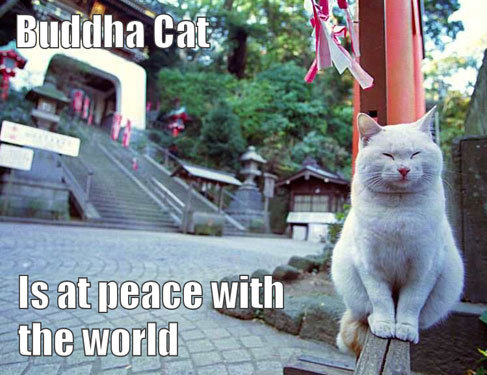
I WILL be back

As I said on my sister blog, I’m taking a summer hiatus, just like your favorite TV show. and as I said here, I wanted to make myself healthier, and I’m getting there.

insofar as physically healthier, I’ve cut out (mostly! sometimes I still cheat a little) wheat and dairy. and I’m taking thyroid meds twice a day now so my energy has returned. I’ve concentrated more on my own yoga practice instead of thinking about my classes, thinking about what I’m going to teach. frankly, when I teach, I channel asanas, hard to describe I know, but that’s me. of course a teacher still has to think about how they will run a class, but if you don’t feed yourself first with your yoga, how can you feed your students?

my back issue that I’ve been dealing with since last October is being resolved through the work of an awesome chiropractor I found who is not your typical bone-cracker. I’ve never been down with the whole chiropractic idea of someone cracking your neck and everything will be fine. my chiropractor deals with the soft tissue first, so my back right now is about 60-70% better after 5 visits.

and in two weeks I leave for Spirit Rock Meditation Center for the second retreat of my Mindfulness Yoga and Meditation Training. I can’t wait because it is such a fabulous program and I feel blessed for being a part of it. talk about being fed. we got an email that Judith Lasater will do two days of teaching on restorative yoga. she is only one of the great teachers that I will experience. so you know I will have to blog about that.

however, before I get to Spirit Rock, I’m spending about 4 days with my California gal pal. she’s picking me up at the airport and we’re immediately hitting an Indian restaurant for breakfast and to pick up food for our sojourn in the Carmel valley. she got us a room with a kitchenette in a funky little motel that is Sideways style. she has scheduled us for massages at Esalen and we’re hitting the hot springs at Tassajara and we’re going here for some cool shopping. all along the way, we’ll do a little wine tasting, a little art viewing, and talk a lot about Ma India since my friend will be making her 8th trip in the fall.

last but not least, I’m planning my 4th trip to India and I’m putting my intentions out into the universe that it will be a 6 month trip. it’s part of my unending, soulful need to migrate home to Ma India (thanks for those words, sistah sita!) I returned from my last trip sicker than an Indian street dog, but as soon as I started to regain my strength I was dreaming those India dreams again.

the first month will be spent studying yoga therapy at an ashram outside of Mumbai, then after that….I blow with the wind. whatever happens, happens. I’m a woman of a certain age and I try to live my life by asking myself, “if not now, when?” the trip will culminate in the Kumbh Mela at Haridwar in 2010. me, and 40 million of my closest friends all caught up in the power of shakti.

life is good. in the meantime, enjoy the buddha cat.

peace out.

addthis_pub = ‘yogagal60510’;

one person at a time


Believe it or not yoga teachers can become very frustrated, sometimes even depressed about their teaching situation. I don’t know any teacher who does this for the money — maybe some do, but I don’t know any. yoga teachers also get burned out and quit teaching AND yoga altogether, I’ve known more than a few. I heard Paul Grilley say that yoga teacher burn-out begins to happen between years 5 and 7, but if you can make it over the hump, you’ll be teaching the rest of your life. I remember that several teachers went up to him after the workshop, me included, with tears in our eyes thanking him for speaking the truth about teaching, telling him “I thought it was only me.” I start my 7th year of teaching this summer.

Yoga teachers deal with lots of heavy stuff (again, maybe not all, but I do and several of my friends do.) those of you familiar with this blog know that I dealt with an alcoholic studio owner last year — her actions of walking into my classes drunk coupled with her denial and lies about her problem was not a easy thing to deal with. it affected my own health.

then there are the students who are just there to sweat, and the students who come into your level 2-3 vinyasa class who have never done yoga before, and they tell you they have rheumatoid arthritis AND herniated disks…but then get very upset when you tell them, uh, I don’t think this is the right class for you.

students run the gamut from A to Z. and then there are students like this:

“I don’t know if you remember me, but I was a student of yours for five years until I started getting sick (well, my body got sick). I moved and I have been really focusing on becoming healthy in every meaning of the word (spiritually, mentally, and physically). I wanted to look you up because I have tried a couple of yoga classes and they just are not the same as when I practiced with you. They were more fitness yoga, and that is not what draws me to yoga. I found you! and I was so excited, but then I read about what you have been up to and I am just so happy for you! It seems…[that] you are really following your path.

I finally started studying Buddhism with more inventiveness. I bought that book you told me about a long time ago, Awakening the Buddha Within. I never really looked at it until now, and now I cannot put it down. I do not think I was ready to read it when I bought it, but I am happy I have it. I also came across The Buddhist Society of Western Australia Video Dhamma Talks on Youtube, and they have really changed my perspective on so many things.

I cannot say things are perfect, but I deal with life a lot better now I think. I have you to thank for so much of it. It was no coincidence that I took your class so long ago, and you have never left my thoughts since.”

This is what makes it all worth it despite alcoholic studio owners, students with senses of entitlement, and students who walk out of a class without paying.

I received this email this morning and was humbled. It reminded me of the second time I studied in India and we talked about having gratitude for the teachings and gratitude for our teachers and their teachers and their teachers before them going back all the way to Patanjali. I was so overcome by our discussion that I left the classroom and found the nearest computer to email my teacher trainer in Chicago, thanking him for everything that I had learned from him.

I cried this morning when I read this. the weird thing (but maybe not so weird in my world) is that I have been thinking about this student, in fact, just last week. I kept one of her papers because it contained some great references for teaching yoga to MS patients.

I teach yoga at a junior college and she reminded me of me when I was her age, a smart-ass (OK, I’m still a smart-ass), searching for something, feeling out of place from where I was. she really connected with yoga even though her physical form was not the “best” — it is not important to me if my students look like they can be on the cover of Yoga Journal. I knew that she was “getting it” in a way that the other students weren’t so I always left her alone, no major adjustments. we connected and she would always stay and talk after class, telling me everything that was going on in her life, some of which wasn’t all that great.

In many ways my students are also my teachers and they help me realize — no matter how much I second guess myself, no matter how many times I think about quitting, no matter how many times I think I taught a lousy class — that I am doing what I am supposed to be doing.

one person at a time.

where the rubber hits the road

“Buddhism is a practice,” says Levine. “It’s not a bumper sticker. It’s not about attending the Dalai Lama’s teachings with 10,000 other people. It’s about practicing generosity in your daily life. It’s getting on your ass and training your own mind on your meditation cushion.”

from Dive-bar Dharma

Considering that I just spent two days in the Dalai Lama’s teachings in Ann Arbor, Michigan, the last paragraph from this salon.com article was pretty potent.

I love that quote — get off your ass to get your ass on the cushion or on your yoga mat.

I am certainly guilty of laziness just like the next person, but when I feel the need to get my yoga butt on the cushion or the mat, I do it. it may not be daily, but I stopped beating myself up about that a long time ago. it is a tangible feeling I get in my body that says “get thee to your yoga room” or to someone’s class.

I teach seven classes a week so I need to feel another’s yoga. I did my first teacher training in 2002 and I still go to my trainer’s studio in Chicago every other week, besides doing my own personal yoga therapy practice. frankly, I don’t understand how any yoga teacher can NOT do their own practice or take someone else’s yoga class because you always have to feed and nourish your own practice or else you become stale, at least in my opinion.

How can a teacher feed his or her students unless they are feeding themselves? in my mind, it’s impossible. when I returned from India this third time I really felt like I needed to stop teaching for a while and totally immerse myself in being a student again. I just might do that — I’m feeling in my bones that I need to spend 6 months in India but that involves giving up my classes, a scary thought giving up my yoga security — you know, all that attachment and clinging.

My siddha yoga sista in California told me that it’s her experience to see people return from long India retreats to find their “material world” suddenly do a change up for the better. she asked me, “what would happen if you went, like you’d come back and nobody would sign up for classes? I don’t think so…because when you’re off on your retreat, you’ll be posting on your blog and otherwise stay connected to your past students and other interested types, even once a month, just to keep it fresh and alive. …I tell ya, sista, when you’re plugged into the divine Ma Shakti of India, good stuff happens…”

In her book Bringing Yoga to Life, Donna Farhi writes:

“…determine whether this teacher has his or her own strongly developed personal practice. Such a teacher will naturally stress the importance of self-practice. Teachers who believe that teaching class is their personal practice are likely using the students as their motivation for practice and have probably yet to develop a strong allegiance with their own inner atman. …Any teacher who claims that personal practice is no longer necessary has probably stopped learning and is ill prepared to foster an appetite for fresh inquiry in students.”

I am always a student first, and a teacher second.


addthis_pub = ‘yogagal60510’;

interview with Desikachar

(photo original Chennai Online upload)

Chennai Online Interview with Desikachar

“Intro: Where is the delusion when truth is known? Where is the disease when the mind is clear? Where is death when the Breath is controlled? Therefore surrender to Yoga – T Krishnamacharya in Yoganjalisaram.

Yoga was in the family. Krishnamacharya was born in Karnataka in 1888 and belonged to a family of distinguished ancestry. Among his forebears was the 9th century teacher and sage Nathamuni, who was a great Teacher who created remarkable works….In his youth, Shri Krishnamacharya experienced insights around some of these teachings in a mystic dream whilst on a pilgrimage….

His son, TKV Desikachar, had the privilege of living and studying with his father. For over 45 years, TKV Desikachar has devoted himself to teaching yoga and making it relevant to people from all walks of life and with all kinds of abilities. His teaching method is based on Krishnamacharya’s fundamental principle that yoga must always be adapted to an individual’s changing needs in order to derive the maximum therapeutic benefit.”

Chennai Online link to Google video of Desikachar speaking about his father.

I have studied three times at the Krishnamacharya Yoga Mandiram in Chennai, India and I am transformed a bit more each time. It was during my first trip three years ago during the month long “Universal Yet Personal” intensive that I heard a teacher say that personal transformation in yoga can only begin in a group class but is accomplished in working one on one with a teacher, in the old way, the traditional way.

The longer I teach, the more I know this to be true.

I bow in gratitude to the teacher of teachers, Sri Krishnamacharya. I am honored and humbled that I am able to study with one of his long-time students (30+ years) Srivatsa Ramaswami, with whom I will spend a week in a teacher training next month. I touch his feet and thank him for showing me what pure yoga is and for inspiring me to go to India…to go home, to the heart of yoga.

addthis_pub = ‘yogagal60510’;

a reader’s view


I get emails from people who comment on my posts, and the one below is from a friend in the yoga-rich San Francisco area who gave me permission to quote her (the emphasis is added.)

it does this old gal’s heart good to know that people read my yoga musings and are inspired to respond with such depth, and that I am not the lone voice in this modern yoga wilderness. plus she loves YogaDawg…:)

food for thought, talk amongst yourselves…..

*******************

“I am with you totally. I tell myself its just the Kali Yuga, our current era, which is known for shit being passed out as the truth. Now of course, my own beloved Siddha Yoga is the truth for me, but clearly born out of traditional Indian style yoga. When you mentioned the teacher in Chennai telling you its all about the relationship between teacher and student: that is my understanding of yoga as well.

So here I am, a physically “plus” sized gal, practicing Siddha Yoga for 25+ years. Love it when the physical, young folks taking their first yoga classes tell me how buff and happy they are now since taking ashtanga yoga classes. I tell them I also do yoga, practiced for all those years, lived in an ashram in India….and just look at their crazed reaction. Then I add that yoga, as practiced in India, is not just about how your body looks, but HOW YOU LIVE YOUR LIFE: its all about love, baby. Not hearts and flowers love. The love you feel before you take actions. And that DOES NOT always mean to speak in a soft, spiritual voice, or to never feel anger, or to remove yourself from the world and live in a cave.

I liked your bit about the “price of yoga”. People will pay more to have their dog shit picked up than shuck out some do-re-me for individual instruction. Dakshina — it’s one of the practices of Siddha Yoga, I’m happy to say. Pay nothing, get nothing. Personal transformation? What’s that???

Once you get the taste of real homestyle cook’n, a MacDonald’s salad will never be the same. Its very difficult to articulate this concept to people coming to you to get their butts tight. How can I tell them about the personal yoga lessons was with my guru: one of the most transformative things that ever happened to me was when she hit me on the head with a marble. another time she hit me over the head with a wand of peacock feathers. What happened inside of me changed my headspace, my approach to life, everything, all in one small, silent and seemingly insignificant moment. Changed me for life. Saw life differently, and I must say, for the better, from then on.

IMHO, you’ve been turned onto homestyle cooking by your teachers in Chennai. once that door is open, you can’t go back. and you want your students to see it too: you are a teacher, you care for your students, you have integrity, and you don’t want them to settle for less. but they’re not asking for what you have to give. frustrating, isn’t it!

Got to say, I just love that Yogadawg’s perspective. here’s someone, online, who is putting it out there, confronting the US mass consumption style ideas about yoga. he’s a real “satsang” type. in Siddha Yoga, one of the practices, just like in Buddhist tradition, is to “keep the company (of others) who are seeking the truth”.

I do hope you’ll be able to do a 6 month stay in Chennai, being a student at the place you’ve been going to. now that “yoga” has become just a work-out for the trendy, with so many looking for their physical fix…to me, you have found a real gem in Chennai. Once you experience the true power of Homestyle Yoga, there is only one way to go: return and learn more.”

addthis_pub = ‘yogagal60510’;

get real


I am recovering from a vicious upper respiratory infection and/or flu that I had for two weeks. I went to a yoga class today and we we were in Bow and I had to come down after only a few breaths because I still felt weak. I berated myself and then I told myself, get real. get real because what do I have to prove? I have/had a nasty infection that kicked my ass exactly one month after I had a vicious case of salmonella food poisoning that I brought back from India that also kicked my ass. My reality is that I will be 54 this year and maybe, just maybe, it takes me longer to recover from things than it did at 44 or 34 or 24. get real. be authentic.

If you are in your 40s or 50s or 60s, why are you still doing a yoga practice as if you were in your 20s? get real. be authentic.

“I am of the nature to grow old. There is no way to escape growing old.

I am of the nature to have ill health. There is no way to escape ill health.”

After the class a yoga teacher friend and I went to lunch and we kvetched about what else, problematic yoga students. ahem….yoga teachers talk about students as much as yoga students talk about teachers.

My friend told me about an older student whom she told not to return to her group class because it was not the right type of class for him, he had too many health issues. she told me his whole litany of physical ailments the worst of which was uncontrolled high blood pressure that gave him exploding ocular headaches. she wanted to teach a safe class but he was not honest about himself when she asked if anyone had any health issues. he wanted to do everything, even poses that were contraindicated for his conditions. All I said was, “ego.”

Ego. we’re conditioned to bully our way through a class, whether it’s a yoga class or anything else. no pain, no gain. even if it kills us.

My friend said just because people do yoga does not mean people can or should do every pose, the same way that because you can run three miles does not mean you should run a marathon. she felt that students truly do not understand this. she said that students think because we are yoga teachers we should be able to not only do every pose, but teach them every pose in any class they choose to attend, no matter what their physical limitations. she mused that maybe our calling as instructors is to help students realize that it is the nature of the body to grow old.

yes, we are dharma teachers on the nature of reality which is impermanence! I’m sorry, what did you say…you only came to this class because you read that Jennifer Aniston lost weight doing yoga?

If you are in your 40s or 50s or 60s, why are you still doing a yoga practice as if you were in your 20s? get real. be authentic.

“I am of the nature to grow old. There is no way to escape growing old.

I am of the nature to have ill health. There is no way to escape ill health.”

I’m taking a workshop with Lilias Folan next month. for those of you who don’t know Lilias (or who think yoga was invented by Madonna), Lilias introduced millions of Americans to yoga in 1972 with her television show “Lilias! Yoga and You.”

Her website says that “Lilias has found that her practice and her teaching have naturally and even necessarily changed over time [emphasis added] as she has physically transformed into having what she describes as her current middle-aged body. Lilias draws on her years of experience, along with living in a changing body. In her new book she describes how to adapt yoga for a body growing older.”

The workshop is advertised as “moving at an enjoyable pace we will prepare the body with interesting warm ups, salutation to the hips and more from her highly acclaimed book Lilias! Yoga Gets Better With Age”.

There is a video on her website called “It’s Not Easy Being Real.” She says that as yogis, we want to be authentic, and that our challenge is to be real and to be an authentic human being as we age. she says the realness is that we age and if there’s a glitch such as illness or maybe we don’t move like we once did, that we should accept it with the wisdom that we are not 21. she says she does not want to be 21 again but she wants to be a juicy 81 year old. hallelujah.

I don’t care anymore about learning a fancy arm balance. I choose to be a rasa devi.

If you are in your 40s or 50s or 60s, why are you still doing a yoga practice as if you were in your 20s? get real. be authentic.

“I am of the nature to grow old. There is no way to escape growing old.

I am of the nature to have ill health. There is no way to escape ill health.”

Stephen Cope is one of the teachers in my Mindfulness Yoga and Meditation training in California and I think he’s brilliant. I was googling some of his articles and I came across this video where he talks about how his practice has changed as he has gotten older. he says that he does not want to do the same practice now as he did when he was younger, that at 56 his practice is much more internal and meditative. in the video he advises how to adapt your yoga practice as you age.

yes, yogins, you are aging. every day. little by little. even those of you who can kick up into that perfect handstand will one day feel that crunchiness, that grinding of an arthritic shoulder and it will be your wake up call to your own impermanence. and it will scare the hell out of you because deep down it is your own fear of death. in this Botoxed, liposucked culture, many of us refuse to accept this, even yogis.

If you are in your 40s or 50s or 60s, why are you still doing a yoga practice as if you were in your 20s? get real. be authentic.

“I am of the nature to grow old. There is no way to escape growing old.

I am of the nature to have ill health. There is no way to escape ill health.”

In May, my teacher from Chennai, India, Srivatsa Ramaswami, is coming to do a training. he wrote the book Yoga for the Three Stages of Life. Ramaswami says that as we get older our practice SHOULD change, that the older we get our practice should become more meditative. this is the Krishnamacharya way.

If you are in your 40s or 50s or 60s, why are you still doing a yoga practice as if you were in your 20s? get real. be authentic.

“I am of the nature to grow old. There is no way to escape growing old.

I am of the nature to have ill health. There is no way to escape ill health.”

I find that the older I get, the more meditative I become, the slower I want to move, the deeper I want to go, the more I want to feel. I want to feel the juiciness of this seasoned body. I am not afraid to feel the aches and pains that crop up because I want to face them in order to move beyond them. I do not want to resist my pain because pain that is not resisted begins to soften. no matter how painful it is, it is a relief to feel.

Pain is not suffering.  Stephen Cope writes that suffering — duhkha — is the resistance to that pain. duhkha is the pain of pain. as a wise ass Buddhist once said, life is pain but suffering is optional.

***********************************************************

The Five Remembrances
(as offered by Thich Nhat Hanh in The Plum Village Chanting Book)

I am of the nature to grow old. There is no way to escape growing old.

I am of the nature to have ill health. There is no way to escape ill health.

I am of the nature to die. There is no way to escape death.

All that is dear to me and everyone I love are of the nature to change. There is no way to escape being separated from them.

My actions are my only true belongings. I cannot escape the consequences of my actions. My actions are the ground upon which I stand.
—Buddha


Never the spirit was born
The spirit shall cease to be never
Never was time it was not
End and beginning are dreams
Birthless and deathless and changeless
Abideth the spirit forever
Death does not touch it at all.
—The Bhagavad Gita


What is never born can never die.
—Sama


being a good yoga student

“What you want
(oo) Baby, I got
(oo) What you need
(oo) Do you know I got it?
(oo) All I’m askin’
(oo) Is for a little respect when you come home (just a little bit)
Hey baby (just a little bit) when you get home
(just a little bit) mister (just a little bit)

R-E-S-P-E-C-T
Find out what it means to me
R-E-S-P-E-C-T…”

This post is inspired by an incident that happened to me yesterday — so be warned, this may turn into a rant.

One of the differences I’ve found (and there are many) between yoga in India and yoga here is that yoga teachers in India are respected. When I’m in India and someone asks what I do and I tell them that I teach yoga, there is a big difference in the reaction compared to someone asking the same question here. I don’t expect anyone to bow down and touch my feet, but here I might as well tell someone that I teach a spinning class. or else someone will say, “I took pilates once.” Say what?!?

Now I know that most of you will say “I like my teacher! She/He is a nice person!”; “She/he is a great teacher!”; “I love taking her/his classes!”, and that’s fine. But how many of you RESPECT your teacher as your TEACHER, A MENTOR – and dare I say it to western readers – a GURU, and not just someone who you try to mimic physically 90 minutes a week? My teacher from India will be here for a training in May and I would have no hesitation whatsoever bowing to touch his feet as one would to any revered teacher in India.

I was teaching my usual yin class yesterday morning and two young women came in late. I had never seen them before and as I learned later from the studio owner, they had never been to the studio before. They walked into class about 10 minutes late as I was leading the class in their first breath awareness practice so I was not about to stop, ask them to sign a waiver, and get money from them. They never said hello or acknowledged me whatsoever when they came in, not even when I brought them props. To make a long story short, they walked out during the middle of my class without paying and without saying a word. I walked out into the lobby a few minutes after they left, but they were already gone.

What angers me is not the fact that they stole from the studio owner and from me, but they obviously had no respect for yoga or for the other students.

A friend of mine who is also a yoga teacher teaches at a corporate fitness center. She doesn’t teach a “power yoga” class as one might expect in that situation. The other day she told me that she was leading the class in awareness, asking them to just let go of whatever brought them there today, let go of the bad weather, the bad drive, etc. She said that during class she could tell that one woman was not in her body, she was antsy and nervous. My friend went over to to ask her if she was OK. Apparently the woman did not like the way my friend was teaching the class, so she told her in no uncertain terms, “THIS IS A FITNESS CLASS! F-I-T-N-E-S-S!” and yes, the woman actually spelled it.

I wonder if the woman knows how to spell R-E-S-P-E-C-T….

*********************************************************************

HOW TO BE A GREAT STUDENT
an article by Mehtab, Yoga Yoga’s Founder
(from Midwest Yoga Teachers Network Newsletter)

I was teaching a yoga class and the woman in the back of the room was doing yoga. Only it wasn’t the type of yoga I was teaching or that the rest of the class was doing.

I watched fascinated as she moved through an elaborate series of seemingly invented postures, oblivious to the rest of the class. She did relax at the end with everyone else, however.

I asked her afterwards what she was doing.

“Oh, I am just listening to my body and doing whatever it tells me to do,” she said.

“So why do you want to come to this class?,” I ask.

“You’re a great teacher,” she said. I started to humbly thank her. “So your classes are crowded and I can hide in the back and do my own practice.”

As yoga students, we are always looking for a great teacher, someone who can inspire us, teach us, and take us to the next level. But the search for a great yoga teacher must start within us. We need to become a great student first.

Here are the guidelines to become a great yoga student:

Realize everyone has something to teach you.

Yoga students and sometimes yoga teachers make the mistake in thinking that teaching yoga is about winning a popularity contest. Students compare notes in the studio lobby, “Oh, if you like Teacher A, you will really like Teacher B. I think Teacher C is too easy. Teacher D really works you out. But now I am at the point where I only want to go to classes taught by Teacher Z.”

I have seen students even show up to take a class and then walk out when they discover their “favorite” teacher is not there that day. They miss the point. Yoga is not teacher-centric, It is practice-centric.

Every teacher has something to teach you – and often it is not what you think it should be. I remember going to a yoga class years ago with my wife and telling her afterwards: “The teacher drove me crazy with his fake-sounding, super-mellow voice.” “Yeah,” she said. “He reminded me a lot of you.” Enough said.

Respect the teacher within the teacher.

In the yogic tradition for hundreds of years, the teacher was the most respected person in your life – more than your parents or any figure of authority. We do not understand that in the West because we often mistake the role of the teacher with the personality of the teacher. The role of the teacher is someone who shares the teachings. The teachings are the important thing – not the personality of the individual teacher.

When you show respect to a teacher, you show respect for all teachers, for the teachings of yoga, and ultimately for yourself. If you want to rebel and be disrespectful, please park in a no-parking zone, talk back to your boss, or engage in your favorite self-indulgent destructive behavior – but always respect the teacher within the teacher. It is the only way you can learn what yoga is really about.

Understand a teacher is 90% the projection of the student.

Whatever you think about your teacher is almost all about what you think about yourself and has very little to do with the teacher. A teacher is a mirror that reflects the student. This is the only way we can learn about ourselves – through self-reflection. I remember a comment card we got from one student about a teacher: “He doesn’t even look like a yogi. He’s too fat. He thinks he is better than everybody else, sitting in front of us and making his little jokes.” For this person, appearances are everything and any value the teacher could have offered is lost in a projection of a student’s own insecurity.

On the other hand, students can have positive projective fantasies about their teachers that are also more about their own needs than about the teachers themselves. I remember one woman going up to a nationally known teacher at the end of a workshop and telling him: “During our last meditation, I opened my eyes and I saw you in the most beautiful and blissful state. Your heart center was really, really open. What were you meditating on?” He replied: “Cheese and macaroni. That is what I am having for supper tonight.”

Examine the reactions and thoughts you have about your teacher. They will tell you a lot about your current state of mind, fears, and lessons you need to learn.

When the student is ready, the teacher will appear.

This is an old saying in almost all practices and spiritual traditions. What it means is that you often get the teacher you deserve or, more politely, the teacher you are capable of encountering at the level of your current development. As you advance in your self-understanding, your capacity to recognize and attract the teacher you need to reach the next level also increases. Why should a master teacher waste time with you if you are not willing to master yourself?

Students make the mistake believing that if they can only find an advanced teacher, they will advance. Instead you need to do the work with the teacher right there in front of you. Then you will earn the right to meet your next Teacher.

One simple test is this: Are you ready to meet your teacher when they do arrive to teach you? Are you fully present, sitting in class and ready to learn? Or do you come in after the teacher has arrived and class has begun? We all have an emergency once or twice a year that may cause us to be late to yoga class, but think of the energetic message you are sending by showing up after the teacher has arrived. Who is waiting on whom to appear?

Know that the only purpose of having a teacher outside yourself is to realize the teacher within yourself.

A great student realizes that they are the teacher as well as the student. Ultimately your yoga practice must become self-directed — but not in the same way as the person who does his or her own poses at the back of the class. Through your yoga practice, you will increase you awareness, awaken your intuition, and learn to trust that guiding spirit that is present in all human beings. This awakening will direct you. Others will continue to teach you, but you will realize that is only through your own self-study, discipline, and surrender to grace that will you understand the purpose of yoga.

When you know that teacher lives within you and within all others, then you will become a great student.

May you have great teachers in your life.
May you teach others by your presence.
May you recognize and honor all teachers.
May you recognize and honor yourself.

addthis_pub = ‘yogagal60510’;

body consciousness: a discussion


There were so many comments posted to Body Consciousness that I thought I would turn them into an entirely new post. my readers’ comments are too insightful to be ignored.

talk amongst yourselves!

Steven:
Maybe it’s just wording, but I disagree with “Yoga was meditation and meditation was yoga, no duality.” If they were the same thing, there would be no need for two words. Also, from what I’ve learned, yoga has been a preparation for meditation, and thus separate. Obviously very interrelated, but separate nontheless. Your point remains, though, that the asana practice has become very separated from the meditation practice in the West, but still, even if some people never find or care about the non-physical part, many will, and that’s good. It sure would help if yoga instructors would stop yammering quasi-spiritual stuff through savasana and allow more than 1 minute of silence to clear the mind!

Sama:
asana + pranayama are prerequisites to meditation according to the lineage that I follow. not just asana. and is not asana practice a moving meditation? I suppose it depends on what your definition of meditation is.

come to one of my classes. I don’t yak during savasana. but even if I did, would you be able to observe the external sounds and not react to them, engaging in pratyhara with equanimity?

thinking more about your comment, steven….

have you ever done walking meditation? is the meditation separate from the action of walking? and if you are walking, are you JUST walking? or is your mind “in here” instead of “out there”?

gartenfische:
This is so insightful (and yeah, we’re thinking along the same lines!). I know that we Westerners—me included—are way too head-oriented. It’s why yoga and meditation are so important for us.

I think that yoga and meditation are different, but that yoga (asana, that is) can be a meditation.

I am not a teacher like you, but as I practice longer, I see how asana, breath, the bandhas, the driste, all lead one into a meditation. Presence is so, so important—inhabiting each pose, as Pattabhi Jois says (Iyengar says this, too, and I’m sure the other great teachers); otherwise, like you said, it’s just acrobatics.

Yoga is such a gift. I am so grateful for teachers, like you, who bring it to us here in the West—we so, so need it!

Sama:
the thing is, gartenfische, each time I come back from my studies in India, the more I feel like an outsider here, in the western yoga world.

Kate Holcombe, a teacher in San Francisco and who has studied extensively at the same school I do, has said that for a long time she hesitated calling what she does yoga because it was so different from what is practiced in the west.

I now know what she meant.

gartenfische:
So is there a way to bring more of the true yoga into the West, or is it hopeless?

Most of my teachers are, at least, trying to be very true to the Indian teaching (Annie Pace, especially).

Even if it is not yoga as it is supposed to be, I have known a lot of growth and healing as a result of my practice, and I am grateful for it. I don’t know—I may never get to India.

Sama:
gartenfische, I am in no way saying that the yoga I study is the way it’s “supposed to be”! that would be so autocratic! and no way am I saying that all yogins/yoga teachers have to go to India to study! HA! India is definitely not for everyone! however for me, the first time I put my foot on indian soil, I felt like I had come home.

I just know that what I study there resonates with me and it is a traditional style. for example, when I’m there I study chanting, pranayama, meditation, asana theory, etc. and from my teachings I’ve come to realize that (for example) pranayama is taught indiscriminately here in many classes I’ve been to, like an afterthought, or with no purpose. A teacher will announce “ok, let’s do kapalabhati” in the middle of the class. I can tell you after my first training, I immediately stopped teaching that pranayama in group classes. that’s just an example.

my classes are always asana/pranayama/meditation. of course, YOUR yoga is what resonates with YOU!

gartenfische:
I have the same hesitations about pranayama, but I think they came from reading something several years ago that warned that it should not be taken lightly and that beginning yoga students shouldn’t do it at all. I have heard of teachers teaching it indiscriminately (it seems) and I’ve wondered if they know what they are doing.

Earlier, I was reading about pranayama in Light on Yoga. He recommends Nadi Sodhana Pranayama for headaches, but elsewhere, he talks about supervision by a guru or teacher being necessary to practice pranayama. So I don’t know if it would be okay to try it as a remedy when I have a headache. Probably not. I have noticed that even ujjayi breathing helps, though

Sama:
yes, I agree about having a qualified teacher to teach pranayama. another thing that is never taken into consideration regarding pranayama in group classes is the dosha, or the body type, so to speak, of each student.

a certain pranayama might be appropriate for one student while it may completely agitate another student, in a group class. how does a teacher know the dosha of each student in a group class? just like yoga, pranayama is not one size fits all, so that is why I believe pranayama is indiscriminately taught in western yoga classes.

also, regarding the bandhas: Krishnamacharya believed that bandhas should not even begun to be taught unless the student can comfortably inhale 10 or 12 counts, and exhale 10 or 12 counts. now tell me how often a teacher in a group class will announce “engage mula bandha!” or whatever bandha as if every student knows what she/he is talking about!

this is why I have said time and again what I have been taught: personal transformation can begin in a group class but is accomplished in a one on one relationship with a teacher.

and THAT is the difference between east and west as I see it.

gartenfische:
Mula bandha is a common teaching in Ashtanga, including with the teachers who study in India. I am NOT saying you are wrong! There just seem to be different “rules” coming from different teachers.

But it is confusing for people, because we don’t know! All these teachers are teaching pranayama and then other teachers say they shouldn’t be. Then everybody’s teaching the bandhas and others say no.

Sama:
I know that mulabandha is common in astanga — altho I’m not an astangi, I did a workshop once with Manju Jois, Guruji’s son. what I am saying that things like pranayama and the bandhas sometimes are taught indiscriminately or not deeply enough. and Krishnamacharya was Iyengar’s teacher AND Patabhi Jois’ teacher, so how THEY interpreted his teachings was up to them!

Nadine:
I for one, totally agree with your post (as I would!)
I am so tired of that other yoga, that is in fact not-yoga.
And the hotpants/ flashy yoga gear that goes with it. Why are people so very very afraid to face themselves, unarmed, undressed (as it were)?

Sama:
yah, what’s up with the hot pants?

it’s the words, not the asanas

This is a video of a Chicago yoga teacher I know, Jim Bennitt. I’ve taken his workshops and he’s an excellent teacher — pure yoga and from the heart. Although he can twist his body into a pretzel, he is also humble. I need to see that humbleness first from a teacher in workshops — the showbiz yogis that are on all the yoga conference tours don’t impress me. Jim studies with Rod Stryker but I’ve told him that the way he teaches and what he talks about is right from Krishnamacharya, the Teacher of Teachers.

He has a beautiful practice in this video, but what he says about yoga is even more pertinent given the shootings at Northern Illinois University on Valentine’s Day.

peace
shanti
salaam aleikum
so shall it be

be here now


DeKalb Chronicle photo Eric Sumberg

Campus Horror

“What is known about the gunman late Thursday is that he was an NIU sociology graduate student in spring 2007, said Peters, who added that the gunman apparently has no police record and there was no known motive for the shootings as of Thursday evening.”

I was not at NIU but I had yoga students who were upset because they have friends at NIU. Even though I did not directly experience this tragedy it has still affected me. I keep thinking about the looks on the faces of the students who came in late to class and said, “there’s been a shooting at Northern. my friends….” I have never seen so much fear in someone’s eyes before.

DeKalb is down the road from the community college where I teach. the yoga studio where I teach is in a small town that is literally across the street from DeKalb.

The area is corn and soybean country, farm country, it’s about as Midwestern fresh-faced as you can find. many of these kids are still innocent about the world, they aren’t tough Chicago kids like I was growing up. many of them are farmers’ kids.

A friend in India told me that the story even made the International Herald Tribune, he had already read about it last night before I wrote about it here. I always laugh when people ask me, “aren’t you afraid to go to India by yourself?” Let me tell you: I feel safer being alone in an Indian village than I do in America. I feel safer being on the streets of Chennai at 2 AM than I would being in Chicago at 2 AM. Every time I go to India, when someone asks me what country I’m from and I tell them, more times than not I am asked whether I own a gun. This is the image that America has even in a remote Indian village.

The reality is that the same thing can very easily happen at the school where I teach. maybe somebody did not like the grade I gave them and they’ll walk into my class, look at me and say “I GOT YOUR YOGA RIGHT HERE, BITCH” and start blasting. Buddha taught that death is certain, the time of it is not. our lives can change in a split second as many people found out yesterday in DeKalb. yet we live our lives as if we will never die.

Tragedies like this always bring home to me how important it is to live in the present moment, to be mindful and to live mindfully. thinking back on yesterday I recall how before I taught my class I went to my department’s office to make copies of some handouts. two department secretaries were in the room complaining about one thing after another — how the hot water in the sink was not hot enough, how the faucet in the sink was loose, how someone on campus did not respond fast enough to a secretary’s email. it was a constant barrage of negativity and I could not wait to leave that room. I remember thinking, man, if they complain about that stuff, how do they handle the really big events in their lives? most of the stuff that we think is important really isn’t in the grand scheme of things.

The other night I read excerpts from this article by Phillip Moffitt to my private students. I loved what he said at the end of the article:

“Looking back over your life, how many weeks, months, even years have you wasted anguishing over something you didn’t get from a parent, a spouse, or in life? Did all that anguish serve you, or would it have been more skillful to have received fully the experience of the loss, accepted it as what is, and then allowed your emotions to go on to experience what is possible in the present moment? More importantly, are you still caught in an endless cycle of wanting mind, imagining that it is the next accomplishment, change in relationship, or piece of recognition that will make you happy? Pay the boatman at the river of loss and sorrow his three rupees and cross over to the other shore. Your life is here, now.”

Be present. Be here now. Be love. Be peace.

peace
shanti
salaam aleikum
so shall it be