yoga miscellaneous: healing

A letter from Sri.K. Pattabhi Jois to Yoga Journal, Nov. 1995

“It is unfortunate that students who have not yet matured in their own practice have changed the method and have cut out teh [sic] essence of an ancient lineage to accommodate their own limitations.”

“Spiritual Madness and Compassionate Presence” — healing of mental suffering through the philosophy and practice of Yoga

“One of my patients had severe post-traumatic stress disorder. His experience of isolation and helplessness sent shockwaves through his day-to-day life. He had flashbacks and significant difficulty relating to others.

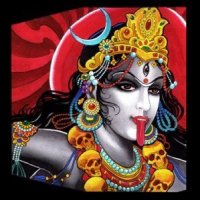
We began his treatment with daily pranayama. We added meditation on both the destructive and creative aspects of the mother goddess Kali. Finally, he began to meditate on his own eternal nature: “I am that I am” (Hum So). Slowly but surely, this healed his illness…”

I worked with a private student today and after 10 years of teaching I am still amazed at how transformative the breath is. She is a relative newbie to yoga and in her classes at various venues from health clubs to studios, teachers have told her to “focus on the breath” but apparently no one has ever TAUGHT her how.

I could see how tight her belly and shoulders were. We did conscious breathwork just like Mark Whitwell or Ramaswami or my teachers at the Krishnamacharya Yoga Mandiram teach.  A light bulb went off over her head. Her entire body visibly relaxed and she left my house looking lighter and brighter. In a word, transformed.

She’s returning for more instruction on the breath and wants to work with me in the vinyasa krama method:

“By integrating the functions of mind, body, and breath…a practitioner will experience the real joy of yoga practice. . .Vinyasa krama yoga strictly follows the most complete definition of classical yoga.” – Srivatsa Ramaswami, The Complete Book of Vinyasa Yoga

Breath + yoga = healing.

we are not the Yogis, we are the Yoga

Read this. And be awed.

what is your yoga truth?

Hanumanasana is Overrated

“From a standpoint where the purpose of Hatha yoga is to facilitate and maintain a healthy functioning body, there is no reason why a person would ever need to be able to do Hanumanasana. However unattached we may be in working towards it, the goal belies our better purpose.

Touting images of flashy classical asana demonstrations as examples of “mastery” has led to a gross exaggeration of physical practice, beyond the point of practicality, and has fueled a physical fitness industry that is more concerned with aesthetics than health. I realize that I may be taking a hard view of things but seeing past the cultural sensationalizing of just about everything can be a daunting task given the deeply ingrained mores stacked against it. Some amount of push back seems necessary.”

“All truth passes through three stages. First, it is ridiculed. Second, it is violently opposed. Third, it is accepted as being self-evident.”

Arthur Schopenhauer, German philosopher — and as quoted by Paul Grilley about certain “truths” of modern-day yoga.

His philosophy controversial, Schopenhauer “claimed that the world is fundamentally what we recognize in ourselves as our will.  His analysis of will led him to the conclusion that emotional, physical, and sexual desires can never be fulfilled.  Consequently, he eloquently described a lifestyle of negating desires, similar to the ascetic teachings of Vedanta, Buddhism, Taoism and the Church Fathers of early Christianity.” (from Wikipedia.)

Why do we engage in certain practices at a certain time, why do we think they were important at the time? When do we begin to move beyond our conditioning and attachments? What is the impetus that throws us headlong into a different direction when we thought for so long that we were always headed in the right direction?

Has your yoga truth changed since you started your practice?

Rod Stryker: “YOGA IS A QUEST FOR THE TRUTH”

the dharma of doo-doo

It always does my heart good when I hear a student talk about how yoga has helped them in their life. Most of the realizations I’ve heard are more about the non-physical than the physical, things on a deeper level than achieving an arm balance or handstand. I sit back and say to myself (or sometimes out loud), yes, they get it, someone has been paying attention!

I’ve always said that yoga is about life so what better teaching than a pile of dog doo-doo in the middle of a bike path.

A few weeks ago I had told my students that at Will Kabat-Zinn’s retreat he had talked about how one little thought can create our reality in a second. For example, we’re walking down the street and we pass someone, we assign the word “creepy”, and our mind instantly creates an entire story about that person, we create an entire world around that person. Will said, “you never know what someone else’s story is.” In other words, just as the Buddha taught, be on the lookout as to how your thoughts create your reality.

Then on Saturday morning during the yin part of our practice I read excerpts from Sarah Powers’ chapter in Freeing the Body, Freeing the Mind: Writings on the Connections Between Yoga & Buddhism.

Sarah wrote about how embroiled she became in her emotions as she laid in bed bathed in sweat from the heat. She said she became “utterly intolerant of my experience and before I knew it, I was defiantly standing, almost expecting I would encounter an enemy lurking.” Sarah said that as she simply watched her intense emotions she became aware of how her angst effortlessly slipped away and how she began to feel calm and present. She was astonished at how a strong emotion can decompose as she mindfully turned her attention inward to her direct experience in the moment. Her next moment was no less fiery, but her inner attitude had shifted. Her experience of the sweltering heat had changed simply because her attention had shifted from resistance to mindful observation.

As my students were in sphinx post one of them told the story of how she was walking her favorite path and she experienced what Sarah experienced: the shift from rage to mindful observation of her fiery emotions:

“On my first lap I just missed stepping in some dog poop in the middle of the paved walking path that circled my neighborhood park. I was enraged that someone would let their dog defecate on the walkway without cleaning it up and assumed it came from the large dog being walked by a woman I had just passed going in the opposite direction a few minutes earlier. I spent the rest of my first lap feeling irritated and blaming this woman for not cleaning up after her dog.

When I got to that same spot during my second lap, I still felt irritated and decided dogs should not be allowed in the park.

On my third lap I began to wonder whether or not the poop had perhaps been there for several hours, which would then exonerate the dog currently in the park as well as his owner. My irritation began to dissipate.

On the fourth lap I realized I had no way of knowing if it was this woman’s dog that had made the mess, so I really couldn’t blame her. I didn’t think anymore about it as I finished the lap.

On the fifth lap, I reminded myself there was poop on the walk but it no longer upset me. An oncoming jogger and I smiled at each other was we both sidestepped the mess.”

After my student told her story I clapped and thanked her for sharing this marvelous teaching. “You get it!,” I told her, “You’ve no idea how this does my heart good, thank you for listening all these years!” I asked if she felt these emotions in her body — Buddha’s First Foundation of Mindfulness. Yes, she said. I told her that ultimately on the fifth lap she experienced Buddha’s Fourth Foundation of Mindfulness, mindfulness of the dharma, i.e., the nature of reality which is impermanence — all things change. Her feelings of rage at the dog poop in the middle of the bike path during the first lap had changed to feelings of neutrality by the fifth lap. My student’s thoughts on first seeing the dog poop and then a woman and her dog had created her reality and her own suffering. If we are paying attention we notice how all things are temporary. That’s awakening, and it comes slowly but surely.

I said, “See how our thoughts create our reality? You created your own suffering all because of a pile in the middle of the path.” I asked whether she would have noticed these subtle shifts of consciousness if this had happened before she started a yoga and mindfulness practice. Her answer was no.

Yoga is Life. All things are a training. Even a hot steaming mess in the middle of your Path.

wisdom from my teacher

Yes, even my yoga guru shuts up to do his practice:

“…[the] English translation of my Guru Sri Krishnamacharya’s Yoga Makaranda (I have the Tamil translation of the book for over 45 years and refer to it even today whenever I want to just shut up and listen to my Guru, Sri Krishnamacharya.)”

Note:  that’s called humility…one of the aspects of a true yogi.

Click here if you want to download Krishnamacharya’s “essence of yoga.” This is a priceless gift. 

Ramiswamiji’s May newsletter on Advaita….

“My teacher Sri Krishnamacharya took considerable pains to teach the Yoga Sutras to his students. He also wanted his students to study and be familiar with other orthodox philosophies like Samkhya, and Vedanta. The several Upanishads, the Gita and Brahma sutra he taught to explain the rather tricky, involved vedanta philosophy, usually following the visishta-advaita approach, though he also was adept in advaita philosophy. He once said in the Brahma Sutra class to the effect that while Advaita could be intellectually stimulating it is visishta advaita that will be emotionally satisfying.

Perhaps the most widely read orthodox Indian Philosophy is Vedanta and especially the Advaita school. There are tons of material available on this philosophy and many people interested in vedic thought study this and gradually become lifelong students of Vedanta. Many long time Hatha Yoga practitioners have taken up the study of Yoga as a philosophical system and considerable material is available from both old and contemporary writers in different languages especially English. And some among the the yoga practitioners have taken an interest in studying the vedanta philosophy also especially the advaitic interpretation. In this however, the published material on Advaita Vedanta available is so technical and involved that the difficult subject is made more inaccessible by several portions which are very technical. Profound and daring, albeit very ancient, this philosophy stands out among all the vedic philosophies. I thought I could write very briefly on the basic tenets of this thought process.

There are at least two things we need to have an experience, a subject and an object. When you and I sit at a table over a cup of coffee or a can of beer or a more yogic glass of goat’s or cow’s milk, I am the subject and you are the object and it is the other way from your point of view. We are two different entities and what does advaita say about our relationship? Advaita says that there is only one principle, the observer which is pure consciousness. It implies that there is only one principle or entity that is pure consciousness that can be termed as one having “Existance” (satya).  Nothing else qualifies to be termed “It exists“. So the term advaita refers to that one principle that alone exists. Of course it appears to contradict our experience as we converse as you and I.

Many Indian philosophies both vedic and non Vedic, endeavor to explain the absolute beginning (aarambha) of the creation of the universe. The several puranas have the narration of creation as an essential aspect of purana. They explain how God created the Universe. There are other views like those of the Samkhyas and Yogis who say the evolution of the Universe began with the disequilibrium of the gunas in the dimensionless mulaprakriti. They do not see the need for a God to create the Universe. The vaiseshika philosophy says that the universe came about by the combination of various atoms of earth, of water, etc. and the atoms or paramanus are the basic building blocks of the Universe. Further all these vedic darsanas are careful to point out that there is also the individual self that is distinct and different from the material universe created. Because they suggest two different principles– the consciousness and matter– these philosophies came to be called dwaita or dualistic. They also differ from the modern scientific view which says that the universe started by the evolution from a tiny but hugely dense entity called singularity, but seems to imply that individual consciousness is a product of matter and not an independent entity—contrary to the vedic philosophies.

Advaita as the name implies indicates that there is only one principle and none else . That principle is pure non changing(sat) consciousness(chit) which they call Brahman. How do they explain the existence of the evolved Universe? Since there is only one principle which itself does not undergo any change with time (avakasa) or place (akasa) the evolved universe is not real but only an illusion and not independent. When we attempt to find out the beginning of the evolution we go back from the present. The classic examples of the chicken and the egg or the seed and the tree are mentioned to indicate the impossibility of finding out the beginning of the evolution. One school of advaitins says that since the chicken-egg phenomenon involves an unending chain of changes the beginning of which can not be determined , so the very exercise of finding out how the universe started (Aaramba vaada) is futile and all views about how the universe began are wrong. In fact, accordingly, the several theories about the beginning of the Universe cancel one another. The impossibility of finding the absolute beginning also could open the possibility that there is no real beginning and that the evolution of the universe itself is not real- the world is not rock solid as we see- and at best it is virtual. They assert that there was no real creation. Gaudapada in his commentary of Mandukya Upanishad states “nobody is ever born.”

In this context I remember a movie I saw when I was young (I was hardly sixty at that time). In the mystery movie, the young detective was trying to find out who murdered “Victim X”. After two years of painstaking investigations (and two hours of my painful viewing) the detective is unable to find the killer, only because “Victim X” did not die in the first place. Our detective started with a wrong premise. I have been trying like crazy for 72 years to understand how the world was created, poring over orthodox and contemporary dissertations on the origin of the Universe and now some Advaitin says that I can not find it because the world was never really created.

Advaita also asserts that a non-changing pure consciousness can not produce a ‘real’ material world nor can a non-conscious prakriti, paramanus or singularity produce non-changing consciousness which is the nature of our true self. So in our dualistic world the advaitin’s view is that only the consciousness is real while the persistent world is unreal. In this context one may consider the statement of Einstein, “Reality is merely an illusion albeit is a persistent one”. Reality here refers to the universe which we experience as real. And advaita rubbishes the general perception that the Universe was really created (sat karya), a universal, taken-for-granted view. The advaitins give several examples to explain the ‘virtuality’ of the observed universe. They compare it to the space that we see in a mirror; though the space that we see in the mirror may be considered to be within the two dimensional mirror surface, it appears to be outside (beyond and behind) of it. The other example is that of the dream experience. In the dream, the space, the objects and the other beings and even our own dream self can be considered to be taking place within the dreamer’s head but they all appear to be real and outside, during the dream state. The third example they give is that of the work of a magician who is able to create an illusion of space and objects. At a higher level is the world created by Siddha yogis.  There is a story of sage Viswamitra creating an illusory heaven to accommodate one of his disciples, King Trisanku. And the Lord who created this virtual ‘universe of illusion’ is the most consummate magician of all.

The Brahman, the only one existing – the advaita -, is pictured as even smaller than an atom (anoraneeyan) but is immensely dense consciousness (prajnana ghana). Within it, due to the inexplicable Maya the beginning less universe appears, only appears, to evolve and exist and persist. Further even though the universe is within the Brahman, it appears to be outside it. And that is the grand illusion.

There is an interesting episode about Lord Krishna as a toddler. Krishan was a purna ‘avatar’ or complete incarnation of Para Brahman or the supreme being. He was raised by his foster parents Yasodha and Nandan in Gokulam. One day he was playing and his mother saw him taking some dirt from the floor and putting it in his mouth. Concerned the mother lifted him and asked him if he put dirt into his mouth.  Without opening his mouth the child shook his head. The mother now more concerned asked him to open his mouth. The child opened the mouth wide and lo and behold! Yasodha saw the entire Universe in his mouth. She had a bird’s eye view, rather an eagle’s eye view (or a Google view) of the Universe including her holding the open mouthed divine child in her arms. She realized that the child was para brahman (the supreme being). The entire universe was within Him even as He appeared as a child, within the vast universe, like all of us. The Lord says in the Bhagavadgita “Everything is in Me but I am not in everything.”

I, as I know myself, wrapped in this maya (maya=that which really is not: the trickster), even though I am within the supreme consciousness, the individual I, as part of the Universe appear to be outside of it, engulfing It, the Brahman. And consequently the supreme consciousness, Brahman, appears to be within this physical me as the Atman or the individual Self ,in my heart cave (dahara). Now, though I am in It, It (Brahman) appears to be within me as my Self or Atman. The Upanishads tell us the means of finding It, within each one of us. The pancha maya model is one such vidya or practice by which each one can find the self within oneself, within the five kosas. It is an exercise by which one knows the only real principle that exists, the Brahman, the pure consciousness as one‘s self or Atman. The Self that resides in my heart lotus (dahara) and the Self that you, sitting across the coffee table , find in your heart lotus are one and the same, the same Brahman. That is advaita. Advaita does not mean all the varied objects like you and I are one and the same, but the Self within us are one and the same, even as they appear to be distinct and different, shrouded by illusion.

There is a considerable amount of source material available on this advaita pilosophy. The ten major Upanishads are the main source followed by the Brahma Sutra and the Bhagavat Gita. In the Upanishads the Vedanta philosophy is presented succinctly through anecdotes, dissertations and dialogues between parent and offspring, teacher and pupil, spouse and spouse, God and devotee, saint and sinner and friend and friend. The advaitic interpretation is chiefly presented by Sri Sankara through detailed commentaries on these major Upanishads, Bhagavat Gita and also the Brahma Sutras. Sankara and some of his pupils have also written several easily accessible texts on advaita called prakrana granthas, like Atma bodha, Vivekachudamani and others.

Many of his works with some translations are available online. The Upanishads themselves explain the philosophy in detail from several viewpoints answering multitude of questions that may arise in the followers’ mind. Several vidyas or dissertations help to have a clear understanding of this old, unusual philosophy. They also contain some very pithy statements which are used as mantras or memory aids and are tellingly direct. Aham Brahmasmi (I am Brahman), Pragnyanam Brahma (Absolute consciousness in Brahman), tat tvam asi (You are That, the Brahman) ayam atma brahma (this individual Self is Brahman) are the most famous. Further there are other equally powerful statements like Brahma satyam, Jagan mitya (Brahman is real/ existence, the Universe is myth –mythya–illusion). Jiva brahmaiva na aparah (The individual Self is definitely Brahman and none other.)

What is the benefit of this kind of inquiry, especially to the majority of us who muddle through life rising with the tide and rolling with the punches? The advaitins say that knowing the truth about ourselves and the Universe is essential and they aver that this is the truth. Truth should be known whether it is sweet, bitter or insipid. Once we know the truth about ourselves and the universe around us our interaction with the outside world could drastically change. The Yogis say that the external world ,predominantly, is a constant source of threefold sorrow (duhkha). So say the Samkhyas. But the advaitin goes a step further and says that to a discerning mind the external world is not only a source of duhkha (barring individual variations, look at the enormity of the threefold collective duhkha in the world–self created, caused by other beings and by nature’s fury) but is itself an illusion. How much importance do I give to the dream experience during dream time and then when I wake up? One tends to shrug off the dream experience as ‘just a dream’ on waking up.

Likewise when my mind after study, contemplation and determination finds that the world after all is virtual like a dream, I may not take my transient worldly life with so much anxiety, expectation and remorse as I seem to be doing all my life. An enormous amount of psychological burden that I unnecessarily carry may be taken off my mind then, and make me peaceful, hopefully. Furthermore, the thought or realization that I am the non-changing majestic reality, the one and only eternal Brahman, is just cool!”

Advaita Pranayama

While slowly inhaling, meditate that the virtual external world is being withdrawn into the source, the Brahman in one’s heart.  Next during the breath holding (antah Kambhatka), meditate on the fact that the Universe is within the Brahman and has no independent real existence.  Then while doing the exhalation meditate that the
illusionary universe is being renounced.  And in Bahya Kambhaka the meditation is on the pure Brahman that alone exists as advaita (based on Sankara’s work and Tejobindu Upanishad.)

A Sanskrit prayer

Death without distress
Life without dependence
Grant me, Oh! compassionate Lord Sambhu (Siva)
In Thee are established all.

addthis_pub = ‘yogagal60510’;

the B.I.T.C.H. is back

B = Brave
I = Intelligent
T = Tenacious
C = Creative
H = Honest

“Embracing your inner bitch…means that you’re being strong and honest with yourself and those around you, and I think that’s a good thing.”

Thanks to Tabatha for that!

Yeah, you heard me. I’m back. But on a very limited basis.

Since I stopped writing in February I can’t tell you how many readers left comments on Facebook or wrote to me asking me to start writing again — or to write for their online yoga mags. It seriously overwhelmed me. Goddess bless you all!

I’ve decided to reopen this blog to post about SPECIAL TOPICS such as my upcoming trainings in teaching yoga to trauma survivors, a weekend with Gary Kraftsow, a week with Mark Whitwell, and a weekend with Erich Schiffman.

We’ll see how it goes, but I’m no longer into the blah blah blah of the modern yoga scene. It bores me.

The ayurveda teacher in my last training at the Mandiram said that a yogi is one whose prana is contained and doesn’t let it leak out with unnecessary blah blah blah (among other things.) Hence, “shut up and do your practice.” So no more snaps of my tats. Hey, I SAID TATS!

Others can write about the usual yoga suspects. Like Lululemon pants, how yoga makes you sexy, or a celebrity doing yoga on the beach. Whatever.

I remember what Kausthub Desikachar told us: if we do not teach others what we have learned we are nothing more than thieves.

I’m no thief. I’m a B.I.T.C.H.

Stay tuned.


dropping the curtain

original art Karin Bartimole

“When you are truly genuine, there will invariably be people who do not accept you. And in that case, you must be your own badass self, without apology.”
(Katie Goodman)

“Yoga is not for people who are interested in staying the same.”
(David Life)

My decision to stop writing this blog came to me in India. I returned from India just last Thursday and my final blog post brewed in the back of my mind ever since the last Tara Stiles “rebel” story in the New York Times came out. Here I was in India and people emailed me telling me that I was quoted in the New York Times. I appreciated their attention (I think), but my first thoughts were Holy Shiva, I can’t get away from the bullshit that is now part of modern yoga (yes, bullshit, and if you don’t like that word, get over it) even though I am thousands of miles away. I thought it must be a slow news day for the New York Times when the writer had to dig up a story that yoga bloggers wrote about last summer.

Does the phrase “been there, done that” have any meaning?

But actually my decision to stop writing has been almost 6 months in the making ever since an article was written about me by the current yoga editor of elephant journal that seemingly pitted me against Tara Stiles, my yoga vs. her yoga.

While the writer thought the story complimentary, I felt blindsided and betrayed. He did not feel it necessary to ask my permission or even to ask my opinion before he wrote about me. While he apologized to me months later for writing the story, it did not matter at that point. Intention is everything and you can’t unring a bell. To me his story brought to light what this modern yoga scene has become: us v. them. The rightous v. the unrightous. The purists v. the modernists. Old v. young. Thick v. skinny. The Lulus v. The WalMarts.

Back in the day when I got into yoga (and no, not the prehistoric days although it sure as hell feels like it sometimes), yoga was just yoga. No one gave a shit what you wore or how your yoga was labeled.

As one reader wrote on my Facebook wall, “on the psychological/spiritual side, perception is reality, which is different for everyone…the non-dualism of advaita wisdom does not map to North American uber-dualism.”

I got over his offense almost as soon as it happened, but it set the wheels in motion to euthanize this blog.

I have always written about what my real yoga is. I really don’t know how often I can repeat this before people understand it: I don’t care what your yoga is, I know what mine is, but one thing that I know is that if something isn’t changing for you off the mat or off the cushion, then it’s not yoga. That’s Yoga Sutras 101.

No bullshit, basic shit. Like compost for your garden, yoga is the compost for the garden of your mind/body/spirit.

And no apologies to those who hate the phrase “real yoga.” I’m tired of that judgment, too. It dawned on me the other day that even in the yoga world, political correctness abounds. Certain things are not supposed to be said for fear of offending. Anyone who criticizes or questions the yoga status quo is called a “hater” or “judgmental” in the yoga blogosphere.

Bullshit.

As a reminder after that last expletive, I heard Jack Kornfield say that anyone who thinks those on the spiritual path are not allowed to become angry or upset anymore, well, those people have a kindergarten view of spirituality. I bow to Jack Kornfield.

Yes, I am sensitive about the topic of “real yoga.” Over the five years of writing this blog I’ve caught flak about being outspoken and that has made me misunderstood at best and unpopular at worst. I’ve been described as being passionate in my defense of yoga in the face of commercialism, exploitation, and misunderstanding. If the body cult of modern Americanized yoga is right, then I’d rather be wrong.

So I am moving on. I am not this body, I am not my thoughts, and I am certainly not this blog. When I started writing there weren’t that many yoga blogs, I guess I was one of the first ones that people noticed. Now, just like there are hundreds of yoga teaching programs, there are hundreds of yoga blogs. I don’t need to write anymore because it’s all already being said on a daily basis. And actually, what is being said has already been said over and over again, there is nothing new under the sun — I learned that at a supposed “meditation retreat” in India.

So I am moving inward. I feel a closing in instead of expansion, but not a contraction in a negative way. There is a Kabbalistic concept called Tzimtzum which means Divine Contraction. The thinking is that if God is infinite, he would have to draw in and so make a void into which creation can come. According to Wikipedia, “Tzimtzum…is a term used in the kabbalistic teaching of Isaac Luria, explaining his concept that God began the process of creation by “contracting” his infinite light in order to allow for a “conceptual space” in which a finite and seemingly independent world could exist. This contraction, forming an “empty space” in which creation could begin, is known as the Tzimtzum.”

I have had more than a few experiences in India that some call “shakti blasts” and they are impossible to explain unless you have felt them. But they have always changed me. Change brings out either the best or the worst out in a person. I feel that my experiences have brought out the best in me although others may not agree. But as the jyotish told me, those others should never be my concern. Standing in my own truth is my only power.

So I am contracting in order to allow a new creation. I have been told by more than a few spiritual adepts and most recently by the jyotish in India that I am destined for great things, things I will not write about because they would be misread as being egotisical and indeed, impossible. But I know my path as surely as I know my own name. Changes have already begun by my signing up for a training in teaching yoga to trauma survivors. I am also applying for a Masters in Transpersonal Psychology program. The next time I return to India it will not be as a student.

My past has marked me and it made me a beautiful palimpsest. I jumped into the Ganges on a most auspicious day and washed myself clean so that I can be used again. You either dance with life or burn and become bitter. There isn’t any other choice. Change is inevitable and unavoidable. It’s just life.

And real yoga is always about life.

The Call

upon first seeing Gangakondacholapuram, 2008 

My first OM was in 1973 with Beat Poet and Buddhist, Allen Ginsberg, and I drifted in and out of yoga during the ‘70s. It was only when I returned to a serious yoga practice in the mid-‘90s that everything clicked.

I began yoga teacher training in 2002 at a traditional yoga studio in Chicago. I was a sponge soaking everything in, I could not get enough yoga knowledge. A yoga master named Srivatsa Ramaswami came to the studio to teach a weekend workshop. I had no idea who he was but learning classical yoga from an Indian teacher intrigued me. He set me on my path to India during the first night of his workshop.

That night he chanted and taught us mantras. His chanting cracked something open and I drove home crying all the way, not from sadness but from an inexplicable joy. There was something about the slow, careful yoga he taught that felt perfect. After that weekend something took hold and I knew I had to travel to the heart of yoga.

I researched yoga schools in India but nothing felt right until I read about the Krishnamacharya Yoga Mandiram, the school of T.K.V. Desikachar. It was no coincidence that the yoga of Ramaswami that had resonated with me so much was the basis of this school. I told my husband to his dismay that when it was time for me to go to India I would go and nothing would stop me.

Something more than yoga drew me to India. More than one emotion percolated at the same time — fear, nervousness, excitement, love, passion. All those emotions rolled up together like kittens in a basket, inseparable; sleeping, yet ready to explode at any moment.

It was like when you meet someone again whom you loved and never forgot. The initial emotions of seeing that person – fear, nervousness, love – suddenly come pouring out of your heart, and you are drawn for an inexplicable reason, never to be the same again. You feel that it is a culmination of something, but you don’t know what, and you don’t want to know, because it doesn’t matter. But it is also a beginning and you hold your nose, close your eyes, and jump. I had never been overseas but at the age of 51 I knew in my bones that going to India was something I must do. I went alone.

I had been told by an adept that I would melt into that world. I stood at the doorway of the airport sniffing the early morning air like an animal finally set free. The feeling was primal as soon as my foot touched Indian soil. The hair on the back of my neck stood up and I stepped into Ma India’s arms. I was home.

addthis_pub = ‘yogagal60510’;
here we go again, part 2

yogis

I want to say from the onset that my writing is not meant to be a scholarly history of Hinduism and I won’t get into any debates about what Hinduism is, who is a Hindu, etc. I am more than cognizant of the various Hindu gods and goddesses and know the difference between a Shaivite and a Vaishnavite (I’m partial to Murugan who is also known in Mahayana Buddhism as Skanda.)

But all that doesn’t matter for this purpose. After all, I am Buddhist with a Kali yantra tattooed on my back so you can figure that out by yourself. I am only writing about yoga as taken from my notes over the years and from the Joshi essay referenced in Part 1. You can read this or move on but be advised that I will not entertain any type of religious debate — there are other forums where you can argue any point you want to make.

When I wrote that “Hinduism actually rejects yoga” in part 1, I knew those words would be shocking.  But when the KYM teacher used those words he was talking about the way Hinduism in general views the philosophy of yoga as a path of liberation.  I have to say that in any yoga training I have ever done I never heard it said that Hinduism gave birth to yoga.  Yes, yoga philosophy is a part of Hinduism, but as for yoga originating in Hinduism, I beg to differ.

Before the time of Buddha (563 BCE to 483 BCE, approximate date of death) the religion of India was Vedic Brahmanism and alongside the Vedic tradition there was an ascetic (the sramanas) form of thought and practice originating in prehistoric times. Prof. Joshi writes that Buddhism had the closest affinity with this sramanic culture and Hinduism grew out of a fusion of Vedic Brahmanism with Buddhism and other sramanic religious trends.

In order to discuss the roots of yoga or whether yoga springs from Hinduism, let’s keep some dates in mind: Vedicism, 1500-500 BCE; Tantricism and Hinduism, 500-1000 CE.

Sages (munis) and ascetics (yatis) lived in ancient India before the time of the Upanisads.  Prof. Joshi writes that “the Rgveda describes a muni who practiced meditation and led an austere life. He is said to be ‘long-haired’ and probably wore a beard. The munis either lived naked or wore … dirty garments and were experts in techniques of silent ecstasy.” (Joshi, p.27)

This was the culture — pre-Hinduism — that birthed the beginnings of yoga.

In part 1 I wrote about Stephen Cope’s talk on the history of yoga during my training at Spirit Rock. He drew a yoga timeline from the Vedas to the explosion of yoga after 1975 when Yoga Journal was first published. He emphasized that the renouncers of the Vedic rituals, these sramanas, starting from the 8th Century BC, used their own bodies and minds as laboratories for the direct experience of yoga and for the research on the nondualism of body and mind.

My KYM teachers taught that Samkhya and yoga are closely related. Prof. Joshi writes:

“In later Brahmanical tradition these two systems [Samkyha and yoga] are generally mentioned together. Yoga as a way of religious perfection is older than the Yoga system of thought now associated with Patanjali’s Yogasutras (cir. 300 CE.) Yoga as a way was an essential element of Sramanic culture. Yoga is therefore of non-Brahmanical and non-Aryan origin. The munis and yatis of Vedic age practiced yoga and dhyana. This is clear from the Rgveda… The early Yoga was possibly identical with Buddhist Yoga or the way of meditation. As it belonged to the non-Vedic Sramanic tradition, the early Yoga was possibly non-theistic and ascetic.” (Joshi, p.33)

Cope taught that Patanjali wrote the Sutras as a treatise for advanced yoga students and reminded us that only three sutras mention asana, the rest are about meditation and the human experience. So when it is commonly said that “yoga is 5000 years old”, that is not true because it was not until the Middle Ages (1300 app.) when the Hatha Yoga Pradipika was written followed by the Geranda-Samhita (1600 app.) and the Shiva-Samhita (1700 app.) that the yoga poses we are familiar with today were revealed.

The Sutras are not about asana practice but about uncovering the roots of human suffering. Yoga and Buddhism both grew out of the same cultural milieu of India as a reaction to the dogma of the Vedic and Brahmin culture. Buddha lived about 700 years before Patanjali wrote the Sutras but given the religious atmosphere of India at that time, it would have been impossible for Patanjali not to have been influenced by Buddhist thought. In his essay Prof. Joshi writes that the Mahabharata (which the Bhagavad Gita is part of) was compiled during the period when Buddhism flourished most in India, during 400 BCE to 400 CE: “the present form of the Mahabharata, with its ethics and philosophy, would have been impossible without Buddhism.” (Joshi, p.13.)

Both the Sutras and Buddhism seek to uncover the roots of human suffering. When Buddha said that “second hand answers have no power to transform”, he was talking about direct insight into known experience, the known experience of sitting and watching the breath, watching the body in the body, and the breath in the breath.

Sounds like yoga (asana-pranayama-meditation) to me. It seems that if anyone should “take back yoga”, it should be my ash-covered friends in the photo above because it was their pre-Hindu forebears who saw yoga as a path of liberation via one’s own efforts rather than through being born into the right caste or through the rites and rituals of Vedic Brahmanism.

________________________________________

Reference:  “Brahmanism, Buddhism and Hinduism: An Essay on Their Origins and Interactions” by Lal Mani Joshi of the Department of Religious Studies, Punjabi University, 1970.

addthis_pub = ‘yogagal60510’;

here we go again, part 1

Hindu blessing of cow, Rameswaram beach, 2006

Getting on the yoga merry-go-round again of the old debate on “who owns yoga?” and whether yoga springs from Hinduism.

There’s lots of stuff going on in the world but it must be a slow news day when the New York Times publishes another article with a dramatic title on the Hindu group that is stirring up the debate over yoga’s soul.

Then there was the USA Today article, “Take Back Yoga Campaign: Back Where?”

Lisa Miller in Newsweek asked whether yoga’s Hindu roots matter. I thought her article was a breath of fresh prana in this debate, but I still think she is mistaken about some things.

And after the debate burned through the yoga blogosphere and Facebook this week, Deepak Chopra finally weighed in on the yoga yada yada in HuffPo.

I thought his article was a bit amusing, since in Miller’s article he claims to have “sanitized” Hinduism in order to make it more palatable: “The reason I sanitized it is there’s a lot of junk in [Hinduism],” explains Deepak Chopra, the New Age guru….“We’ve got to evolve to a secular spirituality that still addresses our deepest longings … Most religion is culture and mythology.  Read any religious text, and there’s a lot of nonsense there.  Yet the religious experience is beautiful.”   But in his HuffPo article he states that  “the nobility of Indian spirituality elevates Hinduism to a unique place in the world.”

Uh, which part of that nobility did he sanitize? OK, whatever…Deepak is a zillionaire guru and I’m not. He must know what he’s talking about because he’s written a ton of books. And is a zillionaire guru. Did I mention that already?

STOP THE PRESSES! I’ve always wanted to say that….

One would think Chopra would be the last word on this but no, I don’t think so…gather ’round, kiddies, and I’ll tell y’all a story. I will preface this by saying that I’m not a yoga scholar and have never written a book. I have no fancy advanced college degrees (yet.) I’m a yoga student first and then a teacher but I’ve been around the yoga block a few times and have taken a workshop or two.  My only claim to yoga fame is studying four times (soon to be five) at the Krishnamacharya Yoga Mandiram, Desikachar’s school in Chennai, India — two intensives and private classes. That’s all.  Like Tao Porchon-Lynch, “I don’t tell you these things from ego, but because it’s what I know.” Be advised that I pulled out my notes from KYM. And I take damn good notes.

But I want to say to the Hindu American Foundation referenced in the NY Times article that I feel your pain. I understand why they are verklempt. As Lisa Miller wrote in Newsweek, “You can’t stop people from using and transforming yoga.  But you have to honor and credit the source….know where yoga came from and respect those origins.” I’m getting very tired of yoga articles written in terms of “fighting” and “owning”, but I don’t blame Indians one bit for wanting reverence and respect paid to an art and science that originated in India. Don’t get me started on OM tattoos on feet but I digress.

But yoga doesn’t come from Hinduism and Hindus don’t own yoga.

Yoga is much older. What I learned at KYM was that yoga was part of the six systems of philosophy in India called the saddarsanas, darsana meaning “to see”:

1. Nyaya — logic; using analysis to look a problem;

2. Vaisesika — evolution; what is the evolution of something to discover its reality. EX: a desk comes from wood which came from a tree which came from a seed.

3. Mimamsa — rituals and rites (doing something in order to get something.) EX: animal and human sacrifice; fire rituals.

4. Sankyha — closely related to yoga; our problems arise because of “seer” and what is seen; there is confusion between the “I” and the rest of the world. “Sankyha” means knowledge of Self through right discrimination. (See the Samkyha Karika of Isvara Krsna.)

5. Vedanta — school of philosophy that interpreted the Upanishads (advaita vedanta is a subset of this philosophy.)

6. Yoga — school of philosophy that holds that the mind is the problem; focus the mind and we solve our problems.

The above information is from my Yoga Philosophy class notes, 2005. The next line I wrote was: “Hinduism actually rejects yoga.” As a legal assistant for 20 years I sat in many a lawyer’s office and wrote their words verbatim to transcribe into letters and legal documents.

So no, I did not make that up and I suppose those words shock some of you. When long-held beliefs are challenged it can be quite painful. Let me try to explain the yoga and Hinduism connection (or non-connection as the case may be) in part 2 after I finish reading the scholarly essay “Brahmanism, Buddhism and Hinduism: An Essay on Their Origins and Interactions” by Lal Mani Joshi of the Department of Religious Studies, Punjabi University, 1970.

This essay was sent to me by a long-time reader and is an essay that Stephen Cope of Kripalu used for his book on the Sutra-s. When I did the Mindfulness Yoga and Meditation Training at Spirit Rock in California, Stephen Cope used many of the points in the essay in his talk to us on the history of yoga.

The gist of the essay is that many of the things Westerners and contemporary Indian Hindus think of as “classically Hindu” actually come from the shramanical tradition generally (the sramanas being the ancient yogis, the ascetics who lived in the Vedic era which is pre-Hinduism) and Buddhism specifically and were incorporated very late in Indian history.

Stay tuned.

addthis_pub = ‘yogagal60510’;