yoga teachers are the new waiters

They say that every restaurant server in Los Angeles is an actor or actress waiting for their big break. So are yoga teachers the new wait staff?

This post over at YogaDork makes one think:

“…many aspiring teachers who hear the call will follow the dream no matter what it takes (meaning, lots of odd jobs and stretching the dollar). For some it’s not worth the stress. Caleb Asch teaches 6 classes a week, but it’s not enough to pay the bills. “The stress of not having enough to live on is a killer,” he said.

JG wrote this comment: “This quote – “The stress of not having enough to live on is a killer” – really hit home for me. I’ve been teaching full time for over five years and I’ve never made a fortune, but I always made the bills. This year has been the exception. With 30+ “one-month-intensive” YTTs in my city churning out teachers and the studios offering increasingly low pay to teachers (after all, why pay when there are people willing to teach for free?), I’m beginning to question my decision to teach, as much as I love it. 2009 may be the year I throw in the towel.”

I’ve written more than a few posts about the economics of yoga teaching and about the plethora of yoga teacher trainings in the Chicago area. The fact of the matter is that there are too many yoga teachers and not enough students, yet studios keep cranking out newbie teachers because teacher training programs pay the bills. A studio doesn’t make money teaching group classes and a yoga teacher certainly doesn’t, not when a studio owner pays a teacher anywhere from $4-$7 per student. I don’t know anyone in the real world who is willing to work 90 minutes to make $4. Yet yoga teachers are expected to and to accept it with a smile and no complaints. And if you don’t like it then you can get out because there are 10 more newly minted yoga teachers waiting to take your place, some who are more than willing to teach yoga for free just for the thrill, uh, experience. This is real world yoga stuff that Yoga Journal does not write about.

Yup, yoga teaching sure has become a funny business in this here Om-mera-ka. In fact, I had a moment last week when the thought popped into my head, “why am I doing this?” The longer I teach, the more yoga nutbars float to the surface. As a yoga teacher friend told me about the following email, “the longer we all hang around this USA, the weirder this yoga tribe is gonna get.”

I received an email with the subject line “private yoga instruction.” I receive more than a few emails like that because I have a website, but it made me suspicious because this was the entire email:

“Hello!

How much do you charge for private sessions? How long are they usually?

Thanks!”

It made me suspicious because when most people ask about private instruction they tell me where they are, what injuries or conditions they have, how they found me, what they are looking for, among other things. Their emails are not two sentences. What also made me suspicious was that it came from a [first and last name]yoga.com. I don’t want to give the name because I don’t want to give this woman any type of publicity.

I googled her name and found a very professional looking website that was, in my opinion, too slick and a bit over the top, a website that buried you with information. The young woman bills herself as “Teacher * Scholar * Consultant * Yoga * Transformation * Sustainability.”

Uh, me too.

I responded: “Why do you want to know that when you are a yoga teacher yourself and not someone in my local area looking for private yoga instruction?”

Ms. Yoga Expert immediately emailed a one sentence reply:

“I am looking to hire Yoga teachers, and gauging further inquiries and
potential offers according to responses to the questions I asked you.”

When I read that sentence I thought “yogabot.” Now is it just me or is this woman disingenuous? Why wasn’t she up front about her real intentions in the first email? Why wasn’t her subject line “yoga teachers wanted” instead of “private yoga instruction”? As far as I’m concerned, she lied and she’s dishonest. As a “scholar”, shouldn’t she know how to word an email so as not to make the person receiving the email suspicious? But what do I know? I only graduated summa cum laude so I don’t know if that makes me a scholar.

Something about the tone of her emails and even her very professional looking website made my skin crawl. I really wanted to email her back and tell her that and some other things, but of course, that would not be very yogic of me.

I don’t belong here. I need to find my own yoga tribe.

my teacher’s wisdom

“Charles Darwin’s 200th birth Anniversary has indirectly energized many to restart the debate about God, Creation and Evolution. This kind of discussion, though, has been going on from time immemorial.

Sayana, the well known commentator on the Vedas, starts his commentary by pointing out that several of the sayings of the Vedas on Heaven and the less favorable place and the details of how to get to the former and avoid the latter can never be proved or disproved. Even if they debate for a billion years (sata koti varsa) the believer can not prove to the nonbeliever the existence of these worlds and God, nor can the non-believer disprove their existence to the believer. Recently, several Darwin believers have put up graffiti billboards, etc., proclaiming, inter alia, “Probably there is no God, so go out and enjoy life”, drawing an equally telling response from a believer, “God exists, so go out and enjoy life”.

The most popular theory of creation of modern science is the Big Bang theory. Great minds have propounded this theory. Basically it asserts that the present Universe we experience evolved out of a dime sized entity called “Singularity” that the universe has expanded from this primordial hot and immensely dense initial condition at some finite time in the past, and continues to expand to this day. The mathematicians would say that this singularity has no dimension and infinite density. Then the Universe evolved out of it. I understand that the Big Bang theory does not address the question whence the Singularity was formed and how. Some speculate that these are formed from matter and energy sucked by the Black Hole(s), which is the end chapter of the previous evolution. Implicitly there is no mention of the need for an intelligent cause (Nimitta Karana) for the creation. It evolves by itself. Of course there are many scientists who believe that there could be an intelligent principle behind it—though they may not call it God. This view that the Universe evolved without God or an efficient cause has been there along with the theistic view from time immemorial. An orthodox philosophy, Samkhya avers that the entire Universe evolved out of a singular non-dimensional entity called Mula Prakriti, without an efficient cause (nimitta karana) called God.

Both these views hold that the Universe, the macrocosm that we experience has a real, material cause. And theists believe in a material cause which is also efficient/intelligent cause, which is God. This macrocosmic view that out of the huge macrocosm, countless individual entities like us have sprung up or were created, or evolved, is generally accepted. But there is a third view less known, less straightforward, which tries to understand the whole evolution from a different point of view, from the point of the individual microcosm.

Yoga looks at it from the individual viewpoint, as briefly explained below, which will help and lead us to understand the third viewpoint about Creation propounded by the Advaitic School of the Upanishads.

All my life I am the subject and the world around is the object. I see objects, hear sounds, smell things etc. When I am awake and see an object, the sequence as all of us know is as follows. Light falls on the object that I see, the light is reflected by the object, and the light particles, reach my eyes and then the retina. The retina
converts them into electrical impulses and they reach some part of my brain. Then there may be some chemical changes in my brain cells and communications among the brain cells resulting in my seeing the object. But in physical terms all the information reaches my brain and is absorbed. With this the physical phenomena end. After these reach my brain, how do I see the object, outside of me, in front of me? The information is in my head physically but how do I see it outside of me? Nothing goes out of my head. The brain projects an image, not outside but in the mental space according to Yogis, because the projection does not and cannot take place in the physical space. My mind projects it and there has to be some awareness or consciousness in me which sees or experiences this mental projection. The yogis call
the projection a chittavritti. The chittavritti is the projection of the mind made out of the information received through the eyes.

Of course the projection is a little more involved. The mind not only gets information through the eyes but also through the ears and other senses, and the mind collates the information and makes a composite presentation which I see in the mental space, just as the objects appear to be outside of me. I not only have the outside picture reproduced in my mind but also me, the subject, as part of the experience. I am also aware that I am in the midst of the total picture as the ‘subject’ experiencing the outside world. I also feel emotions attached to the mental picture. I also react to the experience, sometimes with a happy or sometimes an unhappy
disposition. Anyway there is a composite picture I experience. The totality of what I experience including that I am the observer, I like it, I don’t like it, everything — this is the chittavritti at a moment. In the next moment, the chittavritti changes. Moment after moment there is a new chittavritti and the non-changing Self, the pure consciousness keeps observing this changing flux of chittavrittis.

The chittavritti is not confined to objects outside that I see directly. Sometimes, I infer from partial sensory perceptions or occasionally I try to picture on the basis merely of what I hear. Then there are occasions when I close my eyes and produce my own chittavrittis, without objects, like in dreams—day or night. Then I have chittavrittis produced purely from past incidents which I remember. Then of course my mind completely closes shop when there is an ‘experience of sleep’. So I have a variety of chittavrittis, all taking place in my head. My chittavritti which is the totality of my experience at any given moment takes place not in physical space but in mental space or in virtual space. So even though the objects I
perceive may be real, what I experience is virtual. This is what happens in all of us all the time. But even as the experience may be with virtual objects, the objects of the outside world are real according to Yogis.

But the Vedantins especially advaita vedantins ask a further question. If the experience we have takes place in mental space or chitta akasa, the experience of the prior moment also should be taking place in virtual space. So the objects that reflected light particles for my eyes to perceive themselves are virtual objects. Thus going back they aver that our entire life experience is only virtual and not ‘really’ real. We can extrapolate this to the entire outside world and say the Universe is not really ‘real’, it is an illusion.

So we have three possibilities, following this line of reasoning. Firstly the universe is real even though our experience, known as chittavritti is virtual. This is the position of the Yogis, and we would agree with that. The second view is that it is not possible to say for sure if the outside world exists or not (anirvachaniya) since our experience is limited to our virtual chittavrittis. The third view is that there is no real outside world, there is no real creation and the experience is virtual and the universe is illusory. But, one may assert that the objects are real, we can see, we can feel them. But the Mayavadins or those who say that the world is only an illusion, aver that just as we feel the dream space, dream objects and the dream self to be real during dream but they are found to be an illusion when we wake up, likewise the waking state experience also is virtual and there is no real world outside. They say that there is no real creation, all our life we have a succession of virtual experiences.

Let us get back to the ideas at the beginning of the article. So we have now three views about creation of the universe. One is that it evolved from “Singularity” and that is the material cause of the Universe. Like the modern scientist, Samkhya does not feel the need to agree to an efficient cause like God, the creator. The second view is that God created the Universe and He is both the material and the efficient cause. The third view is that the creation itself is an illusion and hence there is no need to subscribe to a material cause, like the Singularity or the Mulaprakriti. However since there is an experience, the experiencer (Atman or drashta), which is non-changing pure consciousness alone exists which observes the illusionary experience. Some Buddhists schools find no need for even postulating the constantly observing Self.

So, the Upanishads aver that there is an origin of the Universe, like the Singularity of the Scientists or the Mulaprikriti of the Samkhyas, which ‘origin’ the Upanishads call as Brahman, literally meaning “the principle that expanded into this Universe’. But the comparison ends there. While the Singularity is inert, without consciousness, Brahman is pure, non-changing consciousness. It is the considered view of the vedandins that matter cannot produce or become consciousness; the object cannot become the subject. The advaita vedantins further aver, likewise, Consciousness cannot produce or become matter, it can only be an observer. So they postulate the theory that what evolved out of the Brahman is not really real, but only an illusion. Brahman does not expand like the Singularity does as postulated by the Big Bang Theory. In fact it is said that the zero dimension Brahman contains the entire universe within itself, but the Universe appears to be outside of it–like during our dream state the dream objects are within our consciousness but appear to be outside us. Or, it is like the thin film of the reflecting surface of a mirror giving the impression of having the three dimensional space and objects behind it.

One may therefore examine theories of creation other than the most popular views of “God created the Universe” or “the Universe evolved on its own”. The third view is that there is no real creation. Uncomfortable? But this obviates the need to answer the rather difficult questions, “Whence did all this material come to make this
Universe.” Or “Why God created this Universe” and many other questions. The theory of illusory evolution is plausible and tantalizing. Some traditional theists (astikas) who are drawn towards the logic of this third theory of Virtual Creation (maya vada), call the Lord a Mayavin, or the Creator of the Grand Illusion.”
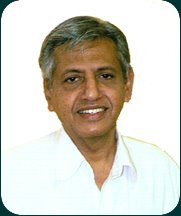
Srivatsa Ramaswami, March 2009


addthis_pub = ‘yogagal60510’;

my next yoga career move


It’s the beginning of 2009 and I’ve pretty much decided that I will not teach in yoga studios anymore. Those of you who are regular readers of this blog know why. I should never say never, things can always change, but as of this moment it’s a better idea to run my own workshops and classes and not teach for anyone else. My yoga persona is not conducive to teaching in gyms or health clubs. I’m not saying that there aren’t good teachers in those venues, but it ain’t me, babe. I can’t teach to someone who is looking for a “work out” in yoga. I mean, I can, but I don’t want to. I can kick your yoga ass and leave you dripping with sweat if that’s what you think makes a great yoga class, but I don’t want to. It’s good to know that because knowing who you are in the yoga world saves you a lot of hassle and heartache. Advice to newbie teachers: don’t try to be someone you’re not. Teach what you know, not what you THINK you know. It’s a gift to know who you are.

With the experiences I’ve had in the last two years with studio owners, I’ve paid my dues. I’ve been teaching for 7 years. I’ve studied three times at one of the most prestigious yoga schools in the world and I am an ongoing student of three yoga masters. I’ve been a student of Buddhism for 30+ years. The next logical step for me, as it has been for other long-time teachers I know, is training yoga teachers. Maybe that’s not the next step for some of you reading this, but I have moved on from teaching group classes. I have private students and I only teach two group classes where I teach for other entities. I call the shots in the rest of my classes.

Many yoga studios in the Chicago area run their own teacher trainings. I have no idea where all these new teachers are going to teach because there are more teachers than there are students, but yoga studios keep cranking out the yoga teachers. Any yoga studio that wants to make a buck comes up with a teacher training program. Let’s be honest — the yoga bucks aren’t in teaching group classes. As I was taught in India, personal transformation for a student only begins in a group class; it is accomplished by working one-on-one with a teacher, in the traditional way. At a yoga conference workshop I heard a show-biz yogini say (and I’ve learned better than to name names anymore in this blog) that she’d rather teach to the two students who get it than to the 10 who don’t. I feel the same way. Her statement was honest and real.

For the last six months I’ve been going back and forth about doing my own teacher training. Frankly I think my training would be unique because it would include Buddhism. Not one training in my area includes that subject. Nor does any teacher training include yin yoga. I’ve studied with the two American yin yoga masters for the last 5 years.

But first I have to get it on with the Yoga Alliance. Yee-ha. I’d love to know what the Yoga Alliance does for yoga teachers other than take their money, but this culture being what it is, everyone looks for that seal of approval to study with. Five years ago I registered at the 200 level and I now have enough hours to be an “E-500” level, that is, an “experienced” yoga teacher. I never wanted to play the game of getting a higher registration, the mere thought of filling out their form gave me hives, but now that I’m thinking of training teachers it’s almost a requirement, future students look for it.

I emailed the YA and asked whether I could apply for E-500 instead of being a plain ol’ 500 hour level yoga teacher. The answer was no, I have to be a 500 hour first, for FOUR YEARS (WTF?!?), before I can apply for E-500. I totaled all my teaching hours since 2004 and according to their own rules, I’m already E-500. As far as I’m concerned, this is just a scam to get more of my money. And for what? The Yoga Alliance does nothing for me. As they say in Texas, that ol’ dog won’t hunt.

So what’s the big deal about being registered with Yoga Alliance in order to train teachers? Unfortunately, for the sole reason that people think Yoga Alliance registration really means something. It’s all about marketing, nothing more, nothing less.

The master teacher I trained with 7 years ago was not, at that time, registered with the Yoga Alliance, but he trained with Pattabhi Jois twice and at an Iyengar institute and lived with his guru for almost 10 years. When I trained with him he didn’t care about being anointed by the Yoga Alliance. As ridiculous as it was he was not an “approved” school when I registered with YA. But over the years he grandfathered into the Yoga Alliance registration — only because people think it really means something. My teacher Ramaswami who studied with Krishnamacharya for 30 years has recently become Yoga Alliance registered — as if someone would not study with him because he wasn’t.

One year from now I’ll be living in an ashram in India studying yoga therapy under the personal guidance of a a swami, after which I will receive a yoga diploma certified by the Indian government. I really think that trumps anything the Yoga Alliance can give me.

I will look to training yoga teachers in the near future. But not in America. In India. I can do a 200 hour training, 8 hours a day, in 5 weeks. People study astanga in Mysore, Iyengar in Pune, viniyoga in Chennai, and travel to Rishikesh all the time to study yoga in general. British ex-pats run yoga teacher training programs in Goa. Why should I not teach yoga and yoga teachers in my beloved Tamil Nadu, India? I’ve been told that with my India experience I should do “sacred temple tours.” That would be a perfect thing to do after a teacher training — a temple puja blessing the new teachers.

I must finish some of my own training first because then I will be fully seasoned. A good cook knows when the seasoning is just right and a smart vintner knows when the wine is aged to perfection ready to be uncorked.

My time has come. The events of the last few years have certainly been in tune with what my vedic and western astrologers have said, both have been right on. So I’m putting it out there and I’ll go with the flow. Buddhism teaches me to detach from the outcome, not to cling but to let go — if it happens it happens. I’m giving it up to something that is greater outside myself.

If you want to study with me, tell me your interest. Just because you take a teacher training doesn’t mean you must teach. Many yogi practitioners take teacher trainings only for the deeper knowledge. I already teach workshops, so doing a teacher training is merely taking it a step further.

Besides…my teachers in India told us that if we do not teach what we have learned and take it out into the world we are nothing more but thieves.

addthis_pub = ‘yogagal60510’;
yin yoga Q & A

After reading this post, Anonymous asked:

“How can it be a good thing to stretch ligaments? Fascia, I understand; I learned a lot about it in anatomy courses & totally get why it needs to be flexible. But I’m not clear on ligaments: don’t they hold bones in place, as in joints? Don’t people have problems with hyperextending in, for example, knees & ankles, when the ligaments are too stretched out & the bones “wiggle” all over the place? If stretching can cause this, can’t yoga also? Thanks for any clarification you can bring to this issue.”

Good questions, Anonymous, I will try to answer.

Your first misconception is that somehow ligaments are different from fascia. No; for the purpose of yin yoga “connective tissue” refers to ligaments and fascia, i.e, the broad bands of connective tissue that even extends into the innermost parts of each cell. I direct your attention to the website of the First International Fascia Research Conference that took place in 2007. My teacher, Paul Grilley, was invited to speak at this conference but did not attend. He believes that once this fascia research gets into the “mainstream” medical community, it will revolutionize medicine. From the fascia research website:

“Fascia, or dense fibrous connective tissues, nevertheless potentially plays a major and still poorly understood role in joint stability, in general movement coordination, as well as in back pain and many other pathologies. One reason why fascia has not received adequate scientific attention in the past decades is that this tissue is so pervasive and interconnected that it easily frustrates the common ambition of researchers to divide it into a discrete number of subunits which can be classified and separately described. In anatomic displays the fascia is generally removed, so the viewer can see the organs nerves and vessels but fails to appreciate the fascia which connects, and separates, these structures.”

In other words, Anonymous, don’t believe everything in your anatomy courses. Medical books sometimes are not updated for 20 years. Why? Too expensive.

“Don’t people have problems with hyperextending?”

If Mark Spitz could not hyperextend his knees by about 30 degrees, he would not have won 7 Olympic gold medals for swimming. If Michael Phelps could not hyperextend his joints, he would not have beaten Spitz’s record. If contortionists could not hyperextend their joints, there would be no Cirque de Soleil. You are believing an anatomical cultural myth that somehow hyperextension of joints is always inherently dangerous, and that’s just not true.

“when the ligaments are too stretched out…”

Your second misconception is that somehow a ligament is “inert”, that once “stretched” it will not return to it’s usual length. Many anatomists, doctors, and medical researchers still believe that connective tissue is not “alive” in the same sense that a muscle is “alive.” This is simply not true. It IS true that injured ligaments take a longer time to heal but that is not because they are “too stretched out”; it’s because they have less blood supply than, for example, a muscle.

So I would ask you, if ligaments get “too stretched out”, then why do people get so stiff in their old age? Stiff hips, stiff backs, stiff knees? Would that not suggest that the connective tissue is NOT inert, that it actually does continually lengthen and shorten, and in old age it can literally shrink wrap the joints if not therapeutically stressed as one therapeutically stresses their heart doing aerobics or the way you therapeutically stress your muscles when you lift weights? But don’t believe me — go ask an 85 year old in a nursing home how flexible they feel.

Here is an excerpt from the chapter “Isn’t Stretching the Joints Bad?” from Paul Grilley’s book, Yin Yoga: A Quiet Practice:

“Moderately stretching the joints is not injuring them any more than lifting a barbell is injuring the muscles. Both forms of exercise can be done recklessly but neither one is innately wrong or dangerous. Of course, if someone bounces into their joints they will hurt themselves sooner or later, but that is Yang activity and Yin connective tissue shouldn’t be trained that way.

Yin forms of exercise seem new to our way of thinking. People accept the fact that muscle tissue shrinks or grows in rsponse to exercise, but imagine that the connective tissue of the body is insert and unchanging. This is not true. All the tissues of our body are changing and adapting to the stresses put upon them, even our bones.

If we didn’t exercise them, our muscles would atrophy and weaken and as a consequence so would our bones. Not as obvious to us but just as undesirable is the slow shortening and stiffening of connective tissue throughout our body due to injuries, neglect and aging. If we never bend our knees or stretch our spines, then the connective tissue is going to slowly shorten to the minimum length needed to accommodate our activities. If we want to maintain our joint flexibilities, we must exercise them, but we cannot exercise them like muscles, we must exercise them Yin fashion.”

“If stretching can cause this, can’t yoga also?”

Anonymous, you must first understand the difference between yin yoga and other forms of yoga which are considered yang.

The fundamental difference between yin yoga and astanga or vinyasa, for example, which are “yang” forms of yoga, is that the poses in yin yoga are done on the floor and held for 3 to 5 minutes minimum (poses like pigeon, child’s pose, cobbler’s pose, forward fold, among others.) Connective tissue does not respond to rhythmical stretches the way muscles do, in fact, you would injure your CT if you worked CT like muscles. Connective tissue is tough and fibrous and stretches best when pulled like taffy, slowly and gently.

A football player tears his ACL because his knee snaps — that’s a yang movement, that is a hard and fast movement that certainly injures connective tissue.

Holding yin yoga postures for a few minutes with moderate stress is not going to pull the connective tissue to the breaking point. The CT is only going to stretch minutely and if you are consistent with a yin yoga practice, the body responds by growing CT a little longer and thicker, which is what you want for the health of your joints.

Thanks for reading this blog and for asking your question.

addthis_pub = ‘yogagal60510’;

Srivatsa Ramaswami: The Three Gunas


I received the following in an email from my teacher, Srivatsa Ramaswami.

I began studying with Ramaswami in 2004 at the Chicago Yoga Center (where he comes very year to teach) and I was hooked the first night. He is considered a chant master in India and the first night’s workshop was the “Yoga of Sound”, all about mantras. I drove home crying because his chanting and the mantras touched my heart. Ramaswami is the teacher who inspired me to go to the heart of yoga, India.

Ramaswami is the longest standing student of T. Krishnamacharya outside of Krishnamacharya’s immediate family. When I started studying with him, Ramaswami was not as well-known as Krishnamacharya’s other students, BKS Iyengar, Pattabhi Jois, and Desikachar, Krishnamacharya’s son. When I told people that I studied with Ramaswami they asked “who?”, but Ramaswami studied with Krishnamacharya longer than any of the Big Three. He was an original trustee of the Krishnmacharya Yoga Mandiram in Chennai, India where I have studied three times. It is certainly not the habit of American yoga students as it is in India to touch their teacher’s feet to show respect, but I would not hesitate, that is how much respect I have for Ramaswami-ji.

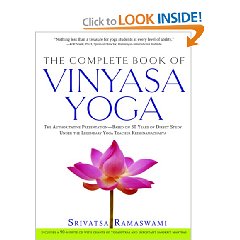
When I bought Ramaswami’s book The Complete Book of Vinyasa Yoga and got toward the end of the Acknowledgement, I began to cry because I saw my name. He mentioned me (and others) as “one of the teachers who has incorporated essentials of vinyasa krama into their teaching and practice even from Day 1.” I was stunned because I did not think he even knew my name. Now every year when he sees me he smiles and asks, “when are you going back to Madras?”, Madras being the old name for Chennai.

I give you the writing of a true yoga master and a true yogi.

Shanti.

The Three Gunas (Triguna) and the Four Human Goals (Purusharthas)

According to Yoga and other sibling philosophies, the entire universe is made of the three Gunas, Satwa, Rajas and Tamas, and these permeate everything (including all of us) everywhere in dominating everything in varying degrees. Due to the preponderance of one of these Gunas, in every individual, different human beings follow different goals. Even as everyone’s desire is to get happiness and get rid of unhappiness, each one, depending upon his or her guna temperament, pursues different means and goals (arthas) for one’s satisfaction or happiness. The three gunas are satwa, rajas and tamas. The four purushartas or human goals are dharma (order), artha (material possession), kama (sensual desires), and moksha (spiritual freedom.) A satwic person is inclined towards dharma, while the rajasic, tamasic and the one who is able to go beyond the influence of all the gunas (gunaateeta) are attracted respectively towards artha, kama and moksha. These four are called purusharthas or chatur-vidha-purushartha (four different human endeavors/goals.)

Persons whose personality is predominantly satwic follow ‘dharma’ as a goal of their lives for happiness. Dharma is the Law of Piety, Compassion, and orderly life. They follow the benevolent dictates of the scriptures, the laws of the land, leading a life consistent with the gods of nature. It is anathema for them to cross the Laws of Dharma. Such Dharmis are said to lead a very peaceful life here and hereafter, as they, who are said to be in a small minority, do and accumulate good karmas.

The Rajasic people are like the proverbial “A” type personalities. Highly energetic and mostly restless, they pursue very down to earth policies and follow the goal of artha or material possessions. More wealth and more power give them happiness and the means are less important than the goals. Only a few who follow this life-long pursuit of possessions and power ever succeed and sustain, leading to collective unhappiness of this lot. The happiness of the majority of them rises with the tide of increasing possessions and ebbs with the loss of wealth and power.

We have then the third group of people who are dominated by tamas. It is said Tamas, because it veils the intellect, makes such people short sighted. Their happiness lies in sensual gratification. Tasty food, frequent tactile stimulus, attractive visual objects and captivating sounds dominate their life. When the senses over a period of time lose their acuity, they have less room to be happy and fall into a state of depression as they get older.

Then there are the spiritual Yogis who relentlessly follow the path of spiritual wisdom and intuitively understand the nature of the ever present, nonchanging nature of their own Self and reach a state of Kaivalya or Moksha or spiritual Freedom. In that state, according to Yogis, the three Gunas reach a state of equilibrium. This, the yogis call a state of Nirodha of the mind, or a state the Lord in the Gita calls Gunateeta or beyond the dominance of the Gunas. This state leads to a permanent and irrevocable state of peace of mind and the yogis aver that it is superior to the other variable and unstable states of happiness; superior to that attained by sensual gratification of the tamasic personality or the happiness arising out of possessions of the Rajasic, or even the dharmic life of a Satwic person. Though the satwic state of happiness is superior to the other two, even that is said to be impermanent. Hence the Lord urges everyone, through His disciple Arjuna in the Gita, to go from Tamas to Rajas and then to Satwa and ultimately transcend all the Gunas. It is easier said then done.

But how is it done? Only Yoga comes with specific measures to change the individual personalities. One can transform a Tamasic mind to a Rajasic bent by practice of Pranayama, in addition to the observance of Yamaniyamas. The observance of a well designed practice of asanas will reduce the addictive influence of Rajas and hence a yogi who practices asana and pranayama will become more and more Satwic, thanks the reduction of Tamas and Rajas. And by spiritual meditation one will be able to transcend all the three Gunas.

So as Lord Krishna says, “Tatha yogi bhava Arjuna”, (Therefore become a Yogi). One should practice Yoga. You will agree?

Best New Year wishes,

Srivatsa Ramaswami

addthis_pub = ‘yogagal60510’;

interview: yin yoga — part 2

What do people need to know about their connective tissue? What is the relationship between connective tissue and yin yoga?

Usually the only time people think about their connective tissue — which includes our tendons, ligaments, and fascia that surrounds and intermingles with our muscles — is when we injure it, like a sprained ankle. However, what people do not realize is that the connective tissue of our bodies is all about our flexibility; our muscles are all about strength. The health of our joints is related to the health of our connective tissue. What will give us a sense of ease and comfort in our old age is not how much weight we can lift, but our flexibility and the health of our joints, like our hips, pelvis, and spine. People do not realize that if our connective tissue is not therapeutically stressed on a daily basis, that is, stretched in slow, long-held floor poses such as what is done in yin yoga, our connective tissue will literally shrink wrap our joints. This should be of great concern to women because the spine is surrounded by about seven layers of connective tissue and when, not if, the connective tissue begins to stiffen due to lack of movement, it can literally crush already thinning vertebra and thereby contribute to that “old lady’s hump”. It is not so much osteoporosis that causes the rounding of the back, it is the connective tissue of the spine shrink wrapping the vertebra. That is why forward folds with a rounded back and back bends are so important for the health of the spine. Doing paschimottanasana with a more rounded back helps to stretch the spine more, rather than doing it with a flat back.

In yin yoga the connective tissue of the hips, pelvis, and spine is worked slowly in a “yin” way. Other forms of yoga are more muscular and therefore more “yang”, that is, moving and rhythmic. The only way connective tissue is stretched is by relaxing the muscles and holding the floor yin poses for three to five minutes minimum. Again, flexibility has nothing to do with our muscles, it has everything to do with our connective tissue.

I believe that the ability to stay still for five minutes at a time has a lot more to do with our minds than our bodies. This is why yin yoga is also mind training, we train ourselves to be still in a world that is rushing out of control, and not that we can control it anyway. If someone values the quality of how they are living each moment, giving themselves time to turn off the movie that constantly plays in their mind and do some yin yoga, then they will begin to find more space in their life.

addthis_pub = ‘yogagal60510’;

interview: yin yoga

I’ve been interviewed for an article for the health and fitness magazine supplement to my local newspaper that will come out in January. I thought I would post some of the questions and my answers.

How does yin yoga balance the mind, body, and spirit?

Yoga was never meant to be a purely physical practice — the ancient yogis (the sramanas) knew this when they went into the forests thousands of years ago to use their own bodies and minds and nervous systems as laboratories for experiments in personal transformation. We are not just our physical bodies so whatever type of yoga is practiced will balance the mind-body-spirit.

All yoga styles work the energy body, however, I feel that yin yoga is in a sense a deeper practice because the emphasis is solely on the connective tissues, not the muscles. Both the ancient Indian yogis and the Chinese yogis (the Taoists) believed that the connective tissue houses energy pathways, called nadis by the Indians and meridians by the Chinese. These energy pathways contain our life force, prana as the Indian yogis called it, chi as the Chinese yogis called it. Our energy body (the total of all these energy pathways) tends to become dense or stagnate when we do not move our bodies outside of our habitual ranges of motion. This is why we do yoga. But by coming into a pose in a slow yin way and staying for many minutes at a time helps us get deeper within our natural ranges of motion in the joints of the hips, pelvis, and lower back.

Chi stagnation is what acupuncturists deal with so that is why yin yoga is also called “needleless acupuncture” because you can move and balance your chi via yin yoga postures by stretching and pressuring the connective tissues that house the meridians. Modern life is very yang, lots of movement, rushing around, no stillness — this causes stress and burn out. Yin yoga is a way of slowing down and going inward. Life is always about balance, the yin and the yang. Too much yang and you burn out; too much yin and you become a couch potato. Think of all the physical ailments that people have from too much stress and burn-out.

Because of my own personal yoga and meditation practice, I truly believe that combining a yin practice with a yang practice (such as a strong vinyasa or astanga practice) offers a complete yoga practice not only on the physical level but more importantly on the psychic level. I believe that working on these deeper levels is what what leads or our own personal transformation and that the changes we make to our soft tissue have a profound influence on the emotional, mental, and energetic levels. My own yoga practice deepened in a very potent way when I began to move away from an alignment-based, precision-obsessed practice.

There is also a whole psychosomatic level to balancing the energy body. Strong and flowing prana (or chi) is important because it affects the way we feel and the way we think. Blending the physical with the emotional levels expands our possibilities within a complete yoga practice.

addthis_pub = ‘yogagal60510’;

yoga in the west: the new aerobics?

Amanda left a very juicy comment to this post. I thought she left such delicious yoga food for thought that it was worthy of its own post.

so what say you, readers? has westernized yoga for the last dozen years or so merely been the “new aerobics”?

Yoga has been in the west for a long time. I have a book I bought at an antique store called The Dayspring of Youth: Yoga Practice Adapted for Western Bodies written by “M” and published in 1933 — not one word about asana is in the book. Indra Devi taught Hollywood stars such as Gloria Swanson and Olivia de Havilland after World War II and in the 1950s. I dabbled in yoga and meditation back in the my college hippie days in the early 1970s and my claim to fame is OMing with Buddhist and Beat Poet Allen Ginsberg. but for yoga to have become so popular and trendy, I believe what Paul Grilley has said about it: that the spirituality had to be totally stripped out of it in order for most westerners to come to it.

So here is what Amanda thinks…the only edits have been for spelling, punctuation, and flow (no yoga pun intended.)

“I am sure there are some lessons for the Western (not the Eastern) yoga community that could be learned from studying the aerobics/groups fitness craze of the 1980s.

At its peak, the aerobics craze dictated (somewhere around 1986-1989) that you ‘needed’ to have all the right brands, the matching leotards, headbands, etc. And preferably be able to teach or do mindnumbingly complex choreography. Aerobics was everywhere – and it was of a variable and questionable quality. Some instructors had ‘it’ and others were simply amateurish, and at worse, downright dangerous. Ironically, the average lifespan of an aerobics instructor was 2 1/2 years.

In the early 1990s, the bubble burst. Be it the matching headbands, the complex choreography, or the whole ‘Barbie Doll/airhead’ image that had built up around the fitness industry, or the economic recession we had back then, people began staying away from classes in droves. It began with men, and continued until it was only the hardcore addicts who were left. Centres that were once highly profitable closed overnight. I know — I owned and operated a centre at this time. I was able to close it and sell the plant equipment and barely avoid losing my house.

By the mid-1990s, this situation began to change. The industry, in Australia at least, had totally professionalised (you need a Diploma level qualification to teach at gyms in Australia — you don’t need this to teach yoga, I notice) and an amazing New Zealand franchise called Body Pump hit the scene. People began to come back. Especially men.

What did Body Pump do? It totally did away with the complexity and the ‘trendy’ clothes. You did Pump in daggy shorts. Instructors taught participants that technique was everything and image was nothing. You focused on the foundations, getting the basics right – with incredible results. As instructors, we were taught how to communicate as experts, were were taught that safety was paramount. Our music and moves were choreographed for us by experts.

Nowadays, if you don’t have Pump on your timetable, you’re losing money. The same New Zealand company has followed with other programs, including one based on yoga. Worldwide, 10 million people every week do either Pump and Body Balance (Flow) alone!

So yoga is 3500 years old and there is a complete way of life, rather than just physical exercise. But when I look at the yoga world in the cities and in the US, all I see is uber-flexible Barbie Dolls in brand name clothes, and a frenzied mega-popularity that will surely burst in this economic climate. I see the aerobics craze all over again. [emphasis supplied.]

Underneath, however, are some dedicated souls who have depth, who are professional and authentic. If I was going to say what can we learn from the aerobics craze, it is this:

the yoga world in the West is yet to really mature – at the moment, it’s an incorrigible teenager. The bubble will burst.

Yet it will mature in order to survive. It will do this and thrive because it will find the right cultural “mix” and niche.

Yoga teachers, studios and schools will disappear whilst this is happening. Those that remain will do so because they have the basics – the heart and soul – of teaching yoga to the community and sharing those basics with others. This is a long, hard journey but one that has to be had.”

Thanks for writing this post, Amanda! check out Amanda’s blog — she is now a “friend of the family”!

And comments are solicited and appreciated!

addthis_pub = ‘yogagal60510’;

is the yoga studio model dead and how ’bout those "yoga communities"?


(photo credit: bindifry)

[Buddha’s teachings that we should surround ourselves with like-minded friends]

“the community was blighted with some unfortunate cattiness, competitiveness and general high-school girl behaviour.”

Hallelujah! I’m not the only one who feels this way!

The above quote was taken from Nadine’s blog. Nadine moved from South Africa to Australia and I’m happy that she is so happy in the Australian yoga scene.

My experiences in yoga studios have not been the most positive, but I take everything as a lesson. sometimes the negatives are greater teachers than the positives. I also believe in karma so maybe the Universe is telling me something about teaching in yoga studios. hey, maybe I was a total bee-atch yoga studio owner in a past life so now I’m getting what’s coming to me. all I know is that I am going to think long and hard before I teach in a studio again.

One of my loyal readers told me that his teacher said “the studio model is dead” and that comment intrigued me. he said that it’s not that she doesn’t still teach some group classes, but rather that those are basically seva and a way to attract students to do the workshops, teacher trainings, and especially private lessons where mature practice can happen.

“Private lessons where mature practice can happen” is also an interesting statement, “mature” being the operative word for me. my teachers in India taught that personal transformation can only begin in a group class but is accomplished by working one-on-one with a teacher in the classical way and I truly believe this.

As for those “yoga communities” I’m the first to admit that because of my recent experiences the phrase leaves me colder than sitting on top of an iceberg. Brenda had a blog post about it where readers weighed in.

So what say you? is the “studio model dead” especially in this economy? and what about those “yoga communities” that everyone talks about and wants to develop? is it about talking the talk and walking the walk? or are “yoga communities” no different from your neighborhood coffee klatch where we just get to wear that cool yoga jewelery?

More on this later as thought develop, so talk amongst yourselves. I’d really like some comments especially from newbie yoga teachers and studio owners. I’d also like to know if teacher trainings nowadays are incorporating more yoga business aspects to the trainings, i.e., “yoga in the real world.”

with metta always….

addthis_pub = ‘yogagal60510’;

fear and loathing in the yoga world, part 2

Fear and Loathing in the Yoga World, Part 1

I will say from the start that the studio owner who fired me in an email last week later realized that her actions were not the most professional or reasonable. she admitted that she should have called me and she regretted what she did. however, the damage had already been done. you can’t unring a bell. you can’t undo the damage that you did.

She sent her screaming email late at night accusing me of things I did not do, so it was too late for me to call her. I wrote back to her immediately explaining how I could not have done the things she accused me of, which were:

1. sending “consistent” emails to students with “negative connotations” about her and the studio. more about that later.

2. calling a woman who was scheduled to do thai yoga massage after my Sunday morning class and asking her to cancel her appointments so that I could use the space. the story about that is even more bizarre than #1.

The situation is that she is closing the studio at the end of the year, not because of the economy, but because it was a hobby that turned into a real business. a successful yoga studio with committed students. I should be so lucky. she admits that she never realized how much work a “real business” takes and it all got to be too much so she decided to close up shop and sell the building. that’s fine, it’s her decision, and I have to say that when I first heard this news I had little reaction to it because all things are impermanent, so be it. but I did tell her that I would look for my own space, maybe even buy a building, I was upfront about that from the get go. and I have found my own space starting in January. so when she told me I was “going behind her back”, that accusation floored me.

I’ll try to make this convoluted story short. I had given up my night class and the owner gave it to another teacher. I emailed a few of my night students saying that I regret I am no longer teaching this class, so-and-so will be teaching it, and I hope to see them in January in my new night class. that’s it. I had also sent an earlier email announcing my new space and my new classes to all students who had voluntarily given me their emails. by the way, all the students know the studio is closing.

As it turned out, the owner taught the night class after which she sent the scathing email to me. she said that three students (who were my students obviously) came up to her after class with the accusations about the “consistent” (two) emails with the “negative connotations.” I did not understand how they could have interpreted anything negative from my emails.

As for asking the thai massage practitioner to “cancel” her appointments, I did call the woman to ask if she was using the space after my Sunday morning class. I wanted to know because a friend who is a semi-pro photographer was coming to the studio after my class to take some shots of me. she told me yes, she’s using the space after my class, and I said fine, I’ll just reschedule. that was it. for whatever reason, the thai massage practitioner called the owner and told her I called. when the owner accused me of wanting to “cancel” this woman’s appointments behind the owner’s back, I called the practitioner and asked her why she told the owner the lie about me. let’s just say I was not my most yogic self. she claimed she did not. when the owner later admitted she acted hastily, she told me that the practitioner did not use the word “cancel”, but that it was hard for her to imagine that she would have heard anything different. so as for who was telling the truth, I had no idea and I did not care. the damage had already been done.

As for the students telling tales about me, human nature is what it is. and I’m sorry to say this, but yoga students love to stir things up. admit it, because y’all know it’s true — in fact, maybe some of you reading this have done it yourself. in our subsequent discussion about it, the owner told me about how students would tell her that so-and-so teacher doesn’t do this, or doesn’t do that, or teaches shoulderstand like this, he doesn’t teach it the way you do, blah blah blah blah blah. I’ve heard students speak horribly about sub yoga teachers, I’ve seen students walk out of classes because “their” teacher wasn’t there that day. I have to ask: what the hell are you doing? and why? I’m here to tell you, if any of you reading this has ever done that, you should be ashamed. yoga is about cultivating an attitude of gratitude and if you don’t have one, yoga has taught you nothing.

After my experience with the alcoholic studio owner, this screaming email brought back bad memories. there was no way I was going to allow another studio owner to treat me like garbage. there was no way I was going to let those lies about me stand. in her original email she wrote that I should send back my key and when she got it she would send my last check and my mat. no way, I thought, I’m getting my things in person, so I called the next day. as it turned out, we talked for an hour. reasonably. I explained my side of the situation. and she became contrite and humble. she never once said “I’m sorry” but she admitted she acted unreasonably. so we agreed to meet the next day so I could get my mat and money.

We met the following morning (the email was Monday night, this was Wednesday morning) and I must say that I was not at all upset. I had let it go. in Buddhism there are three sensations: attachment, aversion, and neutrality. at that moment I was neutral. I walked in, gave her my key, and said I’m getting my mat. she stopped me and said “I must tell you these things…” and she began to tell me how wrong she was. I sat and listened. but the damage had already been done, you can’t unring the bell.

She admitted that the whole situation was a learning experience for her, about how she is ruled by her emotions, about how reactive she is, about how she is very attached to the studio even though she is giving it up. I let her talk and said, “well, I have much more life experience than you,” (she is only about 30), “and I would advise you that next time someone tells you something, to investigate it.” I asked her what she thought the purpose was of those students saying those things about me. I also told her to ask herself why she believed them so readily.

I told her that after this whole experience I am re-thinking whether I should continue to teach in that community. she told me that I would have to do what is right for me but she thought it would be a disservice if I did not. she said that I should not let the actions of the three students ruin it for the others. I told her I appreciated that.

So this entire situation was a learning experience for her but also for me. it was a lesson on letting our emotions rule us, a lesson on reactivity, a lesson on investigation. these are all things that Buddha taught about.

The owner’s first email compared to her contrite second email was absolutely Dr. Jekyll and Mrs. Hyde. since this incident I’ve heard more than a few stories from teachers about the Jekyll and Hyde personalities of yoga studio owners. and all I have to say for right now is “never again.” and for any yoga studio owners reading this, think long and hard about how you treat your teachers and about how much support you give them.

I’m tired of the drama of yoga studios. the alcoholic studio owner (about whom I am finally neutral), the immaturity of the second owner….I think the Universe is giving me another kick in the yoga butt that the studio model is dead for me. time for me to move on to bigger and better things. time for me to examine my own yoga teaching paradigm. my gal pal who lives in India told me that I need to find a “goddess in residence” yoga gig somewhere. I think she’s right. if you have one, let me know, I’ll be on the next Lufthansa flight out.

After my meditation class last night I talked about this with my teacher, the Theravadan Buddhist monk. his dharma talk was about attachment and the Ego, whether there is an “I” and if so, what is it. after our sit I told him that working with attachment and craving is easy for me, but my Ego troubles arise from my aversion (the flip side of attachment) and I told him briefly what happened. he is a relatively young monk but very wise and I always feel at peace after our talks. he said, “why are letting this bother you? you know your truth, you know the type of person you are. no one can change that by their words. let it go.” I said, “but what about the lies about me? my mind continually asks ‘why why why’, that is what makes me crazy.” he said, “accept that sometimes there is no answer. those people have their own problems, don’t create your own problems because you are upset. you will never know their motivations. let it go.” finally he said, “this is a lesson for you, too, a lesson to teach you loving-kindness. send them loving-kindness.”