Krishnamarcharya and those British gymnastics

“Sir” and his father, KYM, 2005

2010 has been the year of scholarly yoga books such as Mark Singleton’s Yoga Body: The Origins of Modern Posture and Stefanie Syman’s The Subtle Body: The Story of Yoga in America. Both authors have written that Krishnamacharya’s yoga was derived in part from British gymnastics and military training exercises.

Even the eminent yoga scholar Georg Feurstein recently wrote that:

“The Hatha-Yoga tradition espoused by Sri Krishnamacharya, who taught at the Mysore Palace for many years, derived many of its yogic postures from gymnastics. This has recently been highlighted by a number of authors inquiring into the beginning of modern Yoga. See, for instance, Mark Singleton’s Yoga Body: The Origins of Modern Posture Practice (2010). He and other researchers have shown that what we in the West consider as Hatha-Yoga is chiefly a nineteenth-century invention, which was once closely associated with nationalism: Foster healthy people for the country’s defence or, in the case, of some nations for their military expansion. We know that in Europe and North America the same attitude has led to gymnastics and body-building and then the modern body cult.”

I don’t know if Mr. Feurstein has ever spoken with Srivatsa Ramaswami about his guru Sri Krishnmacharya, but I do know that there is not one mention of Ramaswamiji in either of the above-mentioned books (I looked.) Neither is he mentioned in Feurstein’s book, The Yoga Tradition, first published in 2001.

Those of you who know me know that I am an ongoing student of Ramaswamiji, having studied with him now for about 7 years. Ramaswamiji studied with Sri Krishnamacharya for 30+ years, longer than his own son Desikachar, and longer than Jois and Iyengar ever did.

So I was glad to see Ramaswamiji address the question of his guru deriving his yoga from gymnastic exercises. If anyone would know, I would think it would be someone who studied with Sri Krishnamacharya for 30 years.

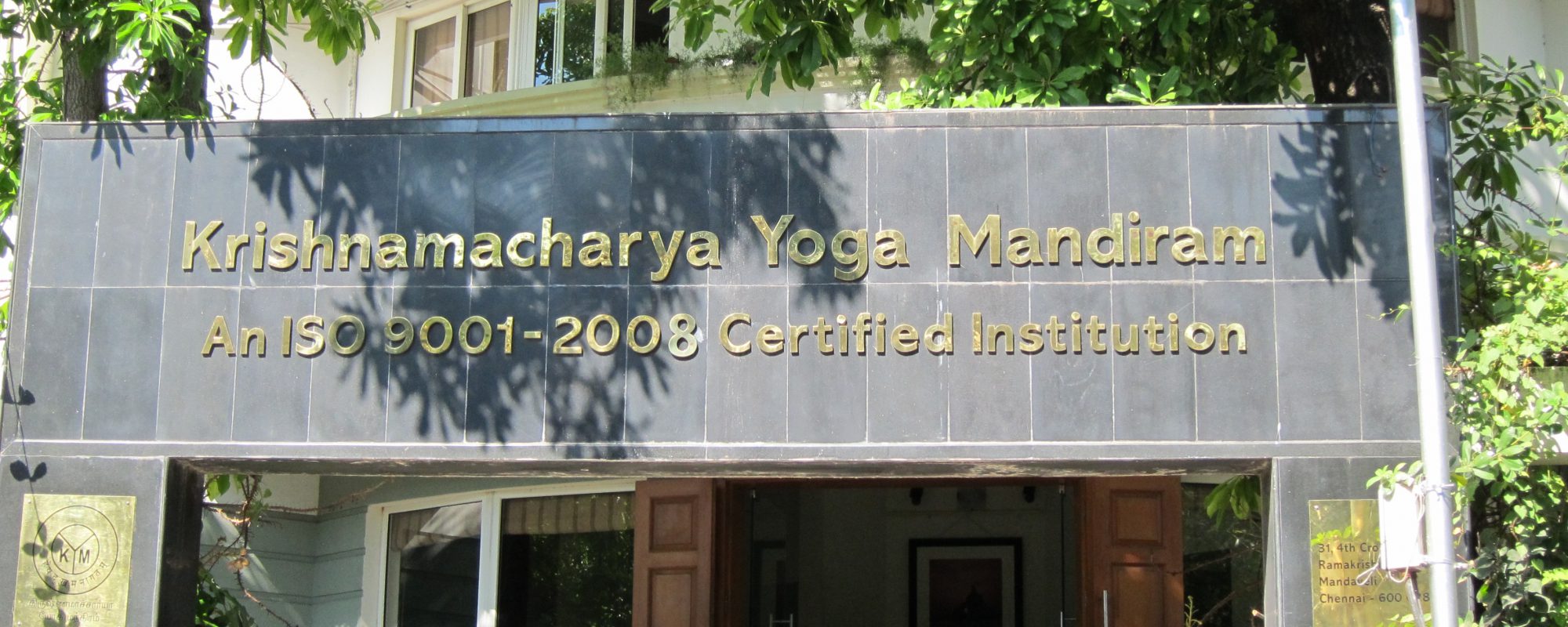
Knowledge from a book is valuable of course, but it can not replace wisdom from an ongoing relationship with a teacher. That is one yoga jewel that has stayed with me from my first training at the Krishnamacharya Yoga Mandiram: the teachers said that personal transformation can only begin in a group class; it is achieved by working one on one consistently with a teacher over a period of time. I truly believe this as I have seen the differences with private students v. group classes.

The following is from Ramaswamiji’s newsletter, unedited but for the the addition of paragraphs and an [emphasis supplied.]

Maybe this will answer the scholars’ questions.

##########

Yoga Gymnastique — Srivatsa Ramaswami

Some eight years back I wangled a presenter assignment at a Yoga Conference in Texas. I was never invited again because, among all the presenters, I had the dubious distinction of attracting the least number of participants for every one of my presentations.

During one of the breaks a well known yoga teacher in US came and sat by my side and inquired about me, about where I was from, etc. I mentioned that I was a student of Pandit Krishnamcharya for three decades. With a quizzical look he asked, “What were you doing for 30 years with him?’, and with a wry smile he said, “Oh, you must have been doing your daily practice at his school”. He left before I could start my long answer. “How can anyone study Yoga for such a long period when there are just a half a dozen sequences or just a little over a score of asanas?,” he must have wondered.

Krishnamacharya as I have mentioned earlier was like a many splendoured diamond each facet brilliant in its own way. He taught yogasanas following the Vinyasakrama, the art form. He also used yogasanas, pranayama and meditation for chikitsa or therapeutic applications. He taught a vast range of Sanskrit chants from the Vedas and also from smritis. He taught several traditional texts like the Yoga Sutras and the sibling philosophies including the several Upanishads, following mainly the Visishtadwaita approach. He taught Vaishnava religious texts as well to a number of his Vaishnava followers. He was a well rounded Yogi and he could make every class absorbing. There would always be something new and insightful. One could never get bored in his classes whether it be the asanas, chanting or textual studies. I wanted to explain these to my celebrity friend but he was too busy to stay and listen.

Some research scholars have mentioned that Krishnamacharya’s vinyasa approach to yoga has a considerable dose of physical exercise systems prevalent at that time in India like the drills and also gymnastics imported into it. But my experience with Krishnamacharya’s asana practice is somewhat different.

It is true that some of the vinyasas and vinyasa sequences like part of Surya Namaskra, the handstands, the jump throughs, jump arounds, push ups (utplutis) may appear to mimic floor exercises in gymnastics. Perhaps there are some asanas and vinyasas Sri Krishnamacharya taught that had some resemblance to drills or gymnastics. But he taught to me almost 1000 vinyasas making up close to 150 asana subroutines. The head stand, the sarvangasana, padmasana are distinctly different from gymnastics and each one of them has scores of vinyasas that are uniquely yogic and no other system seems to have anything like that.

Further, yoga as a physical culture is very old. We may not have records because in ancient times most of instructions were oral and the transmission of knowledge was from teacher to student and the only way to learn was to go to a teacher and learn, practice and internalize. Later on a few texts were written as scripts were developed but they were written in easily perishable palm leaves — like the Yoga Kuranta — and barely one manuscript, no xerox copies, no electronic books were available. So in these matters we have to rely upon authorities/tradition or as the Vedas would call it “aitihya” or firmly held belief.

Even from the available texts like the Puranas one can glean a lot of reference to yoga practice including asana practice. The Brahma Sutras mention that a seated asana is a necessity for meditation. Works written hundreds or even a thousand years back contain sections on Yoga including asanas. Thirumular, a yogi said to have lived 3000 years back wrote about several asanas in his Tamil classic Thirumandiram. Puranas, smritis and several later day Upanishads have sections on asana practice.

There is a dhyanasloka pertaining to the Ramayana which mentions that Sri Rama was in Vajrasana while seated in his flowered bedecked, jeweled throne. In fact from time immemorial many people in India, as a religious practice, have been doing sandhya or morning worship of the sun with specific sun worship mantras and physical movements and gestures. It includes mantras like the Gayatri, pranayama and many postures like tadasana, uttanasana, utkatakaasana, and danda namaskara and utakatasana are specifically mentioned in the smritis.

So in a way we may say that suryanamaskara with mantras and the physical exercise has been a very old practice. The word Yoga is indeed a vedic word. You may check with my book “The Complete book of Vinyasa Yoga” (here no commercial intended) based on my studies with my guru and I do not think it in any way resembles a book of gymnastics. Yogasanas have their own distinct nicety. Gymnastics of course has its own charm. Gymnastics was one my favourite programs while watching the Olympics. I do not know if I would enjoy Yoga Olympiad.

My guru had mentioned on a couple of occasions that physical yoga had been the core system of physical exercises in India. It had technically influenced several ancient systems like wrestling, archery, fencing etc., very physically demanding disciplines, requiring a high degree of strength, dexterity and focus. Yoga is called a sarvanga sadhana as it is helpful for all parts of the body, including the internal organs. There were other indigenous circus-like practices such as malcam, kazhakkoothu where they use ropes or poles and do routines very similar to asanas. He had also mentioned that almost all the physical systems of the world, including gymnastics, had borrowed heavily from Yoga, because the asana portion of Yoga was the most ancient and developed physical culture system. Therefore it could be that there were a few similarities between asanas and some obscure gymnastic systems in different parts of the world at different times. Then one has to investigate the origin of those obscure systems, whether they were older than Yoga, or if they themselves borrowed from ancient yoga practices.

My Guru himself was a passionate researcher. He would always be looking for works on yoga and other systems. He even would advise us to go to different agraharams (small cluster of homes of scholars in certain villages) and look for works on Yoga available with such scholars. He would say that we should visit the hundreds of temples in India, especially South India, and observe the sculptures and idols all over the temples for study of yoga postures. And because of the oral tradition and relying on degradable palm leaves, Yoga itself had a checkered progression, in the limelight during some time in history and obscure at some other times. It then becomes a futile exercise to try to determine which among the physical exercise regimens came first, the seed or the tree or the better known example of the chicken and the egg.

There are distinct differences between the yoga I learned from Sri Krishnamacharya for a long period of time and some of the aerobic exercises like gymnastics. In the vinyasa krama asana practice, the breathing is synchronized with the movements at the rate of anywhere between 5 to 10 seconds for inhalation and exhalation thereby reducing the breath rate to about 3 to 5 per minute, whereas in contemporary aerobic exercises including gymnastics and gym workouts, the breath rate increases to much beyond the normal breathing rate of about 15 or so. This alone makes yoga practice of Sri Krishnamacharya distinctly different from other drills.

The variety of movements in Vinyasa asana practice is said to be designed to exercise all parts of the body including the internal organs. We do not find deep movement, synchronized breathing, and the significantly profound exercises like the bandhas — which are an integral part of Sri Krishnamacharya’s asana practice — in other forms of physical exercises, especially gymnastics. Look at the 1930’s videos, the bandhas of my Guru, they are not a gymnast’s cup of chai.

When I was young, some exercises were very popular. They were outside the pale of yogasanas. One was known as “dandal”, which would look very much like a repetitive movement between caturanga dandasana and the plank or a simpler version of urdhwa mukha swanasana. The other was known as, if I remember right, ‘bhaski’. It involved standing up and doing repeated squats. The first one, ‘dandal’ looks very similar to part of Surya namaskara. Baski resembles a very popular ritual that is done by thousands even today and is known as “toppukaranam” in Tamil and “dorbhyam karanam” in Sanskrit. One holds the lobes of the opposite ears with one’s hands and squats usually in front of the idol of Lord Ganesha. It could be 12 times or 108 times. It is both a good physical exercise and a loving devotional practice to the charming Lord Ganesha.

Are these physical drills, yoga exercises, or devotional practices? Which came first? God knows, Lord Ganesa knows.

Then there is the question of whether Suryanamaskara is old, from the Vedic times. The Surya namaskara can be considered from two views; one is the mantra portion the other is vyayama or the physical part. Certainly Suryanamaskara mantras are from the Vedas. In fact, there is a complete chapter of Suryanamaskra mantras from the Veda which takes about an hour to chant. Again, the other important Surya mantra, Gayatri, is also a Vedic mantra. The Vedas exhort using Gayatri as a mantra to worship the sun daily.

Worship of the sun is considered a daily obligatory duty for the orthodox in India. We have a procedure called Sandhya vandana which is supposed to be done thrice a day, but definitely once a day. This Sandhya procedure is a kind of a worship ritual, towards the end of which one prostrates towards the Sun. While the Gayatri japa portion is done sitting in a yogic posture after required number of pranayama, the upasthana or the second part is done standing. Towards the conclusion the worshipper of the sun has to do a namaskara, a prostration. So from the standing position, usually one bends forward, half squats, places the palms on the floor, takes the legs back by jumping or taking one leg after the other and does an saashtanga namaskara or the danda namaskara prostration). One has to go through these steps (from standing to prostration) and if the steps are properly organized we get the surya namaskara vyayama, a sequence, a vinyasakrama. So, since one has to do sandhya daily and has to do the namaskara startig from standing and since the sandhya is mentioned as an obligatory duty, it will be correct to say that suryanamaskara, both the mantra portion and physical namaskara portion, are from the Vedic times. The actual steps may vary but the physical namaskara to the sun is a procedure practiced from ancient Vedic times.

Further, in India you can see many people who do not practice yoga or the formal ritualistic sandhyavandana, standing on the terrace or on the beach, facing East early in the morning, and doing prostrations a few times, returning to the standing position every time. They do not call it Yoga but suryanamaskara. Some of the present day yoga enthusiasts however do the suryanamaskara, probably at night, in any direction or directionless, do not use the mantras or the devotional bhavana associated with it, but as a mere workout.

I had chanted the suyanamaskara mantra almost on every Sunday with my guru for several years. Namarupa also published my article on Sandhya vandana with pictures of the steps some time back. I also have the one hour long Suryanamaskara mantra chant from the Yajur Veda (which I learned from Sri Krishnamacharya) recorded in mid ’80s and the CDs are still made available in India.

Sri Krishnamacharya’s range of teaching was sweeping. I have mentioned about the asana teaching, his chikitsa krama and vinyasa krama. His chanting of vedas was beautiful and very engaging. I do not know of any yoga teacher during his times who could chant as well as he could from memory. He earned the title “Veda Kesari” or Lion of Vedas. He was a Sanskrit scholar, a Sanskrit Pandit. He taught the vedanta philosophy, the prastana trayas, the Upanishads, the Brahma sutra and the Bhagavad Gita in the visishtadvaita tradition. He was given the title “Vedanta Vageesa”. He was also quite familiar with the advaitic interpretation. He once said while doing the sutra on Anandamaya “Anandamaya abhyasat” in which the two interpretations, advaita and visistadwaita differ from each other, “If you want I can teach you the advaitic interpretation, but advaita may be intellectually challenging but does not give the emotional satisfaction one gets from the visishtadvaitic approach”. He also taught us several important Upanishads. I studied with him several Upanishad vidyas from the major Upanishads, like Brahadaranyaka, Chandogya, Taittiriya, Kaushitaki and others. Some of the vidyas he taught include Pancha kosa Vidya, panchagni, pranava, madhu, Sandilya, Dahara Pratardana and many others.

Once I asked him why if the goal is the same, understanding Brahman the ultimate Reality, then there are so many Upanishads, why so many vidyas. He would say that pupils have different questions about the ultimate reality and these vidyas take you from the known to the unknown.

Supposing fifty people, strangers from different places, go to an unknown country, Pineland, and take a picture with the leader of the country, Mr Pineman. Every one sends home a copy of the picture by email. The way they would point to the unknown leader, Mr Pineman, to those back home would be to start from the known. The known entity in the picture will be the one who sends the picture. He may tell his son/daughter, ”the leader is three rows in front and eight to the right of me.” Another person would start first by asking his kid to identify him/her first in the picture and may say the leader is three rows behind and five seats to the left. Likewise, all the various vidyas of the Upanishads try to help the aspirants to realize the ultimate truth, starting from a known tatwa. I had the privilege of studying several Upanishd vidyas from my guru Sri Krishnamacharya.

He also taught many of the sibling philosophies so that one’s understanding of Yoga and Vedanta will be on firm grounds. He taught Samkhya philosophy by explaining the Samkhya karika with the commentary of Gaudapada. He also taught Yoga Sutra in considerable detail. He had obtained the titles “Yogacharya” and “Samkhya Siromani”. He also was an expert in another profound philosophy called Nyaya and had been conferred the title “Nyayacharya”. He also taught smaller or easier works like Tarka Sangraha to introduce the difficult Nyaya philosophy.

His religious studies were outstanding. He was such an expert in the Vaishnava philosophy, that he was in consideration to head a well known Vaishnava Mutt. He was truly a devotional person. As he practiced yoga he performed his daily puja with great devotion. He had several students who studied the Vaishnava religion in considerable detail. He could quote from the epics, Ramayana, Mahabharata and several other puranas like Vishnu Purana, Bhagavata Purana, etc.

I do not know of any person who was so well versed in the sastras and also at the same time an outstanding practising Yogi. Sri Krishnamacharya is well known, it is almost exclusively due to his yogasana teachings. But his scholarship and teachings were enormous. I feel a bit sad when he is portrayed as a hatha yoga teacher who plagiarized some exercises from gymnastics and called it yoga to make a living, and nothing more. [emphasis supplied.]

Maybe there is some common ground between these two different physical disciplines. I continue to remain in awe of his enormous scholarship, practice and teachings and kindness towards his students. He was a teacher who would uplift you, a true Acharya. When you study with him, you get an unmistakable feeling that his only goal in life was to transmit the traditional knowledge and make it accessible to the student. He was a unique Yogi, a unique teacher, a unique individual. Twenty years after his passing away, I remember him everyday, while practicing, studying or teaching, sometimes in dreams — fondly.”

If you want to study with a true yogi, a true yoga scholar, and a vedic chant master, Ramaswamiji will teach at the Chicago Yoga Center September 17-26.

upon further reflection on the yoga noise

This is me after my head exploded over the latest furor about the way yoga is advertised in America.

OK, not really, but after the requisite three days all things pass and we move on, right? Wrong.

Once again an advertisement for a yoga book created a firestorm in the yoga blogosphere. Maybe the fire was not as widespread as was created by the Judith Lasater letter to Yoga Journal or the naked ToeSox ad, but it did generate many comments here and at Svasti’s place. So let’s just move on. Wrong.

Just for the heck of it I looked at Tara Stiles’ twitter feed to see if there were any more comments about her book other than for yours truly, Svasti, and Blisschick. Over 90% of the tweets are consistently hugely complimentary. Obviously detractors are in the minority. But then I found this one lonely tweet amongst the cacophony of Stiles’ cheerleaders:

“I feel you sold out Yoga to Honda. If you want to model for products, fine. Just keep yoga out of it. Just my 2 cents.”

You see, I thought maybe my last post about her appearance on the morning show in New York was over the top, that I was picking on her too much. But you have to admit that the Dunkin Donuts commercial before her fry the fat yoga show was a priceless piece of irony. There could not have been a better juxtaposition of two images to make a point and that’s the essence of satire.

Then I read what a well-known yoga teacher said about comments on yoga blogs being divisive and not in the spirit of being a yogi (I don’t know if the comment was about the TS discussion, but it made me wonder.) Also, some commenters feel that whatever brings people to yoga is fine and that ultimately they will learn that yoga is so much more than a way to burn blubber and fry fat on the mat.

So am I just a big ol’ meanie?

Last night this foggy menopausal brain thought about all this in the context of being “yogic.”

In the first place, this has nothing to do with Tara Stiles as a person. I haven’t called her any names and I am sure she is a good person in her daily relationships. She must be a good yoga teacher (whatever “good” means to some people) because if she wasn’t she would not have reached the level she has, she would just be another unknown yoga teacher. Or maybe she just got some lucky breaks. Her karma.

But what is true (and it’s not only my opinion but that of others, read the 20+ comments here) is that she sold out yoga for her own purposes just to make a buck. Because what other reason would there be to so blatantly cater to women’s insecurities about their bodies in her atrocious marketing campaign? To use advertising language that is no better than what a cheap diet aid uses for marketing. To further perpetuate the notion that screams at us from every cover of every woman’s magazine at the supermarket checkout line that there is something wrong with us, that we need fixing, that we are always lacking. As it said in the above tweet, keep yoga out of it. If you put yourself out there in the way you advertise your product, then you’d better be willing to take the heat.

Go ahead and call me unyogic, but that’s not yoga. Which leads me to my second point.

I am so tired, saddened actually, that in this Americanized yoga business anything can be called “yoga” and that makes it yoga. No, your morning stretches using yoga poses are not yoga and just because you call them yoga doesn’t make it so. Calling a dog a cat doesn’t make it a cat. I consider myself fortunate to have been exposed to yoga and meditation back in the prehistoric times of my college days when yoga and those who did it were considered weird — there was a reason they called us Freaks.

I started reading books about the Eastern wisdom traditions when I was in high school. I am passionate about all the teachings (if you are also reading the Avadhuta Gita raise your hand) and do my best when I teach to honor the Krishnamacharya lineage. Yoga is very precious to me — I am grateful and blessed that I have opportunity and freedom to travel to India to study in the heart of yoga. So pardon me for feeling protective and angry when people bastardize yoga for their own purposes.

Being “yogic” doesn’t mean being peace-love-dove all the time. The ancient yogis, the sramanas, were rebels, they were spiritual warriors against the status quo. Buddha was a radical — he went against the stream and said to look at reality as it is, not as what you want it to be.

Accusing someone of not being a “yogi” or of not being “yogic” is a cop-out. I will always remember what Jack Kornfield said in our first retreat for my training at Spirit Rock — that anyone who thinks that someone on the spiritual path should not still get angry has a kindergarten view of spirituality.

Chogyam Trungpa taught the way of the spiritual warrior. He said, “Warrior-ship here does not refer to making war on others. Aggression is the source of our problems, not the solution. Here the word “warrior” is taken from the Tibetan “pawo,” which literally means, “one who is brave.” … “And now here is my secret, a very simple secret: It is only with the heart that one can see rightly, what is essential is invisible to the eye.‎”

That cave in India is looking pretty good right now.

seva is sexy

“Yoga is about GIVING. Not taking. That’s how I get my calm and my sexy. I don’t need no special book and unrealistic promises to deliver that.”

Those words are from Svasti’s great blog “Body image issues, yoga & Tara Stiles is a sell-out” that was in response to Stiles’ atrocious ad for her new book (I am loathe to give it any more publicity.) The amazing and heart-felt comments from readers on my blog about it make me think that a yoga revolution is in the air. At least I hope so.

What I found so appalling in Stiles’ ad was the language: “banish belly fat, FAST”; “a YOGA-SLIM body in just 15 MINUTES A DAY!”; “size 8 to a size double 00!”; “combat bra fat with one easy move.” This one was the kicker: “Reshape your body. Learn a fabulous new way to balance WIDER-THAN-DESIRED HIPS.”

Uh, Tara, don’t you think a little thing called BONE STRUCTURE might have something to do with that? How is feeding into women’s insecurities about their hips in any way “yogic”? How about preaching acceptance about those “wider than desired” hips instead of trying to change something that is impossible to change because of BONE STRUCTURE?

I am still reeling from the possibility of bra fat. With homeless children on the street, genocide, floods in Pakistan, and starving people all over the world, now I have to worry about my back fat. Holy Shiva, what’s a grrl to do?

The ad has nothing to do with yoga and has everything to do with what is wrong with with, well, everything that is wrong in this culture. Everything has to work fast — “15 minutes” — and if it doesn’t we move on to the next best thing because our brains are no longer wired to stay with anything longer. We have the attention spans of flies, just look at some children.

I remember what Jon Kabat-Zinn wrote in Coming to Our Senses: Healing Ourselves and the World Through Mindfulness. He said that ADD and ADHD are not the problems of children where the only solution is to medicate them with potentially harmful drugs; he believes that ADD and ADHD are signs of a dysfunctional family unit. In other words, YOU HAVE TO CHANGE YOUR LIFE-STYLE.

And that is what weight loss is all about. It’s not about “210 proven yoga moves” you can do in 15 minutes. I should know because I used to weigh about 200 pounds in the late 1970s. It was a life-style change. And because I used to weigh that much is why I can comment on bullshit ads that promise the impossible.

Personally I think that every dime Tara Stiles makes off the book should be donated to a place that helps young women with eating disorders.

“You may not be able to change the world, but at least you can embarrass the guilty.” — Jessica Mitford

How does a “yoga” book that promises results in just 15 minutes a day speak to the fact that yoga is a life-long process of transformation, 24/7? A process where the results are seen in months and years and not minutes. You operate on faith because there are no guarantees.

As I said in my previous blog, I am so over the excuse of how all these so-called “yoga” books or DVDs are just about “bringing yoga to the people, it’s all good, so don’t be a hater.” If you want to bring yoga to the people then teach in a prison or a homeless or domestic violence shelter year after year, don’t write a book about how to get rid of your bra fat. Now I am back to my post title.

Like Svasti, I get my calm and sexy from seva which is karma yoga in a domestic violence shelter. It’s true the women ask me about losing their belly fat from their pregnancies — there is nothing wrong with wanting to look good and feeling healthy and sexy. But I can assure you that they care more about ridding themselves of emotional demons and nightmares. The classes are pure joy and joy is big-time sexy. I’ll be getting a double dose of sexy because after about 10 years I’ve been asked to teach twice a month.

Every class is wonderful but last week was more so than usual. I did not teach a traditional yoga class but used movement in general as a stress reliever — we jumped and gyrated and shook those wider than desired hips. I had them do Lion’s Breath which they really got into after I told them how lionesses hunt and feed and defend their children while the lion sleeps all day. They could identify with that….and you’ve never heard louder roars.

I tell them that they are my teachers, these poor Hispanic women who own no yoga mats, no Lululemon pants, and come to my class after standing all day at factory jobs. Many of them do not have the luxury of even 15 minutes a day for themselves. My 90 minute class once a month may be the only time they have for themselves. Do you really think they care about bra fat?

After our movement I did yoga nidra with them. Some started crying afterward because of the effect it had on them. One woman was there for the first time and after class she was speechless for more than a few moments because the effect was so profound. When she could speak she asked the group leader if she could talk with me any time she felt bad. The yoga had created trust. The group leader translated and I had to tell her that while I understand Spanish, I am no longer fluent in speaking it so I could not answer her, but if she would like a private yoga therapy session with the group leader translating, I would be happy to do it for free.

Then I felt the shift. Sometimes psychic shifts are so potent that you feel them physically and suddenly everything falls into place. The verification that what I have done for almost 10 years is my true path. It was a physical confirmation. No more second guessing.

My path is no longer teaching in studios, it is about truly bringing yoga and meditation to the people. I have plans in the back of my brain and all things happen when they are ready to happen. My yoga therapy training in India next year will be the icing on the cake and my decision to pursue a masters in transpersonal psychology never felt so right. It’s all going to meld together and it will take longer than 15 minutes.

Damn, I’m sexy.

addthis_pub = ‘yogagal60510’;

you’re too fat and not sexy — so buy my book!

Do you want to be slim, calm, and sexy in just 15 minutes a day? Get rid of your “bra fat” and go from size 8 to a size 00 IN JUST 15 MINUTES A DAY?

“Bra fat”? What a loser you are to have BRA FAT!

Click here for full marketing piece.

I don’t care if Tara Stiles is nice person. I don’t care if she has done legitimate yoga videos in the past. This is a complete sell out for the almighty dollar. Don’t even try to sell me on the “yoga for the masses” excuse. It’s pathetic, and frankly, she should be ashamed for allowing herself to be talked into shilling for this trash. That is, if any convincing was really necessary — somehow I doubt it. But if asked about it, I am sure we would hear the typical higher-lighter-brighter-peace-love-dove-I’m-just-bringing-yoga-to-the-people crap.

We’ve come such a long way since yoga was brought to America.

Watch this video. And then decide which images you want your daughters to see.


The Magazine of Yoga interviews

It was my supreme pleasure to interview with Susan Maier-Moul, the editor of the fabulous Magazine of Yoga. I can’t remember exactly how we connected, maybe it was via a comment I wrote on her site, but I was honored and humbled (and also excited!) that she asked for an interview. Talking with Susan was like talking with a sister or an old friend so I hope we can meet in person one day!

I have a lot of respect for the Magazine of Yoga. I think it’s a true magazine, instead of print, online. During the Yoga Journal/nude ads debacle, people asked “what else is there?” The Magazine of Yoga will fill your yoga reading needs with authenticity, no egos, and no BS, unlike some “yoga inspired” quasi-magazine sites.

The Magazine of Yoga’s tagline is “Real Life is Real Yoga.” Simple, and similar to this blog’s tagline “yoga is life”, a quote from Krishnamacharya. In Susan’s words:

“The life you’re living is the yoga you’re doing.

The Magazine of Yoga is focused on yoga as a practice of effectiveness in this world and this life. We don’t write specifically about yoga as spiritual because that would be redundant.

Life is spiritual, being you is spiritual. There’s no place you can go to get away from The Universe. Not even the office.”

So check out The Magazine of Yoga and, oh yeah….read about me! We had so much to talk about that we had to do it in two parts…

Part 1

Part 2

After reading my interviews, this is what a yogi friend (a mantra teacher) in India wrote to me:

“…gave a glimpse into HOW MUCH DIFFERENTLY the aasanas are practiced in US. What is considered as standard practice (slowness and more time on one aasana) in Bhaarat, is a matter of much discussion and debate in the US. Here, one is considered an aasana-siddha if one can maintain that aasana for one-sixtieth of a day (ie 24 minutes) according to the paatanjala suutra “sthiram sukham aasanam”. Also the mind must be focussed on the breath or the chosen chakra / diety for the entire 24 minutes.”

Yoga IS different in India, as I have said all along.

So now that you’ve read my interviews, if there are any studios out there who would appreciate the eclectic style of this yoga renegade, feel free to contact me. I love teaching to new yoga communities! Have yoga, will travel! My original Australia teaching plans all fell apart, but I would love to visit and finally meet the yoga bloggers from Oz (you know who you are!)…hint, hint….

and it begins again

Have to get a new visa and back in Ma India’s arms at the end of December. Two weeks at KYM then 5 weeks until I land in Mumbai (where I have never been) for a month-long yoga therapy training in Nasik. My longest trip yet.

My gut is telling me this is the icing on the cake before I move on to getting a masters in transpersonal psychology. Somehow I know that in the future my teaching and this will be used together….all things reveal themselves when ready. Conditioned existence.

After all these years it’s all coming together, but first I have to go home.

ferry to Dakshineswar, Kolkata

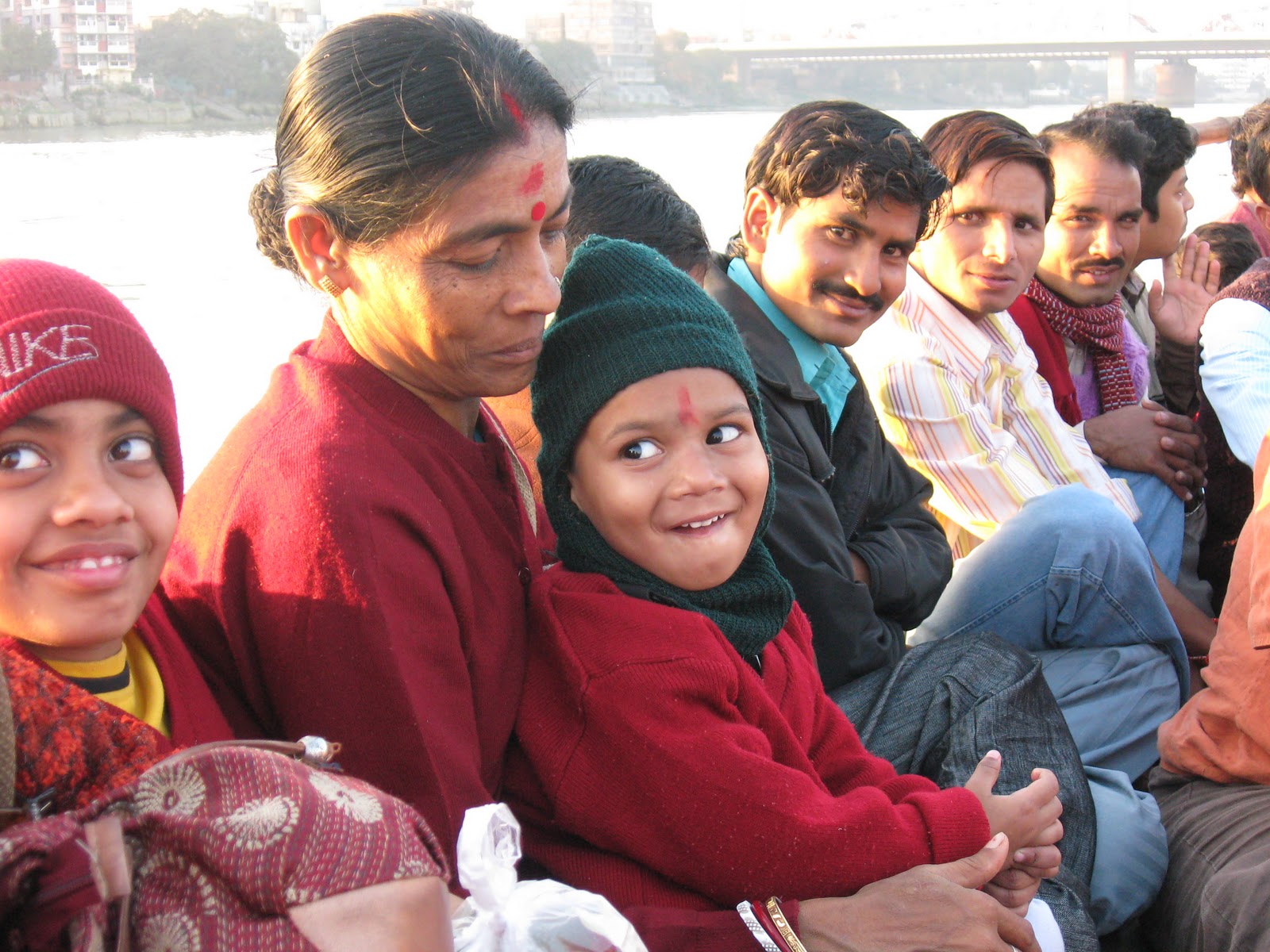
three generations, Bhubaneswar, Orissa

Kolkata street food

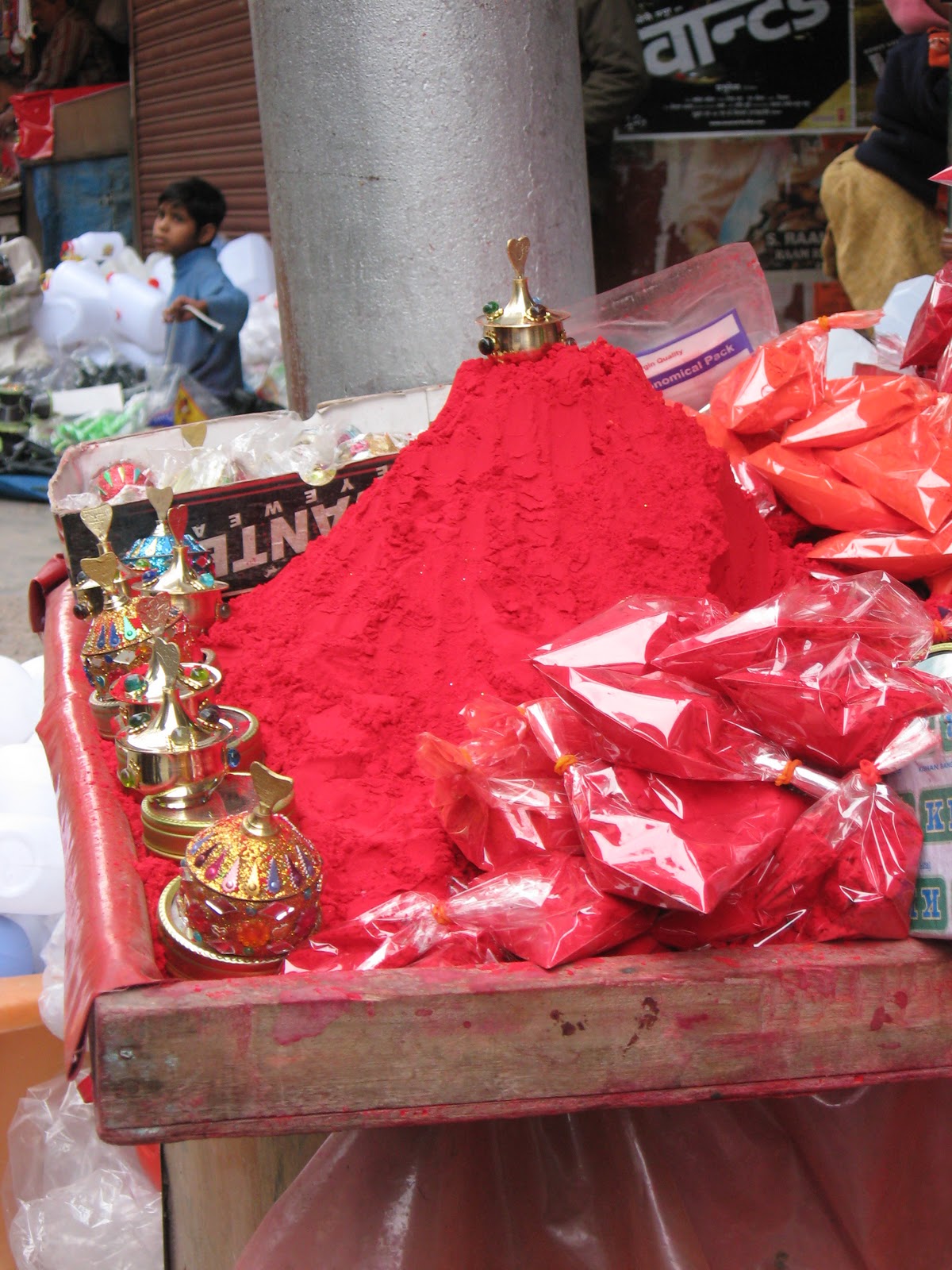
kumkum, Haridwar

addthis_pub = ‘yogagal60510’;

the last word on Eat Pray Love….

…I hope.

<td style='padding:2px 1px 0px 5px;' colspan='2'Back in Black – Eat Pray Love
The Daily Show With Jon Stewart Mon – Thurs 11p / 10c
www.thedailyshow.com
http://media.mtvnservices.com/mgid:cms:item:comedycentral.com:350588
Daily Show Full Episodes Political Humor Tea Party

I heart Lewis Black.

addthis_pub = ‘yogagal60510’;


irony rules

Ahimsa aside, if you do not see the irony in this you need one tight slap and told to snap out of it.

A yoga teacher friend sent me this basically asking “what the what?!?” This was in an email she received from Yoga Journal Online.

“Find personal yoga teachers expensive?”

Say what? Uh, thanks, Yoga Journal (and yes, I know it’s not Yoga Journal specifically but the advertiser), but does it really benefit all the yoga teachers out there for your advertiser to put the idea into peoples’ heads that private teachers are too expensive?

HELLO!! I’m trying to GET more private students, not drive them away! Thanks for nothing.

“Private yoga lessons directly from India”

Hmmmm….let’s see. I call Dell and get to talk to someone in Mumbai. Same with American Express.

Now we’re outsourcing yoga classes to India!

Forget the gym, forget the yoga studio, forget the private teacher. I will get on my computer and gosh darn it all to hell I can get a real authentic Indian to teach me some yoga.

Woo-hoo! No more stinky studio mats and gross toenails on the floor! No more people coming in late and leaving early! No more cell phones ringing in class! I’m just gonna order me up some yoga in the privacy of my bedroom! YAY! Who needs to interact with teachers face to face, I can shut it down and get a pizza in the middle of the class…now THAT’S a slice of yoga heaven!

And to think I made four trips to India and paid all that money to KYM…..what an idiot!

Click the ad and it will take you to Divine Wellness where you can sign up for a free private yoga lesson so knock yourself out:

“Private Yoga Lesson is conducted online using web camera. You get the same experience as a teacher guiding you step-by-step and continuously modifying the program as per your readiness. Only the teacher is across the internet. Even better, our qualified and experienced teachers are in India, the land of origin of Yoga.”

I like the “even better” part because yes, the most “qualified and experienced teachers are in India.” The next best thing is teachers who train in India and that’s me. So call me! I need more private clients. Will yoga for food, rates negotiable.

Go ahead. Get your free lesson and let me know how much they charge. Then I will tell you how much private yoga classes REALLY are in India. I’m rolling my eyes now.

If I had a webcam I would get that free trial and report back, but, hell…I don’t even own an IPod.

Wait a minute….why didn’t I think of this?

DOH! I need one tight slap.

addthis_pub = ‘yogagal60510’

a marriage of Yoga and Buddhism

I have written before about Michael Stone here and here so I was happy to receive his upcoming book to preview, Freeing The Body, Freeing The Mind: Connecting Yoga & Buddhism. It is coming out in September with a Forward written by Robert Thurman:

“Those deep into Buddhism can find a lot to help their understanding and meditation practice in the wisdom and embodying practicality of the Yoga tradition. Those deep into Yoga can find enriching dimensions in the Buddhist Yogas presented herein. And the broad range of readers can find practical help, methods, and tools for a better health, life, and state of mind in the integrated paths presented.”

This book is an absolute must for anyone who wants to explore and better understand the “inter-being” of Buddhism and Yoga. For me, it is a joy. I believe it will become one of the “go to” books for a combined study of these two subjects. If I had my own yoga teacher training it would definitely be on my required reading list.

Buddha studied with diverse yoga masters on his journey towards nirvana. Buddha was a yogi so the Western interpretations of Yoga and Buddhism as being two separate paths never felt right to me in my bones. Just like the first Mindfulness Yoga and Meditation Training at Spirit Rock spoke to my entirety as a Buddhist yogini, so does Stone’s book further confirm what I have intuited all along.

In his Introduction Stone speaks to how the oversimplification and misrepresentations of the two traditions disregarded how Yoga and Buddhism share the same ethical and philosophical components. Stone refers to Yoga and Buddhism as being like the ecology of trees — while trees share the same characteristics and similarities, a maple and oak are different. The branches and leaves are different, they have different nutritional requirements, and they look very different from one another. But upon closer inspection, the similarities are clear — root systems grow in similar ways, growth cycles follow the seasons in similar ways. So whether comparing trees or two wisdom traditions, Stone says that “when we look for parallel comparisons, we find difference, and when we look for difference, we find similarity.”

But you don’t have to take Michael Stone’s word for it because various Buddhist and Yoga master teachers contribute the first 12 chapters of the book. Among others, Chip Hartranft and Frank Jude Boccio explore the way their own Buddhist and yoga practices interweave, setting their practices against the backdrop of traditional teachings. Daniel Odier and Eido Shimano Roshi explore the body from the Zen and Ch’an perspectives and in so doing break down the false view that meditation is a mind practice separate from the body. Victoria Austin writes from her perspective as both a Zen teacher and Iyengar Yoga teacher. Christopher Chapple, whom Stone refers to as “one of the most prominent Yoga scholars in the United States” and a practitioner, draws parallels between traditional Yoga and Buddhist teaching. New York yoga teacher Jill Satterfield tells her story about how she integrated Yoga and Buddhism not just in her teaching but also in a dramatic transformation in her own body and heart — and it definitely is a dramatic story of self-healing because I heard her tell the same story at Spirit Rock. Finally, Sarah Powers speaks to her melding of Yoga and yin practices and Buddhist training and what it’s like to practice Yoga and Buddhadharma day in and day out.

Stone’s chapter is the last chapter entitled, “Practice Maps of the Great Yogis”, where he writes of the wisdom of both the body and the mind as the ancients saw it in both traditions. In my experience I have found that some think that reading the ancient texts is a sufficient yoga practice (mind-stuff); others feel that asana is enough and never delve deeper into meditation and philosophy (body-stuff.) Too much of one and not enough of the other is a recipe for imbalance. An emphasis of one over the other further serves to separate the body-mind complex.

Buddha sat down to watch his own breath and knew that no insight was possible until his mind was settled and his body at ease. Patanjali wrote how asana and pranayama help with the release of effort, both physically and mentally. In the section entitled “Right Mind, Right Body”of this last chapter, Stone quotes Takuan who “reminds us of the immovable wisdom we find here in the body and awareness that is free from fixation and ambition.” Takuan said: “The Right Mind is the mind that does not remain in one place. It is the mind that stretches throughout the entire body and self. The Confused Mind is the mind that, thinking something over, congeals in one place.”

Stone then quotes the last line of the Hatha Yoga Pradipika:

“As long as the Prana does not enter and flow through the middle channel of one’s mind and body, and the internal energy does not become stable by the control of the movements of prana; as long as the mind does not rest in the ease of the inherent resolution of opposites without any effort, so long all the talk of knowledge and wisdom is nothing but the nonsensical babbling of a madman.”

Stone points out that the HYP ends with a “description of awakening as a mind at ease and a body dynamic and intelligent.” So how do we use the body to study the mind and work with the mind through the body? Obviously asana alone has physiological benefits, but we need to remember that asana teaches us to work with the mind. “In this very one-fathom long body along with perceptions and thoughts, do I proclaim the world, the origin of the world, the end of the world and the path leading to the end of the world,” Buddha said. That is, the end of suffering, nirvana.

All the contributors mentioned above are practitioners first writing from their personal experiences of practicing both systems for years. Stone says that looking at traditions like Yoga and Buddhism as mere philosophies without practice is not good science, good research, or good history. He believes that a pure intellectual approach leaves core teachings unexamined and in such cases “the scholar is blinded by his or her books.”

Finally, there is an ample Notes section at the end of the book citing references for each chapter from the important ancient texts to the modern Buddhist and Yoga classics — too many to list here but yoga and Buddhism scholars will not be disappointed in the breadth and scope of these references.

Stone’s book, in his words, “attempts to describe not only the philosophical basis of Yoga and Buddhism but also what it’s like to practice within and between these systems.”

Enjoy the excerpt.

##########

Freeing The Body, Freeing The Mind: Connecting Yoga & Buddhism
By Michael Stone

“Over the years, I’ve found it increasingly frustrating that Yoga is continually reduced to “a body practice” and Buddhism “a mind practice.” This makes no sense at all. Anyone who has practiced deeply in both traditions knows that the Buddha gave attention to the body, Patanjali the mind, and both traditions value ethical precepts and commitments as the foundation of an appropriate livelihood. I organize a community in Toronto called Centre of Gravity Sangha, a thriving group of people interested in integrating Yoga and Buddhist Practices.

In the Buddha’s teachings, the body is used as the primary object of meditation, so that one can study the universe not through books or theory but through one’s subjective experience. Likewise the Yoga postures, when practiced with breathing and sensitivity, become opportunities for deep meditative insight because they are designed to calm the nervous system. This grounds us. When we move within the various shapes of the yoga poses and tune into the internal energetic patterns of our breath, we are working the habits of mind as well.. Though the Yoga postures we practice in modern Yoga studios have obvious therapeutic benefits at physiological levels, some teachers and schools seem to have forgotten how the postures also teach us how to work with the mind. And for most of us, our troubles are not simply in the body – primarily, trouble is in the mind. How can we use the body to study the mind and work with the mind through the body? By experiencing how the two are completely interrelated.

There is a fundamental affinity between mind practices and body practices. Think of them both as curves in a grand mandala that continually spirals in, on, and through itself with no beginning or end. When I work deeply with my mind, I only do so by giving attention to the body: I witness its processes, from breathing to listening or seeing. The same is true when I study the intricate holding patterns in the web of my body (called koshas in Sanskrit), I end up seeing where my mind sticks, where it can’t focus, where it gets caught in refrains of old tape loops. What I thought was “body” is mostly mental. The Buddha says “Leave the body in the body.” When the Buddha teaches mindfulness practices, he begins with the bare awareness of body.

“The old Indian practice of Yoga,” writes scholar Karen Armstrong, “meant that people became dissatisfied with a religion that concentrated on externals. Sacrifice and liturgy were not enough: they wanted to discover the inner meaning of these rites.”3 Turning inward means taking responsibility for the spiritual path by focusing on the microcosm of reality that exists in the body’s functioning in this and every moment. Although yogic practices can supposedly be traced back some five thousand years, and although yogins described their paths and discoveries in very different terms depending on their respective cultural vocabulary, they all share the same common focus: the body is the primary object of meditative inquiry.

When we begin by taking care of the body and paying attention to its workings, we find ourselves focusing the mind, settling the breath, and learning much more about the nature of reality than we’d know by extroverted thinking alone. There are some things we just can’t figure out with ordinary thinking.

Just resting in feeling the sense of the body without any notions or concepts, we begin to tune in to the glorious operation of the natural world that is only available to a quiet mind. Of course, the mind is not separate from the body in any way – it is just a seamless continuation of the sense organs. We begin with the body because it is always present – it is the very apparatus we need to receive and explore any corner of the natural world. We use “the mind” to explore “the body,” but as we get closer and quieter, we come to see that mind and body are inseparable. The seeker Uddalaka in the Yoga Vashista, a story that interweaves Yoga and Buddhist philosophy, enters a remote practice place and begins practicing Yoga. After some time he exclaims,

“Just as the silkworm spins its cocoon and gets caught in it, you have woven the web of your concepts and are caught in them.

. . . There is no such thing as mind. I have carefully investigated, I have observed everything from the tips of my toes to the top of my head: and I have not found anything of which I could say: This is who I am.”

If we approach Yoga practices simply through books and words, and not direct contact with the physical and material reality of the body and breath, all we are left with is conceptual scaffolding. We can’t know these practices from the outside. They were never meant to be mere philosophy or codified ritual. Knowing about practice is not enough: we must drop our “knowing” and feel our way into present experience by seeing things clearly. By seeing, the old yogis are not referring to the eyes but to what the Zen tradition calls “the true dharma eye”——the eye that sees without clinging, without sculpting, without allowing what is seen to get stuck into the web of like or dislike. The spirit of Yoga and Buddhism embodies a radical approach to human experience – we begin practice through paying attention to what is here in this moment. Each and every one of us can wake up without needing to adopt a new ideology or belief system. When we return to present experience through the sense organs themselves——eyes, ears, nose, tongue, skin, and mind—we enter the freedom of this very moment, and the old paths of the yogis come alive here and now. There is no freedom in just repeating the words and rituals of the old masters——we must express freedom and interdependence through the action of our whole being and community through mind, body, and speech.

Every morning we wake up under the same bright northern star the Buddha saw when he awoke one dawn in his early thirties. Every moment we breathe the same molecules of air that once nourished Santideva, Dogen, Thich Nhat Hanh, your parents and their parents. Perhaps practice also fulfills our responsibility to the yogi-poets and wanderers who long ago struggled with aging bodies, unreliable thoughts, and an imperfect culture. They took great care in putting together words and phrases to articulate their path: they tried to leave maps for us, so we can enter way life happens in a way that motivates us to meet reality in an embodied and creative way.”

addthis_pub = ‘yogagal60510’;

things white people do

one interpretation of Kali

Given all the recent uproar about yoga advertising, I want to ask this question again:

why is American yoga such a white thing?

This post is from 2007 and three years later I am still asking the same question.

The Color of Yoga

I am white (but have been told “you’re not all that white”), so why does this question bother me so much? Maybe because I grew up on the south side of Chicago? Maybe because I lived with Tejanos on the Texas/Mexico border? Maybe because my ex-husband is Mexican?

Don’t know. But the way yoga is advertised bothers me, maybe because it seems so exclusive — despite all the peace-love-dove New Age rhetoric — when it should be inclusive of older, rounder, darker.

The ads in Yoga Journal for Kripalu are the only ones that are realistic because they have all colors, all shapes, and all ages.

You bet I am tired of the skinny, young, white women in yoga advertising AS IF that is the only type who does yoga in America. Brooks Hall is on fire with her post about….another ad using a skinny, young, white woman. How original Corporate America.

“slimmer calmer healthier” — notice which word is first in the ad.

As someone who taught yoga in a community college to young women with eating disorders, these people just DON’T GET IT.

“The ways of materialistic culture as seen in this advertisement seem to be trying to cleanse yoga of its Indian-ness, as if the strangeness of it is a form of pollution.”

Yeah, let’s just make everything white bread because that’s what we are really comfortable with since yoga is a white thang anyway. Scroll down to read the Minority Yoga Report: http://www.yogacitynyc.com/yoga_week.php#259

I could go on, but what’s the point?

I teach to Hispanic women at a domestic violence shelter and they connect to yoga and meditation more so than many people I’ve taught at yoga studios. I can count on one hand the number of people of color I have taught in 9 years of teaching.

With the latest discussion about Yoga Journal, the mass-marketing of yoga, all the blah blah about how wonderful it is that yoga is reaching the masses, that more and more people are exposed to yoga, how yoga is so “mainstream” (and I do not believe it is)….where is the increase of people of color taking yoga classes?

Or have our white sensibilities forgotten them in all the rhetoric about how absolutely fabulous it is that so many more white people are taking yoga now?