just yoga, part 2

Part 1 is here….

Sigh.  Maybe it’s because this time of year is colder and darker;  maybe it’s because it’s that time of year when my  head is in India but my body is still here; maybe it’s because of the modern yoga scene in general.   But it’s the time of year where I turn even more inward and become philosophical.  Or ranty.  Take your pick.

Am I the only one who is not impressed by photos of people doing what’s called “acro yoga”?  You know….the photos of someone being hoisted skyward by someone with their legs in the air?  Sure it looks cool and fun and it catches my attention for about 3 seconds.  And yeah, I’d like to try it just like I would like to try flying through the air with the greatest of ease on a trapeze.  Once.  But for a studio to put it on their regular schedule?  Really?  Do studios actually make more dough with acro yoga on their schedule?  Or is it just another yoga fitness version of the Slide?  Something to catch our attention for 15 minutes because we’re never satisfied with doing JUST YOGA?

I taught a yin yoga class over the weekend at a place where I only teach once a month so I don’t build any type of student-teacher relationship with drop-in students.   A new woman came in and like I always do I introduced myself, asked if she had ever done yin yoga before (never), and asked about her injuries.  She told me she practices vinyasa and proceeded to give me a litany of her issues and then stopped and said, “I’m sure you don’t want to hear everything.”  I said, “yes I do.  that’s my job.”  So she gave me a few more and knowing she would fine with what we were going to do, I told her to take it easy, that the class is more about letting go than muscling in, and that I would keep an eye on her.

After the class I asked how she was and she said fine, that she liked it, but she had trouble with stillness because she moved all the time in vinyasa.  I shrugged and said, yes, people have a hard time with being still.  That’s just par for the course in yin classes with vinyasa practitioners who don’t know any other way to be their yoga.  Notice I did not say “do their yoga.”  Someone then complimented her on her vinyasa practice in spite of all her injuries and she began telling me again about all her injuries.  I just nodded and said, “well…sounds like you need some yin yoga to complete your practice.”  However, I really wanted to ask her, “why isn’t your yoga healing your body? ”   But more importantly I wanted to ask her, “why aren’t you even questioning whether the yoga you’re doing is right for you?”

I hoped she would return.  I intuited that she could really use a yin practice and not just on the physical level.  But rarely do students I meet in public classes seek out classes in my home shala to get the personal attention they deserve.

I read this blog today and thought it was entirely applicable to the student who was in my class:

Yoga is a healing modality that creates balance and transformation. Sometimes people may become obsessive about how to heal from a certain ailment or malady. They focus so hard upon what ails them and their energy becomes consumed in a downward spiral. By Yoga practice you expand your awareness to explore your boundaries. What is the mobility of my body? What is the capacity of my breath this breath in this position? In? Out? How long before the tendencies of my mind interrupt my silence? This expansion of awareness is akin to taking stock on all your resources or being the manager of all your systems and behaviors. Healing which really lasts comes from the intelligence provided by observing yourself and choosing those things which you intuitively feel bring you towards well-being.

An excellent, thoughtful article and one that makes me despair about the modern state of yoga with its myriad of styles.  So many people have asked me lately what “style” of yoga I teach that I want to run away screaming.  It seems like all that people know about modern “yoga” are labels and not the essence, a healing modality as the blogger above writes about.  More times than not, people (and I am talking about people who have gone to yoga classes) have no idea that yoga is a healing modality when I tell them I also do private yoga therapy sessions.

When people ask me if yin yoga is a style, I honestly say no, it’s not, at least not the way I teach it.  I tell people in workshops that it’s just another way to be your yoga, the asanas are the same, that there is merely a different emphasis on stillness.  Even when I teach vinyasa (and I am loathe to call it flow), my emphasis is stillness.

My website says that:

...“Metta” is a Pali word (maitri in Sanskrit) meaning loving-kindness, friendliness, benevolence. Yoga practiced in this manner is about befriending your body and becoming your own best friend.

Metta Yoga is the yoga of Awareness, a powerful combination of yoga, meditation, breath awareness, and intuitive healing.

It is yin (stillness) and yang (movement) yoga, blending softness and strength. You will be encouraged to compassionately explore your edge as you grow your practice, strengthen your body, expand your heart, and free your mind. You will be challenged and supported, but most importantly, reminded to bring your full attention to your body and to your breath, ending class with pranayama and mindfulness meditation.

I posted that on my Facebook business page today and a woman responded “this sounds like just what I need…are there classes near me?”

For some reason, her question made me very sad.

That’s all I teach.  Just yoga.

Come take a class with me and you’ll see.  Quickly.  Before I run away screaming and, as a friend has said, I take up residence in India.

Mark Whitwell on Kausthub Desikachar

 “I wish to make clear that the sexual scandal around Kausthub has no implication, at all, on Krishnamacharya’s life work and dedication to Hatha Yoga. Although lineage held in family is a historic way of preserving teachings, the lineage is not dependent on this arrangement. Krishnamacharya himself communicated to me, all who represent their teachers work with a clear heart and honest intention are lineage holders.”  (Mark Whitwell, from his Facebook page.)

Part 1:

Part 2:

Mark is a former student of Krishnamacharya and Desikachar, so I am glad that he weighs in on the matter and I agree with what he says.  One of the things Mark speaks to is the cultural (patriarchy) aspect of this and as I said in my own first post , there are various layers to the situation and that is one of them.

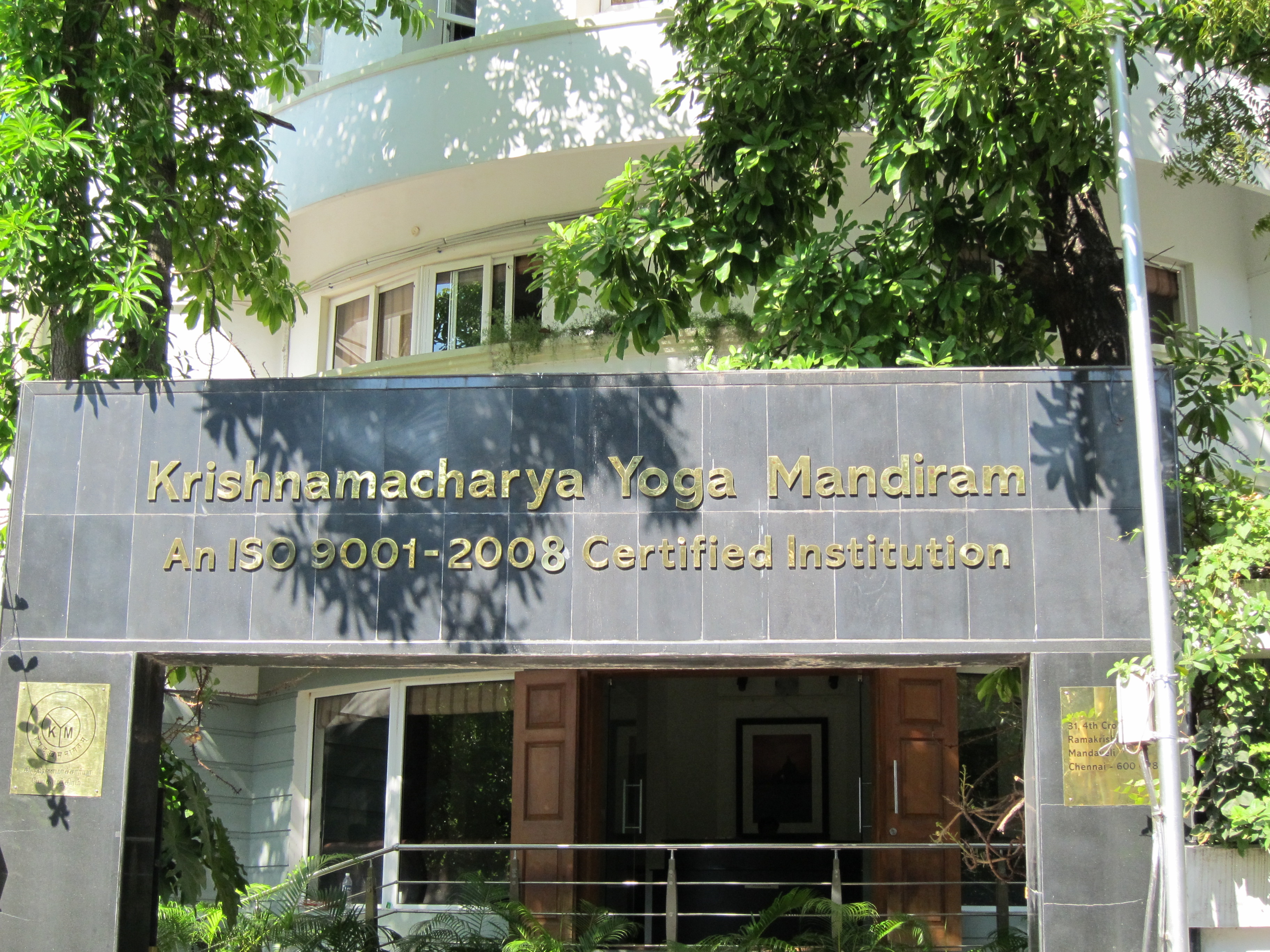
In an ongoing discussion of the Kausthub mess, a friend and I cyber-chatted about one of  the latest writings about it in the yoga blogosphere and he gave me permission to quote him.   We have a bit different perspective on the matter having both studied at the Krishnamacharya Yoga Mandiram.  Many commenting on this in the yoga blogosphere have not.

“Lots of people are viewing this issue from their misconceptions about India and yoga.  If guru culture (whatever the hell that means) has burned them (or they have never experienced a guru and essentially see them from a strictly xenophobic, American individualism is the highest virtue point of view), they’ll bitch and moan about it.  If large Westernized organizations (whatever the hell that means) have burned them, they’ll bitch and moan about that.

So many comments on blogs have centered on how “organizations” should behave.  It’s bullshit.  Americans are so quick to absolve individuals of responsibility by talking about a “culture” that enables.  Some cultures enable and even promote either good behaviors or bad, useful ones or detrimental ones… usually some mix of all.

But this shit could’ve been staved off easily if people at an individual level had done the right thing.  They all acted in their own self interest… or mostly in their self interest (some acted in the interest of their teacher/friend/colleague).

Nobody acted in the best interest of the student.  And here’s the really awful part because as teachers we are always supposed to act in the best interest of the student.  You don’t give techniques to students just because you know them or are eager to teach them… or even because the student is begging for them.  You give them to a student only if it is in the best interest of the student (and this takes appropriateness into account).

It’s a much uglier thing to come to terms with.  But I can’t imagine that anyone who had taken this situation, regardless of what point of view they were looking at it from, and sat with it in meditation or even just considering it with some common sense to determine the right action would’ve come to any different conclusion than that it had to stop.

And yet it didn’t.”

de-culturing Yoga: Or, “You say asana, I say assana”

sadhus (yogis) at the Kumbh Mela, Haridwar, 2010

I’m a fan of The Babarazzi and of this post in particular:  Is De-Culturing Yoga an Act of Good Faith or a Promotion of Xenophobic Ideology? /// A Light and Easy Subject

There is a great discussion going on in the comments and I liked this one in particular.  A commenter said:

“There is a similar “secularizing” trend in Buddhism these days and some thought provoking articles in the Fall issue of Tricycle.  A quote from one:

“We reassure ourselves that the changes we’ve made in Buddhism are all for the best — that Buddhism has always adapted itself to every culture it enters, and we can trust it to adapt wisely to the West. But this treats Buddhism as if it were a conscious agent — a wise amoebic force that knows how to adapt to its environment in order to survive. Actually, Buddhism isn’t an agent and it doesn’t adapt. It gets adapted — sometimes by people who know what they’re doing, sometimes by people who don’t. Just because a particular adaptation survives and prevails doesn’t mean that it’s genuine dharma. It may simply appeal to the desires and fears of its target audience… Is a designer dharma what we really want?… People sometimes argue that in our diverse, postmodern world we need a postmodern Buddhism in which no one’s interpretation can be criticized as wrong.  But that’s trading the possibility of total freedom from suffering for something much less: the freedom from criticism…” -Thanissaro Bhikkhu

Replace the word “Buddhism” with “yoga” and tell me how it reads then.  As Thanissaro Bhikku asks, is a designer dharma Yoga what we really want?

More than a few yoga bloggers have written about the commodification or the cultural appropriation of yoga in the West.  Another commenter to the above Babarazzi post said, “In tonight’s class the teacher invited us to pantomime Hindu deities (i.e. “Kali” = squat and bring arms up and growl like lil’ grizzly bears; “Ganesh” = make an elephant’s trunk with our arms ; “Shiva” = stand on one leg and pretend to play the flute).”  Actually, the last one would be Krishna not Shiva.  Wonder if the teacher actually said Shiva.  Yikes.

I stopped saying namaste at the end of my classes when I came back from India the first time because I learned it does not mean “I bow to the light within you” or “the Divine in me honors the Divine in you” or “I honor the [fill in the blank] in you” or whatever the latest interpretation is.  After my first trip, saying it at the end of my class did not feel true to me anymore, it felt false, but that’s me.  Hey, you say po-TA-toe, I say po-TAY-toe.  As my friend Caroline says, “Don’t fold your hands and say ‘Namaste.’  Nobody does that, and if someone does, it means they have earmarked you as a naïve foreigner.”   Caroline lives in India.   People do not say it where I go because Tamil is spoken, not Hindi.

There was a short discussion on the use of namaste in my last training with Ganesh Mohan.  Every morning he led a practice and at the end said a simple “thank you” — as the teachers at the Krishnamacharya Yoga Mandiram say at the end of class; they never say namaste, the Westerners do.  The teacher I certified with also does not say namaste at the end of class; again, he simply thanks us.  I’ve wondered how namaste-ing at the end of a Western yoga class started.

When Ganesh said “thank you”, some of the students responded with namaste.  Ganesh smiled and said, “about that namaste….” and began to explain that at its most basic it means “hello.”   So why would I say hello at the END of my class?  I open my workshops with a big NAMASTE and I bow.

He said nama means “to bow” and te is the familiar form of “you”, just like there is the familiar and formal uses of “you” in Spanish, tu and usted.   However, he explained, in India one would not say namaste to an elder or to someone who is, shall we say, higher on the economic scale, that in fact, they would be insulted and might even get angry.  Better to say namaskar, Ganesh said.

After the explanation the students were silent for a few moments.  Then someone said, “well, another thing we’ve appropriated.”

Yeah, kinda.

I recite the four Brahma Viharas at the end of my classes:

May all beings have happiness and the causes of happiness.
May all beings be free from suffering and the cases of suffering.
May all beings never be parted from freedom’s true joy.
May all beings be free from attachment and aversion.

and then…

OM MANI PADME HUM
SHANTI, SHANTI, SHANTIH

And I bow and thank them.

Peace and gratitude….good things to leave class with.

Kausthub-gate: the latest

Below is an email I received from the KYM this morning.  It’s a damn good thing that KYM has finally publicly condemned Kausthub.   As I said in my  first post about this, I know Dr. Latha as a wonderful teacher and am confident that she won’t tolerate any shenanigans.

The link to this new blog yogascandals was sent to me by the former KYM teacher whose 2007 letter to Desikachar was published online.  In her opinion it is “some ray of hope for the women, an open forum for sharing in anonymity.”  As the blog’s creator wrote:

“this blog is available to anyone to share their stories, with as much anonymity as you wish. if you have a anything to share for any reason, you can send me a comment to any post and I will contact you. I will not publish anything second hand, and I will not add my own commentary to any content.

my reason for doing this is to bring to the public eye, what is being held in exclusive circles of the sangha, the senior teachers, the khyf, kym etc. No one seems to address the confusion and distress of the affected or the students. So many people have spent so much time, dedication, loyalty, respect and money on this teacher and the KHYF and they deserve to know what is going on.”

(underline is my emphasis.)

May the healing begin.

Dear Friends, Colleagues, Patrons and Well-Wishers.

Warm Greetings from Krishnamacharya Yoga Mandiram.

On behalf of the Board of Trustees, Staff and Teachers of the Krishnamacharya Yoga Mandiram, I wish to express KYM’s deep condemnation of the alleged misbehavior of Mr. Kausthub Desikachar. Our deepest sympathies lie with all the women who have been affected in this issue. Since these allegations have been brought to light, the Board of Trustees has obtained Mr. Kausthub Desikachar’s resignation from the Board and severed all ties with him.

We wish to reiterate that the Krishnamacharya Yoga Mandiram, since its inception in 1976 has been functioning as a Public Charitable Trust under the direct supervision of not any one individual but a board of carefully selected trustees who are each distinguished professionals in their own right and most of whom are direct students of Yogacarya T Krishnamacharya and/or our founder, TKV Desikachar.

The Krishnamacharya Yoga Mandiram has never had and never will have any involvement with any activities of the KHYF.

Every one of the Trustees is deeply committed to taking forth the valuable teaching legacy of T Krishnamacharya as handed down to several generations of teachers by his son, TKV Desikachar. The Board of Trustees firmly believes that the institution and the teachings themselves are far greater than any individual and all efforts will be made to ensure the transmission of these teachings as envisoned by our founder, TKV Desikachar.

In the context of the current situation, it is our deepest wish to carry forth the commendable work, especially in the realms of health and healing, done by the teachers of the KYM over the years. Hence, we are giving the greatest impetus to the uninterrupted transmission of these precious teachings and will ensure that all our activities – yoga studies programmes, teacher training programmes, chanting programs with a thrust on health and healing, individual therapy sessions, individual yoga studies lessons and individual chanting sessions will proceed as before.

Several new programmes will also be announced shortly on our website. We shall also establish a strong support network of old students of T Krishnamacharya and TKV Desikachar who have expressed their willingness to sharing their invaluable knowledge, so that there is continuity and growth in learning for students of this tradition worldwide.

As always we seek your continued support and patronage. We value your feedback and suggestions so that we may carry on our work of spreading the healing message of T Krishnamacharya in a transparent and positive manner.

Best Regards

Dr. Latha Satish
Managing Trustee

final words on a yoga scandal

I received more than a few messages of support and appreciation for my writing about the Kausthub mess.   People know that I have a bit different perspective about it considering how long I’ve studied at KYM.  Thanks for your support!

But I received one message that interested me very much and that I thought was important enough to share.  The person I received this from used to write a blog on spirituality, one I thought was a cut above the usual, one that was much deeper than the new agey blah blah that’s out there.   He is someone I know who has “done the work.”  He said that he did not want to comment publicly but thought I would find some value in his thoughts.  I did, so I asked his permission (which he gave me) to publish his words.  He said he followed (but not closely) the Anusara story and did not know much about Desikachar, either the person or the tradition.

Any serious practitioner knows that yoga is about energy.  Prana is of course one of the first words we learn about in yoga.   Shiva/Shakti energy is discussed in some yoga circles.  And yet, what does all that really mean?  Do we really understand the implications of that concept coming out of a 200 hour teacher training?

Some people are fascinated by Tantra.  They think it’s all sexy and mysterious and the secrecy about it draws them in.   Hell, even Oprah talked about it or at least one aspect of it — sex.  Who doesn’t want in on some sexy, mysterious yoga voo-doo that may confer power over mere yoga mortals?  I recall that John Friend was all up into it, to his own demise.  One becomes fascinated with something that is called the Left Handed Path and they think they can become a yoga sorcerer.

What this reader refers to in his comment below is rarely talked about in modern yoga training, at least in the West.  We’re all into the asana, perfecting that handstand or chilling at the yoga fests.  But there is a whole other deeper aspect of yoga that is often not even mentioned, merely hinted at.

To put it bluntly, without mature guidance, yoga can fuck with your head.  As Paul Grilley said in a training I did with him, yoga is slow medicine but even good medicine can kill you if taken injudiciously.  That’s why it is so important to have the guidance of a seasoned, competent teacher who has done the work and can honestly answer your questions.  However, ultimately, the path is walked alone.

Yoga can work some heavy changes, both positive and negative.   Real yoga is about dealing with that Shadow Self.  Yoga is not all about love and lite manifesting 108 sun salutations that might save the world from itself.  That’s why I believe and have always said that “yoga cooks us” especially if you’re doing the important work.   Kausthub certainly knows how transformative yoga is as evidenced by his lecture to us this year.

As the reader told me about his comments, you can take them or leave them.

It’s all food for thought, not just about the latest scandal, but for all of us.

**********   

My comments are more general in nature and may not apply to these specific situations, but in all likelihood, they have some merit.  They are based on some observations I have made along my own journey regarding the way energy tends to flow in the realm of human interaction.  They are also based at least in part on my observations of my own responses to various situations as a proxy for all human (especially male) energy.

These yoga practices can very often and easily drive up combinations of energetic imbalance that predictably result in such situations. I used to wonder why so many of these yoga gurus would end up in scandals, if they are supposed to be models of “enlightenment”, but now I can see that it is not at all surprising.

Because yoga is primarily a “fire path” (with practices designed to move shakti upward through the spinal and central channels and out the crown), males in particular are susceptible to these problems.  Most men are already somewhat imbalanced toward this “fire” direction, as opposed to most females, whose “water” (cool) energy tends to flow downward more easily and are thus more naturally grounded when practicing yoga.

It’s easy to spot when this happens – the result is usually short temper, arrogance, magnetic power, etc. This imbalance tends to seek out its opposite polarity to create harmony.  Thus, in the case of men, they seek out female energy.  It often results in sexual activity because of the unconscious nature of its manifestation. When you’re not grounded at all and you’ve bypassed your lower chakras to shoot out the crown, those lower centers tend to act on their own.  And it can also result in various forms of male/female domination, abuse, and control. The women in these situations are in many cases imbalanced as well (in the opposite direction, which tends toward sadness, depression, etc.), and when they meet this charismatic male energy there can be an explosive response. Needless to say, typically none of the parties involved are well equipped to deal with the consequences of their engagement.

Let’s face it – we’re all playing with fire here when it comes to spiritual cultivation, no matter what the path. It’s a challenging situation, and (temporary) imbalance is inevitable.   It helps a lot if you can anticipate it and understand what some of the antidotes are (or if you have good teachers you can trust to watch over you). Unfortunately, as I’ve witnessed many times and am now coming to understand more clearly, virtually all “systems” of cultivation are pretty much only half-baked and often tend to ignore these imbalances when they occur. Many of these systems actually predictably create imbalances, or at least ignore large parts of what it means to be a “complete” human.  I don’t want to comment specifically regarding any particular tradition, but I will say that even when they do have balanced practices available, many practitioners (especially the ones that tend toward imbalance) will ignore them and do too much pranayama, etc., in order to develop more power.

Personally, I’ve found that it’s possible to combine the best of multiple approaches, although this is also a perilous path and requires much wisdom, diligence and vigilance.  Even then, you can never really know how it’s going to turn out, as everyone is different and what works for one, may not turn out so well for another. When it comes to organizations, I’ve mostly tried to avoid them, as they come with a lot of baggage and tend to crystallize their belief systems.  However, I’ve also found that they can be very useful if one doesn’t get too caught up in their dogma or feel too desperate to belong to something. …

Evolution is a painful and difficult process, and anyone who thinks it isn’t or shouldn’t be that way is simply naive.  The Earth itself is currently undergoing some radical shifts in its own energy/consciousness, and it’s inevitable that in the process there is going to be much resistance and upheaval.   It really explains the polarization of American society as embodied in politics and the “liberal/conservative” axis.  There is no difference between the micro- and the macro-, they dance with each other in unison.

These “scandals”, both the individual parties who sparked the controversies, as well as the reactions of the populace, are all evidence of this evolutionary process.  We cannot separate our individual selves from them, nor should we.   Rather, we can embrace the whole of who we are at both the micro- and macro- scale, and continue to work on ourselves to find the balance and harmony that we so naturally seek.

thoughts from a yoga subversive on the latest yoga scandal

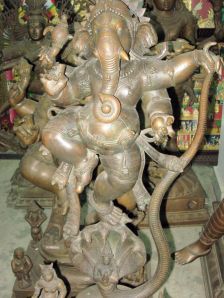
Ganesh, God of Wisdom, with Vishnu

By now many people know about the latest yoga scandal about Kausthub Desikachar, all the allegations about him regarding sexual, emotional, and spiritual abuse.  I learned about it a week before it hit the yoga blogs, first from the search terms people used to find this blog:  “kausthub desikachar scandal”; “kausthub desikachar sex abuse”; “kausthub desikachar allegations”; “kausthub desikchar rape.”

What the frack!  Something huge is going on!  “Uh, oh,” I thought, “this is going to be bigger than John Friend.” Then I got a Facebook message from a teacher asking me, “have you heard….”  I put 2 and 2 together and then I was sent emails with attachments of the letters that have now been published in various yoga blogs.

As many of you know, I have studied yearly at the Krishnamacharya Yoga Manidram since 2005 and have written many times about my experiences there.  I was shocked (but not surprised) when this news came out.  I have no allegiance to Kausthub whatsoever, he was never my direct teacher.  He was my teacher once for a class on Chapters 3 and 4 of the Sutras during my second trip to KYM in 2006.

The allegations made me physically ill.

I will only say that I am privy to information that is not public and that I will not make public.  I will also say that I am appalled that the 2007 letter from a KYM teacher to Desikachar outlining the reasons for her resignation from KYM has been published in yoga blogs.  I don’t know if she knows her letter has been passed around in emails and published in blogs (I have written to her via Facebook as she was one of my teachers 2005-2006), but I am sure no one wants their private letters published without permission.  Maybe she does not mind that her private correspondence was published, but I have to ask the yoga bloggers who made it public: did you ask her permission? Two women yoga bloggers came forward to write about their own experiences with Kausthub but that was their own choice.

I believe KYM must be open and transparent about all of it.  What made me angrier than Kausthub’s actions was that they were ignored by those in charge, including his father.

Many people asked me whether I wanted to speak or write about what was happening.  People expected me to write about it because of how many times I have studied at KYM, but I decided not to because it was too soon and my feelings were too raw.  My plans to take a group to KYM for private classes have been in the works since March and I seriously reconsidered my group trip.

The first person I asked for advice was my teacher, Srivatsa Ramaswami, whom many of you know I have studied with since 2004.  I also study with Ganesh Mohan, whose father also studied with Krishnamacharya.  They are the two I know who are closest to the lineage — they gave me good advice that I will keep private because it is between teacher-student (as was Saraswati’s 2007 letter to Desikachar.)  Not keeping teacher-student confidences private is one thing that Kausthub is accused of.

After MUCH consideration and literally sleepless nights about this, I decided to continue with my group trip to KYM.  Why?  Because I received advice from J. Brown, whose essays and opinions on modern yoga I respect.  He is familiar with the lineage via Mark Whitwell.  He told me that he thinks the situation is different from Anusara because there is no “spiritual head” of the tradition and it is by Desikachar’s example that there is no brand name (KYM does not call the style “viniyoga” as Gary Kraftsow does.)   This means that no one person can lay claim to it and, therefore, no one person’s bad behavior can diminish the power of the teachings.  In his opinion, he thought that I should carry on as planned and “stay true to your practice and the experience you were hoping to provide the people joining you and it will be good enough. The experience of going to India and studying at the Mandiram is not contingent on one particular teacher.”

“Stay true to your practice.”  I will let that resonate for a while.

I also received advice from one of my favorite teachers at KYM who is still there and whom I have known since 2005.   She told me that it is always about the teachings and what we learn from it, that the essence is important and nothing else.

Finally, it was hearing the Vedic chant to Patanjali every morning in my training with Ganesh Mohan this past week that helped me decide.   The chant told me what it’s really all about.   The practice.

That, and the fact that the people who have signed up for my trip told me that the allegations against Kausthub did not make a difference to them — they want the teachings and they trusted my judgment and wisdom about the situation.  As soon as the news hit I sent an email to everyone who had signed up or who was thinking of signing up letting them know how conflicted I was about continuing with my plans.  I asked them to give me a week to make a decision.   One woman told me that she appreciated my honesty and it was because of my  open and honest writing in this blog that attracted her to my trip in the first place.  Only one woman cancelled her plans to go on this trip because of what happened and I respect her decision.  We all have to follow our own hearts and I am at peace with my decision to continue with the trip.

Krishnamacharya’s teachings belong to the yoga world, they do not belong to the institutions or any one person whether it is  Desikachar or his son.  While KHYF is the money-making part of KYM, the two have always been considered separate entities.   Although international students attend classes at KYM, it has more of an “Indian” emphasis and influence, with Indian teachers.  KHYF was always geared to bringing yoga therapy training to the West with Kausthub teaching and overseeing the Western teachers (KHYF did not exist when I first went to KYM.) I rarely saw Kausthub at KYM other than in 2006.

About 6 years ago I considered entering the yoga therapy program (their first training) but decided not because of Kausthub. I thought his responses to my questions were arrogant. He expected me to fly to where he was teaching in the United States for a personal interview even though I had just returned from my second trip to KYM that was within 6 months of the first.  Regarding acceptance into the training, he said a personal interview would take precedence over a telephone interview.  I told him to forget it, that if two trips to KYM within 6 months did not show my allegiance to his grandfather’s teachings I don’t know what would.

Don’t lay this all on KYM.  As I said all during the Anusara debacle, the teachers who knew about John Friend’s shenanigans and said nothing are equally culpable.  The KHYF yoga therapy training program has Western senior teachers who work closely with Kausthub.  If they or any other Western teacher had any inkling that something horrible was going on, they should have stepped forward, gone public, disassociated themselves.  We now know that these things have been going on since at least 2007.  

From all that I know about the situation thus far I think nothing short of an exorcism can help Kausthub.  He needs long-term, intensive help.  Every one of us has a shadow side with secrets and REAL YOGA is about pulling up those demons and dealing with our shadow selves. It hurts like a MFer and it ain’t pretty.

Sometimes we need a radical change and a brand new perspective and the Kausthub situation is giving KYM just that.  I know they have separated themselves from Kausthub.  In an email I received from the Director of Yoga Studies in response to my concerns about bringing my group, she said that KYM “strongly believes in the teachings of Shri Krishnamacharya and Shri Desikachar.” KYM appointed Dr. Latha Satish as the acting managing trustee in place of Kausthub and I know her as a wonderful teacher.

Any situation is never black or white and there are many levels to this, including cultural.   I am absolutely not making excuses for Kausthub’s actions, but one thing I have learned in my 6 trips to India is to not view things in India through a Western lens — and I know that is something very hard to understand if one has not been to India as many times as I have or if one does not live there.   It is something I have discussed privately with people (both Western and Indian) and it is also something I will not write about but one can begin to get some insight from the book Being Indian

All that being said, I am wise enough to not let Kausthab’s personal failings get in the way of my respect for the Krishnamacharya lineage.  What Kausthub did (and he denies nothing) is a disgrace — but he only disgraced himself and his family, not the tradition.  If anything, this should be another wake-up call to yoga practitioners about putting their teachers on pedestals. Funny how people are so quick to question everything in their lives but their own yoga practice and teachers.  I don’t want to hear anything about how a “guru” is a bad thing — click the link and read what Kausthub has to say about the teacher-student relationship (in retrospect, apparently speaking about himself.)

As I heard Kausthub himself say this year, “If the spiritual teachings are valid, yoga will sustain; if yoga is merely a fashion, it will not sustain. The teachings are much larger than any crisis modern yoga is currently experiencing.”

When he said that I thought he was referring to John Friend but I know now he was predicting his own future.

is school out on old school yoga?

copyright OmTapas

I posted this blog post on my Facebook page yesterday:   Is Old School Yoga Becoming Extinct?

The blogger — who owns a studio  in Lewisville, Texas — makes many excellent points.  When I lived down the road from that area, 1989-1992, I think if I would have mentioned the word YOGA to anyone I would have been run out of town on a rail.  People did not appreciate this very left of center Yankee gal in that area back then, but that’s another story.

If you’ve read this blog since 2005  (yes, I really was one of the first yoga bloggers to critically question and comment on the status quo of modern American yoga), you’ll know how I feel on the subject.  I’m an old school teacher and am not afraid to use the phrase “real yoga” (you can also read about that somewhere in these 400+ posts.)

Another old school teacher and I had a Facebook discussion on this topic:

HER:  The yoga boom has not been good for those of us who have been teaching a long time. I’m also “old school,” and have seen a drop in attendance as studios that offer trendier yoga styles have sprung up all over town. While my classes retain students quite well, they don’t attract a mainstream clientele.  Like you, my students are dedicated. Many have been coming to class for 20 years or more, partly for the yoga, but also partly for the lovely sangha that has evolved over the years.

ME:  exactly. I also find that most people I come in contact with in my area have no idea what yoga therapy is about.  when people ask what I do I mention about working privately, one on one, with yoga therapy and they always ask, “what’s that?” so I explain.  and the ONLY thing they know about yoga is using it as a work out, sweating, and pretzel poses.  I have been blessed for the last 2 months to work with a trauma survivor of sexual assault who truly gets it, her progress has been phenomenal.  but she is only one.  and she is moving out of state.  so I am back to square one. 😦   it is depressing for me and I have thought about quitting teaching many times.

HER:  I’ve thought about giving up many times. When I hear about packed classes where a fresh-out-of-a-200-hour-training teacher is putting people in harm’s way, it makes me want to throw up my hands. But over the past few years I’ve come to realize that the kind of yoga I teach, and I suspect the kind of yoga you teach, is never going to attract a mainstream audience. The people who come to my classes are an out-of-the-ordinary group of people, and because my classes are not huge, I can get to know them as fellow humans. I count this as a blessing, even though I struggle to survive financially.

I am unapologetically old school which means I don’t make a lot of money (it’s actually becoming less and less every year, so much so that I’ve thought about working for lawyers again, part-time), but my students are very dedicated practitioners (most of whom have been with me since Day 1 of my teaching, going on 11 years now), and it definitely is a sangha in the true sense of the word.

All I can say is thank the Goddess I don’t own a studio because I probably would have had to close the doors years ago.  I still believe all this is dependent on geography, on where you live.  If you are a teacher/studio in an area with little yoga, you are a big fish in a little pond.  If you live where I live, Chicagoland, where the city has a studio on every other block and the suburbs have studios within a stone’s throw from each other, the story will be different.  Supply, demand.  As I’ve written before, studios make money on their workshops and teacher trainings, not on their group classes.  OR, by selling memberships now.   The owner gets the money up front, every month, no refunds on that membership charge, so if a student only goes a few times and switches to Zumba, it still ca-ching for the studio.

But I keep sticking it out.  I will still go to India to study for as long as I can (every dime I make goes to that), I have partnered with a friend to teach what we believe is a paradigm shifting therapeutic yoga training because the world needs healing, and for the first time I will bring a group to India for old school study at the Krishnamacharya Yoga Mandiram and retreat next March.  And I believe I am being called to amp up my energy healing work (but not necessarily for humans) — I’m learning two new practices at the end of the year

In the meantime, I just keep on keeping on.

just yoga

Conversation with two 20-something women at the Bernalillo New Mexico Wine Fest, Labor Day, 2012…as I sit on the ground in Cowface Pose (bottom half only.)

20s:  “Do you do yoga?”

Me:  “Yes, I’m a teacher.”

20s:  “Cool!  We thought you did yoga because of the way you’re sitting.”

Me:  <smile>

20s:  “What type of yoga so you teach?  Hot yoga or vinyasa?”

Me:  “Just yoga.  Hatha.”

20s:  <confused looks>

Me:  “I’m old school.  I study in India.”

20s:  “Cool!  So do you study hot yoga or vinyasa?”

Me:  “Just yoga.  Hatha.”

20s:  “So what do you think of hot yoga?”

Me:  <smile>  “I’m old school.”

20s:  “Respect….we give you respect…”

…as they both give me knowing nods and light their cigarettes.

read. this. now.

The Trouble With Yoga.

One of the best pieces I have read about “what’s wrong with yoga.”  Actually, NOTHING is wrong with yoga and I’m damn tired of reading how people quit yoga because they’ve hurt themselves.   Maybe the writer should have read this that I wrote four years ago before she up and quit.

As one of my Facebook friends commented:

“Leaving yoga is apparently the new black. You have to give it to the author for owning up to the fact that she left asana practice because of what amounted to a wounded ego. I’m not against holding teachers accountable. If anything I err on the opposite extreme. But 20 years of practice and you can’t manage modifications without feeling so humiliated that you need to quit and find something else that you can be the “best” at? Better yet, 20 years of practice and you can’t manage to do asana at home on your own? It’s a good thing that she moved into a new practice where even the most competitive mind will have trouble finding an actual gauge to measure itself against others. Running away from uncomfortable feelings is always a missed opportunity. It’s human nature and not always possible for us to counter it. But I would’ve expected more of an acknowledgement of that from someone willing to offer tips on finding what works for you, learning to let go and embracing change.”

And the following quote contains a deep truth.  Like I tell my students, stop doing yoga and be your yoga:

“Another, more serious but more subtle, symptom of our current trouble with yoga is that a large number of people are attending classes for years without developing an authentic, personal relationship to the practice. When I work with such students in my office and ask them to do a foundational asana like Downward Facing Dog or Triangle, there is a pervasive sense of strain, rather than ease and enjoyment. My eyes and hands—my whole embodied sense—tells me that these supposedly intermediate students are arranging their bodies as they think they “should,” rather than experiencing the internal dynamics of the asana for themselves. They imitate rather than inhabit the pose.”

Finally, oh, hell yeah I said in my head:

 “If the yoga community wants yoga teachers who can transmit embodied wisdom to students, it needs to alter its habit of turning out yoga instructors in a weekend or a month. If the yoga community wants to be true to yoga’s premise that the body is and should be a vehicle for liberation, for enlightenment, it needs to stand firm against our tendency to treat the body as less than the mind. “

UPDATE: who wants to go to India?

looking toward south cliff, Varkala, Kerala
the Heart of Yoga, Chennai

That’s a serious question.

Long time readers know that I started studying at the Krishnamacharya Yoga Mandiram in 2005.  I thought back then that I would never return to KYM or to India, I thought it was a one-time thing.  Little did I know that I would return to KYM only 6 months later in 2006 and that I would be blessed enough to return there yearly.   Who knew what a grip India would have on my heart?  Who knew that the longer I study in this lineage the more I know that I can study here the rest of my life?  It is an honor and a responsibility to be a representative of this lineage.

The senior teachers know me by name now.  When I walked into the building on the first day of training this year I was greeted like an old friend and it did my heart good.   The intensive, “Discover Yoga Anatomy”, was amazing.  It truly was an advanced training, beyond asana, on a deeper level.  Although the teachers have studied with Desikachar for years and years, they are still students of yoga.  One of my favorite teachers said she is still learning, that they learn from us and from each other.  They are humble.  One touches the feet of Krishnamacharya in his photo portrait that is the classroom.  They are not afraid to use the word “guru.”

I have scheduled the week of March 11-15, 2013 for taking a group for private classes.  I have scheduled an asana class; theory and practice of pranayama; chanting; meditation; class on the Sutras; and an introductory class on the Bhagavad Gita, 6 classes daily for five days.   The classes will be geared toward the students’  yoga experience.  When I was there an American yoga teacher had brought 18 people with her.  My group will be limited to 12, and I need a minimum of 6 people for the trip to happen.

After that week, I will lead a yin-yang yoga retreat March 16-24 in Varkala, Kerala.  In between my trainings, before I went to KYM, I spent 15 days in Varkala, a place where I had never been.   In fact, I spent 10 days, returned to Chennai, and then flew back to Varkala because I missed the vibe and the friends I had made so much.  They did not want me to leave.

Varkala has a chill vibe, as people there say, and I thought I would be put off by all the westerners.  I must say I had some culture shock when I arrived because I had never been with so many westerners before in my travels (apart from KYM.)  But I grew to love it.  The place is a mix of backpackers, package tourist groups, retirees, old hippies, young hippies, and families with children.  It’s easy.  Real easy.  And it would be a great place to chill after the cacophony of Chennai.  Besides which, ladies, you can get some great yoga pants made for about $10 by the tailors on the clifftop, pants that sell in the US for 7 times the price — I had 4 made.

The retreat — where I will teach one class in the morning — will be here.  I have already booked all the cottages facing the pool.  Double occupancy only so bring a friend!

I had energy work done by an amazing energy worker so a session with her and a dinner party in her garden on our last night are included in the price.  Ayurvedic consulations are available as well.  I had a back issue for five years (thanks to being Miss Gumby all my life) and after doing the yoga therapy practice every day that I learned in my first training and having medical ayurvedic treatments for 7 days at this place, I now wake up pain free — and I still do my yoga therapy practice.  The Varkala resort has its own ayurvedic doctor or there are many choices in Varkala.

Other activities are available if you want to run around, but I guarantee that chilling on the beach, eating fresh food every day, and meeting great people will be enough for some.

You will arrange the domestic RT flight from Chennai-Trivandrum and the 5 star hotel in Chennai before flying home on March 25 (very early morning) with my travel agent.  Those prices are NOT included in my package price.

PACKAGE PRICE IS $1,950.00 (OR $1,925.00 for one garden view cottage at Varkala resort) WITH A PORTION OF YOUR PAYMENT GOING TO THE BANYAN, A WOMEN’S SHELTER IN CHENNAI.

THE BEST PART IS THAT I AM GIVING A $100 DISCOUNT IF YOU MAKE ONE PAYMENT IN FULL BY JANUARY 1, 2013!

YOU CAN REGISTER AND PAY NOW ON MY WEBSITE PAGE.

ASK ME ABOUT THE “NO YOGA” RATE IF YOUR FRIEND/PARTNER WANTS TO ACCOMPANY YOU BUT DOESN’T WANT TO PARTAKE IN YOGA.

You are responsible for your international and domestic flights, one day/night stay your last 24 hours in Chennai, your Indian visa, food other than breakfast, sight-seeing, ayurvedic treatments in Kerala (if so desired), tips, and ground transportation in Chennai and Varkala.  Please be aware that your India visa starts on the day it is issued, NOT when you land in India.

This trip will be geared toward yoga teachers, serious practitioners, and those who are independent travelers and who can go with the flow.  I won’t sugar-coat it:  Ma India can kick your ass but good.  It did mine the beginning of this trip, my 6th, and then I surrendered and let go.  Once I did that, all was good.

The entire trip will be from March 10-March 24 (arrange  your flight to leave Monday, March 25 or thereafter.)  You must spend a day decompressing from your flight to India and acclimating a bit before KYM classes start on Monday, March 11.  However, I can tell you that after 6 trips with 16+ hour flights to India, I do not have jet lag when I arrive — I hit the ground running.

I’m throwing this out to the Universe.  Doing the best I can and letting the rest go.

Let me know your interest.

not where I had my treatment — I liked the sign!
looking healthy and happy in Varkala