sh*t a crazy old yogini says

You’ve heard about the twitter and Facebook phenom “Sh*t My Dad Says” (which I love by the way)?

Then welcome to the newest feature of this blog: Sh*t a Crazy Old Yogini Says.

“Practice itself is the vehicle of enlightenment. There are those rare among us who instantly become self-realized, but for the rest, it takes work.

I’ve heard the Dalai Lama say that westerners think too much, we are always lost in thought. A daily diet of words stirs up the mind, which in and of itself is not necessarily bad. But there is the risk that students will practice with their brains instead of their guts and thereby become enmeshed in the dharma instead of liberated by it.”

I like Susie Essman playing me in the TV pilot.

addthis_pub = ‘yogagal60510’;

metta to you all

addthis_pub = ‘yogagal60510’;

life is a vinyasa

1. I am of the nature to grow old. There is no way to escape growing old.

The forever changing images that I see in the mirror each morning remind me of the first of Buddha’s Five Remembrances. Today this soul’s present incarnation has been on this planet for over 50 years.

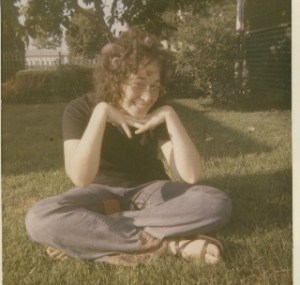
My photographs are also constant reminders of my mortality. Every birthday reminds me that I now have less time ahead of me than I have behind me. That knowledge makes each day more precious than the last. I will not die an unlived life.

“eat mangoes naked
lick the juice off your arms
discover your own goodness
smile when you feel like it
be delicious
be rare eccentric original
smile when you feel like it
paint your soul”
—SARK

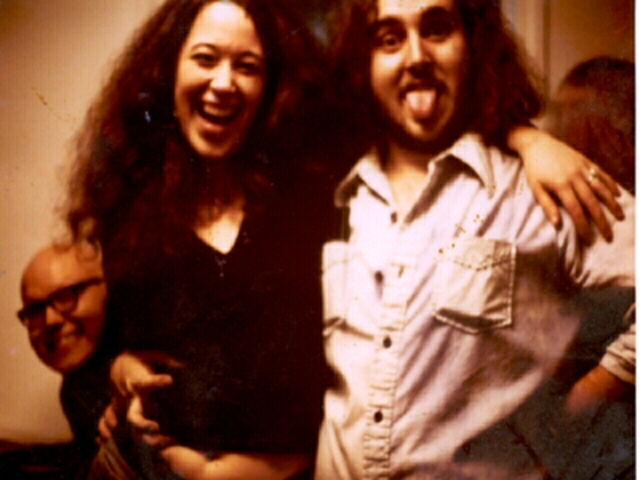
What happened to the 16 year old? What happened to the 20 year old? They are still here but the package has changed, the ribbons are torn and frayed and the wrapping paper yellowed and weakened in spots.

I see these old photos and am reminded that I almost died at my own hand when I was 16. I never thought I would live to be at the party where my friend grabbed me with gusto around the waist. I could have left this earth a long time ago in more ways than one. I tried my damnedest for years to do just that. But I am still here, those girls are still around somewhere inside my head.

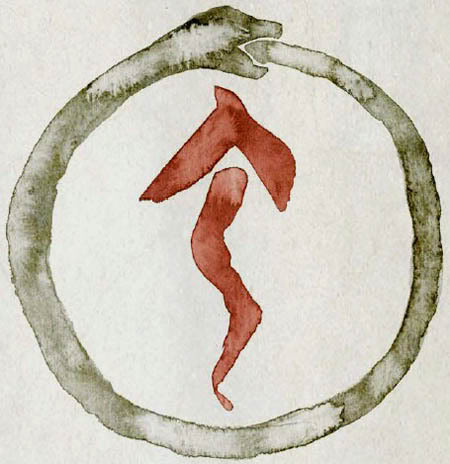
Those photos are also a reminder of the me I lost but found again once I got back on the yoga path. Life is a circle.


“The Ouroboros often represents self-reflexivity or cyclicality, especially in the sense of something constantly re-creating itself, the eternal return, and other things perceived as cycles that begin anew as soon as they end. It can also represent the idea of primordial unity related to something existing in or persisting from the beginning with such force or qualities it cannot be extinguished.”

The photos bring home the truth of the Five Remembrances and the truth of impermanence and they remind me to THINK. Birthdays are contemplations on what I would like to plant in this final season of my life.

What will it be?

What do I plan to do with this one wild and precious life?

2. I am of the nature to have ill health. There is no way to escape ill health.

Every day I wake up with pain. My freaky femurs that Paul Grilley uses as examples of extreme internal hip rotation are beginning to ache. My hair is thinning and I can see my scalp. My eyes have the beginnings of cataracts. But I thank the Universe for my physical yoga practice because without it I probably could barely move.

I thank the Universe for my yoga and meditation practice that allows me to know the truth of Buddha’s Fourth Foundation of Mindfulness: mindfulness of the dharma, of the true nature of reality that nothing is permanent, that each moment is constantly changing. Asana practice offers a great window into impermanence because our practice changes every time we step on the mat, from day to day, moment to moment. Is your practice changing as you change? And if not, why not? Get real.

3. I am of the nature to die. There is no way to escape death.

4. All that is dear to me and everyone I love are of the nature to change. There is no way to escape being separated from them.

These remembrances are the hardest lessons to learn. Thoughts of death of those near and dear to us and of our own death strike the most fear in our hearts. It is said that our only fear is the fear of death, all our other fears arise from that primal one.

We know things change but we put so much effort and energy into trying to live life as if that were not so. This is what Patanjali wrote about in chapter 2 of the Yoga Sutra-s: he described the qualities necessary to change the mind effectively and gradually from a state of distraction to one of attention, one of the qualities being avidya which is literally “not seeing.” This willful denial of reality, this willful not seeing the truth of impermanence perpetuates our suffering and misery. We so want things to never change – our hair, our skin, our supple spines, the people in our lives – that clinging to things that are by their very nature impermanent causes our suffering.

The suffering of change is what gives us the most gut wrenching pain in our lives. It is not our physical pain, but the pain of pain.

But when this truth of reality sunk deep into my bones it was liberation. I am not responsible for anyone’s happiness, I am only responsible for my own. No one is responsible for my happiness, I am only responsible for my own.

It’s a law of physics that energy can neither be created nor destroyed. We are energy bodies, filled with chi, prana, Life Force, whatever you want to call it. This body is merely the vessel that will eventually crack open and fall apart like an old terracotta pot. But the essence of me will live on. What is born dies but what is never born can never die. We truly are billion year old carbon.

We shall not cease from exploration.
And the end of all our exploring
Will be to arrive where we started
And know the place for the first time.
-T.S. Eliot

5. My actions are my only true belongings. I cannot escape the consequences of my actions. My actions are the ground upon which I stand.

Like everyone else, my life is composed of losses and gains. My losses have been due to neglect, poor judgment, ego, recklessness, selfishness. My gains have been through hard work, grit, determination, and intuition. Other gains have simply come through the blessings of the Universe. Karma. I’ve been graced with a fortunate birth despite going through things back in the day that would have killed a weaker person. I should never have become this old. The cards were stacked against me. Or were they? I truly am a survivor.

The Five Remembrances keep me awake to the human condition. My spirituality has brought me closer to Spirit, have helped open a heart that was closed for so long, and has taught me to have gratitude for whatever comes my way. My dharma wheel is turning and it tells me to embrace the inevitability of life’s changes.

Life is a constant series of movements that change from one form to another — just like asanas. I have reached a deep sentient awareness that nothing is truly lost in the end. We meet who we are meant to meet in this life and people come and go and return again in a constant dance and flow — like a vinyasa. We meet ourselves and each other over and over again in this spanda until we find our way home.

What will you do with your one wild and precious life?

"Yoga For A World Out Of Balance"

Many thanks to Michael Stone for sending me this passage from his book Yoga For A World Out Of Balance: Teachings on Ethics and Social Action and allowing me to use it for a blog post. This excerpt resonated with me on such a deep level that it gave me pause, especially the sentence: “Yoga teaches us that everything is connected to everything else in the ongoing flux and flow of reality, beginning in the microcosm of the mind and extending all the way through the myriad forms of life.”

Sometimes the seemingly most simple insights are the most profound. Over the course of my yoga life I have had more than few epiphanies where the realization of the above sentence sent shock waves through my cells. Once at the Monterey Bay Aquarium where I sat transfixed before the tank containing the kelp forest and having such a deep visceral knowledge of interconnectedness that I felt it in my bones. And in my heart.

Again at the bottom of Ngorongoro Crater in Tanzania in March as I watched the wildebeast migration.

Yesterday as I was gardening when I pulled up an oak tree seedling and found the acorn still attached to the root. As I studied the oak in my hand I remembered the words from William Blake’s poem: “To see the world in a grain of sand, and to see heaven in a wild flower, hold infinity in the palm of your hands, and eternity in an hour.”

There is knowing…and then knowing that you know.

In joy…..

************

“The human world is continually speeding up while the non-human world of plants, insects and animals, with its once vast range of ecological diversity, is rapidly declining, causing irreversible symptoms throughout the web of life. A spiritual practice exclusively concerned with my enlightenment, my transcendence, or my emancipation from this life, this body or this earth is not a spiritual practice tuned into these times of ecological, social, physical and psychological imbalance. The declining health of our ecosystems and the call for action in our cities, economies, communities and families remind us that we don’t have time to wait for enlightenment in isolated caves or interior sanctums; instead, it’s time to consider action-in the world and inner practice as synchronistic and parallel. Action in the world is not an externally imposed duty or simply a preliminary stage on the path to greater awareness but is in itself a valid spiritual path and an expression of interdependence, freedom and awakening.

By seeing the inseparability of psychological change, ethical action and spirituality, we can avoid the common fragmented and problematic view that spiritual practice takes us away from the world, excluding the body, householder life and pressing contemporary issues like poverty, injustice, environmental degradation or other forms of inequality and suffering. Yoga teaches us that everything is connected to everything else in the ongoing flux and flow of reality, beginning in the microcosm of the mind and extending all the way through the myriad forms of life. Yoga also claims freedom from suffering as its primary objective. It is from these realizations that our spiritual, ethical and contemplative practices originate and mature. Wherever there is imbalance and suffering, yoga shows up.

Because of the sweeping changes of the modern era – including genetic research, the telephone, internet, high rates of literacy, swift air travel, two column accounting systems and faster and faster lifestyles – the iron-age world view out of which yoga teachings began to be described and refined can only offer us a partial platform, path and set of truths. We begin in this culture at this time, so we must begin now to articulate and re-envision a yoga that is responsive to present circumstances – rooted in tradition yet adaptable and alive in contemporary times. Yoga has always represented a radical path that leaves behind stiff metaphysics and doctrine and instead turns the practitioners’ attention inward to the immediate experience of mind and body. The yogin studies the nature of reality as it presents itself here and now. As we turn toward the mind-body process we begin to open to the temporary nature of our lives as well as the fact that we are inextricably woven into the very elements that constitute everything else – we are the natural world. For too long, yoga has been mischaracterized as an inner practice without understanding the teleology of practice. Yoga practices tune us into reality by waking us up to the inherent transience of earthly life, the freedom that arises when wanting is relinquished, the truth that no thing is “me” or “mine,” and the basic intelligence of the mind, body and the life that supports us. The term “yoga” connotes the basic unity and interconnectedness of all of life including the elements, the breath, the body and the mind. The techniques of yoga – including body practices, working with the breath and discovering the natural ease of the mind – reorient the practitioner to the very deep continuity that runs through every aspect of life until we realize that mind, body and breath are situated in the world and not apart from worldly life in any way.

Beginnings

When I began practicing yoga my primary focus was the physical practice of yoga postures and every morning for the first six years, I woke up to practice at five o’clock , six days a week. I sat in meditation for an hour, followed by standing postures, twists, forward bends, an hour of back bending and inversions and finally breakfast. When I had any free time, I attended academic lectures on Indian philosophy, completed two degrees in psychology and religion and studied Sanskrit; but the formality of my practice began to feel separate from the world I moved through and I felt that formal practice and daily life had little in common. The connection between meditation, the physical practice of yoga, and the spiritual discipline to which it belonged became ambiguous and vague and though I could intellectually grasp the connection between waking up the body and stilling the mind, I didn’t understand how to put these practices into action in everyday life. While I was having significant insights in meditative practices, I felt formal practice and daily life were not seamlessly woven.

This is true for many contemporary yoga practitioners, and as I now teach extensively, the most common question I hear is how to integrate philosophy, body practices, meditation and daily life together with one’s role in relationships, concerns about the world around us, and the desire to take action in a world out of balance. Even when students begin having genuine experiences of insight or meditative quietude, I always ask them how they are going to incorporate these experiences into their daily activities. How does spiritual practice support and motivate our choices and ambitions? How can my personal enlightenment be the goal of practice if there is so much suffering around me? If the domain of any spiritual tradition is the relief and transformation of suffering, what does yoga, one of the great spiritual traditions, have to say about contemporary forms of suffering and existential disorientation ?

For the practitioner of hatha yoga – the meditative practice of waking up to present experience in mind and body – the link between yoga as a “practice” and a “spirituality,” is often realized through an intuition rather than through intellectual articulation. However, intuition is not enough; nor is it enough to imagine that yoga offers a complete set of codes or truths that can, like mathematical equations, tell us what to do in every given situation. The world is too complex, too nuanced, and is always shifting, therefore we need to investigate the practical ways that yoga practice matures both in formal study and in everyday life. Today, our personal, ecological and social situations present unique and direct challenges to each and every one of us to respond to the great existential questions of life and death, to look deeply into interdependence, and to fully actualize our awakening in a world distressed and in need. How is our awakening going to contribute to the world-at-large? Why is our spiritual path important for the great rivers, the butterflies and the architecture of our cities?”

addthis_pub = ‘yogagal60510’;

dharma talk: Michael Stone

What a surprise it was to receive an email from Michael Stone, author of Yoga for a World Out of Balance: Teachings on Ethics and Social Action.

Michael told me that he likes this blog (and it always does this old English major’s heart good when published authors tell me they like my writing – he thinks LYJ is “not simply the repetition of familiar yoga cliches”) and asked whether I wanted to contribute to the conversation about his book.

I am sorry to say that I have not yet read the book, but I’m getting a copy from the publisher. When read, I will review it here. I am especially interested in his book that will come out in September Freeing the Body, Freeing the Mind. The subject is one that is near and dear to my heart, the yoking of yoga and Buddhism:

“Buddhism and yoga share a common history that goes back centuries. But because yoga and Buddhism came to North America from Asia as two separate traditions, their commonalities in the West often seem invisible. Most people choose to study either yoga or Buddhism and generally don’t combine the practices. Michael Stone brings together a collection of intriguing voices to show how Buddhism and yoga really do share the same values and spiritual goals.”

In my humble opinion, Patanjali could not have written the Yoga Sutra-s without being a bit influenced by the wandering Buddhist monks during his time. When I sat in my Sutra-s classes I would think “yes! and Buddhism says….” Then in any Buddhism classes I would think, “yes! and the Sutra-s say….” In my own mind, there was never any separation of the two philosophies. As they say in India, “same same but different, madam!”

For those of you interested in this idea, read Chip Hartranft’s translation, The Yoga-Sutra of Patanjali: A New Translation with Commentary.

Here is an exceptional video of Michael Stone. It’s about 30 minutes long, so make some tea, pull up a comfy chair, and listen to a dharma talk on things such as the Self, karma, transcending patterns, and meditation. I like the reference to “heat” in the title since I always tell my students how yoga marinates and cooks us!

http://vimeo.com/moogaloop.swf?clip_id=10336462&server=vimeo.com&show_title=1&show_byline=1&show_portrait=0&color=&fullscreen=1

Michael Stone Dharma Talk: Let the Heat Kill You from Centre of Gravity on Vimeo.

addthis_pub = ‘yogagal60510’;

hand me that Anusara and a chicken wing


When a product with a well-known brand name is seen in a movie or television show, that’s called “product placement”: “product placement, or embedded marketing, is a form of advertisement, where branded goods or services are placed in a context usually devoid of ads, such as movies, the story line of television shows, or news programs. The product placement is often not disclosed at the time that the good or service is featured.” An example of product placement would be when the characters are drinking Budweiser beer and eating Kentucky Fried Chicken and the labels are featured prominately so you don’t miss them. Companies typically pay for product placement.

What a surprise then when one of the characters who was under suspicion for murdering his girlfriend in this week’s episode of Law and Order: Special Victims’ Unit (“Beef”) say he was an Anusara yoga teacher. Not just any old yoga teacher, but an ANUSARA yoga teacher. The writers made sure to have the character tell detectives Elliot and Oliva that his yoga teaching was all about “grace” (John Friend’s tagline for his trademarked style of yoga) so how could he possibly be a murderer? Wow. It’s usually cigarettes and booze that are product placements, but now yoga? Ah….yoga in America.

Sounds like someone on the Law and Order: SVU staff digs Anusara because why was character an ANUSARA yoga teacher, not just a plain vanilla yoga teacher? Being an ANUSARA yoga teacher added nothing to the plot, a non-branded yoga teacher character would have worked just the same. Of course, only someone who knows about Anusara yoga and who was listening carefully would have caught the reference. It would have gone over the head of someone who knows nothing about trademarked yoga, but it made me go “hmmmmmm…….” Just sayin’.

So it was a breath of fresh air to read the New York Times story A Yoga Manifesto about yoga’s “new wave” of “a brewing resistance to…the cult of personality,”, i.e., the rock star yogis. Years ago I did a weekend workshop with John Friend before he was filling up the huge halls and he had an entourage of yoga groupies students that would rival any rock star.

From the NYT article:

“And is it surprising that yoga, like so much else in this age of celebrity, now has something of a star system, with yoga teachers now almost as recognizable as Oscar winners? The flowing locks of Rodney Yee. The do-rag bandanna worn by Baron Baptiste. The hyper perpetual calm exhibited by David Life and Sharon Gannon, who taught Sting, Madonna and Russell Simmons. The contortions (and Rolls-Royces) of Bikram Choudhury.

…’The irony is that yoga, and spiritual ideals for which it stands, have become the ultimate commodity,’ Mark Singleton, the author of Yoga Body: The Origins of Modern Posture Practice, wrote in an e-mail message this week. ‘Spirituality is a style, and the ‘rock star’ yoga teachers are the style gurus.'”

The article speaks about the success of Yoga to the People, the New York yoga business that is at the forefront of the “no rock star yogis” yoga. While Yoga to the People has a contribution-only, pay-what-you-can fee structure, apparently it’s a cash cow for Greg Gumucio. He has three studios in New York (including two hot-yoga studios that charge $8 a class), one in San Francisco, one in Berkeley, and one scheduled to open in Brooklyn. He is considering expanding to Austin, Chicago, and Los Angeles. I say good for him because it’s a great idea.

The irony of success is that Greg Gumacio and his brand of “yoga for the people” will become as popular and as well-known as any rock star yogi.

What say you about the mention of Anusara yoga (albeit in an off-hand way) in a primetime television show? Does it go along with what Mark Singleton said in the NY Times article that “yoga, and spiritual ideals for which it stands, have become the ultimate commodity”, something to be sold just like a pack of cigarettes or a jeans label? Why not have commercials for all the name brands: Forrest, Jivamukti, Core Fusion, YogaFit, and of course, Bikram. I bet the ad agencies would line up to get a piece of that pie.

This post is not about Anusara yoga or John Friend. Replace those words with any other trademarked and name brand yoga and the post would be the same. The selling of yoga as a commodity.

As Tony Soprano would said, whaddayagonnado?

UPDATE:

uh oh….they’re on to me! from site meter: “Atlanta, Georgia arrived from mail.anusara.com on ‘linda’s yoga journey’.” I’d better lock the doors and pull the shades.

….wait…I hear a mob outside….instead of fire and pitchforks they’re all holding Shiva’s tridents that have been set on fire….quick! help me! they are banging down the doors yelling “GET HER!!” AAAARGHHHHH!! Save yourself!

addthis_pub = ‘yogagal60510’;

yoga ink redux

There are three things that I spend most of my yoga earnings on: more yoga, India, and tattoos.

This is (dare I say it?) the completion of a tattoo project that started in the late 1970s, an era before AIDS when tattoo artists used the same needles on everyone after sterilization in an autoclave. My first artist was named Snake. Snake tattooed that little flower that is to the left of the butterfly. I took some Tylenol with codeine because I was afraid of what a tattoo needle would feel like. That little flower took all of 10 minutes and the codeine didn’t kick in until I got back home. Now look at me, and what you see aren’t the only ones I have.

It’s the Kali yantra surrounded by hibiscus, her flowers. They will be red and “this form of the Kālī yantra is used for her representation as one of the ten Mahavidyas or main forms of Devi…an additional Shakti triangle is “hidden” by the circle and ring of lotus petals circumscribing the central portion of the yantra. This probably signifies the “hidden” true nature of Devi as Maya (illusion).”

“In the center is a group of five triangles. Each point represents one of the fifteen Kali Nityas or eternities, one for each day of the waning Moon. In the eight petals are eight Bhairavas and eight Bhairavis, coupling together.”

The Kali Yantra contains within it the transformative energy of change.

When we internalize this energy and surrender to its sweet transformative power of love, we begin our inward journey toward healing and spiritual growth. According to the Tantric tradition, the 36 corners of the Yantra represent the 36 principles (tattvas) of creation, from the Most Transcendent to the most minute expression of Materiality. The bindu is the central point, the seat of the soul, the Atman; the internal link with Brahman the Absolute. The bindu is also Kali, and all the phenomenal world emanates out from Her. In the Tantric tradition, Kali as the energy (Shakti) aspect of material nature is united with the Absolute (Shiva) for the sake of creation.”

In an arch above the yantra will be “love devotion surrender” in Sanskrit.

Put a fork in it. I’m done.
(tattoos by Serena Lander)

“Sadashiva is without energy (lifeless) when Mahakali is manifest. He also is like a corpse when in union with Shakti. Clearly, without Shakti, the primordial god is lifeless and cannot act.” — Todala Tantra, I

addthis_pub = ‘yogagal60510’;

change is good

It was high time for a change and the original blog designer was nowhere to be found.

Thanks to Blisschick I learned that Blogger had new templates (where have I been?), and Svasti offered her design expertise. Eventually I figured it all out.

Yes, some of the words are a bit hard to read when they are on top of a bird image, but that is my way of focusing your awareness and concentration. Mindful reading. Frankly I find it much easier to read than blogs with black or very dark backgrounds with small light fonts — they make my eyes cross so I never read them.

Ever since my trip in general and my jump into the Ganges specifically, I have felt things rumbling and tumbling. This new look represents that. Flying birds have always represented freedom to me so they represent my flying to India and flying on my dharmic path. The butterfly in the title represents transformation, all that marinating and cooking. The eyes represent strong purpose.

I surprised myself that I liked all the white space because I love crazy, wild colors, the colors of India. My toenails are always painted hot pink or bright orange. A new me, a new look.

I have felt a need to move away from previous teachings and explore new ones on my next trip to India. I want to apply for the 2011 yoga therapy course at Yoga Vidya Dham. I want to return to the ashram in Haridwar and just BE, soaking everything up like a sponge.

My gut is telling me not to return to teaching in the college in the fall. This semester my friend took over the class for me and the seeds of not wanting to return to it were planted in India. Sometimes when a yoga teacher wants to quit it’s not where or what they teach it’s who they teach to. I feel like I’ve done my time with these kids, it’s time to move on for ME.

I started teaching a new class in a great space on my terms and I’ve caught myself wondering “but what about next year when I want to travel?”, but the next thought is an equal willingness to give everything up, no attachment. Somehow it is a deep knowing that everything happens when it is supposed to happen and I should be open to it, whatever IT is.

No attachments.

I would rather fail at the right things than succeed at things that are not right for me.

Practice-breath-practice-breath and all things are forthcoming.

you are what you are seeking

I needed to hear this today at this moment. And I think you do, too.


addthis_pub = ‘yogagal60510’;

the fundies are everywhere

Yes, even in the yoga and meditation worlds.

After my last post about not being allowed to attend a vipassana retreat in the strict Goenka style, one of my long-time readers and supporters, Kevin, sent me this email. I loved what he had to say and he gave me permission to to reprint it.

“I was sorry to hear about your recent encounter with Goenka fundamentalist fervor. I appreciate the fact that that community provides retreats all over the world on a dana basis, but Goenka-ji’s virulent fundamentalism and complete misunderstanding of the history of Buddhism generally and Theravada in particular make him about as good an ambassador and spokesperson for Buddhism as Jerry Falwell is for Christianity (I’m not exaggerating).

As an Indian who “found religion” in Burma he has the fervor only converts can have, and he’s certainly expressed his contempt for Hinduism, yoga of any sort and all other forms of Buddhism many times. It’s clear much of his defensiveness come from the fact that he clearly knows at some level that the particular form of Buddhism he practices and teaches was invented out of whole cloth less than 100 years ago, and has nothing to do with the way meditation is taught in the broader Theravada tradition, let alone the Tibetan or Zen traditions.

The thing is, there is no such thing in the suttas as “vipassana” meditation. Vipassana is insight that arises out of calm abiding (samatha/shamatha) meditation – i.e. anapanasati, or mindfulness of breathing. “Mindfulness” or sati means one thing only: keeping the attention focused on the object of meditation. The superb and well-regarded teacher Thanissaro Bhikku defines this very clearly in the article I’ve attached (from Insight Journal).

Now what’s taught at Spirit Rock is a hybrid of Burmese-style instructions coming from Mahasi Sayadaw and his successors (with Goenka being an offshoot of that) and the Thai forest tradition as represented by Ajahn Chah, which teaches and practices samatha and vipassana the way it is presented in the suttas. The Tibetan tradition preserves the original progression as well: you learn calm abiding (shamatha) and do that for a long time, until the mind is stabilized enough for vipashyana (with Dzogchen and Mahamudra being the ultimate such practices).

The Burmese aberration happened because meditation practice altogether had been lost in Burma by the middle half of the 20th century. The whole tradition had become completely scholastic. The philosophical perspective and techniques they came up with are based on the abhidhamma, with its theory of mind-moments, and in particular on the Visuddhimagga. To put it another way, what Goenka presents as the definitive and original teachings of the Buddha is a lineage-less aberration invented out of whole cloth by scholars who at least had the good sense they needed to learn hot to meditate.

Jack Kornfield goes into huge challenges they had trying to integrate contradictory teachings in his recent article on the history of Spirit Rock, which I’ve also attached.

As someone who really loves the Theravada tradition but who came to it after years of practicing in the Tibetan tradition it kind of drove me crazy to see the total lack of clarity about what is and isn’t mindfulness and how concentration practice differs from insight. I finally got to the root of the problem when I read the fantastic book A History of Mindfulness: How Insight bested Concentration by Sujato Bhikku (who, intellect-wise, is the Ken Wilber of Theravada Buddhism). I think anyone who teaches dharma should be required to read this book, which can be downloaded here:

http://sites.google.com/site/santipada/bhantesujato%27swork#books

The fact that Goenka’s clueless staff person said you can’t practice mindfulness on one of their “vipassana” retreats just floors me. What a bunch of Moonies! Well, it’s their huge loss since you are knee-deep in the middle of the transformative yoga and meditation practice that the Buddha himself lived.”

After his email I told Kevin that I just love it all. I am “officially” Buddhist since I’ve taken both the Five and the Eight Precepts in ceremonies, but I love Kali Ma. The shakti blasts that hit me in certain temples in India are too much for me to ignore. I am not going to choose ONLY ONE WAY, I don’t see why I should. It’s all good in my book. I’ve been in the Dalai Lama’s as well as Gelek Rimpoche’s teachings which are Mahayana Buddhism and I study with a Sri Lankan Theravadan Buddhist monk, but sometimes when I sit Kali’s mantra reverberates loudly inside. I certainly don’t feel “confused” as was implied by the vipassana fundie. I feel peace.

“The winds of grace are always blowing, but you have to raise the sail.” — Ramakrishna

This was Kevin’s response:

Alan Wallace…has become my favorite meditation teacher over the past few years. In person I find him even clearer than Tibetan teachers I love such as Tsoknyi Rinpoche, Chokyi Nyima Rinpoche and others. One really cool thing about Alan is during his 14 years as a monk he not only did Goenka retreats but also studied with a Sri Lankan master for the better part of a year, doing classic breath meditation the way the Buddha taught. There’s a fantastic contemporary teacher names Leigh Brasington (great web site too: http://www.leighb.com/) who specializes in teaching samatha and jhana in the old way, and he is the dharma heir to the wonderful Ayya Khemma, who also got all her training in Sri Lanka. My point is in connecting with your Sri Lankan teacher – and of course Bhante Gunaratana is another great example – you are connecting with the oldest strains of Theravada there are, unadulterated for the most part with the stuff they came up with in Burma in the 1950’s (though there are Goenka and Mahasi places even in Sri Lanka now).

I’m with you 100% on being open to anything that liberates. Yes I am a Buddhist, but to me that means (as I say when I do the refuge every day) “I take refuge in the teachings and practices that lead to lasting freedom and happiness.”

Patanjali, Sri Krishnamacharya and his successors, Shankaracharya and Ramani Maharishi, Sri Nisardatta Maharaj and countless liberated beings from various traditions throughout the motherland of India are just as much a part of that refuge for me as Lord Buddha – and I don’t think he would have wanted it any other way.”

Neither do I.

(correction: Goenka-ji was born in Burma to Indian (and Hindu) parents. The comment about the fervor of converts still applies.)