what is tantra?

“Tantra” is a word that gets thrown around a lot in yoga circles. It’s a word that many American yogis have become familiar with via Sting who claims that he can get it on for hours because of tantric sex (see the comments that follow in YogaDork’s post.)

I don’t think there is anyone who has done as great a disservice to tantric yoga as Sting because of his comments. The whole sex thang is about 1% of what tantric yoga is about. Once Sting and tantra were on Oprah you knew it was going to be all downhill after that. IMO, if this culture’s attitude about sex wasn’t so f*cked up in the first place (pun intended), there wouldn’t be all the giggle-snorts with the mere mention of the word “tantra.” (“Oh yeah, you mean THE SEX!!” slobber, slobber…)

Then there is John Friend who is sometimes referred to as “Tantra Lite.” In the NY Times article about him that is burning up the yoga blogosphere it states:

“Friend’s “dharma talks” — short sermons — are based largely on simplified tantric principles (not, he stresses, the ones relating to tantric sex): students learn that they are divine beings, that goodness always lies within, that by opening to God’s will — opening to grace, Friend calls it — ‘you actually become vastly more powerful than the limited person that you usually identify with.'”

What I don’t understand is when people talk about Anusara yoga’s concepts such as “opening to grace”, etc.. I have heard more than a few yoga teachers say that they never heard those concepts before in their trainings and I really have to question that.

Isn’t all yoga about “opening to grace”? Isn’t all yoga about moving beyond our limitations? Isn’t all yoga about opening the heart, surrendering, giving it up to something greater outside ourselves? At least for me it is and always has been. John Friend isn’t the first teacher to talk about such things, he did not invent these concepts, he merely repackaged them for mass consumption.

When I hear a yoga teacher say that they’ve never heard such things before it makes me even more thankful for my non-Anusara inspired teachers and how they taught and what they taught me. I’ve been blessed to have the teachers I’ve had.

Mark Whitwell says, “asana is hatha yoga, the non dual tantra of direct intimacy with Reality that is nothing but nurturing.”

All yoga is nurturing. No one specific brand, no trademarks, just do YOUR YOGA.

So what is tantra? In his book Tantric Yoga and the Wisdom Goddesses, David Frawley writes that “Tantra can best be defined as an energetic approach to the spiritual path, using various techniques including mantra, ritual, pranayama, and meditation. It contains a devotional approach emphasizing the worship of the Goddess and her Lord, Shiva. It contains a way of knowledge, directing us to Self-realization and the realization of the Absolute. As such it is a complex yet integral system for the development of consciousness which has something for all those who are seeking the truth.”

In my training “tantra” was never separate from hatha yoga. The word is a combination of “tanoti” and “trayati”. Tanoti means “to expand, to stretch, to extend” and trayati means “to liberate or free”. Therefore tantra (tan+tra) means to expand one’s experience and awareness of everything, to extend the frontiers of apprehension beyond the material, thereby attaining spiritual knowledge and liberation.

Isn’t that YOGA, no matter what brand name it is?

I learned that “tantra” means “to weave.” Through weaving in certain breath and meditation techniques, we train up our system to become more sensitive to the subtle forces of prana or the vital life force. Through learning to control the prana in yoga you learn to control the mind.

Isn’t that YOGA, no matter who trademarked it?

Taking a deep breath….SO……

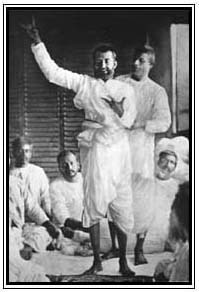
What inspired this post was a Facebook discussion that followed the above photo. It is a photo I took at the Kumbh Mela of a baba whose arm has atrophied from his austerity, his extreme tapas. My caption to the photo was “no Tantra Lite at the Mela!” because the sadhus I met at the Mela were the real deal, the down and dirty tantric yogis.

Taking part in the Facebook discussion are Carol, blisschick, and Baba Rampuri, who’s about as real of a yogi deal as you can get.

Talk amongst yourselves and leave a comment if you are inspired…..

##########

“blisschick: and the point of that would be…[i.e., the frozen arm]

Carol: Would actually really like it if someone could explain to me: What is this form of Tantra about, and what if any relationship does it have to anything that we call Tantra in this country?

L-S: these sadhus are devotees of Shiva and the upraised arm is a form of mortification or austerity, it’s tapas. it’s a way of showing extreme detachment from the body, transcending the body. other sadhus might stand day and night,… even while sleeping, or they sit in one place and stay sitting there, till they die.

Baba Rampuri: Wonderful photo! It is Naga Baba Amar Bharti Ji in this photo, he is a Naga Sannyasi, and a very close friend for many years. He is an “Urdhvabahu” meaning “raised arm”, but this is a description not a sect. One of the main things distinguishing traditional yoga from American yoga is austerities, “tapas.” It is a powerful means of obtaining knowledge and power. In one way, it’s an extreme form of focusing will power, almost like saying, “Nothing is going to stop me in my quest! Not pain, not discomfort, not the attraction of the world, not even death! I don’t need food, water, nor even air!” When I make disciples, and some of you know that we have 5 gurus, I always choose Amar Bharti Ji to join me as one of the five.

L-S: Carol, what is tantra in this country? In America, hasn’t the phrase been mutilated, people taking a sensationalist approach encompassing only thinking about “sacred sexuality,” with little reference to its true practice as a path to enlightenment? for me, hatha yoga IS tantra yoga because there is philosophy, meditation, and mantra and other practices. don’t forget there is also Buddhist tantra in the Mahayana tradition.

of course American yogis aren’t going to perform austerities like the Urdhabahu baba (who blessed me with his other hand!), or cover their bodies with ash and sit in cremation grounds to try to transcend their worldly attachment to life.

Baba Rampuri: Carol, these days Tantra means anything you want it to. In the West, it’s normally a marketing tag for something to do with new age sexuality, or at best, new age psychology. In India, at it’s worst, it is thought of as black magic. Yoga, as practiced in the West, has nothing whatsoever to do with Tantra as it is practiced in its high and low forms in India. At it’s best, Tantra is the teaching that Shiva gives to Parvati regarding knowledge and immortality. The practice of this involves the connection of Sacred Speech with Knowledge and the corresponding withdrawal from the illusory perception of the world.

Carol: thank you so much, Linda-Sama & Baba Rampuri! I feel so fortunate to wake up & find so many answers to my question. If you are interested, here is a link to a Yoga Journal article that I think captures how I commonly hear Tantra described in the American yoga community: http://www.yogajournal.com/wisdom/2240.

blisschick: It seems very much to me like a denial of the GIFT of this life. If transcending the body were meant to be a spiritual goal, why are we given bodies at all to begin with? (I know these statements will simply be perceived as me not getting it but I find this bothersome. I choose YES and this seems like a giant NO.)

Baba Rampuri: Christine, you are right, if it is his purpose to transcend his body, which it is not. He is pushing the envelope. He is using an extreme practice to get quick results. He is using his body in a way to acquire knowledge.

L-S: thanks for the clarification….I used the wrong word in “transcending”…yes, we have these bodies to use as vehicles for enlightenment (as the Buddha also taught about the “fathom-long body”), but these austerities (to me) show a non-attachment to the body, i.e., “non-attachment” being different from “transcending.”

Carol, I scanned the YJ article and will read it more deeply later…but as for tantra in the US…I have heard people say that they never heard of the tantric concepts or even the word tantra before they studied with John Friend.

I find that a bit hard to believe. I don’t know about anyone else, but I became familiar with tantric concepts from India from my teachers early in my yoga training. so I agree with Baba when he says that it seems that “tantra” can mean almost anything in American yoga. I also think many of the concepts have to be distilled in a different way for westerners. I mean, I’ve been to studios where the mere picture of Durga or Shiva on the wall makes people uncomfortable…how are they going to handle tantric ideas if a teacher talks about them?

blisschick, to me, tantric yoga is about “sacred body-fearless mind”. Buddha taught that the path to enlightenment is in this body, watching body/breath, watching the feelings/felt senses, watching those mind objects that are our thoughts, and embodying the dharma, the ultimate truth of reality which is impermanence. those are the four foundations of mindfulness, and that is how we can use our body, use the physical asana practice to realize deep truths.”


a classic yoga text…but not the one you think

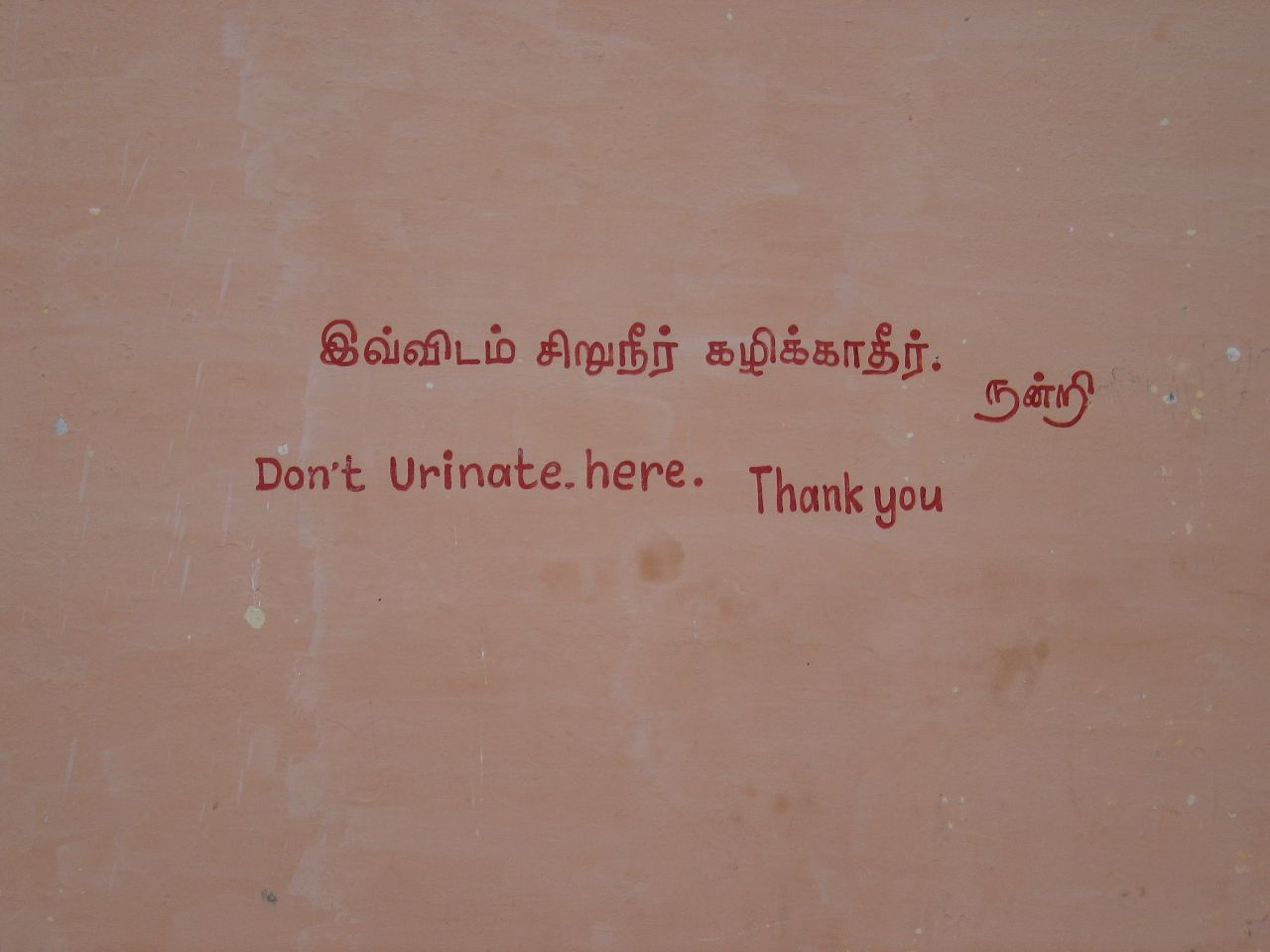
AUM in Tamil

Sanskrit is the language we are all familiar with in yoga classes, but the Indian government declared Tamil an “official classical language” in 2004, the year before they declared Sanskrit to be the same.

As yoga students we are familiar with Patanjali’s Sutra-s, the Bhagavad-Gita, and the Hatha Yoga Pradipika, but how many are familiar with classic yoga texts that are outside the mainstream? How many have you heard about in your teacher trainings?

The history of the Tamil language and its literature is as equally rich as the Sanskrit language and its literature, but unless one travels to south India, it remains unfamiliar to many. I am grateful that my first experience of India was in the south and not the north. I am grateful that my first experience with the heart of yoga was in Tamil Nadu in the Krishnamacharya tradition and not in the ashrams of north India.

So I was glad to see Georg Feuerstein’s review of a classic yoga text that was not written in Sanskrit and is not among the “big three” of classic yoga literature, although Mr. Feuerstein believes it should be right up there with them. It is my humble opinion that if a serious yoga student only sticks with the “mainstream” yoga literature, one will miss out on the vast richness of the yoga tradition.

For example, one of the texts given to us when I first studied at the Krishnamacharya Yoga Mandiram was Nathamuni’s Yoga Rahasya. The Yoga Rahasya is an important text that was lost for many centuries. The revival of this text by Krishnamacharya brings us the teachings of Nathamuni, a 9th century yogi and Vaisnavite saint. Some of the concepts presented in this text include the importance of yoga for women, yoga practices to be done during pregnancy, the adaptation of yoga to suit people in different stages of life, and yoga as a tool in therapy. A 9th century yoga book that contains very modern yoga concepts.

A huge thank you to Brenda Feuerstein for giving me permission to reprint Georg’s review in its entirety.

*******

Tirumūlar`s Tirumandiram: A Tamil Classic on Tantric Kundalinī-Yoga

The Tirumandiram. T. N. Ganapathy, gen. ed. Ten volumes. St. Etienne de Bolton, Quebec: Babaji`s Kriya Yoga and Publications, copublished with Varthamanan Publications, Theyagaraya Nagar, Chennai, India, 2010. 3766 pages. $100.00 USD plus $50.00 S&H 10-volume set.

Review by Georg Feuerstein, Ph.D.

There are at least four Yoga scriptures that should have a place in any library of core Yoga works: Patanjali’s Yoga-Sūtra, the Bhagavad-Gītā, and the ten-chapter edition of the Hatha-Yoga-Pradīpikā of Svātmarāma Yodīndra, which are all composed in Sanskrit. The fourth scripture is Tirumūlar’s Tiru-Mandiram, which is written in Tamil. Until recently, the last-mentioned work was available only in a dubious English rendering, which I was reluctant to recommend to my students.

A dozen or so years ago, I expressed to Marshall Govindan (Satchitananda), president of Babaji’s Kriya Yoga Order of Acharyas, my earnest wish to one day see a competent English translation of the Tiru-Mandiram. I had no idea that my words would find a receptive ear. Govindan wasted no time to raise the necessary funds to assemble a team of Tamil experts to set about translating this text of no fewer than 3,047 recondite verses. After a decade of solid labor, Tirumūlar’s highly encrypted esoteric work was released in English at a gala celebration held in Chennai, India, on January 17, 2010.

I confess I was both awestruck and overjoyed when I unpacked the ten finely printed volumes of the Tiru-Mandiram translation, which came to me as an unexpected gift in a neat cloth-wrapped package from India. Immediately I started to look through all ten volumes and then settled on carefully reading word for word the third tantiram (“book”) of Tirumūlar’s composition, which deals specifically with primary yogic concepts. Being familiar with these teachings from the Sanskrit literature, I readily slipped into the rhythm of Tirumūlar’s poetic/devotional exposition and allowed him to carry my mind toward the lofty regions that seem to have been his spiritual home. Later, I read the remaining eight of nine books of the Tiru-Mandiram in their proper sequence, allowing Tirumūlar’s work to progressively unfold itself for me.

Based on the Tiruppanandal Kāci-t-tirumadam edition, the present translation with commentary, which runs into more than 3,000 pages, also made use of Dr. S. Annamalai’s 1999 critical edition of the text. The present edition of 3,000 copies is complemented by a DVD, which makes the text, translation, and commentary affordable to a larger number of people. As Marshall Govindan explains in his preface, the DVD also honors the Order of Acharyas’ commitment to “Green Yoga.”

What makes this edition singularly attractive is that in addition to a close-to-the-original English translation, Tirumūlar`s text is also reproduced in Tamil and in transliteration. I have personally found it inspiring to recite aloud some of the Tamil quatrains, appreciating their mantric quality and the melodious Tamil language.

In his General Preface, seventy-eight-year-old Prof. T. N. Ganapathy confesses that this massive project made him “stagger at times” and also made him wonder whether he was “attempting the impossible” (p. xix). This undertaking was complicated by the fact that certain traditionalist Shaivites objected to producing a commentary on Tirumūlar’s sacred work, especially in English. Humbly, Prof. Ganapathy, who served as general editor, states that the English commentaries accompanying Tirumūlar’s verses are not intended as a traditional bhāshya but claim only to furnish “clues and guidelines for understanding the richness of the spiritual mystical experiences of the saint.” “The commentaries,” he goes on to explain, “are meant to be guides, pointing to the goal, to the essence, but themselves are unrealized, mere descriptions of truth” (p. xxi).

Prof. Ganapathy’s team of translators and commentators comprised Shri T. V. Venkataraman (books 1-3), Dr. T. N. Ramachandran (book 4), Dr. KR Arumugam (book 5), Prof. P. S. Somasundaram (book 7), and Prof. S. N. Kandaswamy (book 8). Prof. Ganapathy himself was responsible for translating and commenting upon books 6 and 9, and he also edited the entire translation. He admits: “No translation can convey the literal sweetness of the original and its wonderful philosophical concepts and mystical emotion, which carry one away like a torrent or a tempest” (p. xxv). The Tiru-Mandiram is extremely recondite, and its verses are “most difficult to translate and interpret” (p. xxv). Prof. Ganapathy assures the reader, however, that the “translators have taken extreme care not to project certain pet theories and prejudices” (p. xxv) and to translate the verses as faithfully as possible, given their limited understanding.

In particular the present edition seeks to steer a neutral course between the two contending philosophical orientations to Tirumūlar’s work. The first is the strictly theistic (dualistic) interpretation of the devotional Siddhānta branch of South-Indian Shaivism. The second is the Tantric orientation, which is nondualistic and follows the pathway of the Siddhas. In the tenth volume, which contains various appendices and indices, the controversy about theistic/dualistic versus Tantric/nondualistic is taken up separately. As the overall editor, Prof. Ganapathy has allowed each translator his own voice rather than attempt to achieve “dull uniformity.” There is, however, a fundamental unity underlying the various translations, which he ascribes to Tirumūlar himself.

The following is a short synopsis of the nine books (tandiram) of the Tiru-Mandiram:

Book 1: Beginning with a 50-verse invocation of Lord Shiva, Tirumūlar next praises the Vedas and Āgamas and then offers verses on the guru tradition, fellow students, his own seven disciples (viz. Mālāngan, Indiran, Coman, Piraman, Uruttiran, Kālāngi, and Kancamalayan), and his own journey, followed by a section on Shiva’s relationship to the Hindu trinity (consisting of Brahma, Vishnu, and Rudra). After these introductory stanzas, Tirumūlar proceeds to impart spiritual instruction about the path of attaining Shiva’s love, which leads to the opening of the “inner eye” and ultimately to absolute bliss.

Book 2: Commencing with 2 stanzas in praise of Sage Agastya, Tirumūlar then goes on to explain the mystical import of Lord Shiva’s eight heroic exploits and other deeds, as described in various Purānas, He also offers verses on the three categories of individuated being (Sanskrit: jīva), on worthy and unworthy folk, as well as on the desecration of temples. Tirumūlar concludes with a unique teaching about Shiva’s “downward face” (Sanskrit: adhomukha) by which he showers grace upon devotees.

Book 3: This portion, consisting of 335 verses, specifically deals with the eight-limbed Yoga first formulated by Patanjali and also with various Tantric practices. It strongly champions the Siddha tradition.

Book 4: Here Tirumūlar discusses various cakras (i.e., mandalas)—their construction and ritual use, and he dedicates 100 quatrains to describing the kundalinī-shakti.

Book 5: This book offers a description of the four ways to God realization—through the caryā, kriyā, yoga, and jnāna method—and the four stages of liberation to which they lead: sāloka, sāmīpya, sārūpya, and sāyujya. Tirumūlar also defines the three realities of Shaivism: pati (lord), pashu (soul), and pāsha (bondage). He also speaks of the four degrees of the descent of divine power (Tamil: catti-nipādam), known in Sanskrit as shakti-pāta.

Book 6: This short section talks about the guru, subject, object, and knowledge; renunciation, austerity; the attainment of knowledge through divine grace; hypocrisy; sacred ashes; the apparel of a penitent, a knower, and a Shiva devotee, which leads over into a discussion about who is fit or unfit for the spiritual process.

Book 7: This book explains the six props (ādhāra), worship of the guru, of Shiva’s linga, and of Shiva’s devotees; the microcosmic sun; the bindu; the soul, the enlightened one, and related matters.

Book 8: Here the states of experience on the spiritual path are explained at some length (in 527 verses). In verse 2370, Tirumūlar states that the end of the Vedas, the end of the Āgamas, the end of the subtle sound (nāda), the end of illumination, the end of the eight-limbed Yoga, and the end of the five subtle aspects (kalā) are all essentially the same, but only a pure individual can comprehend this. As verse 2381 states, these six endings occur in ecstasy (samādhi) where jīva becomes Shiva.

Book 9: This final book of the Tiru-Mandiram describes in mostly esoteric language the ultimate realization of Shiva (shiva-bhoga) and the state of liberated souls.

Tirumūlar, a fully realized adept (by his own testimony), was a master of Kundalinī-Yoga, who had been initiated into this method by Nandi, a North-Indian adept whose spiritual realization was such that Tirumūlar equated him with Shiva himself. His Tantric store house include mantra (sacred sound), yantra (graphic mantras), locks (bandha), seals (mudrā), breath control (prānāyāma) and the other seven limbs of Yoga, as well as ritual worship, the right-hand method of “bedstead Yoga” (paryanga-yoga), and various forms of initiation (dīkshā).

Tirumūlar’s description of diverse aspects of the kundalinī process leave no doubt that he had completely mastered this esoteric (Tantric) Yoga, which leads to the highest goal of emptiness (i.e., insubstantiality), or shūnya (Tamil: kaduveli). This is a reference to the indescribable infinite luminous space that is the ultimate Reality, Shiva. Little wonder that this kind of nondualist mystical language did not sit well with the dualist Shaiva Siddhānta adherents. It is, however, gratifying to know that thanks to the efforts of the late Sri Satguru Sivasubrahmuniyaswami (see Appendix One in vol. 10, pp. 3393-3449), the gap between the nondualists and the dualists (or, rather, pluralists) has been narrowed, which has led to a new appreciation of the spiritual genius of Tirumūlar and his extraordinary work among the Tamils.

Yoga-loving English speakers and the academic community owe an enormous gratitude to Marshall Govindan (Satchitananda) for initiating and sustaining this mammoth project, to his wife Durga Ahlund Govindan for her unstinting editorial and other support, and to Prof. T. N. Ganapathy and his team of translators and editors for successfully completing a truly monumental undertaking. One can only hope that the release of this complete rendering of the Tiru-Mandiram will end the relative neglect of the Tamil spiritual literature at the hands of Western scholars. The immense value of a careful study of this literature is overwhelmingly clear from the present work.

One problem area that deserves attention is Tirumūlar’s date. The editors generously placed him about 200 A.D., which is close to Prof. S. Dasgupta’s (first Indian ed. 1975, vol. 5, p. 19) proposed date for the saint (first century A.D.). But in light of the teachings, as they are now reliably accessible through the present translation, such an early date is highly improbable. A review is not the place to examine this chronological matter in detail. I would, however, like to proffer the following basic thoughts:

First, The age of the Shaiva Āgamas is a bone of contention between the Sanskrit-speaking North and the Tamil-speaking South. Tirumūlar himself (see verse 65) explains that Shiva expounded his teachings in both “Āriyam” (i.e. Sanskrit) and Tamil. But then he also hints (see verse 81) at himself taking to teaching the wisdom of the Āgamas in Tamil after having received them from his guru Nandi(deva) at Mount Kailāsha. This Nandi is mentioned in verse 62 as one of the recipients of nine Āgamas (listed in verse 63, which could have been interpolated), which he then transmitted to Tirumūlar. The Nāthas know Tirumūlar as Mūlanātha, a direct disciple of Adinātha (i.e., Shiva). The South Indian Siddhas regard Tirumūlar as the first promulgator of the new tradition of Yoga (nava-yoga), which Tirumūlar himself confirms (see verse 122). He calls this innovative teaching Shiva-Yoga (see verse 884).

Tirumūlar states in two verses that the Āgamas are countless (see verse 58), and that there were twenty-eight of them (see verse 57). Prof. M. S. G. Dyczkowski (1988, p. 5) observes that “there is no concrete evidence to suggest that any [Āgamas] existed much before the sixth century. The earliest reference to Tantric manuscripts cannot be dated before the first half of the seventh century.” He further notes that “the Śaivāgamas proliferated to an astonishing degree at an extremely rapid rate.”

Second, Prof. K. V. Zvelebil (repr. 1993, p. 73), who places Tirumūlar in the seventh century, says that the saint is mentioned in Cuntarar’s Tiruttonttokai, which Prof. Zvelebil assigns to the late seventh to early eighth century. If correct, this is a definite terminus ante quem.

Third, Tirumūlar refers to the Linga-, the Shiva-, and the Tamil Kanda-Purāna by name. The first-mentioned text has been dated to between 500 and 800 A.D. The Shiva-Purāna, which quotes the Linga-Purāna, must accordingly be of a later date. Prof. R. C. Hazra (repr. 1982, vol. 2, p. 261) suggested 600-1000 A.D., with some portions having been composed not earlier than 950 A.D. But these dates are conjectural, and the Shiva-Purāna could have been in existence one or two centuries earlier. The Kanda-Purāna was created probably as late as the fourteenth century, which makes this reference suspicious. Obviously, the Tiru-Mandiram has been subject to fairly extensive interpolation.

Fourth, according to Prof. D. G. White (1996, p. 76), who places Tirumūlar and his teacher Nandi in the sixth to seventh centuries, the “magical alchemy” of the Siddhas (see, e.g., verses 834 and 841) belongs to the period before 1000 A.D.

Fifth, in verse 563, Tirumūlar refers to 108 āsanas. This quatrain was very probably interpolated, as it suggests that Tirumūlar was aware of a fairly developed form of Hatha-Yoga, which would place him after the time of Goraksha—an unlikely date. Early Hatha-Yoga was focused on breath control and meditation rather than postures. It is, of course, possible that “108” symbolically stands for “a plethora.”

Sixth, Tirumūlar’s biography is given in the Periya-Purānam, which, according to Prof. L. Rocher (1986, p. 77), was composed in the eleventh century by Shekkilār, the minister of a Cola king. Interestingly, the Tiru-Mandiram refers to the Periya-Purānam twice (see verses 744 and 2113), which would seem to mark these stanzas as interpolations.

Given the above considerations, I would tentatively assign Tirumūlar to the period between 600 to 650 A.D. to allow sufficient time for his reputation as a Siddha to have spread and for Cuntarar to refer to him in his Tiruttonttokai. Placing him earlier would clash with widely accepted dates for the Purānas and the earliest Āgamas. Based on his teachings, I would intuitively have placed him closer to the time of Goraksha (eleventh century), but if Tirumūlar does indeed belong to the seventh century, we must conclude that he had access to early forms of sophisticated Tantric teachings (his guru Nandi’s).

At any rate, Tirumūlar was a premier teacher, who was chiefly responsible for disseminating Shaiva Tantric teachings to the Tamil-speaking world. Irrespective of his actual date, his teaching is of inestimable value and, in part, helps explain and complements the Sanskrit sources of North India.

BIBLIOGRAPHIC REFERENCES

Dasgupta, S. A History of Indian Philosophy. Volume 5: The Southern Schools of Śaivism. Delhi: Motilal Banarsidass, first Indian ed. 1975.

Dyczkowski, M. S. G. The Canon of the Saivāgama and the Kubjikā Tantras of the Western Kaula Tradition. Albany, N.Y.: SUNY Press, 1988,

Hazra, R. C. “The Purānas” in: Cultural Heritage of India. Vol. 2: Itihāsas, Purānas, Dharma and Other Sāstras. Calcutta: The Ramakrishna Mission Institute of Culture, 1962.

Rocher, L. The Purānas. Wiesbaden, Germany: Otto Harrassowitz, 1986.

White, D. G. The Alchemical Body: Siddha Traditions in Medieval India. Chicago: University of Chicago Press, 1996.

Zvelebil, K. V. The Poets of the Powers. Lower Lake, Calif.: Integral Publishing, repr. 1993.

TO ORDER THIS 10-VOLUME SET please visit the following link:
http://www.babajiskriyayoga.net/english/bookstore.htm

FOR ADDITIONAL INFORMATION please visit the following link:
http://www.tirumandiram.net/

Copyright ©2010 by Georg Feuerstein. All rights reserved.
Distribution in any form requires prior permission. http://www.traditionalyogastudies.com/

yoga whores* for the corporate dollar

Oh my.

“Yoga” and “whore” in the same sentence. That’s a jolt to the manomayi kosha.

Sometimes strong language is needed to get people to sit up and take notice. What can I say? When I was a young hippie chick I looked up to strong-talking women like Angela Davis and Germaine Greer.

No, I’m not dissing any working girls. In fact, I have a lot more respect for a woman who has to make her living on the street than I do for some of the *corporate* yoga antics out there right now. I’m using this definition of “whore”: A *person* considered as having compromised principles for personal gain.

To clarify, be advised (and that language comes from my working for lawyers for 20 years) that I am writing about CORPORATIONS, NOT about any specific yoga person who is a spokesperson/model for a yoga mat company, yoga clothes, etc. I would not mind being in an ad for the eco-mat that I use because I love the brand (and no, it is not Manduka.) For your ** reference, see the U.S. Supreme Court’s “corporate personhood” debate.

My phrasing is comparable to the way one of my city representatives used it when she said that my town was whoring itself for the local sales tax revenue if the powers that be allowed Walmart (one of the 10 worst companies on the planet according to betterworldshopper.org) to build next to a marsh/bird sanctuary. Long story short: they didn’t. A citizens’ group that I started stopped them from doing that.

A grass roots group. I made my own flyers and walked door to door. No corporate sponsors. Power to the people.

Roseanne is on fire with her post on the rained out “yoga gathering” in New York City. She says:

“I wonder, do we have to do this dance? We all know it’s a dance. You really can’t convince me that, other then sponsoring an event with a guaranteed captive audience of 10,000, do these companies embody yogic values? JetBlue would like to co-opt the openness and transparency associated with yoga by guaranteeing “no blackout dates, no seat restrictions” on its frequent-flier program. It’s nice of adidas to sponsor a high-profile yoga teacher, offer free yoga classes around the world and develop a line of sustainable yoga wear ~ but its other business practices include endorsing the slaughter of kangaroos (an endangered species) in Australia and sweatshops in Asia. Can we separate these actions from its endorsement of yoga?”

Max Strom posted this response on his Facebook page about it:

“…exciting that 9000 people gathered in Central Park to practice yoga and I have been waiting for an event like this for some time. But it my opinion the event was sadly squandered. All the media was there, CNN, the NY Times, everybody – the cameras were pointing. For the first time in history the world put the …microphone at the mouth of the larger yoga community in America. But what was the message given? We are celebrating the Solstice. We want more people to practice yoga. That’s it? We have nothing more to say to the world but that in 2010? With the oil gusher reminding us all that solar power is desperately needed, 9000 people doing salutations to the sun could have brought the world an unforgettable visual and call to invest in a nonpolluting technology. And with hurricane season kicking up in the Gulf, we could have bought attention back to the people of Haiti. Let us come together again in mass. Soon. But next time let’s show what we stand for. And yes we can do it without corporate sponsors. Martin Luther King did.”

Instead, everyone walked away with swag bags.

I loved Max’s last two sentences, especially since I watched Martin Luther King march through my Chicago neighborhood in the late ’60s. I also saw a crazy throw a brick at Dr. King’s head and saw him stumble and then march on. I became politicized, radically, at an early age.

YogaDork asks whether we want to smell like Eat Pray Love….

““Pray” journeys to India’s sultry incense and spice history with jasmine, pink pepper, patchouli, amber, juniper berry, cardamom, and musk for a woodsy scent laced in exoticism.”

…and alerting the advertisers’ new dream, the yoga moms, that they should get ready to take out their wallets for the Home Shopping Network:

“Well, thank goodness for the candle set. What if you want smell like exotic praying patchouli, but want the room to emit love and mangoes??”

Funny.

I kinda remember India smelling a bit differently….

Yeah, something stinks. And it’s not the new Eat Pray Love perfume.

Of course corporate sponsorship is the way of the modern world. Sports teams started it a long time ago. People even get corporate names tattooed on their foreheads (hey, I like tats but you couldn’t pay me enough) and name their kid after their favorite soda or car.

Just because it’s the way it is nowadays, does that make it “good”? Really?

Have we really become that numb that no one asks the question anymore, “when is enough, enough?”


where’s the money?

YogaDork blogged that Lulu-NO THICK GIRLS ALLOWED-lemon had their best ever financial quarter. The company “plans to open 30 new showrooms and up to 15 new stores this year” Lulu-NO FAT BOTTOM GIRLS HERE-lemon said that “net revenues for the quarter ended May 2 were $138.3 million…” and “ended the quarter with $173.6 million in cash and cash equivalents compared with $59.3 million at the end of the first quarter of fiscal 2009.”

That’s a lot of clothes. That’s some serious coin.

Yoga Journal has always told us that there are millions of yoga practitioners in the United States spending millions of dollars on yoga paraphernalia, teacher trainings, you name it. Speaking only about teacher trainings, we all know that they can start around $2,000 (that’s an inexpensive one) and go well beyond $10,000. Sarah Powers started the Insight Yoga Institute and while the training sounds absolutely wonderful, it costs approximately $15,000.00 to complete.

Sarah, along with other teachers, also started the philanthropic Metta Journeys which travels to Rwanda and benefits Women for Women International. The Rwanda trip costs $5,745 with a $1,000 donation to Women for Women International. The cost does not include airfare and depending on where you live in the United States it could cost you $2,000 to fly to Africa.

Of course we have all seen the ads in yoga magazines for all types of yoga retreats taught by people you’ve never heard of and you can google “yoga retreats” and find literally hundreds all over the world. My teacher in Chicago is offering a yoga vacation in Italy costing $1,340-$1,880; a 10 day yoga vacation to Peru costing $3,140-$3,950; and his 19th yoga vacation in Mexico for $1,700-$2,800.00. None of his trips include airfare and as far as I know, he has never had to cancel a trip due to a lack of students.

(And yes I know I have just given everyone free advertising; would that I get the same from someone for my yoga endeavors.)

My question is: where’s the money?

In other words, who is going on all these trips to all these places for yoga?

The reason I ask is that I have an opportunity to teach in Bali for 10 days, two classes a day. If only 6 people came I would get my lodging and airfare paid for. If 7+ people came I would get paid a certain amount per person. It’s a legitimate offer from a reputable person and it sounds totally sweet, doesn’t it?

So why am I not foaming at the mouth with delight?

Because the last time I taught overseas not one person from the United States signed up for what I offered.

You may remember my Africa trip, my yin-yang yoga weekend with a seva component:

“The cost of the retreat was $1,108.00 and I was taking $108 from each westerner for the Seva Foundation. It was hoped that the founders of the clinic, Dr. Paul Courtright and Dr. Susan Lewallen, would be able to give us a tour of the facility. I thought it was a win-win situation for everyone involved…yoga + meditation + buddhadharma + seva under the African sky.

But no one signed up.

At least no one from the West. I sent my announcement to over 100 people around the United States, advertised it on Facebook and Twitter, and put an ad in a Chicagoland yoga magazine that has a circulation of over 20,000. The Seva Foundation put an announcement on their website’s home page. But not one person showed any interest in spite of the charitable component of the retreat.”

That’s why I am not jumping for joy at this latest offer for me to teach overseas. My Africa weekend was not that expensive relatively speaking because it included everything: yoga plus lodging and food and I told people where to get discounted flights to Tanzania.

The Bali retreat organizer has a client database of over 1,000 people but I hesitate to spend any money on advertising (i.e., another $500 ad in the local yoga magazine) because frankly, what happened last time (or should I say did not happen) felt like a kick in the teeth (and this is the first time I’m saying it out loud.) I advertised to literally over 20,000 people via print ad, my business newsletter, and of course social networking, but zilch. I can understand no one wanting to fly to Africa. What I don’t get is not one person expressing one iota of interest.

I believe that even in a bad economy there are people with disposable income. They’re spending it on $100 yoga pants. Obviously. Just ask Lulu.

I understand how someone with children can’t take off for 10 days, but I also know people (including teachers) who can’t commit to a weekend of yoga in their own backyard. For the most part, people who do yoga (and this includes teachers) tell me that any type of yoga trip is too expensive for them even in the United States. “It’s the economy,” stupid.

Maybe the lack of response to my thing was because I live in the Midwest, not the trendiest part of the country even if it is Chicago. Maybe it’s because I don’t do the fancy arm balances or kick someone’s yoga butt and that’s what people want. Maybe I really don’t have anything to offer.

So I ask again: where all the yoga peeps with money that I keep hearing about? Who is going on all these retreats?

Someone is because I see photos of lots of smiling faces at Kripalu or Omega or Esalen or Land of the Medicine Buddha or (fill in the blank.) I don’t see a dearth of people here.

Where’s the yoga money?

today is a good day to die

Before the Battle of Little Bighorn, Lakota warrior Crazy Horse purportedly said, “today is a good day to die.”

Today was a good day for Sweet Sox to die, on Buddha Day, the day that honors The Awakened One’s birth, enlightenment, and death. It is a full moon and the weather could not have been any more beautiful.

It was interesting how my mind worked back to the first spirituality I began to study intensely all those years ago as a young seeker starting on my path.

After writing the last post Sox deteriorated rapidly last night. He could barely walk. I made him as comfortable as possible. He would not eat or drink. I tried to hand feed him and dribbled water into his mouth.

This morning I got up at at 5 AM and sat with him until my husband came home from his second office, a three hour drive away. I sat for four hours chanting OM MANI PADME HUM using my mala made from bodhi tree seeds and reading the Tibetan Book of Living and Dying.

I took Sweet Sox outside so he could feel the grass one last time. He hobbled around and laid down every few feet, closing his eyes. I picked him up and walked around the Buddha head three times chanting OM MANI PADME HUM. What is never born can never die.

We went to the vet and it was done. He only weighed 5 pounds. She told me his intestines felt thick and hard, filled with tumors. Just as with Jack the Yogi Cat, I stroked him and chanted OM MANI PADME HUM, asking all the Enlightened Ones to protect him on his journey. Just as with Jackie, all the strain left his face and he looked like a kitten again. The vet and the vet tech cried along with us.

I hope for his fortunate rebirth into a higher realm.

From the Tibetan Book of Living and Dying:

“…we catch glimpses of the vast implications behind the truth of impermanence….Inspired and exhilarated by this emergence into a new dimension of freedom, we come to uncover a depth of peace, joy, and confidence in ourselves that fills us with wonder, and breeds in us gradually a certainty that there is in us ‘something’ that nothing destroys, that nothing alters, and that cannot die. Milarepa wrote:

In horror of death, I took to the mountains –
Again and again I meditated on the uncertainty of the hour of death,
Capturing the fortress of the deathless unending nature of mind.
Now all fear of death is over and done.

Gradually then we become aware in ourselves of the calm and sky-like presence of what Milarepa calls the deathless and unending nature of mind. And as this new awareness begins to become vivid and almost unbroken, there occurs what the Upanishads call ‘a turning about in the seat of consciousness,’ a personal, utterly non-conceptual revelation of that we are, why we are here, and how we should act, which amounts in the end to nothing less than a new life, a new birth, almost, you could say, a resurrection.”

Today was a good day to die.

dharma teaching from my cat on Buddha’s birthday

Life and Death are but an illusion.
Happy and Sad are just a state of mind.
Love and Compassion alleviates the suffering
Of All sentient Beings – those who have been
our Mothers and our Fathers.
To recognize the interconnectedness of all beings

Is to know peace! ~ a Buddhist Homage.

One of the most significant celebrations in the Buddhist tradition happens every May on the night of the first full moon in May when people celebrate the birth, enlightenment and death of the Buddha. It is known as Buddha Day or Buddha’s Birthday and this year it is May 27th.

Buddha Day celebrates the days that Siddhartha Gautama sat under the bodhi tree in Bodh Gaya, India over 2500 years ago and attained enlightenment, when he became The Awakened One. On the third day of sitting, Gautama awoke and saw the world for what it was, realized the process to end our suffering (which is so simple but not easy), and began sharing it with others. Well, not immediately because he believed that what he realized was so simple no one would believe him. But he eventually started turning the Wheel of Dharma to teach us how to free ourselves and awaken just like he did.

My cat is dying. He was diagnosed with lymphoma, intestinal cancer, and he is 18 years old. A cat who decided to adopt us when he followed my husband and Sam Dog (who also passed over the Rainbow Bridge) home on a bright Texas morning. A compassionate woman socialized him when he was a kitten living in a pile of bricks with his mother and siblings. We saw her feeding them and petting them the first 6 months of his life. On that sunny Texas morning he followed Sam Dog into the house and never looked back.

But now he is dying. Buddha said there is no escaping old age, sickness, and death…death is certain, the time of it is not.

All these years his karma was never to be sick, unlike Jack the Yogi Cat. His illness came on suddenly, within the last month, teaching me once again that life can change in an instant. Our lives can change for better or worse in the next moment. How can we sit with the suffering of others if we do not know how to sit with our own?

He had his first chemo treatment last week. Some of you might wonder why I would put an 18 year old cat through chemo but I have an excellent vet and discussed all the options with her. Sox is a fighter, he is still strong, and I will not put an animal down merely because their treatment is an inconvenience. Last year my Jack the Yogi Cat died from complications of diabetes at the age of 17 and I gave him insulin shots every day for 10 years; towards the end it was twice a day. Sox is not very active now and his life is spent in the kitchen on a bath mat and towels as Jack did at his end.

His reaction to the first chemo treatment was not good, but he is better now and I will make him as comfortable as I can. I give him prednisone every day and that is how I know he is having a good day, if he fights me. Just like any other cancer patient he will have good days and bad days. If he begins to suffer or no longer has quality of life, then we will make our decision. But for now, he is comfortable and eating.

I shed many tears last week and also examined my own spirituality. I read an elephant journal post on how a Buddhist deals with the death of a animal companion. I am “officially” Buddhist because I took the Five Precepts, one of them being “no killing.” I read about a rimpoche who fed his cat by hand (which I have done) and took his cat to the litter box (which I have done), but I will not allow an animal to suffer. Everything is about intention. My karma is my karma.

There are no absolutes even though religions try to make us believe there are. Buddha told us to question everything including his teachings. Every situation is different. I asked myself about Sox’s euthanasia…do I want to end his suffering or mine? My suffering is watching him deteriorate as I watched my Jackie. My suffering is my attachment to wanting his life not to change even though I know it must. I will always do what I think is best for my animal companions.

Sox is once again teaching me about impermanence and of course, compassion every day. But also about joy. I am grateful for the joy and laughter he brought to our lives. I am grateful that we are in position to afford chemo therapy for a cat. These remembrances of joy and gratitude have eased my suffering about my dying animal friend. If I should be in the situation that my cat is in now, depending on the circumstances, I would probably forego chemo for myself. I want to end my days in India, just burn my body on Ma Ganga, light the candles for me and send me on my way. Hari Om, Jai Ma.

I will know when it is time. And when that time comes I will take his ashes along with those of Sam Dog and Jack the Yogi Cat and bury them together under our statue of St. Francis of Assisi (or St. Frankie as we like to call him, the patron saint of animals) who wears a Hindu mala around his neck. They will be in view of a large Buddha head that the eastern sun shines on and also near a verdigris sculpture representing Native American spirituality. Many roads lead to the top of the mountain.

There is still that 1% Lutheran in me who believes that Sam Dog and Jack the Yogi Cat will run to greet Sox when he crosses the Rainbow Bridge. It is a beautiful picture in my mind anyway, and it is a reincarnation story.

A cat in this life, a buddha in the next.

“Do no harm.
Work toward the benefit of all.
Maintain a pure outlook on all things.

All beings are potential Buddhas, all sounds are sacred as Mantra, all thoughts as clear as wisdom, and all phenomena as whole and full as the Buddha field…

OM MANI PADME HUM

All of the Buddha’s teachings are contained within this mantra.”


(Jack the Yogi Cat, left; Sox, right)

the yogini cult — JAI MA!

The other day I read a misinformed comment on another blog about ancient yoga in India. The commenter said, in essence, that classical yoga would not have been taught to women because of India’s patriarchal society, that yoga in ancient times was for men only. I shook my head.

For one thing, I don’t think it’s a good thing to make such sweeping statements about Indian culture unless you’ve been there, more than once. Even then it would be hard to generalize. For another thing, it’s simply not true.

Krishnamacharyga taught Indra Devi. He was a strict Brahmin, but he taught vedic chanting to women believing that it was women who would carry on the vedic chant tradition, not men.

A difficult book to find, the Yogayajnavalyka Samhita written by the sage Yajnavalkya, is one of the oldest texts on yoga. It is a dialogue between the sage Yajnavalkya and his wife Gargi, who was considered one of the most learned women of those times. Gargi poses questions to her husband on how to reach the highest truth. The manuscript, translated by Krishnamacharya and then later translated into English by his son, Desikachar, is dedicated to “all great women.”

Yajnavalkya is considered one of the most important teachers in the Vedic tradition. His works are so vast that it can only be compared to those of the Veda Vyasa. He contributed to the Vedas through the Sukla Yajur Veda and the Brhadaranyaka Upanisad. His wife Gargi is mentioned in the Brhadaranyaka Upanisad as “a scholar in all the sastra-s”, as one of the women seekers of truth, and one who was very proficient in logic.

The only asanas mentioned in the book are: svastiknasana; gomukhasana; padmasana; virasana; simhasana; bhadrasana; muktasana; and mayurasana — because that one “removes all internal diseases and even the effect of poison.” You will note that all poses except peacock pose are seated poses.

So as for the statement about how yoga was only for men in the ancient times…uh, no. I think it behooves any yoga scholar or historian to move beyond what is traditionally taught and to investigate the rich yogini tradition of ancient India. Remember that there is both shiva-shakti, the lingam and the yoni.

I had read about the Temple of the 64 Yoginis (also called the Temple of the 64 Dakinis) in Hirapur, a village outside Bhubaneswar in the state of Orissa, and I knew I had to see it. These small temples were for tantric practices, for the acquisition of siddhis or “supernatural powers.” Yogini worship was seen predominately between 800 and 1300 AD.

From The Hindu:

“The cult of 64 yoginis as well as its occult and secret practices and philosophy are methodised by Matsyendranath (8th to 10th century AD) in his magnum opus, Kaulajnananimaya. He is associated with religious movements of medieval India and is revered in neighbouring countries like Nepal and Tibet.

The number of yoginis differ from one source to another but 64 appears to have been generally accepted. The principal yoginis, also known as Mother-Goddesses, are Brahmani, Mahesvari, Vaishnavi, Kaumari, Varahi, Indrani and Chamunda who according to the myths were created to the drink blood of demons….

A circular wall, hardly 2 metres in height, containing 64 niches within its inner circumference encompass this hypaethral yogini shrine. All except one of these contain an image of a yogini goddess. Some of them are delineated with voluptuous bodies, some with horrific shrunken features, still others with animal heads.”

I did not take any photos as sometimes I don’t feel right about doing that, depending on the temple. I wanted to experience things without being behind a lens. When we arrived we were told the significance of each yogini and then a puja was done for us. We were the only visitors and it was very special for me — I felt the energy of the little Kali behind me. Unlike the huge Tamil Nadu temples I am so familiar with, there are no soaring spires here. Thousands of years ago this was the beating heart of a primeval society, open to the elements but hidden from outsiders. Dedicated to worship of the Mother Goddess in all her forms, I felt safe. In one niche there was a female Ganesha, the yogini Ganesani. There were many others such a yogini with the face of a bear, and others wearing garlands of human heads or holding different weapons. There were also the familiar goddesses such as Lakshmi and Chamundi. The yoginis were regarded with both fear and awe.

An image of Shiva is also found here and there is a square slab that the priest told me is believed to have been used by wandering tantriks as a sacrificial altar. I climbed on top and immediately felt the urge to dance, the same way I wanted to dance when I felt the energy in the Park Street Cemetery in Kolkata. Something about those charnal grounds….

I’ve recently learned about the above book and I will definitely buy it to learn more about these powerful yoginis. “It appears that the worship of the Yoginis… was one of the significant, though less familiar, cults practiced by the Saktas who believed in the supremacy of Sakti or Power concentrated in the person of the Great Goddess.”

life is a vinyasa

1. I am of the nature to grow old. There is no way to escape growing old.

The forever changing images that I see in the mirror each morning remind me of the first of Buddha’s Five Remembrances. Today this soul’s present incarnation has been on this planet for over 50 years.

My photographs are also constant reminders of my mortality. Every birthday reminds me that I now have less time ahead of me than I have behind me. That knowledge makes each day more precious than the last. I will not die an unlived life.

“eat mangoes naked
lick the juice off your arms
discover your own goodness
smile when you feel like it
be delicious
be rare eccentric original
smile when you feel like it
paint your soul”
—SARK

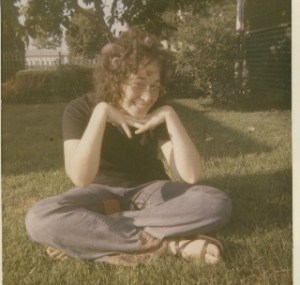
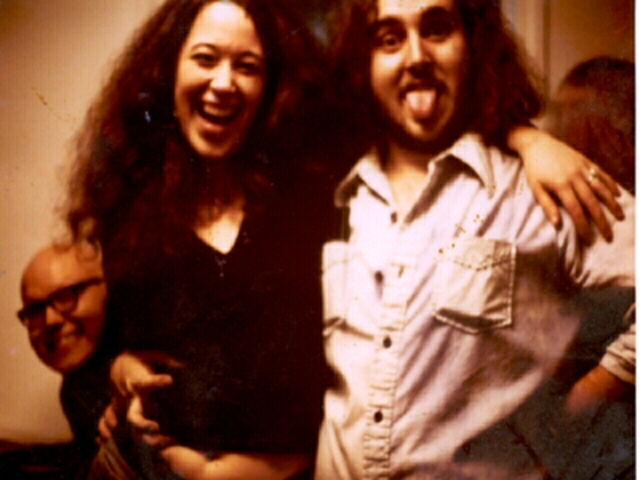
What happened to the 16 year old? What happened to the 20 year old? They are still here but the package has changed, the ribbons are torn and frayed and the wrapping paper yellowed and weakened in spots.

I see these old photos and am reminded that I almost died at my own hand when I was 16. I never thought I would live to be at the party where my friend grabbed me with gusto around the waist. I could have left this earth a long time ago in more ways than one. I tried my damnedest for years to do just that. But I am still here, those girls are still around somewhere inside my head.

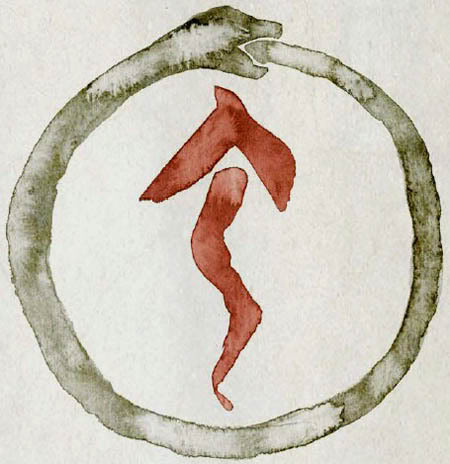
Those photos are also a reminder of the me I lost but found again once I got back on the yoga path. Life is a circle.


“The Ouroboros often represents self-reflexivity or cyclicality, especially in the sense of something constantly re-creating itself, the eternal return, and other things perceived as cycles that begin anew as soon as they end. It can also represent the idea of primordial unity related to something existing in or persisting from the beginning with such force or qualities it cannot be extinguished.”

The photos bring home the truth of the Five Remembrances and the truth of impermanence and they remind me to THINK. Birthdays are contemplations on what I would like to plant in this final season of my life.

What will it be?

What do I plan to do with this one wild and precious life?

2. I am of the nature to have ill health. There is no way to escape ill health.

Every day I wake up with pain. My freaky femurs that Paul Grilley uses as examples of extreme internal hip rotation are beginning to ache. My hair is thinning and I can see my scalp. My eyes have the beginnings of cataracts. But I thank the Universe for my physical yoga practice because without it I probably could barely move.

I thank the Universe for my yoga and meditation practice that allows me to know the truth of Buddha’s Fourth Foundation of Mindfulness: mindfulness of the dharma, of the true nature of reality that nothing is permanent, that each moment is constantly changing. Asana practice offers a great window into impermanence because our practice changes every time we step on the mat, from day to day, moment to moment. Is your practice changing as you change? And if not, why not? Get real.

3. I am of the nature to die. There is no way to escape death.

4. All that is dear to me and everyone I love are of the nature to change. There is no way to escape being separated from them.

These remembrances are the hardest lessons to learn. Thoughts of death of those near and dear to us and of our own death strike the most fear in our hearts. It is said that our only fear is the fear of death, all our other fears arise from that primal one.

We know things change but we put so much effort and energy into trying to live life as if that were not so. This is what Patanjali wrote about in chapter 2 of the Yoga Sutra-s: he described the qualities necessary to change the mind effectively and gradually from a state of distraction to one of attention, one of the qualities being avidya which is literally “not seeing.” This willful denial of reality, this willful not seeing the truth of impermanence perpetuates our suffering and misery. We so want things to never change – our hair, our skin, our supple spines, the people in our lives – that clinging to things that are by their very nature impermanent causes our suffering.

The suffering of change is what gives us the most gut wrenching pain in our lives. It is not our physical pain, but the pain of pain.

But when this truth of reality sunk deep into my bones it was liberation. I am not responsible for anyone’s happiness, I am only responsible for my own. No one is responsible for my happiness, I am only responsible for my own.

It’s a law of physics that energy can neither be created nor destroyed. We are energy bodies, filled with chi, prana, Life Force, whatever you want to call it. This body is merely the vessel that will eventually crack open and fall apart like an old terracotta pot. But the essence of me will live on. What is born dies but what is never born can never die. We truly are billion year old carbon.

We shall not cease from exploration.
And the end of all our exploring
Will be to arrive where we started
And know the place for the first time.
-T.S. Eliot

5. My actions are my only true belongings. I cannot escape the consequences of my actions. My actions are the ground upon which I stand.

Like everyone else, my life is composed of losses and gains. My losses have been due to neglect, poor judgment, ego, recklessness, selfishness. My gains have been through hard work, grit, determination, and intuition. Other gains have simply come through the blessings of the Universe. Karma. I’ve been graced with a fortunate birth despite going through things back in the day that would have killed a weaker person. I should never have become this old. The cards were stacked against me. Or were they? I truly am a survivor.

The Five Remembrances keep me awake to the human condition. My spirituality has brought me closer to Spirit, have helped open a heart that was closed for so long, and has taught me to have gratitude for whatever comes my way. My dharma wheel is turning and it tells me to embrace the inevitability of life’s changes.

Life is a constant series of movements that change from one form to another — just like asanas. I have reached a deep sentient awareness that nothing is truly lost in the end. We meet who we are meant to meet in this life and people come and go and return again in a constant dance and flow — like a vinyasa. We meet ourselves and each other over and over again in this spanda until we find our way home.

What will you do with your one wild and precious life?

the fundies are everywhere

Yes, even in the yoga and meditation worlds.

After my last post about not being allowed to attend a vipassana retreat in the strict Goenka style, one of my long-time readers and supporters, Kevin, sent me this email. I loved what he had to say and he gave me permission to to reprint it.

“I was sorry to hear about your recent encounter with Goenka fundamentalist fervor. I appreciate the fact that that community provides retreats all over the world on a dana basis, but Goenka-ji’s virulent fundamentalism and complete misunderstanding of the history of Buddhism generally and Theravada in particular make him about as good an ambassador and spokesperson for Buddhism as Jerry Falwell is for Christianity (I’m not exaggerating).

As an Indian who “found religion” in Burma he has the fervor only converts can have, and he’s certainly expressed his contempt for Hinduism, yoga of any sort and all other forms of Buddhism many times. It’s clear much of his defensiveness come from the fact that he clearly knows at some level that the particular form of Buddhism he practices and teaches was invented out of whole cloth less than 100 years ago, and has nothing to do with the way meditation is taught in the broader Theravada tradition, let alone the Tibetan or Zen traditions.

The thing is, there is no such thing in the suttas as “vipassana” meditation. Vipassana is insight that arises out of calm abiding (samatha/shamatha) meditation – i.e. anapanasati, or mindfulness of breathing. “Mindfulness” or sati means one thing only: keeping the attention focused on the object of meditation. The superb and well-regarded teacher Thanissaro Bhikku defines this very clearly in the article I’ve attached (from Insight Journal).

Now what’s taught at Spirit Rock is a hybrid of Burmese-style instructions coming from Mahasi Sayadaw and his successors (with Goenka being an offshoot of that) and the Thai forest tradition as represented by Ajahn Chah, which teaches and practices samatha and vipassana the way it is presented in the suttas. The Tibetan tradition preserves the original progression as well: you learn calm abiding (shamatha) and do that for a long time, until the mind is stabilized enough for vipashyana (with Dzogchen and Mahamudra being the ultimate such practices).

The Burmese aberration happened because meditation practice altogether had been lost in Burma by the middle half of the 20th century. The whole tradition had become completely scholastic. The philosophical perspective and techniques they came up with are based on the abhidhamma, with its theory of mind-moments, and in particular on the Visuddhimagga. To put it another way, what Goenka presents as the definitive and original teachings of the Buddha is a lineage-less aberration invented out of whole cloth by scholars who at least had the good sense they needed to learn hot to meditate.

Jack Kornfield goes into huge challenges they had trying to integrate contradictory teachings in his recent article on the history of Spirit Rock, which I’ve also attached.

As someone who really loves the Theravada tradition but who came to it after years of practicing in the Tibetan tradition it kind of drove me crazy to see the total lack of clarity about what is and isn’t mindfulness and how concentration practice differs from insight. I finally got to the root of the problem when I read the fantastic book A History of Mindfulness: How Insight bested Concentration by Sujato Bhikku (who, intellect-wise, is the Ken Wilber of Theravada Buddhism). I think anyone who teaches dharma should be required to read this book, which can be downloaded here:

http://sites.google.com/site/santipada/bhantesujato%27swork#books

The fact that Goenka’s clueless staff person said you can’t practice mindfulness on one of their “vipassana” retreats just floors me. What a bunch of Moonies! Well, it’s their huge loss since you are knee-deep in the middle of the transformative yoga and meditation practice that the Buddha himself lived.”

After his email I told Kevin that I just love it all. I am “officially” Buddhist since I’ve taken both the Five and the Eight Precepts in ceremonies, but I love Kali Ma. The shakti blasts that hit me in certain temples in India are too much for me to ignore. I am not going to choose ONLY ONE WAY, I don’t see why I should. It’s all good in my book. I’ve been in the Dalai Lama’s as well as Gelek Rimpoche’s teachings which are Mahayana Buddhism and I study with a Sri Lankan Theravadan Buddhist monk, but sometimes when I sit Kali’s mantra reverberates loudly inside. I certainly don’t feel “confused” as was implied by the vipassana fundie. I feel peace.

“The winds of grace are always blowing, but you have to raise the sail.” — Ramakrishna

This was Kevin’s response:

Alan Wallace…has become my favorite meditation teacher over the past few years. In person I find him even clearer than Tibetan teachers I love such as Tsoknyi Rinpoche, Chokyi Nyima Rinpoche and others. One really cool thing about Alan is during his 14 years as a monk he not only did Goenka retreats but also studied with a Sri Lankan master for the better part of a year, doing classic breath meditation the way the Buddha taught. There’s a fantastic contemporary teacher names Leigh Brasington (great web site too: http://www.leighb.com/) who specializes in teaching samatha and jhana in the old way, and he is the dharma heir to the wonderful Ayya Khemma, who also got all her training in Sri Lanka. My point is in connecting with your Sri Lankan teacher – and of course Bhante Gunaratana is another great example – you are connecting with the oldest strains of Theravada there are, unadulterated for the most part with the stuff they came up with in Burma in the 1950’s (though there are Goenka and Mahasi places even in Sri Lanka now).

I’m with you 100% on being open to anything that liberates. Yes I am a Buddhist, but to me that means (as I say when I do the refuge every day) “I take refuge in the teachings and practices that lead to lasting freedom and happiness.”

Patanjali, Sri Krishnamacharya and his successors, Shankaracharya and Ramani Maharishi, Sri Nisardatta Maharaj and countless liberated beings from various traditions throughout the motherland of India are just as much a part of that refuge for me as Lord Buddha – and I don’t think he would have wanted it any other way.”

Neither do I.

(correction: Goenka-ji was born in Burma to Indian (and Hindu) parents. The comment about the fervor of converts still applies.)

from sadhus to zebras, part 2

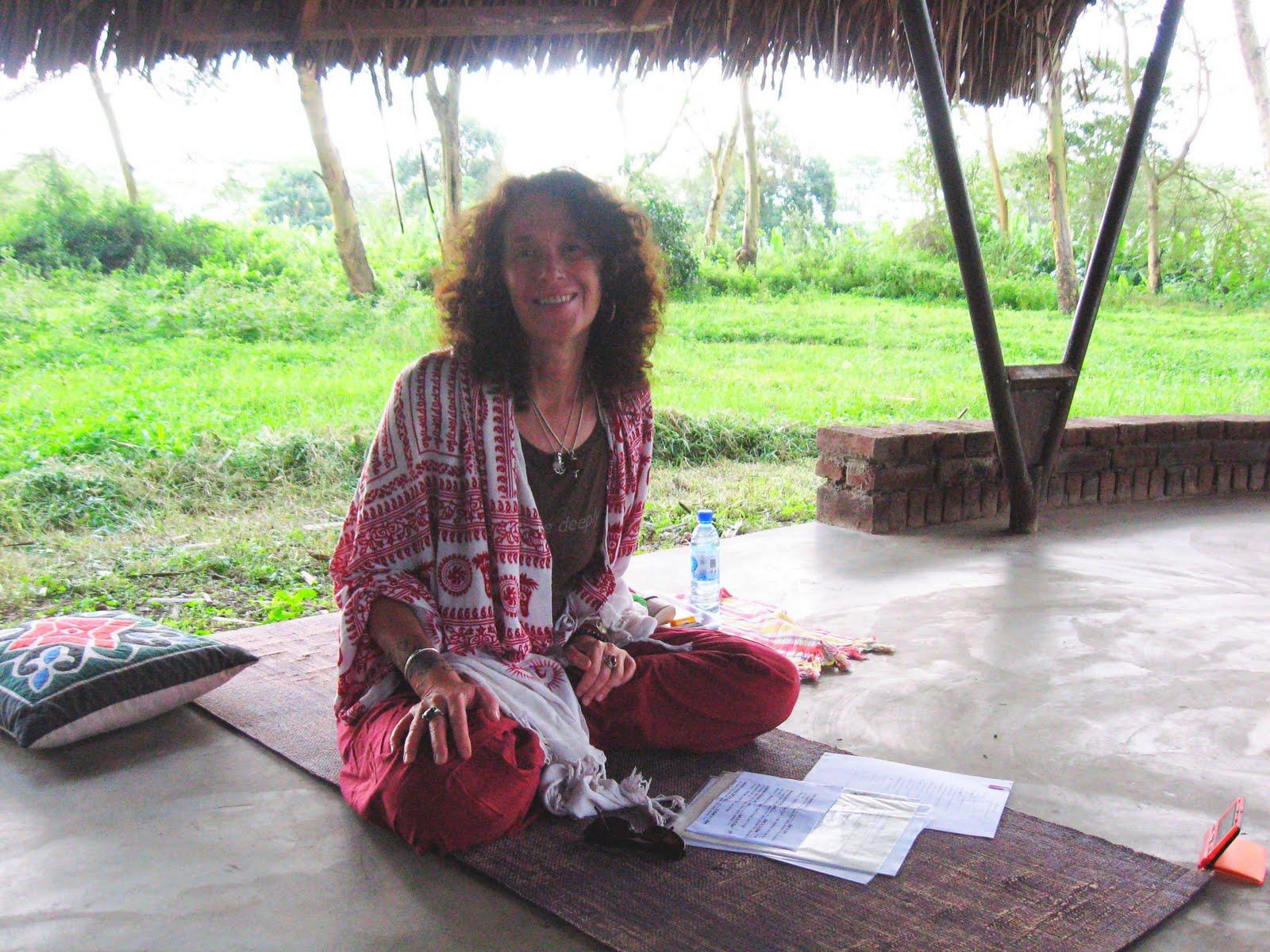
After spending five nights on Zanzibar — no internet, no phones, just lots of sun and beach and alone time and daily power cuts and one day of the Zanzibar version of Delhi Belly — I flew to Arusha via Dar es Salaam to lead my yin-yang yoga retreat.

Years ago an akashic record reader told me that something so potent would occur during one of my trips to India (this was before the Kumbh Mela was even a thought in my mind) that I would have to go a “green place with palm trees” in order to recoup. Yep, that happened. Everything that spiritual adepts told me would happen, did happen on this trip.

I have to say that if I hear anyone whine about how terrible airport security and the TSA are in American airports, they are getting one tight slap (and if you know old Bollywood movies you know what that is.) AMERICANS HAVE NOTHING TO COMPLAIN ABOUT REGARDING AIRPORT SECURITY, so get over it, keep your mouths shut, and get on the planes. Until you’ve flown through African airports, you have nothing to say. For one thing, you are x-rayed twice, once going into the airport and again before your gate. If you are lucky, you won’t get your carry-on searched. In detail. So shut up.

I spent two days chillaxin’ at my friend Pat’s house before we left for her friend’s property where I was to teach. The retreat started on a Friday night, but Pat asked me to guest teach her class the night before. I taught the class by candlelight and flashlight because the electricity AND the lodge’s generator went out. I just went with the flow and it was a great experience! During savasana I chased inch-long black ants away from one student who had baggy shorts on — didn’t want one of those humongous ants crawling up his shorts and biting his asana or worse!

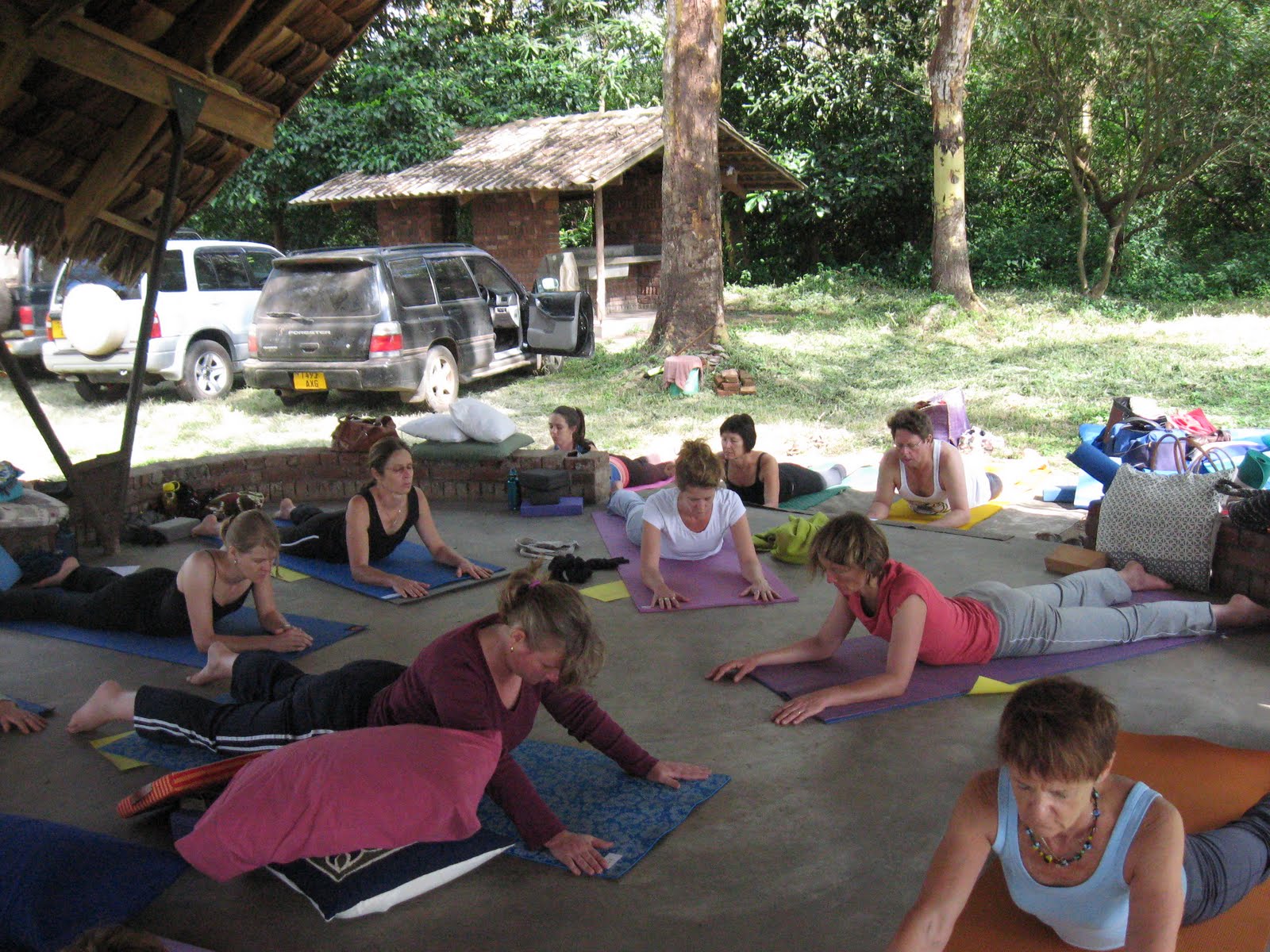
I was blessed that the weekend was a screaming success. I did two dharma talks and four yoga sessions and each one was filled with 17-20 people each. Not too shabby for my first global teaching experience.

Of course the energy was very different — different students, different cultures, a different country. There were a few Americans, but most were British and Dutch ex-pats with varying degrees of yoga experience, however, many did not have a consistent meditation practice. That’s where I tweaked them.

My first talk on Friday night was “Introduction to Mindfulness Meditation” and I felt like crap. After all my traveling I had finally hit the wall and my stomach had started bothering me again. All I wanted to do was sleep and this was only 7 at night. It was also obvious to me that these yoga students were not accustomed to sitting and listening. One woman was trouble — if you teach long enough you can figure out in a heartbeat who’s going to be a challenge as soon as they open their mouth. Pat even got upset about how rude this woman was and how fidgety the students were. I let it all wash over me. Everything is temporary.

I wouldn’t exactly call this woman rude but I could tell she had some type of anger and control issues. She asked questions not to learn more but to challenge me and then she eventually walked out on the Friday night talk. Her husband came with her for the yoga sessions and the funny thing was, he was the exact opposite of her — he was funny, kind, and self-deprecating. As it turned out, by the end of the weekend she had softened up a bit. I had directed some of my dharma talks on JUDGMENT to her during the yin sessions. She ended up thanking me for the weekend and wrote down the name of the book I had read from. Everything is a teaching, even for the teacher.

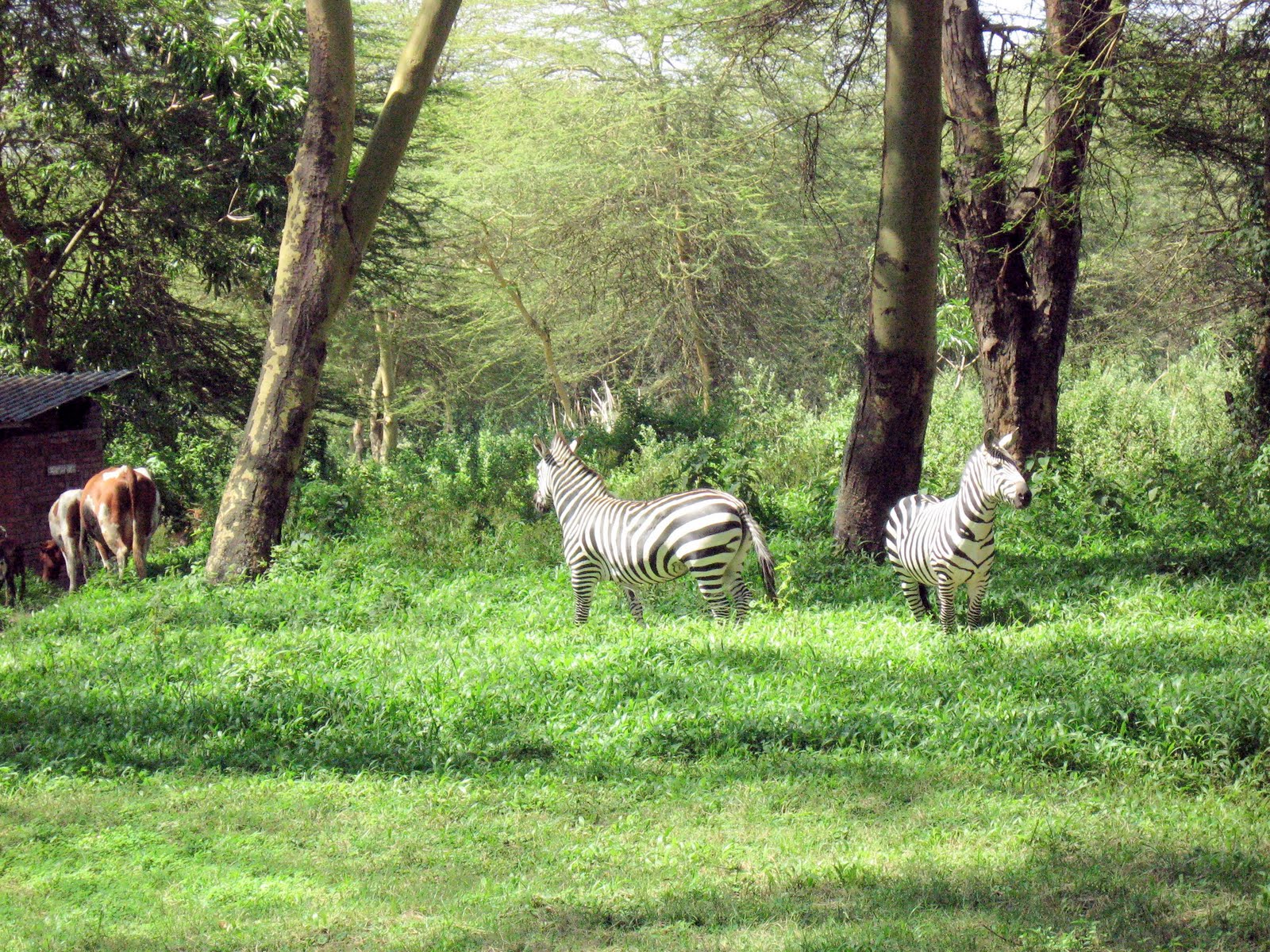
The morning sessions were yin yoga plus vinyasa and the afternoons were all yin yoga. All sessions included mindfulness meditation. During the first session on Saturday a most wondrous and serendipitous thing happened: zebras walked through the retreat. I was teaching the vinyasa portion and I saw the zebras and stopped everything. I pulled out my camera and said that I had to take a picture because no one back home would believe it. Teaching here just isn’t the same, believe me!

I could tell that few had experience with mindfulness meditation, so I thought I would take them out of their comfort zone. After the first session on the first day, I told them that since the weekend started out with a talk on mindfulness, I wanted them to keep mauna between the sessions and if they could not do that, then at least practice mindfulness as much as they could. I gave them examples such as keeping their voices low, deeply listening to someone, not interrupting when someone was talking to them, and mindfully chewing their lunch.

Some looked shocked but they tried it. Most were into it, but I saw a few reading books and texting at the same time. I tried the mindfulness experiment on the second day between sessions, but many blew it off. The funny thing was that on the second day those who weren’t into the meditation part did not even try to hide it.

I would have them sit for about 20 minutes at the end of each session. Eventually I would open my eyes a bit and I saw people with their eyes wide open big as day, looking around, adjusting their clothes, scratching an itch, or picking their feet. It’s always the feet-pickers who get me (and you know who you are.) Hey, if you’re not even going to try to sit in stillness, then sit quietly with your eyes closed and stop squirming around like some two year old kid with ADHD.

At one point I also had them do a 30 minute walking meditation which had profound impacts on some people. The majority had never done walking meditation before and they liked it. Probably because they weren’t sitting still!

I loved teaching to a totally different group of people. Even though they were westerners, they were still different compared to American yoga students, at least my students back home (mine are much more mindful!)

I must say that after being in Arusha I can see why people there are fidgety and easily distracted. While the area outside the city is a wonderland of indescribable beauty, the energy I felt in Nairobi and Arusha was one of underlying violence waiting to happen. I couldn’t shake it. Some people told me that they felt Kenya will be the next country with a genocide, it’s just a matter of time.

The fact of the matter is that all these westerners, even if they have lived in Tanzania for 20 years, could be kicked out if the government decides they no longer want non-Tanzanians in the country. I saw buildings with huge red Xs on them. Pat told me if the Arusha city government decides it wants to widen a street, your building will be Xed and knocked down at a moment’s notice with everything inside. You can come home from work one day and no longer have a home. One of the students ran a restaurant and his building was knocked down just a few weeks before. Poof, gone.

Pat will soon move to a town outside of Durban, South Africa. Her and her husband have lived in Arusha for 15 years, but she told me that it has never felt like home. Pat will build her own yoga shala somewhere on their land so she can teach and she has asked me to come back and do another retreat. Who knows? Maybe next year. I know there is at least one yogi in Durban because someone from there did a search for “Mark Whitwell” and found this blog!

We went on a 48 hour safari after the retreat. On the second day we went to Ngorongoro Crater, the place where humankind took its first steps. When you are witnessing the beginnings of the wildebeast migration, an event that has been going on for thousands of years, and all you can hear are the animals, the wind, and your breath, it does something to you on a primal level. I was told I would die in India and be reborn in Africa. I now know what that meant.

I don’t think Africa will ever be my India, but with an open heart I look forward to returning. I am very grateful for having this opportunity that was set in motion five years ago. Hari om.

“We are stardust, we are golden,
We are billion year old carbon,
And we got to get ourselves back to the garden.

Well, then can I roam beside you?
I have come to lose the smog,
And I feel myself a cog in somethin’ turning.
And maybe it’s the time of year,
Yes and maybe it’s the time of man.
And I don’t know who I am,
But life is for learning…”