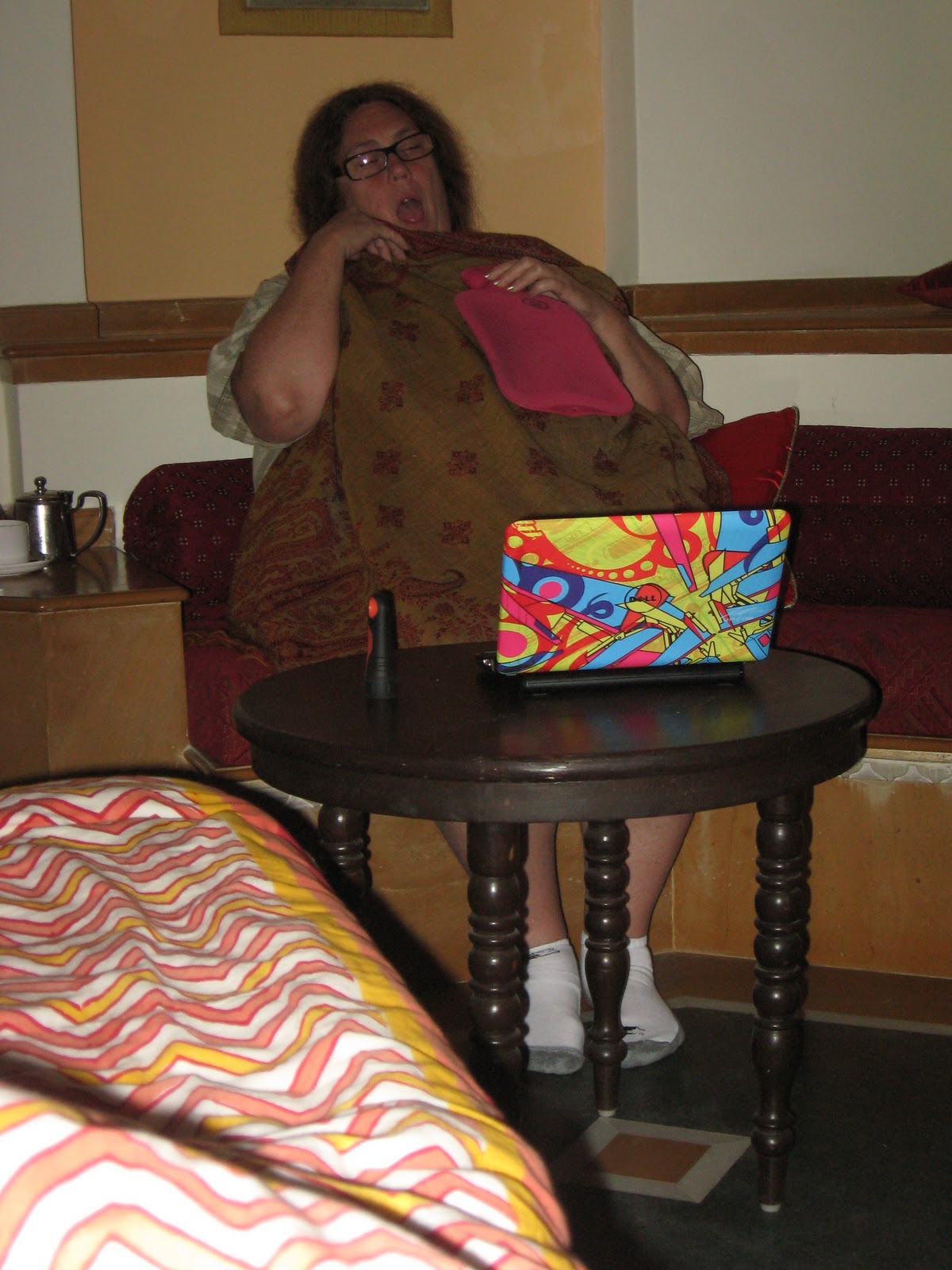
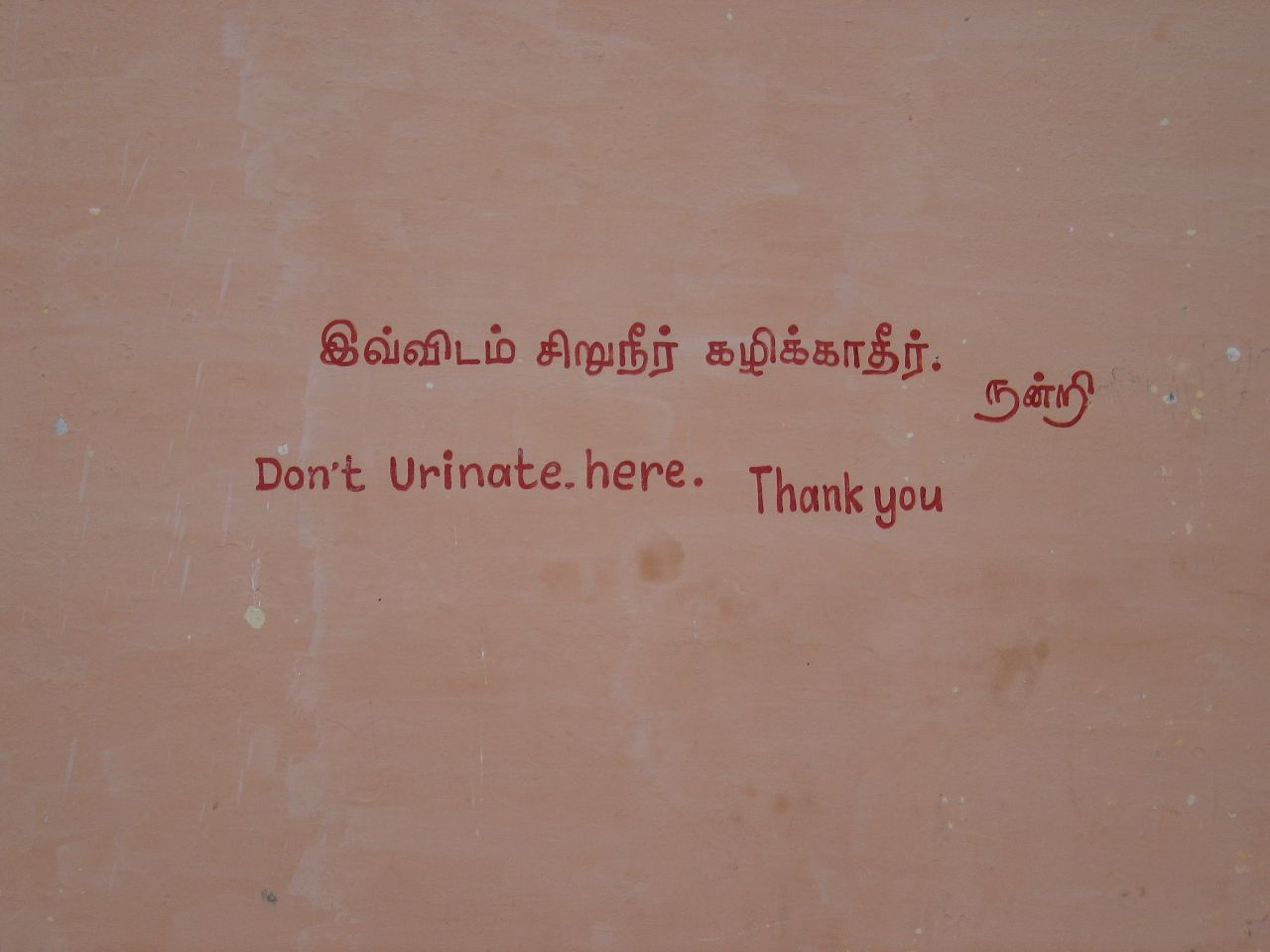
my Eat Pray Love Tour of India

“Eat. Pray. Fall in Love with [our] Inspirational India Tour.
Starts at $19,795 per person, based on double occupancy.”

I have an idea. I’ve done four trips to India so who better to lead you to the land of yoga, spirituality, and chillums incense?

extra rupees for medicinal plants

Have you always dreamed of traveling to exotic India?

a lot of incense needed here

“I Loved indian movies from age 5. Finally at the age of 35 i funally went to india (had a dream from early childhood)…To say I was deeply disappointed is to say NOTHIN I was in SHOCK!….”

shock

“……It is such a pity that indian movies have NOTHING to do at all with real life… I wish India was a little close to the image you see in movies.”

Well, I have your enlightenment right here. Pay me $20,000 and I will take you to lands like you’ve never dreamed of….THE REAL INDIA!

Extra charge for animal costumes.

addthis_pub = ‘yogagal60510’;

in review, the personal is still political

original upload by BAM’s Blog

Unless you’ve been in yoga nidra for a week, then you know that Judith Lasater’s letter to Yoga Journal about how she felt about nudity in yoga advertising set the yoga blogosphere on fire. In case you missed her letter, here it is:

“Yoga Journal was born in my living room in Berkeley in 1975, where I was one of five yoga practitioner-teachers who gathered to create the magazine. I have loved the magazine ever since. But I’m concerned about ads that have stimulated both confusion and sadness in me about where the magazine is now and where it is headed.

I am confused because I do not understand how photos of naked or half-naked women are connected with the sale of practice products for asana, an important part of yoga. These pictures do not teach the viewer about yoga practice or themselves. They aren’t even about the celebration of the beauty of the human body or the beauty of the poses, which I support. These ads are just about selling a product. This approach is something I though belonged (unfortunately) to the larger culture, but not in Yoga Journal.

Finally, I feel sad because it seems that Yoga Journal has become just another voice for the status quo and not for elevating us to the higher values of yoga: spiritual integration, compassion and selfless service. My request is that Yoga Journal doesn’t run ads with photos that exploit the sexuality of young women in order to sell products or more magazines. Thank you for your attention and willingness to hear another point of view.

Judith Hanson Lasater
San Francisco, CA”

The comments both pro and con about Lasater’s letter flew fast and furious in Roseanne’s blog (cited above) and in elephant journal. There was overwhelming support for Lasater on her Facebook page where she said that it was not her intention to harm Yoga Journal: “It is my intention to open the dialogue and be clear about what my values are.”

Indeed she did.

Both Brooks Hall and Carol Horton wrote eloquently about the maelstrom. But Nikki Chau said on her Facebook page that Lasater’s letter to Yoga Journal “was *not* about the Toesox ads with Kathryn Budig.”

Whew. And now it’s my turn.

Brooks said that how we react to seeing nudity is personal. Of course it is, and to that I say, the personal is political. I am not a feminist scholar but I am a feminist, a word that many women nowadays shy away from.

“The personal is political” was a mantra of the ’70s feminist movement. The saying comes directly from an essay written by radical feminist Carol Hanisch in 1969, and was a way to convey to women who were suffering in silence that their individual experiences were, in fact, instances of cultural sexism.

The sentence indicates that many of our personal problems, and specifically women’s personal problems throughout history, have been political — sometimes created by, definitely supported by, and ultimately addressed by politics. In this case, the politics of advertising.

“Sex, Lies, and Advertising,” was an article written by Gloria Steinem for Ms. Magazine in 1990. She discussed the aspects of feminism and how advertising venues such as magazines use women to sell products. Advertisers have been using women to sell products since the late 1800’s, but according to Steinem, using women became the natural way to advertise and sell products, but is it right to do so?

Advertisers use women to sell anything and everything. Madison Avenue knows that beautiful women are the tools that draw in consumers to buy the products that they supposedly need and ultimately want to buy. That’s Advertising 101. Using a naked woman in yoga product advertising is no different from a using a naked woman to sell a car. Just because it’s yoga, that makes the ad more “artistic”? A naked body is a naked body whether it’s used to sell a yoga mat or tires. Why are some in denial that in the advertising game a naked body = sex or at least sexiness? Advertising is about selling fantasy. At least the ads for porn are honest, they know what they are selling.

So whether or not Lasater was writing about the ToeSox ad in particular doesn’t matter. What would the reaction be if a naked male yogi was only wearing socks? The fact is that a naked man would never be used to sell those socks. Ever.

That’s the whole point.

I have no idea who Kathryn Budig is and I am sure no one forced her to take off her clothes. She probably was paid good money to pose naked and ToeSox probably sold a lot of socks. She has the right to take off her clothes for commercial purposes and ToeSox has the right to make a profit.

But I can tell you that every time I saw her ad in Yoga Journal I rolled my eyes and said “again?” The ad does not make me want to run out to buy something I don’t need and it does not make me aspire to be her as some commenters at elephant journal have suggested.

So when I read Lasater’s letter I yelled “right on” just like I did when I marched for women’s rights back in the day. Then I started reading the comments directed toward Lasater’s supporters and that’s when the personal once again became political for me.

Not to get into my life story, but I’m no prude. I’m not an anti-pornography feminist like Andrea Dworkin was and I’ve sat naked in the communal hot tubs of Esalen. But what was more offensive to me than seeing a naked woman used to sell a yoga product YET AGAIN, were the comments that if we disagree with ads using nudity, then we must:

1. hate nudity;
2. hate the female form;
3. hate sex
4. have a problem with our own sexuality;
5. be repressed;
6. be close minded
7. etc., etc. etc.

From elephant journal, posting its Facebook comments:

“In my opinion “it takes one to know one” and if anyone sees anything perverse about a girl with no clothes on, then the perversion is in their head in the first place….I would hazard a guess that the Ladies…probably wish deep down that they could be in that pic as well!”

[this guy doesn’t even know how sexist that statement is — so much for sensitive yoga guys.]

“Those offended may need to seriously consider gaining a deeper relationship with that oNe in the mirror there.”

we all need to get a little more comfortable with sex and the nude body (our own or otherwise)”

“It’s sad when our culture looks at beautiful photos like these and automatically switches into auto pilot and think – SEX. Are we really that much out of tune with our bodies and self.”

One female commenter told me that my “tone is full of rage not compassion. Relax. It’s an ad. 30 seconds from now another will take its place and it will be forgotten.”

Yes, and that’s the problem.

As for the armchair diagnosis of “rage”….what?  Say again? I’m getting a flashback of being told that we were a bunch of angry bitches.  I’m waiting for the “and you all need to get laid” comment.

My oh my….the more things change, the more they stay the same. Still. Even after almost 40 years.

To those comments I say: BULLSHIT.

I’m not as eloquent a writer as Judith Lasater, but I cut to the chase.

Those are the same types of comments I heard as a young feminist back in the early ’70s…that just because one is offended by a naked woman selling cars, perfume, clothes, or yoga crap that we don’t need, there must be something “wrong” with our outlook, there is something “wrong” with us. We were patted on the head with the comment “lighten up, honey, it’s no big deal.”

Yes, it IS a big deal in the larger context.

The larger context is not that nudity is used to sell a yoga product (and a half-naked woman is used in the latest issue to sell a Yoga Journal conference) — the problem is that naked women are STILL used to sell everything. As Cyndi Lee said at Roseanne’s blog: “It is NEVER okay to use women’s bodies to sell ANYTHING EVER. Not in Yoga Journal or any other medium. If you don’t get this, then learn about the awful things that are being done to women all over the world right now because people view them as objects.”

Lasater’s letter started a powerful discussion on the commodification and values implicit in yoga ads. What is interesting to me is how so many of the commenters on elephant journal and Facebook got caught up in the nudity issue and thereby missed the essential point: that Lasater’s letter was a question on “where the magazine is now and where it is headed.” If she attacked anything, it was the status quo. To those people who can’t see that, I say take off your blinders.

We’ve become blind to the use of women’s bodies in advertising, whether it is “artistic” or not, and our blindness is avidya, i.e., “not seeing.” Yoga is supposed to be the means by which our blinders are removed so that we can awaken from our avidya.

As Gloria Steinem asked in 1990, can’t we do better than this?

Anne Cushman asked the same question in 2003 with her article in the Shambhala Sun, “Yoga Chic and the First Noble Truth.” Anne says that yoga and meditation are ultimately about turning our eyes away from the airbrushed images of the outside world and looking deep within our own hearts.

“It’s not that there’s anything wrong with these yoga pin ups, in and of themselves…The problem comes when we start to compare ourselves with these glossy images and imagine how utterly happy and fulfilled we would be if we looked like that….


So lately, I’m looking for a different kind of image to inspire my practice. The book I’m shopping for would show pictures of all sorts of people doing yoga and meditating. There would be old people, fat people, scarred people, profusely hairy people, people with bad skin and big noses, people with thighs riddled with cellulite, people with droopy breasts and flabby thighs and faces etched with lines from hard living. There would be people with cerebral palsy, people gone bald from chemotherapy, people paralyzed by drive-by shootings, people who’d lost limbs in wars. Some people would do the poses perfectly. Others would do them clumsily, propped up on sandbags and bolsters, unable even to touch their fingertips to the floor.


All of us would be reflected in this book’s pages.”

Why are we satisfied with the status quo?

For me, yoga is a vehicle for transformation and that value is lost when we settle for the old, stale paradigms repackaged as “progressive” or “enlightened.”

In an effort to market their cigarettes to women in the late 1960s Virginia Slims used the ad slogan “you’ve come a long way, baby.”

Have we?

guest blogger Barry Wadsworth on "Yoga as Mindfulness Practice – A Buddhist Perspective"

Many of you know that my yoga practice is informed by Buddhism. I am unable to treat my physical yoga practice as anything other than a moving meditation or mindfulness practice. I have studied the buddhadharma for so long with various teachers in both the Mahayana and Theravada traditions that I think it’s ingrained in my DNA by now! Yoga is my meditation and vice versa. In some of my workshops I’ve started to incorporate dharma talks on Buddha’s Four Foundations of Mindfulness as they apply to the physical yoga practice.

Most yoga teacher trainings (at least the ones with which I am familiar) do not speak much of Buddhism (even though Buddha was most definitely a yogi) which is why I was so glad I found the first Mindfulness Yoga and Meditation Training at Spirit Rock in California. It was finally a training that spoke to my entirety and I am blessed to have been part of the first training with such wonderful teachers in both classical yoga and Western Buddhism.

I see no conflict with my Buddhism and my traditional yoga training in India at the Krishnamacharya Yoga Mandiram and with Srivatsa Ramaswami. It’s all good and each enhance the other as far as I am concerned.

Vinyasa krama is what I have studied with Ramaswamiji since 2004 and it is the yoga style that I primarily use for my own practice (combined with yin yoga) and with private clients. According to Ramaswamiji, vinyasa krama yoga is an ancient practice of physical and spiritual development, and is a systematic method of practicing and adapting yoga for the individual. Krama is a Sanskrit word meaning “stages.” It is a step-by-step process involving the building in gradual stages toward a “peak” within a practice session. This progression can include asanas of increasing complexity or gradually building one’s breath capacity. In his book The Complete Book of Vinyasa Yoga, Ramaswamiji says that “by integrating the functions of mind, body, and breath. . .a practitioner will experience the real joy of yoga practice. . .Vinyasa krama yoga strictly follows the most complete definition of classical yoga.”

So I was glad to “meet” Barry Wadsworth when he made me an administrator of the Vinyasa Krama group on Facebook. He has just completed Ramaswamiji’s 200 hour vinyasa krama teacher training and is also Buddhist so we had a lot to talk about. Our Facebook conversation about yoga and Buddhism morphed into his writing here…enjoy!

For those of you who would like to explore classical yoga with a true yoga master who studied with Krishnamacharya for over 30 years, Ramaswamiji will be teaching in Chicago during September.

**********

“For Buddhists, the practice of yoga asanas as a method of mindfulness practice is especially meaningful. Although some traditional yoga teachers emphasize mindfulness of breathing in synchronization with the breath, the Buddhist context of using bare attention to penetrate the moment as a means to realization is not as emphasized or is missing. During Chan and Vipassana practice, especially on retreats, slowing down all activity to the point that you can peer into its very nature is essential and can lead to a very direct experience of impermanence and self-nature. This understanding and emphasis coupled with the practice of yoga asanas is particularly useful.

In the Yoga Sutras, there is the concept of uninterrupted, moment-to-moment one pointedness or focus. But the goal there is not realization of self-nature in the Buddhist sense, but realization of individual self (atman) as distinct from the citta vrittis. Of course, this is where Buddhism departs, with an emphasis on there not being an independently existing person, self, or soul.

Practicing yoga has been a kind of experiment for me. Can a practicing Buddhist practice yoga in such a way that the fundamental truths of Buddhism, suffering, impermanence, and no self (anatma), are not distorted or lost? I think the answer is definitely yes, but it requires a clear understanding of the differences in addition to the similarities of the two traditions. Otherwise, it becomes a confusing melting pot that doesn’t do justice to either tradition. For me, the goal is not Patanjali’s dualistic realization of individual self as distinct from phenomena and Universal Self (Purusha of Isvara). It’s also not Shankara’s non-dualistic realization that self is Brahman. Rather, it’s the complete liberation from attachment to any notion of self. Once self is removed from the picture, perception is pure and everything is seen just as it is. This is true, unimpeded and boundless liberation. When the experience of self is lost, perception pivots on itself and myriad things sing in harmony with all other things, infinitely correlated, perfect and complete. Any clinging to “self” collapses this perfect harmony, the natural state of things, to self and other, internal and external, interesting and uninteresting, good and bad, mine and not mine.

One might say that one who experiences “aham Brahmasmi” (I am Brahman) also experiences this same non-dualistic reality and is not impeded by attachment or aversion to anything since everything is experienced as Self. Yet Buddha’s awakening specifically had the characteristic of going beyond an eternal notion of self, even Universal Self, as the highest enlightenment. According to Buddhist sutras, as long as there is any identification with self, one is still trapped in the cycle of birth and death and not completely liberated. The wisdom of knowing the truths of suffering, impermanence, and no self engenders compassion for all sentient beings and frees one to act completely for the benefit of others, without regard to self. I’ve seen this selflessness in my Shifu, Chan Master Sheng Yen and in my Vipassana master, Ven. Chanmyay Sayadaw. They both have the quality of being completely present and available, fully there for you with no distraction, when you talk with them. Your ego could even get puffed up with the feeling that you were the most important person in the world to them at that particular moment. But, they also had the compassionate ability to deflate the ego when the time was right. I’ve noticed the same quality in the Dharma heirs of Master Sheng Yen and some of Chanmyay Sayadaw’s disciples and lay students — fully present, awake and clear, penetrating, insightful, patient, and compassionate. I noticed the same qualities in the Dalai Lama. The world needs more saints like these!

For Buddhists and non-Buddhists, practicing yogasanas with mindfulness can be very beneficial in developing a very direct perception, a bare awareness of space, time, motion and sensation. Deepening this experiences enables the silence of meditation to stabilize in daily activity and bring about moment-to-moment penetrating focus along with awareness unbound by the environment. The union of Buddhist understanding with mindful practice of yogasanas is particularly beneficial. I’m very glad to hear of courses being taught, such as those at Spirit Rock, that have this focus. This is bound to improve the overall landscape of Yoga as it is taught in the West.”

Read more at Barry’s blog Chan Practice.

award time Friday

Guess what, readers! This Ageless Hippie Chick Yogini will NOT be writing about the Yoga Rock Star who shall remain nameless mentioned in the New York Times. Why? Because everything that can possibly be said about it, him, them, has been said, and frankly, because the entire brou-ha-ha bores me. And boredom does not become me.

So this post will be in gratitude to Brooks the Yogic Muse and Svasti. Both of them were gracious enough to list me as one of their favorite yoga bloggers for different yet similar reasons.

From Brooks…

…because she admires and connects with blogs that she sees as “transmitting the beautiful humanity of the writers as they live a most yogic life.”

And from Svasti…

…because she thinks “that most of us who blog (girls and guys) are warriors, because writing involves opening the heart. And my definition of being a warrior includes not being afraid of looking deeply into your own heart, fears, sorrows and all!”

I thank them both, humbly and deeply. Please go to their blogs to read about the other fine yoga bloggers they wrote about. These two mentions mean much more than what I wrote about here.

Visit my blogroll to see all the bloggers who I think are yoga stars.

Let’s all support one another.
addthis_pub = ‘yogagal60510’;

what is tantra?

“Tantra” is a word that gets thrown around a lot in yoga circles. It’s a word that many American yogis have become familiar with via Sting who claims that he can get it on for hours because of tantric sex (see the comments that follow in YogaDork’s post.)

I don’t think there is anyone who has done as great a disservice to tantric yoga as Sting because of his comments. The whole sex thang is about 1% of what tantric yoga is about. Once Sting and tantra were on Oprah you knew it was going to be all downhill after that. IMO, if this culture’s attitude about sex wasn’t so f*cked up in the first place (pun intended), there wouldn’t be all the giggle-snorts with the mere mention of the word “tantra.” (“Oh yeah, you mean THE SEX!!” slobber, slobber…)

Then there is John Friend who is sometimes referred to as “Tantra Lite.” In the NY Times article about him that is burning up the yoga blogosphere it states:

“Friend’s “dharma talks” — short sermons — are based largely on simplified tantric principles (not, he stresses, the ones relating to tantric sex): students learn that they are divine beings, that goodness always lies within, that by opening to God’s will — opening to grace, Friend calls it — ‘you actually become vastly more powerful than the limited person that you usually identify with.'”

What I don’t understand is when people talk about Anusara yoga’s concepts such as “opening to grace”, etc.. I have heard more than a few yoga teachers say that they never heard those concepts before in their trainings and I really have to question that.

Isn’t all yoga about “opening to grace”? Isn’t all yoga about moving beyond our limitations? Isn’t all yoga about opening the heart, surrendering, giving it up to something greater outside ourselves? At least for me it is and always has been. John Friend isn’t the first teacher to talk about such things, he did not invent these concepts, he merely repackaged them for mass consumption.

When I hear a yoga teacher say that they’ve never heard such things before it makes me even more thankful for my non-Anusara inspired teachers and how they taught and what they taught me. I’ve been blessed to have the teachers I’ve had.

Mark Whitwell says, “asana is hatha yoga, the non dual tantra of direct intimacy with Reality that is nothing but nurturing.”

All yoga is nurturing. No one specific brand, no trademarks, just do YOUR YOGA.

So what is tantra? In his book Tantric Yoga and the Wisdom Goddesses, David Frawley writes that “Tantra can best be defined as an energetic approach to the spiritual path, using various techniques including mantra, ritual, pranayama, and meditation. It contains a devotional approach emphasizing the worship of the Goddess and her Lord, Shiva. It contains a way of knowledge, directing us to Self-realization and the realization of the Absolute. As such it is a complex yet integral system for the development of consciousness which has something for all those who are seeking the truth.”

In my training “tantra” was never separate from hatha yoga. The word is a combination of “tanoti” and “trayati”. Tanoti means “to expand, to stretch, to extend” and trayati means “to liberate or free”. Therefore tantra (tan+tra) means to expand one’s experience and awareness of everything, to extend the frontiers of apprehension beyond the material, thereby attaining spiritual knowledge and liberation.

Isn’t that YOGA, no matter what brand name it is?

I learned that “tantra” means “to weave.” Through weaving in certain breath and meditation techniques, we train up our system to become more sensitive to the subtle forces of prana or the vital life force. Through learning to control the prana in yoga you learn to control the mind.

Isn’t that YOGA, no matter who trademarked it?

Taking a deep breath….SO……

What inspired this post was a Facebook discussion that followed the above photo. It is a photo I took at the Kumbh Mela of a baba whose arm has atrophied from his austerity, his extreme tapas. My caption to the photo was “no Tantra Lite at the Mela!” because the sadhus I met at the Mela were the real deal, the down and dirty tantric yogis.

Taking part in the Facebook discussion are Carol, blisschick, and Baba Rampuri, who’s about as real of a yogi deal as you can get.

Talk amongst yourselves and leave a comment if you are inspired…..

##########

“blisschick: and the point of that would be…[i.e., the frozen arm]

Carol: Would actually really like it if someone could explain to me: What is this form of Tantra about, and what if any relationship does it have to anything that we call Tantra in this country?

L-S: these sadhus are devotees of Shiva and the upraised arm is a form of mortification or austerity, it’s tapas. it’s a way of showing extreme detachment from the body, transcending the body. other sadhus might stand day and night,… even while sleeping, or they sit in one place and stay sitting there, till they die.

Baba Rampuri: Wonderful photo! It is Naga Baba Amar Bharti Ji in this photo, he is a Naga Sannyasi, and a very close friend for many years. He is an “Urdhvabahu” meaning “raised arm”, but this is a description not a sect. One of the main things distinguishing traditional yoga from American yoga is austerities, “tapas.” It is a powerful means of obtaining knowledge and power. In one way, it’s an extreme form of focusing will power, almost like saying, “Nothing is going to stop me in my quest! Not pain, not discomfort, not the attraction of the world, not even death! I don’t need food, water, nor even air!” When I make disciples, and some of you know that we have 5 gurus, I always choose Amar Bharti Ji to join me as one of the five.

L-S: Carol, what is tantra in this country? In America, hasn’t the phrase been mutilated, people taking a sensationalist approach encompassing only thinking about “sacred sexuality,” with little reference to its true practice as a path to enlightenment? for me, hatha yoga IS tantra yoga because there is philosophy, meditation, and mantra and other practices. don’t forget there is also Buddhist tantra in the Mahayana tradition.

of course American yogis aren’t going to perform austerities like the Urdhabahu baba (who blessed me with his other hand!), or cover their bodies with ash and sit in cremation grounds to try to transcend their worldly attachment to life.

Baba Rampuri: Carol, these days Tantra means anything you want it to. In the West, it’s normally a marketing tag for something to do with new age sexuality, or at best, new age psychology. In India, at it’s worst, it is thought of as black magic. Yoga, as practiced in the West, has nothing whatsoever to do with Tantra as it is practiced in its high and low forms in India. At it’s best, Tantra is the teaching that Shiva gives to Parvati regarding knowledge and immortality. The practice of this involves the connection of Sacred Speech with Knowledge and the corresponding withdrawal from the illusory perception of the world.

Carol: thank you so much, Linda-Sama & Baba Rampuri! I feel so fortunate to wake up & find so many answers to my question. If you are interested, here is a link to a Yoga Journal article that I think captures how I commonly hear Tantra described in the American yoga community: http://www.yogajournal.com/wisdom/2240.

blisschick: It seems very much to me like a denial of the GIFT of this life. If transcending the body were meant to be a spiritual goal, why are we given bodies at all to begin with? (I know these statements will simply be perceived as me not getting it but I find this bothersome. I choose YES and this seems like a giant NO.)

Baba Rampuri: Christine, you are right, if it is his purpose to transcend his body, which it is not. He is pushing the envelope. He is using an extreme practice to get quick results. He is using his body in a way to acquire knowledge.

L-S: thanks for the clarification….I used the wrong word in “transcending”…yes, we have these bodies to use as vehicles for enlightenment (as the Buddha also taught about the “fathom-long body”), but these austerities (to me) show a non-attachment to the body, i.e., “non-attachment” being different from “transcending.”

Carol, I scanned the YJ article and will read it more deeply later…but as for tantra in the US…I have heard people say that they never heard of the tantric concepts or even the word tantra before they studied with John Friend.

I find that a bit hard to believe. I don’t know about anyone else, but I became familiar with tantric concepts from India from my teachers early in my yoga training. so I agree with Baba when he says that it seems that “tantra” can mean almost anything in American yoga. I also think many of the concepts have to be distilled in a different way for westerners. I mean, I’ve been to studios where the mere picture of Durga or Shiva on the wall makes people uncomfortable…how are they going to handle tantric ideas if a teacher talks about them?

blisschick, to me, tantric yoga is about “sacred body-fearless mind”. Buddha taught that the path to enlightenment is in this body, watching body/breath, watching the feelings/felt senses, watching those mind objects that are our thoughts, and embodying the dharma, the ultimate truth of reality which is impermanence. those are the four foundations of mindfulness, and that is how we can use our body, use the physical asana practice to realize deep truths.”


a classic yoga text…but not the one you think

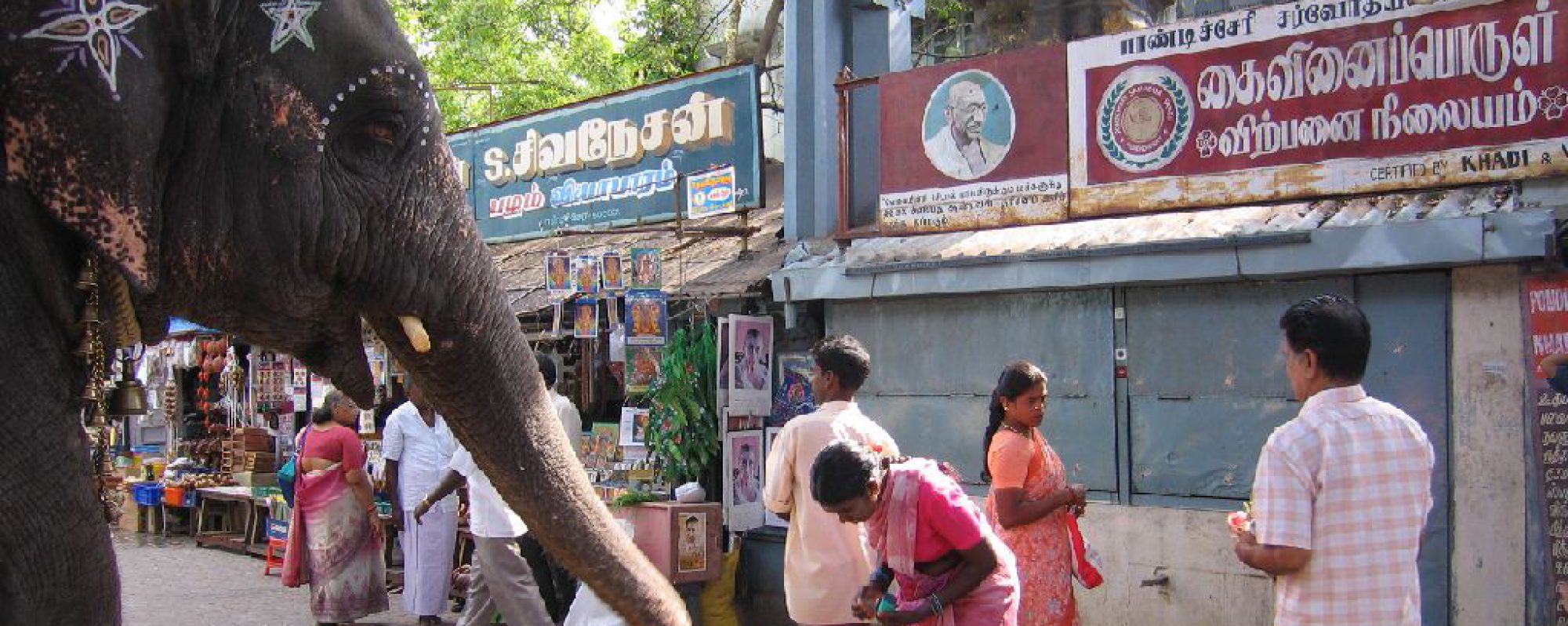
AUM in Tamil

Sanskrit is the language we are all familiar with in yoga classes, but the Indian government declared Tamil an “official classical language” in 2004, the year before they declared Sanskrit to be the same.

As yoga students we are familiar with Patanjali’s Sutra-s, the Bhagavad-Gita, and the Hatha Yoga Pradipika, but how many are familiar with classic yoga texts that are outside the mainstream? How many have you heard about in your teacher trainings?

The history of the Tamil language and its literature is as equally rich as the Sanskrit language and its literature, but unless one travels to south India, it remains unfamiliar to many. I am grateful that my first experience of India was in the south and not the north. I am grateful that my first experience with the heart of yoga was in Tamil Nadu in the Krishnamacharya tradition and not in the ashrams of north India.

So I was glad to see Georg Feuerstein’s review of a classic yoga text that was not written in Sanskrit and is not among the “big three” of classic yoga literature, although Mr. Feuerstein believes it should be right up there with them. It is my humble opinion that if a serious yoga student only sticks with the “mainstream” yoga literature, one will miss out on the vast richness of the yoga tradition.

For example, one of the texts given to us when I first studied at the Krishnamacharya Yoga Mandiram was Nathamuni’s Yoga Rahasya. The Yoga Rahasya is an important text that was lost for many centuries. The revival of this text by Krishnamacharya brings us the teachings of Nathamuni, a 9th century yogi and Vaisnavite saint. Some of the concepts presented in this text include the importance of yoga for women, yoga practices to be done during pregnancy, the adaptation of yoga to suit people in different stages of life, and yoga as a tool in therapy. A 9th century yoga book that contains very modern yoga concepts.

A huge thank you to Brenda Feuerstein for giving me permission to reprint Georg’s review in its entirety.

*******

Tirumūlar`s Tirumandiram: A Tamil Classic on Tantric Kundalinī-Yoga

The Tirumandiram. T. N. Ganapathy, gen. ed. Ten volumes. St. Etienne de Bolton, Quebec: Babaji`s Kriya Yoga and Publications, copublished with Varthamanan Publications, Theyagaraya Nagar, Chennai, India, 2010. 3766 pages. $100.00 USD plus $50.00 S&H 10-volume set.

Review by Georg Feuerstein, Ph.D.

There are at least four Yoga scriptures that should have a place in any library of core Yoga works: Patanjali’s Yoga-Sūtra, the Bhagavad-Gītā, and the ten-chapter edition of the Hatha-Yoga-Pradīpikā of Svātmarāma Yodīndra, which are all composed in Sanskrit. The fourth scripture is Tirumūlar’s Tiru-Mandiram, which is written in Tamil. Until recently, the last-mentioned work was available only in a dubious English rendering, which I was reluctant to recommend to my students.

A dozen or so years ago, I expressed to Marshall Govindan (Satchitananda), president of Babaji’s Kriya Yoga Order of Acharyas, my earnest wish to one day see a competent English translation of the Tiru-Mandiram. I had no idea that my words would find a receptive ear. Govindan wasted no time to raise the necessary funds to assemble a team of Tamil experts to set about translating this text of no fewer than 3,047 recondite verses. After a decade of solid labor, Tirumūlar’s highly encrypted esoteric work was released in English at a gala celebration held in Chennai, India, on January 17, 2010.

I confess I was both awestruck and overjoyed when I unpacked the ten finely printed volumes of the Tiru-Mandiram translation, which came to me as an unexpected gift in a neat cloth-wrapped package from India. Immediately I started to look through all ten volumes and then settled on carefully reading word for word the third tantiram (“book”) of Tirumūlar’s composition, which deals specifically with primary yogic concepts. Being familiar with these teachings from the Sanskrit literature, I readily slipped into the rhythm of Tirumūlar’s poetic/devotional exposition and allowed him to carry my mind toward the lofty regions that seem to have been his spiritual home. Later, I read the remaining eight of nine books of the Tiru-Mandiram in their proper sequence, allowing Tirumūlar’s work to progressively unfold itself for me.

Based on the Tiruppanandal Kāci-t-tirumadam edition, the present translation with commentary, which runs into more than 3,000 pages, also made use of Dr. S. Annamalai’s 1999 critical edition of the text. The present edition of 3,000 copies is complemented by a DVD, which makes the text, translation, and commentary affordable to a larger number of people. As Marshall Govindan explains in his preface, the DVD also honors the Order of Acharyas’ commitment to “Green Yoga.”

What makes this edition singularly attractive is that in addition to a close-to-the-original English translation, Tirumūlar`s text is also reproduced in Tamil and in transliteration. I have personally found it inspiring to recite aloud some of the Tamil quatrains, appreciating their mantric quality and the melodious Tamil language.

In his General Preface, seventy-eight-year-old Prof. T. N. Ganapathy confesses that this massive project made him “stagger at times” and also made him wonder whether he was “attempting the impossible” (p. xix). This undertaking was complicated by the fact that certain traditionalist Shaivites objected to producing a commentary on Tirumūlar’s sacred work, especially in English. Humbly, Prof. Ganapathy, who served as general editor, states that the English commentaries accompanying Tirumūlar’s verses are not intended as a traditional bhāshya but claim only to furnish “clues and guidelines for understanding the richness of the spiritual mystical experiences of the saint.” “The commentaries,” he goes on to explain, “are meant to be guides, pointing to the goal, to the essence, but themselves are unrealized, mere descriptions of truth” (p. xxi).

Prof. Ganapathy’s team of translators and commentators comprised Shri T. V. Venkataraman (books 1-3), Dr. T. N. Ramachandran (book 4), Dr. KR Arumugam (book 5), Prof. P. S. Somasundaram (book 7), and Prof. S. N. Kandaswamy (book 8). Prof. Ganapathy himself was responsible for translating and commenting upon books 6 and 9, and he also edited the entire translation. He admits: “No translation can convey the literal sweetness of the original and its wonderful philosophical concepts and mystical emotion, which carry one away like a torrent or a tempest” (p. xxv). The Tiru-Mandiram is extremely recondite, and its verses are “most difficult to translate and interpret” (p. xxv). Prof. Ganapathy assures the reader, however, that the “translators have taken extreme care not to project certain pet theories and prejudices” (p. xxv) and to translate the verses as faithfully as possible, given their limited understanding.

In particular the present edition seeks to steer a neutral course between the two contending philosophical orientations to Tirumūlar’s work. The first is the strictly theistic (dualistic) interpretation of the devotional Siddhānta branch of South-Indian Shaivism. The second is the Tantric orientation, which is nondualistic and follows the pathway of the Siddhas. In the tenth volume, which contains various appendices and indices, the controversy about theistic/dualistic versus Tantric/nondualistic is taken up separately. As the overall editor, Prof. Ganapathy has allowed each translator his own voice rather than attempt to achieve “dull uniformity.” There is, however, a fundamental unity underlying the various translations, which he ascribes to Tirumūlar himself.

The following is a short synopsis of the nine books (tandiram) of the Tiru-Mandiram:

Book 1: Beginning with a 50-verse invocation of Lord Shiva, Tirumūlar next praises the Vedas and Āgamas and then offers verses on the guru tradition, fellow students, his own seven disciples (viz. Mālāngan, Indiran, Coman, Piraman, Uruttiran, Kālāngi, and Kancamalayan), and his own journey, followed by a section on Shiva’s relationship to the Hindu trinity (consisting of Brahma, Vishnu, and Rudra). After these introductory stanzas, Tirumūlar proceeds to impart spiritual instruction about the path of attaining Shiva’s love, which leads to the opening of the “inner eye” and ultimately to absolute bliss.

Book 2: Commencing with 2 stanzas in praise of Sage Agastya, Tirumūlar then goes on to explain the mystical import of Lord Shiva’s eight heroic exploits and other deeds, as described in various Purānas, He also offers verses on the three categories of individuated being (Sanskrit: jīva), on worthy and unworthy folk, as well as on the desecration of temples. Tirumūlar concludes with a unique teaching about Shiva’s “downward face” (Sanskrit: adhomukha) by which he showers grace upon devotees.

Book 3: This portion, consisting of 335 verses, specifically deals with the eight-limbed Yoga first formulated by Patanjali and also with various Tantric practices. It strongly champions the Siddha tradition.

Book 4: Here Tirumūlar discusses various cakras (i.e., mandalas)—their construction and ritual use, and he dedicates 100 quatrains to describing the kundalinī-shakti.

Book 5: This book offers a description of the four ways to God realization—through the caryā, kriyā, yoga, and jnāna method—and the four stages of liberation to which they lead: sāloka, sāmīpya, sārūpya, and sāyujya. Tirumūlar also defines the three realities of Shaivism: pati (lord), pashu (soul), and pāsha (bondage). He also speaks of the four degrees of the descent of divine power (Tamil: catti-nipādam), known in Sanskrit as shakti-pāta.

Book 6: This short section talks about the guru, subject, object, and knowledge; renunciation, austerity; the attainment of knowledge through divine grace; hypocrisy; sacred ashes; the apparel of a penitent, a knower, and a Shiva devotee, which leads over into a discussion about who is fit or unfit for the spiritual process.

Book 7: This book explains the six props (ādhāra), worship of the guru, of Shiva’s linga, and of Shiva’s devotees; the microcosmic sun; the bindu; the soul, the enlightened one, and related matters.

Book 8: Here the states of experience on the spiritual path are explained at some length (in 527 verses). In verse 2370, Tirumūlar states that the end of the Vedas, the end of the Āgamas, the end of the subtle sound (nāda), the end of illumination, the end of the eight-limbed Yoga, and the end of the five subtle aspects (kalā) are all essentially the same, but only a pure individual can comprehend this. As verse 2381 states, these six endings occur in ecstasy (samādhi) where jīva becomes Shiva.

Book 9: This final book of the Tiru-Mandiram describes in mostly esoteric language the ultimate realization of Shiva (shiva-bhoga) and the state of liberated souls.

Tirumūlar, a fully realized adept (by his own testimony), was a master of Kundalinī-Yoga, who had been initiated into this method by Nandi, a North-Indian adept whose spiritual realization was such that Tirumūlar equated him with Shiva himself. His Tantric store house include mantra (sacred sound), yantra (graphic mantras), locks (bandha), seals (mudrā), breath control (prānāyāma) and the other seven limbs of Yoga, as well as ritual worship, the right-hand method of “bedstead Yoga” (paryanga-yoga), and various forms of initiation (dīkshā).

Tirumūlar’s description of diverse aspects of the kundalinī process leave no doubt that he had completely mastered this esoteric (Tantric) Yoga, which leads to the highest goal of emptiness (i.e., insubstantiality), or shūnya (Tamil: kaduveli). This is a reference to the indescribable infinite luminous space that is the ultimate Reality, Shiva. Little wonder that this kind of nondualist mystical language did not sit well with the dualist Shaiva Siddhānta adherents. It is, however, gratifying to know that thanks to the efforts of the late Sri Satguru Sivasubrahmuniyaswami (see Appendix One in vol. 10, pp. 3393-3449), the gap between the nondualists and the dualists (or, rather, pluralists) has been narrowed, which has led to a new appreciation of the spiritual genius of Tirumūlar and his extraordinary work among the Tamils.

Yoga-loving English speakers and the academic community owe an enormous gratitude to Marshall Govindan (Satchitananda) for initiating and sustaining this mammoth project, to his wife Durga Ahlund Govindan for her unstinting editorial and other support, and to Prof. T. N. Ganapathy and his team of translators and editors for successfully completing a truly monumental undertaking. One can only hope that the release of this complete rendering of the Tiru-Mandiram will end the relative neglect of the Tamil spiritual literature at the hands of Western scholars. The immense value of a careful study of this literature is overwhelmingly clear from the present work.

One problem area that deserves attention is Tirumūlar’s date. The editors generously placed him about 200 A.D., which is close to Prof. S. Dasgupta’s (first Indian ed. 1975, vol. 5, p. 19) proposed date for the saint (first century A.D.). But in light of the teachings, as they are now reliably accessible through the present translation, such an early date is highly improbable. A review is not the place to examine this chronological matter in detail. I would, however, like to proffer the following basic thoughts:

First, The age of the Shaiva Āgamas is a bone of contention between the Sanskrit-speaking North and the Tamil-speaking South. Tirumūlar himself (see verse 65) explains that Shiva expounded his teachings in both “Āriyam” (i.e. Sanskrit) and Tamil. But then he also hints (see verse 81) at himself taking to teaching the wisdom of the Āgamas in Tamil after having received them from his guru Nandi(deva) at Mount Kailāsha. This Nandi is mentioned in verse 62 as one of the recipients of nine Āgamas (listed in verse 63, which could have been interpolated), which he then transmitted to Tirumūlar. The Nāthas know Tirumūlar as Mūlanātha, a direct disciple of Adinātha (i.e., Shiva). The South Indian Siddhas regard Tirumūlar as the first promulgator of the new tradition of Yoga (nava-yoga), which Tirumūlar himself confirms (see verse 122). He calls this innovative teaching Shiva-Yoga (see verse 884).

Tirumūlar states in two verses that the Āgamas are countless (see verse 58), and that there were twenty-eight of them (see verse 57). Prof. M. S. G. Dyczkowski (1988, p. 5) observes that “there is no concrete evidence to suggest that any [Āgamas] existed much before the sixth century. The earliest reference to Tantric manuscripts cannot be dated before the first half of the seventh century.” He further notes that “the Śaivāgamas proliferated to an astonishing degree at an extremely rapid rate.”

Second, Prof. K. V. Zvelebil (repr. 1993, p. 73), who places Tirumūlar in the seventh century, says that the saint is mentioned in Cuntarar’s Tiruttonttokai, which Prof. Zvelebil assigns to the late seventh to early eighth century. If correct, this is a definite terminus ante quem.

Third, Tirumūlar refers to the Linga-, the Shiva-, and the Tamil Kanda-Purāna by name. The first-mentioned text has been dated to between 500 and 800 A.D. The Shiva-Purāna, which quotes the Linga-Purāna, must accordingly be of a later date. Prof. R. C. Hazra (repr. 1982, vol. 2, p. 261) suggested 600-1000 A.D., with some portions having been composed not earlier than 950 A.D. But these dates are conjectural, and the Shiva-Purāna could have been in existence one or two centuries earlier. The Kanda-Purāna was created probably as late as the fourteenth century, which makes this reference suspicious. Obviously, the Tiru-Mandiram has been subject to fairly extensive interpolation.

Fourth, according to Prof. D. G. White (1996, p. 76), who places Tirumūlar and his teacher Nandi in the sixth to seventh centuries, the “magical alchemy” of the Siddhas (see, e.g., verses 834 and 841) belongs to the period before 1000 A.D.

Fifth, in verse 563, Tirumūlar refers to 108 āsanas. This quatrain was very probably interpolated, as it suggests that Tirumūlar was aware of a fairly developed form of Hatha-Yoga, which would place him after the time of Goraksha—an unlikely date. Early Hatha-Yoga was focused on breath control and meditation rather than postures. It is, of course, possible that “108” symbolically stands for “a plethora.”

Sixth, Tirumūlar’s biography is given in the Periya-Purānam, which, according to Prof. L. Rocher (1986, p. 77), was composed in the eleventh century by Shekkilār, the minister of a Cola king. Interestingly, the Tiru-Mandiram refers to the Periya-Purānam twice (see verses 744 and 2113), which would seem to mark these stanzas as interpolations.

Given the above considerations, I would tentatively assign Tirumūlar to the period between 600 to 650 A.D. to allow sufficient time for his reputation as a Siddha to have spread and for Cuntarar to refer to him in his Tiruttonttokai. Placing him earlier would clash with widely accepted dates for the Purānas and the earliest Āgamas. Based on his teachings, I would intuitively have placed him closer to the time of Goraksha (eleventh century), but if Tirumūlar does indeed belong to the seventh century, we must conclude that he had access to early forms of sophisticated Tantric teachings (his guru Nandi’s).

At any rate, Tirumūlar was a premier teacher, who was chiefly responsible for disseminating Shaiva Tantric teachings to the Tamil-speaking world. Irrespective of his actual date, his teaching is of inestimable value and, in part, helps explain and complements the Sanskrit sources of North India.

BIBLIOGRAPHIC REFERENCES

Dasgupta, S. A History of Indian Philosophy. Volume 5: The Southern Schools of Śaivism. Delhi: Motilal Banarsidass, first Indian ed. 1975.

Dyczkowski, M. S. G. The Canon of the Saivāgama and the Kubjikā Tantras of the Western Kaula Tradition. Albany, N.Y.: SUNY Press, 1988,

Hazra, R. C. “The Purānas” in: Cultural Heritage of India. Vol. 2: Itihāsas, Purānas, Dharma and Other Sāstras. Calcutta: The Ramakrishna Mission Institute of Culture, 1962.

Rocher, L. The Purānas. Wiesbaden, Germany: Otto Harrassowitz, 1986.

White, D. G. The Alchemical Body: Siddha Traditions in Medieval India. Chicago: University of Chicago Press, 1996.

Zvelebil, K. V. The Poets of the Powers. Lower Lake, Calif.: Integral Publishing, repr. 1993.

TO ORDER THIS 10-VOLUME SET please visit the following link:
http://www.babajiskriyayoga.net/english/bookstore.htm

FOR ADDITIONAL INFORMATION please visit the following link:
http://www.tirumandiram.net/

Copyright ©2010 by Georg Feuerstein. All rights reserved.
Distribution in any form requires prior permission. http://www.traditionalyogastudies.com/
bad yoga?

“Expand. Evolve. Grow. Forget not the goal.
Awake. Achieve the goal.”

Swami Sivananda

Let’s see….in a “modern” yoga class Swamiji would be told his yoga is “wrong”…..
Oh my! His legs aren’t straight in locust!
He has a rounded back in his forward fold!
Look at his hand position in shoulderstand! He must not know what he’s doing! Shame on his yoga teacher for allowing him to do that! His fingers MUST point up, not turned out to the side, that’s not right! He is seriously going to injure himself!
In a “modern” yoga class Sivanandaji would also be told to put his elbows closer together in his shoulderstand and a teacher would immediately run up to put a strap around his upper arms because that’s the way his arms “should” be.

And Swami, look at your belly! You need a lot more CORE WORK! C’mon, Swami…get a Yoga for Abs DVD!

(shakes head…)

addthis_pub = ‘yogagal60510’;

the best writing about yoga in a long time

I’ve been writing this blog since 2005 and I’ve come across many yoga blogs over the years — some great, some not so much, some to which I am indifferent, i.e., those I read once and never return. We all have our tastes and I know that this blog is too snarky for some, maybe not foo-foo-peace-love-dove enough about yoga for others, and that’s fine. I’ve been criticized for not sugar-coating my words, for not being “yogic” enough, for being too bold and brash, and frankly, for being too me. That’s fine because I know that neither my yoga (not hard enough) nor I (not gentle enough) are everyone’s cup of chai in the blogosphere or in real life. At my age, ask me if I care.

But today I found The Magazine of Yoga and I am hooked.  Maybe some of you know it already, but I can’t stop reading the articles.  I especially loved this post about teaching: Tired, Uninspired, and Teaching Yoga. Some pithy remarks from the post:

“In teacher’s everyone life there are times the problem is more intractable or more existential, sometimes both at the same time.

My personal prejudice about this is that if you are serious at all about teaching, it’s going to happen to you. I have never had a bad teacher ask me what do about boredom, exhaustion, or doubt….

….If we are ever going to develop the emotional maturity to rise to our full potential as human beings we’re going to have to go through feeling abandoned, mistaken, dubious, and afraid.

Holy Shiva, did that sentence resonate with me…the times I have felt abandoned and mistaken on this path are more than I care to count. I have felt so alien in my local yoga world you can call me ET. So reading these last two lines…

“‘Get up and go out in the world,’ she [Eve Ensler] said, ‘and do what you came here to do.’

Because there’s more to the practice than asana, there’s life.”

…recharged me.

As did a new private student today…because there’s more to the practice than asana, there’s real life, yoga warts and all.

addthis_pub = ‘yogagal60510’;

feeding my soul

Over the weekend I went to a talk on yoga psychology by Uma Krishnamurthy. She is a psychiatrist, a yogi, and an accomplished Bharatanatyam dancer. One of my favorite things that she said was not about yoga but about dance: if you are angry, dance. To help dissolve your ego, direct your anger to God, and dance. Then you will forget what you are angry about.

Uma quoted from the Gita, the Vedas, and the Yoga Sutras, from Ramakrishna and Aurobindo and Krishnamurthi. Her lecture on how yoga and the ancient teachings teach us about the true purpose of yoga which is personal transformation was so inspiring to me, yet I left her talk feeling a bit depressed.

Her talk made me feel as if I were in India again listening to my teachers at the Krishnamacharya Yoga Mandiram. Yet, I left depressed because I feel sometimes that I am the lone voice in the wilderness where I live insofar as getting the personal transformation message out there. I left with the feeling that I don’t belong here, that my ideas on yoga are too “out there.” The feeling that I don’t belong here is so overwhelming at times that it tears at my heart and soul. But that feeling also makes me grateful for my private students who come to my house because they are so dedicated to change and to their practice.

One of my former private students, a business entrepreneur, once told me that it’s hell being a pioneer, that it’s much easier being a follower because the pioneer is the one who gets the arrows shot up her ass. Take that advice for what it’s worth. I will write more later about Uma Krishnamurthy’s lecture.

I told my husband when I got home that the truth that is held in the ancient teachings that Uma spoke about was the reason I travel to India — it nourishes me like no other place does and I can’t explain it. This post comes the closest to an explanation.

I think I will put on some music and dance.

addthis_pub = ‘yogagal60510’;

yoga whores* for the corporate dollar

Oh my.

“Yoga” and “whore” in the same sentence. That’s a jolt to the manomayi kosha.

Sometimes strong language is needed to get people to sit up and take notice. What can I say? When I was a young hippie chick I looked up to strong-talking women like Angela Davis and Germaine Greer.

No, I’m not dissing any working girls. In fact, I have a lot more respect for a woman who has to make her living on the street than I do for some of the *corporate* yoga antics out there right now. I’m using this definition of “whore”: A *person* considered as having compromised principles for personal gain.

To clarify, be advised (and that language comes from my working for lawyers for 20 years) that I am writing about CORPORATIONS, NOT about any specific yoga person who is a spokesperson/model for a yoga mat company, yoga clothes, etc. I would not mind being in an ad for the eco-mat that I use because I love the brand (and no, it is not Manduka.) For your ** reference, see the U.S. Supreme Court’s “corporate personhood” debate.

My phrasing is comparable to the way one of my city representatives used it when she said that my town was whoring itself for the local sales tax revenue if the powers that be allowed Walmart (one of the 10 worst companies on the planet according to betterworldshopper.org) to build next to a marsh/bird sanctuary. Long story short: they didn’t. A citizens’ group that I started stopped them from doing that.

A grass roots group. I made my own flyers and walked door to door. No corporate sponsors. Power to the people.

Roseanne is on fire with her post on the rained out “yoga gathering” in New York City. She says:

“I wonder, do we have to do this dance? We all know it’s a dance. You really can’t convince me that, other then sponsoring an event with a guaranteed captive audience of 10,000, do these companies embody yogic values? JetBlue would like to co-opt the openness and transparency associated with yoga by guaranteeing “no blackout dates, no seat restrictions” on its frequent-flier program. It’s nice of adidas to sponsor a high-profile yoga teacher, offer free yoga classes around the world and develop a line of sustainable yoga wear ~ but its other business practices include endorsing the slaughter of kangaroos (an endangered species) in Australia and sweatshops in Asia. Can we separate these actions from its endorsement of yoga?”

Max Strom posted this response on his Facebook page about it:

“…exciting that 9000 people gathered in Central Park to practice yoga and I have been waiting for an event like this for some time. But it my opinion the event was sadly squandered. All the media was there, CNN, the NY Times, everybody – the cameras were pointing. For the first time in history the world put the …microphone at the mouth of the larger yoga community in America. But what was the message given? We are celebrating the Solstice. We want more people to practice yoga. That’s it? We have nothing more to say to the world but that in 2010? With the oil gusher reminding us all that solar power is desperately needed, 9000 people doing salutations to the sun could have brought the world an unforgettable visual and call to invest in a nonpolluting technology. And with hurricane season kicking up in the Gulf, we could have bought attention back to the people of Haiti. Let us come together again in mass. Soon. But next time let’s show what we stand for. And yes we can do it without corporate sponsors. Martin Luther King did.”

Instead, everyone walked away with swag bags.

I loved Max’s last two sentences, especially since I watched Martin Luther King march through my Chicago neighborhood in the late ’60s. I also saw a crazy throw a brick at Dr. King’s head and saw him stumble and then march on. I became politicized, radically, at an early age.

YogaDork asks whether we want to smell like Eat Pray Love….

““Pray” journeys to India’s sultry incense and spice history with jasmine, pink pepper, patchouli, amber, juniper berry, cardamom, and musk for a woodsy scent laced in exoticism.”

…and alerting the advertisers’ new dream, the yoga moms, that they should get ready to take out their wallets for the Home Shopping Network:

“Well, thank goodness for the candle set. What if you want smell like exotic praying patchouli, but want the room to emit love and mangoes??”

Funny.

I kinda remember India smelling a bit differently….

Yeah, something stinks. And it’s not the new Eat Pray Love perfume.

Of course corporate sponsorship is the way of the modern world. Sports teams started it a long time ago. People even get corporate names tattooed on their foreheads (hey, I like tats but you couldn’t pay me enough) and name their kid after their favorite soda or car.

Just because it’s the way it is nowadays, does that make it “good”? Really?

Have we really become that numb that no one asks the question anymore, “when is enough, enough?”