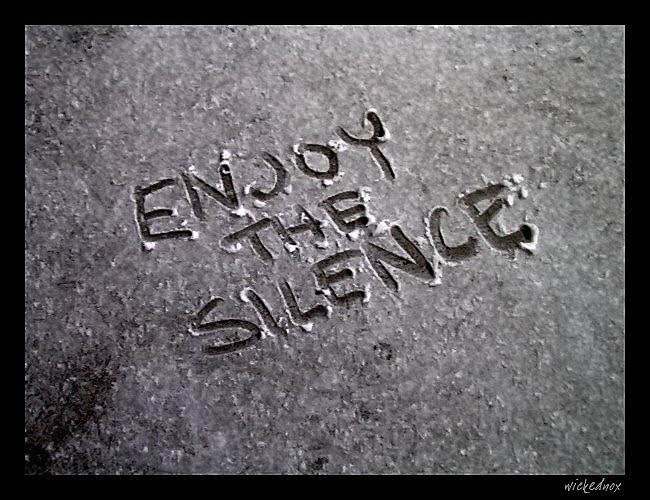
I’ve been kicked out of better places than this

OK, I really wasn’t kicked out. I just wasn’t let in.

In 2006 I did my first 10 day silent vipassana retreat here that is in the strict Goenka tradition. A requirement of the Mindfulness Yoga and Meditation Training that I did at Spirit Rock Meditation Center in California was that one had to sit a 5 day or longer vipassana retreat.

The vipassana retreat was my first long silent retreat and it was the hardest thing I have ever done but the most transformative. I went through 6 days of hell, but on the 7th was reborn, so to speak. I ended up loving my experience. In fact, if I had my own yoga teacher training program a vipassana retreat would be one of the requirements for certification, that’s how important I think it is. If you want my piece of paper you would have to sit in silence 10 hours a day for 10 days, no excuses.

I’ve always wanted to return. When I came back from India I felt the need to sit intensely like that and desired the structure of the retreat, don’t ask me why. I wanted to do a three day retreat instead of a 10 day so I applied for a sit in August. If you go to the Illinois website you can see what the lengthy application is all about. They ask you lots of questions about your practice, if you have done any other meditation styles, if you teach any other meditation styles, plus the usual questions about your mental health since strict vipassana is a very intense practice. After writing the application you are then called for a telephone interview.

So being the good yogini that I am I was honest. You know, that whole satya thing. I wrote about my retreats and training at Spirit Rock, who the teachers were, that I am a yoga teacher, that I incorporate meditation in my classes, and that I teach mindfulness meditation.

A very nice woman called to interview me and she was very impressed with my application commenting on everything I have done. She said I could do the retreat as long as I understood not to “mix” my mindfulness meditation with the vipassana practice. I said that I totally understood that and she said I could go on the retreat.

She called me yesterday with the bad news: I could not attend the retreat. Instead of becoming angry or disappointed, feelings of amusement arose. I REALLY wanted to do this retreat (and some of you might think I’m nuts for REALLY wanting to sit 10 hours a day), but for some reason I thought it was hilarious. Maybe it was the woman’s voice. Ginger had the stereotypical voice of a grandmother that you might hear in cartoons. It was classic and precious. How could I get angry at her and besides, what would be the point? She was just following Goenka’s rules. Don’t kill the messenger.

She told me that she looked at my website and was very impressed with my “accomplishments” in yoga teaching and that I trained at Spirit Rock and go to India to study yoga. But I don’t consider myself “special”, I just do what I do. I thought, so just because I’ve done the training that I’ve done, that means I can’t do a 3 day vipassana retreat, something that I really want to do? I mean, I don’t know very many people who would subject themselves to a strict vipassana retreat. In fact, most yogis I know would probably prefer to hang upside down over a fire. WHAT DO YOU MEAN I CAN’T GO?!?

I tried not to chuckle. Ginger sounded so sincere in her compliments about my yoga and meditation practices, how could I dare laugh? She said it was BECAUSE I teach mindfulness meditation that I can’t go. She said that Goenka was very strict about the mixing of any other practice with vipassana (which I already knew) and her supervisor was afraid that I would mix everything up and get “confused” (and go nuts — the teachers are afraid people will freak out because vipassana is an intense practice.) Please stay home she told me.

The bottom line is that one has to make a choice. It’s either a strict vipassana practice or the highway. None of this take one from column A and one from column B. I told Ginger, yeah, but the roots of mindfulness meditation are in vipassana. “Yes, dear, we know,” she said, “but unless you make a choice of what practice you want to do, you can never come back here. Go to Barre instead.” Goenka, via Ginger, banished me to the Insight Meditation Society in Massachusetts. I hung my head. Oh, the shame of it all.

Damn it. I’m banned from every vipassana center in the known and unknown Universe! Sigh. I was really looking forward to all those kriya nightmares ridding me of my samskaras. Mara won’t be visiting me in my dreams now.

So much for honesty is the best policy. If I had said nothing about everything I have done since my first retreat, I would have gotten in. I should have kept my mouth shut.

Well, you know what, Goenka? According to your rules, one is not supposed to do any yoga on a vipassana retreat. But listen up, dude — you know that 4 AM wake up call to sit? I blew that off every day and DID MY YOGA IN MY ROOM!! Yeah, that’s right, I broke the rules!

Gee…ya think they found out about that?

addthis_pub = ‘yogagal60510’;

oneness, suchness

“We are not separate;
we cannot be separate from Nature,
which sustains us in a vast interdependence with everything.

The universe comes perfectly
and is awesome in its integration and infinite existence.
It is our natural state.”  (Mark Whitwell)

There are certain images in my head from my trip that are still affecting me.  It was such an amazing adventure that words are much too puny a mechanism to try to describe what I experienced, so don’t expect a travelogue.  But I truly came to know what the spiritual adept told me last year when she said I would die in India and be reborn in Africa, because it happened, just like she said.  A holy man I met at the Mela, purely by chance — no, it was my good karma — changed my life forever.  Just as she foretold, the old me died.

The photo above is not one of mine, those will come later.  But it is what I saw at the bottom of the Ngorongoro Crater in Tanzania, which is called the 8th natural wonder of the world for good reason.

When you are standing in the middle of a wildebeast and zebra migration, an event that has been going on for thousands and thousands of years, you feel very insignificant.  There are no sounds, other than your breath and the grunts of the animals and the wind and the swishing of tails, and you know deep in your bones that things you thought were very important, really aren’t in the whole grand scheme of things.  Just as she foretold, a new me was reborn.

There is a difference in knowing and truly knowing that you know, and if one witnesses such a thing and does not come to know the true nature of interconnectedness…

that is, that thing we are supposed to come to truly know and feel as a result of an authentic yoga and meditation practice….

…then you are brain-dead.

Maybe more so, dead in the heart-mind.

Or at least sleeping ( = not awake.)

“What are you?,” the Buddha was asked after his time under the bodhi tree.

“I am awake,”, he responded.

Of course one does not have to travel to Africa, or anywhere else for that matter, to experience this. Maybe you only need to sit in your own backyard and mindfully watch and listen and feel.  During one session of my retreat I had the students do 30 minutes of walking meditation. None of them had ever done that before and their experiences were rather potent for them.  They were amazed.

There is knowing.

And knowing that you know.

No more discussion is needed.

donation update and until we meet again


I mailed a check today to the Seva Foundation in the amount of $200 asking it to be used specifically for the Kilimanjaro Center for Community Ophthalmology. You can read about the eye clinic here.

A big hug and thanks to:

Shelley

Bob

and Svasti

for their donations!

If anyone else wants to donate, please DO NOT send the money to my Paypal account, send it diretly to Seva as per the instructions in my link.

My wish for the Universe for 2010 are the Four Immeasurables, compassion, loving-kindness, sympathetic joy, and equanimity:

MAY ALL BEINGS HAVE HAPPINESS AND THE CAUSES OF HAPPINESS

MAY ALL BEINGS BE FREE FROM SUFFERING AND THE CAUSES OF SUFFERING

MAY ALL BEINGS NEVER BE PARTED FROM FREEDOM’S TRUE JOY

MAY ALL BEINGS DWELL IN EQUANIMITY, FREE FROM ATTACHMENT AND AVERSION.

This is my last blog post of 2009. I leave for India and Africa next week for the yoga adventure of a lifetime. I’ve written about it and you’ve read about it…now it’s time for me to run into Ma India’s arms and return to my soul’s home….(the quote is a link to another post)

“I was alone, finally, with no one to protect me. I wanted to sing for happiness — a rare, raw, immediate sort of happiness that was directly related to my physical situation, to my surroundings, to independence, and to solitude. The happiness I felt that morning had nothing to do with the future or the past, with abstractions or with my relationships to other people. It was the happiness of entering into something new, of taking the moments simply for what they were, of motion, of freedom, and of free will. I loved not knowing what would happen next, loved that no one here knew me. I felt coordinated and strong, and the world seemed huge and vibrant. It was a relief to be alone…

My happiness was a feeling of physical lightness, of weightlessness, like drifting on air…”

Mother India, I’m coming home.


addthis_pub = ‘yogagal60510’;

pruning out the deadwood


photo ©Loba Landscapes, 2009

An oldie but a goodie that I think is appropriate for this time of the year….

Making Room for New Growth

Whenever I talk on mindfulness meditation (or mindfulness training as I call it now) I always throw out these questions:

how many of you are working on automatic pilot? are you so comfortable that you have become numb to the present moment?

“How much pruning do you need to do in your life? Are you strong enough to cut the deadwood out of your life no matter how painful it is?”


addthis_pub = ‘yogagal60510’;

peace on earth

This is all that any of us really need.

Merry Christmas

Happy Holidays

peace
shanti
asalaam ‘alaykum

MAY ALL BEINGS HAVE HAPPINESS AND THE CAUSES OF HAPPINESS

MAY ALL BEINGS BE FREE FROM SUFFERING AND THE CAUSES OF SUFFERING

MAY ALL BEINGS NEVER BE PARTED FROM FREEDOM’S TRUE JOY

MAY ALL BEINGS DWELL IN EQUANIMITY, FREE FROM ATTACHMENT AND AVERSION

That is my wish for you.

addthis_pub = ‘yogagal60510’;

the gratitude of a bloggin’ yogini


I’ve been writing this blog since 2005 when I decided that nothing would stop me from traveling to the heart of yoga. On March 25, 2005 I entitled my first blog post “no turning back”. I was reminded that I started planning for my trip in 2004, only two years after I became a teacher.

I smiled when I read that first post today because I remembered my naivety about India. I wore my rose-colored glasses the first time and now Indians ask me if I live there. Words like Gangaikondacholapuram roll off my tongue without a second thought.

I was 51 and had never been overseas in my life and I went alone to a country that many people warned me against. But when I took my first step on Indian soil the feeling was primal — I knew I had come home and I never looked back. If I have to explain that you wouldn’t understand because words are not adequate to describe what I felt, a feeling I remember as if it was yesterday.

Reading the words that I wrote in 2005 —

“I’ve been told by an akashic record reader that when I go to India, I will “disappear”. Not literally, but that I will melt into that world as if I were going back home.”

— chilled me because that certainly happened. There has not been one single day since I returned from my first trip that I do not think of India. I guess that’s obsession. But not attachment. Because even if I never returned to Ma India, my memories would last several lifetimes.

I also knew that I had to deepen my personal yoga practice because when I got back into yoga in the mid-90s I was like a sponge, and I knew in my heart that this sponge had to soak up everything yoga before I died. So off I went to the school named after the father of modern yoga and it changed my practice and my teaching forever.

I don’t know why I started blogging because I am usually a very private person. I don’t like people knowing my business, never have. I guess it was merely to chronicle my trip and my yoga experience in India like a diary. I never really thought anyone would read what is now over 300 posts. I have strong opinions that I don’t apologize for at my age and like spicy South Indian food, I am an acquired taste. But read you have.

What has amazed me about the blogging experience are the people I have “met” in the yoga blogosphere. I’ve written honestly and authentically about some very shabby treatment I’ve experienced in the yoga world and I received more support from my readers — people I don’t know and have never met — than from yoga people in my own backyard and for that I thank you.

It also overwhelms me that people have emailed me or left comments about how my posts have inspired them in some way. Sigh.

I’ve “met” people who I would dig practicing and hanging out with in the real world. Yoginis like Brenda, Svasti, Amanda, Nadine, Fernanda, and Roseanne, plus others like my thankachi (Tamil for “younger sister”) FlowerGirl. We need some testosterone in the mix so YogaDawg, too. He gave me the YogaDawg Seal of Approval a long time ago. I have a feeling we all practiced together in some past lives somewhere.

So I was amazed and overwhelmed again when Roseanne picked “this is my real yoga” as one of her Top 15 Yoga Blog Posts of 2009. It did my heart good because I used to be a writer of poetry who won a few awards back in the day (I actually took a grad course in Ezra Pound), so to be recognized for my prose is very nice. Roseanne was an editor of ascent magazine which was my favorite yoga magazine. Thanks, Roseanne, and y’all go check out the other fab 14 yoga blog posts.

I will be gone for two months starting in January and I like to disconnect from my life here as much as possible so I don’t know if I will be blogging at all. I wanted to keep all my previous posts about India in another blog so I moved my old posts to Ma India, My India, — you can check there for any future updates. Good stuff, so read!

Just like 2005 was a new chapter in my life, I feel that my upcoming trip will be just as momentous, maybe more so. I’ve been told — just like a spiritual adept foretold my reaction to India in 2005 — that it will be “life changing.”

Who knows? I take everything with a huge grain of salt. But whatever happens, good, bad, or indifferent, I am grateful for it all because it’s always about the journey, isn’t it?

“I came into this world to live out loud.” (Emile Zola)

addthis_pub = ‘yogagal60510’;

Donna Farhi on yoga

My blogging time here is growing shorter. Thirty-three more days and I step on the plane for a yoga adventure of a lifetime (and yes, this woman of a certain age still feels blessed to be able to do this.)

I’m starting out in Chennai, my second home, at the Krishnamacharya Yoga Mandiram. Taught by Desikachar’s senior teachers, I will have four private classes a day in meditation, pranayama, the Hatha Yoga Pradipika, and vedic chanting (which will be my favorite class to attend.) I will also have a yoga therapy consultation and a yoga therapy program designed for me — I will then do two asana classes with a KYM therapist. For me this is yoga heaven, and of course, I will spend time with the friends I made on my first trip to Chennai.

I am spending the least amount of time in Chennai this trip. I usually stay a month, but this time I will only be there for two weeks when my friend meets me and we fly to Kolkata….my first time outside of South India.

However, before she arrives I am spending a weekend at the holy city of Thiruvannaamalai to climb the holy hill Arunachala and visit once again (I was there in 2006) the ashram of the great Advaita Vedanta sage Ramana Maharshi. He said, “enquiry in the form ‘Who am I’ alone is the principal means. To make the mind subside, there is no adequate means other than self-enquiry. If controlled by other means, mind will remain as if subsided, but will rise again.” He considered his own guru to be the Self, in the form of the sacred mountain Arunachala.

I am blessed to be able to climb the holy hill.

I am beginning to turn inward more and more the closer I get to leaving, a deep knowing is coming to fruition. After Arunachala, I will be blessed with Kali shakti in Kolkata at her temples and visit the Temple of the 64 Yoginis in Bhubaneswar.

Finally at the Maha Kumbh Mela in Haridwar I will dip my toes in the Ganges on MahaShivaratri and witness the tantric yoga rituals of the ultimate yogis. Me and 50 million of my closest friends.

After India, even more amazing to me is that I WILL TEACH YOGA IN AFRICA. I am bringing a style of yoga (yin) to yogis who have never experienced it before. It amazes and overwhelms me. My weekend is sold out, the spaces bought by the small yoga community of Tanzania, and I am blessed to do this. Paul Grilley told me “YOU GO, GIRL!” YES!

Sounds like a good idea for a movie…another Enlighten Up!, only better.

So with my death and rebirth looming before me in India (as has been told to me for more than a few years by various spiritual adepts), I will be blogging less and less. There will be another guest blogger in the near future, one of my college yogis who, I am happy to say, has totally drunk the yoga kool-aid. She will be writing about the true purpose of yoga: healing and transformation — how yoga has helped with her ulcerative colitis.

In my blogging laziness I give you a conversation with Donna Farhi, Svasti’s guest posts being good segues into her conversation about yoga. Years ago I did a workshop with Farhi and she was another teacher that made a lightbulb go off over my head when I was a newbie teacher. Everything she said made sense to me. Here is an excerpt:

Q: How do you differentiate between “good” and “bad” yoga?

Donna Farhi: Good yoga cultivates a deep sense of self-acceptance and tolerance for others. When I witness someone practicing and living yoga well, they have developed clear perception, concentration, and the skill to respond to any situation with a presence of mind. In my yoga classes that means that the form of the postures is not the goal – you can be as stiff as an ironing board and much less flexible than your compadres in a yoga class and still be practicing beautiful yoga if your practice is fostering that respect and care for yourself.

In this sense the greater and greater emphasis on the form of postures in the West has been a two edged sword. The refinement has allowed us to make the postures much more beneficial, but Westerners are so caught up in external image and the meaning they attribute to those images, that for many Westerners good yoga means touching their toes. The trend in the U.S. in the last ten years has been to judge people’s yoga almost purely from their physical adeptness. We attribute some kind of spiritually advanced state to someone who can put their feet on the back of their head. That is we’ve started to mistake the map for the territory. Quite often this supposedly good yoga is fostering a sense of superiority and judgment towards others who practice any other form of yoga. To me, any yoga that fosters those qualities is bad yoga.

Talk amongst yourselves.

addthis_pub = ‘yogagal60510’;

study + practice = balance


Prajnaparamita
(The Prajñāpāramitā Sutras are a genre of Mahayana Buddhist scriptures dealing with the subject of the Perfection of Wisdom.)

Brenda Feuerstein was kind enough to give me permission to publish this article by Georg Feuerstein. Georg has authored over forty books including The Shambhala Encyclopedia of Yoga, The Yoga Tradition, and Yoga Morality. You may also know Georg and Brenda from their Traditional Yoga Studies website: “Traditional Yoga Studies (TYS) is dedicated to promoting authentic yogic teachings based on scriptural and oral transmission, as well as solid research, and to bringing out their relevance at the present time of severe environmental and social crisis.” You can visit http://www.traditionalyogastudies.com for distance learning courses on:

1. 800-hour course on the history, philosophy, and literature of Yoga;
2. 250-hour course on Patanjali’s system of Classical Yoga;
3. 250-hour course on the Foundations of Yoga; and
4. 120-hour course on the Bhagavad-Gîtâ

Brenda also told me that they have received an anonymous donation and have decided to pay it forward and give away 10 partial scholarships for their 800-hour Philosophy, History and Literature of Yoga Course. Applications are due by the end of January 2010. If you interested in applying for the course scholarship program which is 50% off the regular price ($600.00 off), you can email Brenda the following information: full name and mailing address, email address, and tell them about yourself, why you want to study the course, and why you require a scholarship for the program.

In light of reader comments on my last post, I thought Georg’s article was especially timely.

Talk amongst yourselves!

Studying Yoga by Georg Feuerstein

Everybody talks about practicing Yoga. Few Westerners talk about studying it, and many believe that the study of Yoga is unnecessary and even a waste of time. They like to quote Sanskrit sayings about the uselessness of book learning. These are typically taken out of context, and other, more pertinent statements are either ignored or not even known.

Then, again, there are those who—like the majority of academics—maintain that one must understand Yoga objectively and that by practicing it, one automatically jettisons any claim to objectivity.

Both attitudes are wrong. The belief that studying Yoga is redundant is self-evidently mistaken, because unless we know what we are practicing, we cannot really hope to be successful in our practice. This is like wanting to build a computer without expert knowledge of its component parts and how they interact. Perhaps a more pertinent example would be to want to remove a brain tumor without any medical knowledge and surgical skill.

Thus, the Vishnu-Purâna (6.6.2), a medieval encyclopedic Sanskrit work, rightly and unequivocally states:

“From study one should proceed to practice (yoga), and from practice to study. The supreme Self is revealed through perfection in study and practice.”

The belief that objective knowledge is possible and highly desirable is just that: a belief. Philosophers have considered at great length whether the common ideal of scientific objectivity is in fact possible, and many have come to question this. Many have, in addition, expressed doubt about whether such objective knowledge, even if it were possible, would be desirable. Their thoughtful works are readily available, and so I won’t argue this point here.

My present focus of attention is on the study of Yoga, which tradition tells us is indeed essential to success in the practice of Yoga. Study is treated as an integral aspect of Yoga practice. Thus, Patanjali lists study as one of the five aspects of self-restraint (niyama), the second limb of his eightfold path.

The Sanskrit word for study is svādhyāya, which means literally “one’s own (sva) going into (adhyāya).” It stands for the serious and systematic study of both the Yoga tradition and oneself. Both knowledge of the tradition and self-knowledge go hand in hand.

The traditional scriptures contain the distilled wisdom of sages who have climbed to the pinnacle of self-knowledge, and therefore these texts can contribute to our own self-knowledge. Study, in the yogic sense, is always a journey of self-discovery, self-understanding, and self-transcendence.

Yoga does not call for blind faith, though it stresses the superlative importance of real, deep faith (shraddhā), or trust. Mere belief cannot help us realize that which abides beyond the conditional or egoic personality. Instead, Yoga has always been intensely experimental and experiential, and study is one aspect of this sound approach.

Many Western Yoga practitioners, especially those with a dominant right brain, shy away from study. They much rather polish their performance of this or that posture or, more rarely, learn a new breathing technique. Yet, it would seem they often miss the mark, because they do not know the proper context in which these techniques must be cultivated. The state of Hatha-Yoga practice and teaching in the Western hemisphere is a good case in point: What was once a profoundly spiritual discipline has been demoted to physical health and fitness training. [emphasis supplied.]

Often Western Yoga practitioners do not even have an accurate knowledge of the techniques themselves. They sometimes seek to compensate for their ignorance by trying to reinvent the wheel and by producing their own versions of yogic practices. While innovation is commendable — our whole civilizational adventure is based on it — in the case of Yoga, we would do well to be modest. After all, the Yoga tradition can look back upon the accumulated wisdom of at least 5,000 years of intense experimentation.

Just as a predominantly right-brain (action-driven) approach to Yoga has its pitfalls, a purely left-brained (thought-driven) approach is equally precarious, if not altogether futile. “Armchair Yoga” cannot replace actual experience.[emphasis supplied.] If our practice is merely nominal, so will be our attainments. In Yoga, both theory and practice form a continuum, like space-time. It requires from us a full engagement, as the Buddhists put it: with body, speech, and mind. Yoga, as the Bhagavad-Gītā (2.48) reminds us, is balance (samatva). Hence we ought to engage both cerebral hemispheres when applying ourselves to the yogic path. Let us also recall here that one of the meanings of the word yoga is “integration.”

An ancient scripture, the Shata-Patha-Brāhmana (11.5.7.1), declares that, for serious students, study is a source of joy. It focuses the student’s mind and allows him or her to sleep peacefully. It also yields insight and the capacity to master life. What more could one ask for?

Copyright ©2009 by Georg Feuerstein. All rights reserved.
Reproduction in any form requires prior permission from Traditional Yoga Studies.


addthis_pub = ‘yogagal60510’;

this is my real yoga

“You are a life saver. Without you I would be a stressed out 20 year old bitching about everything. Now I live my life and I’m writing my own story and I have never felt better. I tell everyone about you and how you guide people to find not only happiness but themselves. I thank you for opening my eyes to that.”
[college student, 2009]

With all the yada yada about how old yoga really is (see discussion in comments), the name-branding of yoga and the Show Biz Yogi Lifestyle (TM of course), what is “real yoga”, Bikram’s desire to have yoga (uh, asana) competition in the Olympics, ad infinitum, it all makes me want to scream “STOP!”

Don’t get me wrong, I love a good discussion, but I have to ask: when is enough, enough? Buddha (basically) said not to take peoples’ words as gospel, that you must experience things through your own lens and judge for yourself.

I know what works for me and I’ve written about it on numerous occasions. Brenda made an excellent point when she asked “if you just boil it down to asana without any kind of inner reflection, then isn’t it just floor exercise?” I love her one word opinion about that.

But I will play devil’s advocate and say, so what? So what if someone does some stretches when they get out of bed and calls it yoga? I asked Tom Pilarzyk that question when I heard him speak on whether American yoga is in crisis.

He said that he would compare that to the idea of Christmas. He asked, what if a person said “so what if I only like lots of presents on Christmas?” Tom said, OK, if that’s all you want, but isn’t the idea of Christmas really about something more?

I believe that yoga must contain certain things in order for it to be called yoga. Notice that I did not say any type of spirituality must be a requirement; I don’t even say namaste at the end of my classes. I don’t care if you’ve never read a yoga book and think Bhagavad Gita is the name of the guy who fixed your computer.

As I’ve heard Desikachar say, if yoga does not contain X, then you’re just doing acrobatics. Nick Rosen, the “star” of the movie Enlighten Up said “yoga’s anything you want it to be and that’s very freeing…” Uh, OK…I’m going to swing from a chandelier in my chakra underwear and trademark it as “SwingYoga.” Yup…just call something “yoga” and that makes it “yoga.” Uh-huh. And if you steal this idea I’m going to sue your yoga butt.

Sometimes all this yada yada makes me want to go off and live in a cave. OK, not really, but it does make me question being a yoga teacher, especially when stuff like this happens. I tell myself, why bother, when people aren’t getting it. I know a few teachers who have just given up. Then I remember what I heard Seane Corn say in a workshop: that she’d rather teach to the two who get it than the 10 who don’t.

But then a student tells me what my college yogi told me. Or the hearts of the domestic violence survivors crack open when they know that maybe just for this moment they are loved unconditionally.

That is my real yoga, and frankly, I don’t care what you do. I used to care, but I don’t anymore. You do your “yoga” and I’ll do mine. But please…don’t insult me and my teachers and my teachers’ teachers going all the way back to Patanjali by calling your morning stretches or your posing, yoga.

Don’t insult the original yogis, the sramanas, those renouncers of the Hindu rituals who around the 8th Century BC to the 2nd century CE used their bodies and minds as laboratories for the direct experience of yoga and nondualism.

If something isn’t changing for you off the mat, then don’t call it yoga.

Instead of a Christmas analogy, I’ll use food. If you want to make a chocolate cake but leave out the chocolate, can you still call it a chocolate cake? Or is it just a poor imitation?

Just askin’.

the ups and downs of teaching and why common sense ain’t too common

“Repeated frustrations and disappointments, Sama, are always a reflection of repeated misunderstandings and presumptions. Oh, darn.” – The Universe

Some of the most frequent search phrases for this blog are about “teaching yoga” or “how much does a yoga teacher make” or “I want to teach yoga.” I’ve written before about the trials and tribulations about teaching for yoga studio owners, so this is another taste of what real life yoga teaching is all about. Gather ’round, children.

Besides teaching privately, I also teach at two community colleges and rent a room at a massage therapy business. I will be gone for two months next year so I needed to get subs for my classes. The two colleges are covered and the persons in charge of my classes are very thankful that I did not leave them in the lurch; both wished me well and told me they would welcome me back, no problem. In fact one woman told me that I was the best yoga teacher they could ever have….sigh (hug.)

Some of you may recall my misadventure with a young studio owner which prompted me to find the room that I rent. I started teaching in this space in January and the dedicated yin students followed me there from the studio.

As a renter I am under no delusion that I will be there forever. You rent at the whim of the landlord. It seemed like a great fit since the owner does massage, reiki, has meditation classes, etc.

When I started using his space the first thing I did was invite him to my class on Sunday mornings to experience what yin yoga is all about and to learn more about me. I thought he would be all into it considering he is a massage therapist and teaches meditation classes (in other words, he talks the talk.) He never did.

I told him that I study yoga therapy at one of the leading yoga schools in the world, so I encouraged him to suggest yoga therapy to his clients. I encouraged him to promote the fact that he had a highly trained yoga teacher working out of his space and it could be a win-win situation for both of us. The situation that I describe can really be the best of both worlds for a yoga teacher and a holistic practice if there is communication and give and take between the parties. During the year I also suggested different workshops but he never showed any interest. I am the only yoga in this small town, which will soon have no yoga. A big fish in a little pond with lots of room for growth. Unfortunately, as much as I would like to have my own meditation center that offers yoga (instead of the other way around), I can not afford to rent a space large enough to do this.

I said that I would be gone for two months and asked whether it would be OK to continue the classes (my students were already worried about what would happen to the classes) with my friend subbing. After all, it’s not my place, so I teach there at his whim. I asked three times about it and I never received a response. I finally received this email:

“When Metta-Yoga started at the Center, I was thinking about it more from the perspective that it would be of benefit to some of the Center clients. So far, it doesn’t seem like there has been very many that have taken up on the opportunity. The additional exposure would have been nice too, but as far as I can tell, there have only been one or two students who have sought sessions. Also, I need to start teaching classes on Saturday and Sunday days which would end up conflicting with the class room use on Sunday. From a philosophical perspective, I am slightly more comfortable referring clients to a style of Yoga such as Svaroopa as it is more spinal and joint opening then core strengthening. I think a restorative / repairative style would be more attractive to some of my older, chronically impaired clients who have spinal & joint issues. Therefore, I am thinking that at the end of the year we should end the use of the space for the classes you are teaching.”

Now let me break down this email for you, kids….

1. Other than being mentioned on the center’s website, to my knowledge my sessions were never advertised to their database, so how would his clients know what I offer and take advantage of it? I always asked whether my new sessions would be announced and I never received any response. In fact, I used to teach two classes and had to drop one because of lack of attendance. I also could not depend on coverage in the local paper — the editor told me my press release could always be superseded by an announcement for let’s say…a hog calling contest. ahem.

2. As for needing to use the room, I understand that, it’s his space.

3. My students did not utilize his services, which is too bad, but I could not help that.

4. But as for the part in bold….HUH?!?

Like I said, even after more than a few invitations the owner never came to my class (which he could have taken for free!) or ever asked me what I teach or how I teach, so he had no basis for making that statement. Yin yoga is “core strengthening”? Whaaaat?

As for Svaroopa yoga, I started becoming suspicious when I saw cards for a Svaroopa yoga teacher next to my cards on the front desk. Hmmmmmm, I thought, what’s that all about? I know nothing about that style of yoga, only that it uses chairs and lots of props and is considered restorative. But my point is: the owner never made any attempt to learn what I do or what I can offer.

“Spinal and joint opening”? This was my response to that:

“I do not teach a style of yoga that is “core strengthening.” I invited you a number of times to come experience yin yoga, but you never did.

All yoga is “spinal and joint opening” just as all yoga is therapeutic if applied in the right manner. In fact, the style of yin yoga is not only practiced by senior citizens with limited mobility, but is also used in addiction and trauma recovery programs. The concept of “yin” means that it is “still” as opposed to “yang” or moving.”

Common sense tells me that if I, a holistic practitioner, was renting space to a yoga teacher with my training in yoga, yoga therapy, meditation, and energy work, that I would want to take advantage of that and work with that person to grow both our businesses. He would have been the only alternative therapy business for miles around to offer yoga therapy. As my friend who was going to sub for me told me, his loss. But common sense ain’t too common anymore. What was I thinking?!?

Don’t kid yourselves. As much as we yoga teachers like to think that yoga has gone mainstream, that people will be rushing to yoga therapy, or that other holistic practitioners will knock down your doors begging for your services…think again.

So let this be a lesson for you, children, on the ups and down of yoga teaching. But am I upset? Actually I’m not. For some reason that I have yet to figure out, I am relieved. Sure it was a nice chunk of change every 6-8 weeks, but the energy was off. When I offer my services to someone and say let’s work together, and I am not respected and worse, underestimated, it’s time to get the hell out.

This yoga business journey has shown me time and time again to do my own thing and don’t count on (and never completely trust) anyone but me. The words of my astrologer keep ringing in my ears: find my own tribe.

addthis_pub = ‘yogagal60510’;