just an old-fashioned girl

Last night in class I only had two students. Believe it or not, this no longer bothers me — I show up and I teach. Despite how “mainstream” yoga people love to believe yoga is nowadays — and I would really like someone to explain to me what mainstream is — the number of students in class is diminishing. I’m not the only teacher in my area who finds this to be true. More on that later.

So since it was a loosey-goosey class, we yakked for the first 30 minutes, me and my two students about the State of Yoga in America. I will add that this was totally unsolicited by me, these two gals just wanted to let loose. Of course this is not a scholarly study by any means, merely anecdotal, but interesting just the same.

One woman told me that she was glad she found my class — this woman is older like me, I would say in her 50s. She told me she was glad she found a “real yoga” class — her words, not mine, unsolicited. By “real yoga” she meant not “power yoga” (her words) as is taught in her gym where she takes Pilates. My class is the first yoga class she has ever taken (because her chiropractor recommended it), so she had nothing to compare it to. In spite of knowing nothing about yoga other than it was supposed to help calm her down, she somehow knew she wanted to take a “real yoga” class.

She was dismayed at the lack of commitment from the drop-in students. She asked why students feel that a yoga class is supposed to be convenient for them, instead of making it a priority like anything else in their lives. She asked me why students feel they don’t have to support a yoga class, that they can just show up whenever they want to. We recalled the couple who came once and said that they “maybe” do yoga once a month. Uh…why bother? Was it a night they were bored and wanted to spice up their evening with my class? OK, I’m kidding.

I shrugged. I have no answers anymore to questions about yoga in OMerika. But I smiled and thanked her for calling my class “real yoga” and thanked her for her commitment to herself.

The second woman, younger, 30s maybe, was also dismayed at the lack of students in my class. She had been coming to this venue for yoga for a long time and told me the class used to have about 20-30 students in it. I was asked to take over this class to try to build it back up — I had heard that the class had too many subs and people had stopped coming.

The younger woman told me — again, unsolicited and her words, not mine — that I was old-fashioned. I smiled and she laughed. She told me, “I think your class is the way yoga originally was before it became mainstream. You know…real yoga.” Ahhhh….there are those words again.

I asked her what she thinks “mainstream yoga” is. I said to please explain it to me because I’m stuck in my little ol’ boring box of asana-pranayama-meditation, so I am out of touch.

She said this: that the more mainstream yoga becomes, i.e., yoga taught all over the place, the more people will lose sight of what yoga really is. She said that yoga right now is trendy and popular, it’s merely “the thing to do”, just another fitness trend.

It was her belief that mainstream yoga has been dumbed down (her words) to cater to this culture rather than trying to change this fast-paced culture.

I will let that sink in because it is a very powerful statement.

She believes that people are so used to moving fast in their daily lives, that that is the type of yoga people want instead of yoga to slow them down, to go inward. She told me that to her, that’s not “real yoga.” She said, “if I wanted that, I’d go to an aerobics class.”

I smiled. I told her thanks for saying I’m old-fashioned, but I prefer the term “old school.” “Now let’s do some old-school yoga,” I said, as I started the vinaya krama class.

Out of the mouths of students.

I found the exchange interesting. According to my student then, “mainstream” merely means “popular.” But is popular always a good thing? This student also believes that with the popularity of yoga nowadays, the sheer number of yoga classes being offered outside of yoga studios (her emphasis) actually devalues yoga and cheapens the real message of yoga, which is personal transformation. This student lives in a suburb that is far from my class. She told me that there is plenty of yoga around her house but it is the “fast food yoga”, as she calls it, and will have none of it.

“Fast food yoga.” I like that description. Sure you can survive on a diet of fast food, but how healthy is it for you in the long run?

And now for another real life yoga teaching experience….

A yoga teacher friend has a small studio, trying to make a yoga buck as is every other local studio. A chiropractor in her area organized a lecture on living a holistic life via healthy eating habits, exercise, meditation, things like that. About 200 people attended.

I will say that again: 200.

Every yoga business guru will tell you that is the perfect opportunity and place to advertise yoga. I have heard that suggestion time and again — that in order to get your yoga name out there you must hook up with chiropractors or other holistic businesses.

My friend spoke about her studio, what yoga can do, handed out flyers, and spoke about the yoga fundamentals class series she was offering. She asked me, “and how many people do you think signed up or even asked a question?”

None. Zero. Out of 200 people.

Do you want fries with that?
listen. and then listen again.

“(The Atma) is not even in name different (from the Brahm.) It is not hidden in the high words (of the Vedas.) O Friend! How can I call it uniform or varied? I am by nature Eternal Freedom beyond all ills.” Avadhuta Gita, 4.13

“Know me to be free from one and all. For me there is neither the Maya nor its opposite. How can I be said to have anything to do with the Sandhya and other prescribed devotional duties? I am by nature Eternal Freedom beyond all ills.” Avadhuta Gita, 4.18

The Avadhuta Gita of Dattatreya

“He who has filled the universe, He who is Self in self, how shall I salute Him!” To know the Atman as my nature is both knowledge and realisation. “I am He, there is not the least doubt of it.” “No thought, no word, no deed, creates a bondage for me. I am beyond the senses, I am knowledge and bliss.” There is neither existence nor non-existence, all is Atman. Shake off all ideas of relativity; shake off all superstitions; let caste and birth and Devas and all else vanish. Why talk of being and becoming? Give up talking of dualism and Advaitism! When were you two, that you talk of two or one? The universe is this Holy One and He alone. Talk not of Yoga to make you pure; you are pure by your very nature. None can teach you.”
— Swami Vivekananda on the Avadhuta Gita

As a yoga student/teacher, are you only familiar with the Bhagavad Gita?

It is my nature to be Free.


because yoga cooks us

Chickpea to Cook
~Jalaluddin Rumi
(translated by Coleman Barks)

A chickpea leaps almost over the rim of the pot
where it’s being boiled.

“Why are you doing this to me?”

The cook knocks him down with the ladle.

“Don’t you try to jump out.
You think I’m torturing you.
I’m giving you flavor,
so you can mix with spices and rice
and be the lovely vitality of a human being.

“Remember when you drank rain in the garden.
That was for this.”

Grace first. Sexual pleasure,
then a boiling new life begins,
and the Friend has something good to eat.

Eventually the chickpea
will say to the cook,
“Boil me some more.
Hit me with the skimming spoon.
I can’t do this by myself.

“I’m like an elephant that dreams of gardens
back in Hindustan and doesn’t pay attention
to his driver. You’re my cook, my driver,
my way into existence. I love your cooking.”

The cook says,
“I was once like you,
fresh from the ground. Then I boiled in time,
and boiled in the body, two fierce boilings.

“My animal soul grew powerful.
I controlled it with practices,
and boiled some more, and boiled
once beyond that,
and became your teacher.”

atha, yoga, anusasanam

and it begins again

Have to get a new visa and back in Ma India’s arms at the end of December. Two weeks at KYM then 5 weeks until I land in Mumbai (where I have never been) for a month-long yoga therapy training in Nasik. My longest trip yet.

My gut is telling me this is the icing on the cake before I move on to getting a masters in transpersonal psychology. Somehow I know that in the future my teaching and this will be used together….all things reveal themselves when ready. Conditioned existence.

After all these years it’s all coming together, but first I have to go home.

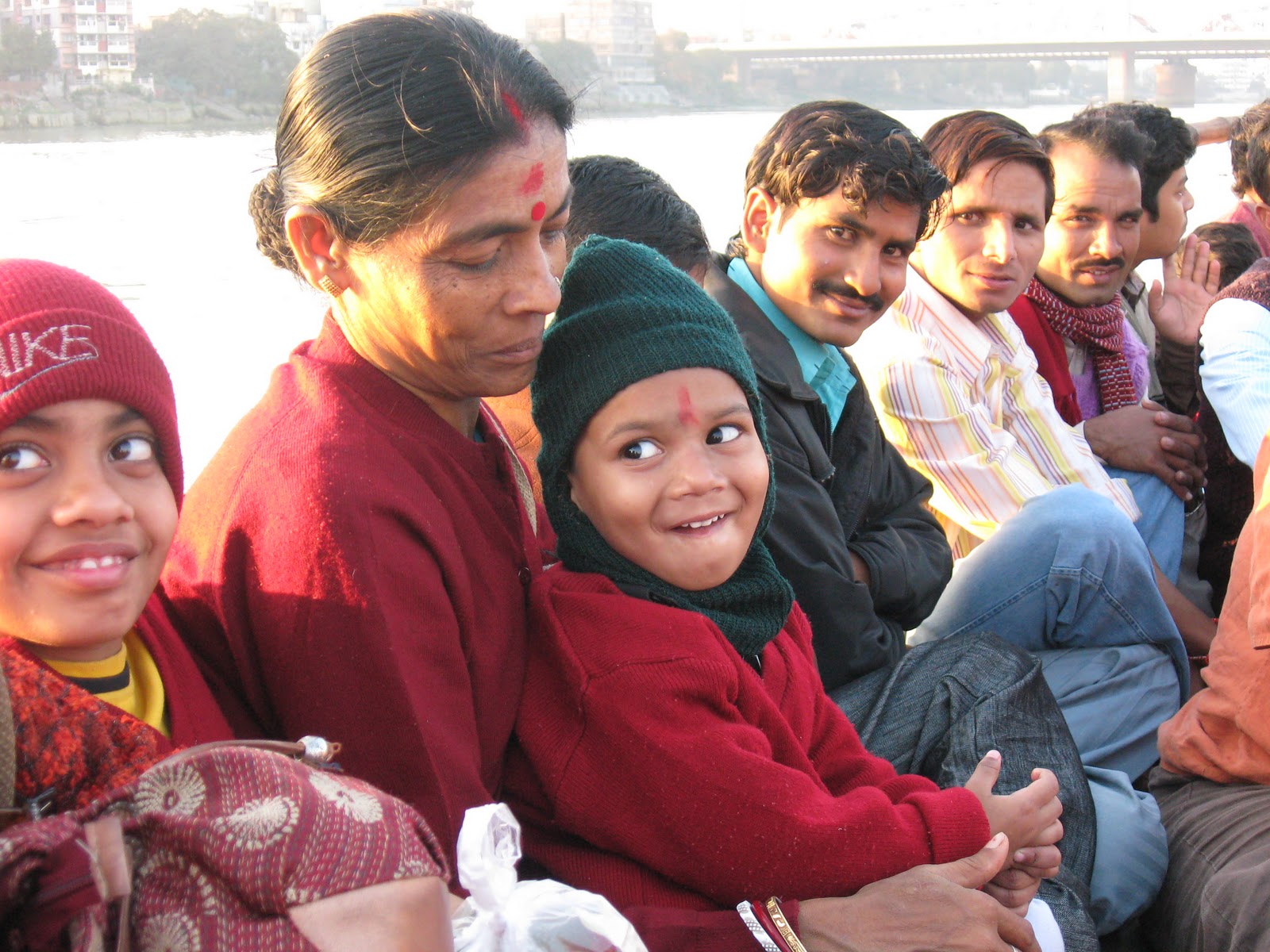
ferry to Dakshineswar, Kolkata

three generations, Bhubaneswar, Orissa

Kolkata street food

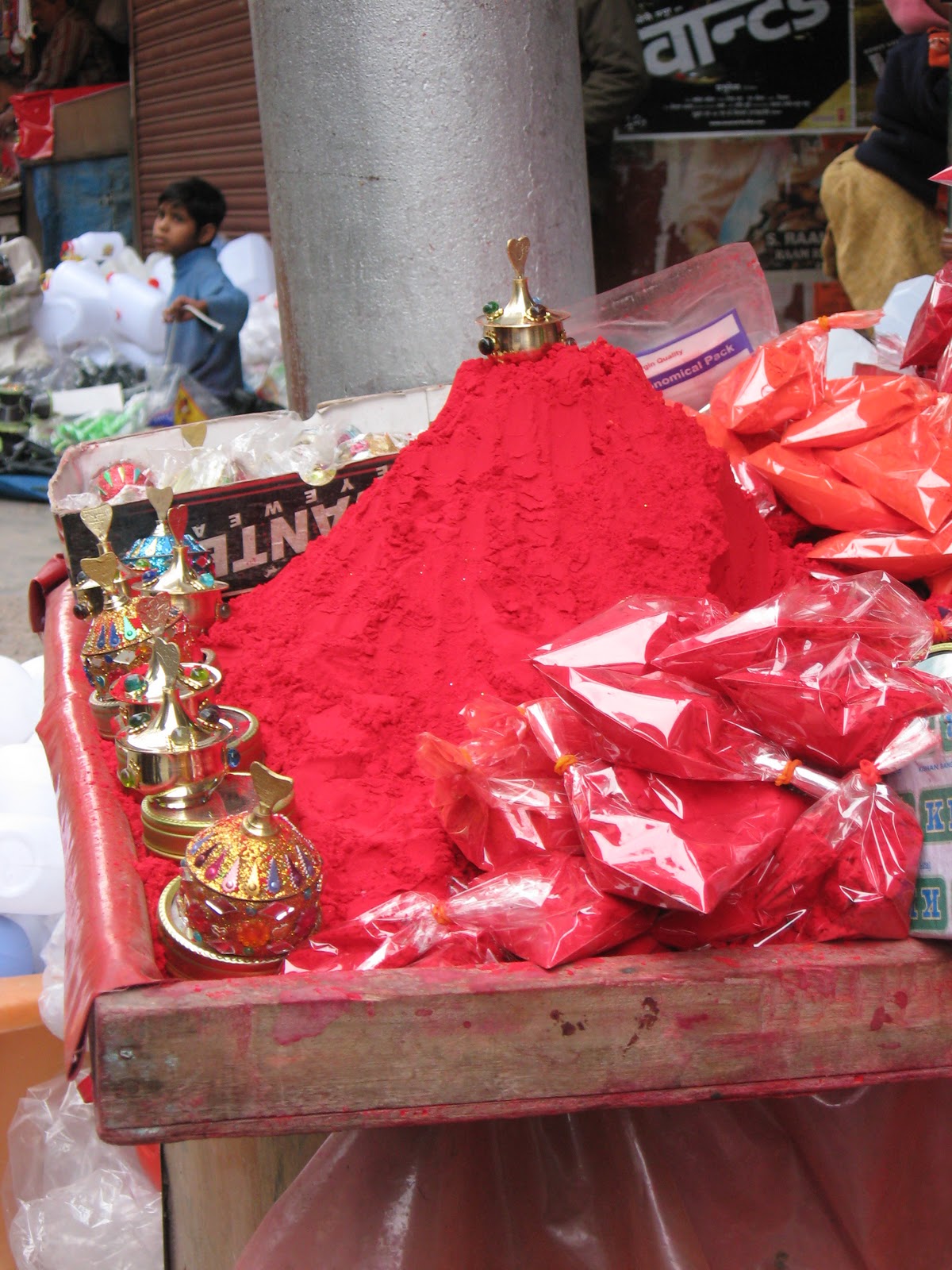
kumkum, Haridwar

addthis_pub = ‘yogagal60510’;

a marriage of Yoga and Buddhism

I have written before about Michael Stone here and here so I was happy to receive his upcoming book to preview, Freeing The Body, Freeing The Mind: Connecting Yoga & Buddhism. It is coming out in September with a Forward written by Robert Thurman:

“Those deep into Buddhism can find a lot to help their understanding and meditation practice in the wisdom and embodying practicality of the Yoga tradition. Those deep into Yoga can find enriching dimensions in the Buddhist Yogas presented herein. And the broad range of readers can find practical help, methods, and tools for a better health, life, and state of mind in the integrated paths presented.”

This book is an absolute must for anyone who wants to explore and better understand the “inter-being” of Buddhism and Yoga. For me, it is a joy. I believe it will become one of the “go to” books for a combined study of these two subjects. If I had my own yoga teacher training it would definitely be on my required reading list.

Buddha studied with diverse yoga masters on his journey towards nirvana. Buddha was a yogi so the Western interpretations of Yoga and Buddhism as being two separate paths never felt right to me in my bones. Just like the first Mindfulness Yoga and Meditation Training at Spirit Rock spoke to my entirety as a Buddhist yogini, so does Stone’s book further confirm what I have intuited all along.

In his Introduction Stone speaks to how the oversimplification and misrepresentations of the two traditions disregarded how Yoga and Buddhism share the same ethical and philosophical components. Stone refers to Yoga and Buddhism as being like the ecology of trees — while trees share the same characteristics and similarities, a maple and oak are different. The branches and leaves are different, they have different nutritional requirements, and they look very different from one another. But upon closer inspection, the similarities are clear — root systems grow in similar ways, growth cycles follow the seasons in similar ways. So whether comparing trees or two wisdom traditions, Stone says that “when we look for parallel comparisons, we find difference, and when we look for difference, we find similarity.”

But you don’t have to take Michael Stone’s word for it because various Buddhist and Yoga master teachers contribute the first 12 chapters of the book. Among others, Chip Hartranft and Frank Jude Boccio explore the way their own Buddhist and yoga practices interweave, setting their practices against the backdrop of traditional teachings. Daniel Odier and Eido Shimano Roshi explore the body from the Zen and Ch’an perspectives and in so doing break down the false view that meditation is a mind practice separate from the body. Victoria Austin writes from her perspective as both a Zen teacher and Iyengar Yoga teacher. Christopher Chapple, whom Stone refers to as “one of the most prominent Yoga scholars in the United States” and a practitioner, draws parallels between traditional Yoga and Buddhist teaching. New York yoga teacher Jill Satterfield tells her story about how she integrated Yoga and Buddhism not just in her teaching but also in a dramatic transformation in her own body and heart — and it definitely is a dramatic story of self-healing because I heard her tell the same story at Spirit Rock. Finally, Sarah Powers speaks to her melding of Yoga and yin practices and Buddhist training and what it’s like to practice Yoga and Buddhadharma day in and day out.

Stone’s chapter is the last chapter entitled, “Practice Maps of the Great Yogis”, where he writes of the wisdom of both the body and the mind as the ancients saw it in both traditions. In my experience I have found that some think that reading the ancient texts is a sufficient yoga practice (mind-stuff); others feel that asana is enough and never delve deeper into meditation and philosophy (body-stuff.) Too much of one and not enough of the other is a recipe for imbalance. An emphasis of one over the other further serves to separate the body-mind complex.

Buddha sat down to watch his own breath and knew that no insight was possible until his mind was settled and his body at ease. Patanjali wrote how asana and pranayama help with the release of effort, both physically and mentally. In the section entitled “Right Mind, Right Body”of this last chapter, Stone quotes Takuan who “reminds us of the immovable wisdom we find here in the body and awareness that is free from fixation and ambition.” Takuan said: “The Right Mind is the mind that does not remain in one place. It is the mind that stretches throughout the entire body and self. The Confused Mind is the mind that, thinking something over, congeals in one place.”

Stone then quotes the last line of the Hatha Yoga Pradipika:

“As long as the Prana does not enter and flow through the middle channel of one’s mind and body, and the internal energy does not become stable by the control of the movements of prana; as long as the mind does not rest in the ease of the inherent resolution of opposites without any effort, so long all the talk of knowledge and wisdom is nothing but the nonsensical babbling of a madman.”

Stone points out that the HYP ends with a “description of awakening as a mind at ease and a body dynamic and intelligent.” So how do we use the body to study the mind and work with the mind through the body? Obviously asana alone has physiological benefits, but we need to remember that asana teaches us to work with the mind. “In this very one-fathom long body along with perceptions and thoughts, do I proclaim the world, the origin of the world, the end of the world and the path leading to the end of the world,” Buddha said. That is, the end of suffering, nirvana.

All the contributors mentioned above are practitioners first writing from their personal experiences of practicing both systems for years. Stone says that looking at traditions like Yoga and Buddhism as mere philosophies without practice is not good science, good research, or good history. He believes that a pure intellectual approach leaves core teachings unexamined and in such cases “the scholar is blinded by his or her books.”

Finally, there is an ample Notes section at the end of the book citing references for each chapter from the important ancient texts to the modern Buddhist and Yoga classics — too many to list here but yoga and Buddhism scholars will not be disappointed in the breadth and scope of these references.

Stone’s book, in his words, “attempts to describe not only the philosophical basis of Yoga and Buddhism but also what it’s like to practice within and between these systems.”

Enjoy the excerpt.

##########

Freeing The Body, Freeing The Mind: Connecting Yoga & Buddhism
By Michael Stone

“Over the years, I’ve found it increasingly frustrating that Yoga is continually reduced to “a body practice” and Buddhism “a mind practice.” This makes no sense at all. Anyone who has practiced deeply in both traditions knows that the Buddha gave attention to the body, Patanjali the mind, and both traditions value ethical precepts and commitments as the foundation of an appropriate livelihood. I organize a community in Toronto called Centre of Gravity Sangha, a thriving group of people interested in integrating Yoga and Buddhist Practices.

In the Buddha’s teachings, the body is used as the primary object of meditation, so that one can study the universe not through books or theory but through one’s subjective experience. Likewise the Yoga postures, when practiced with breathing and sensitivity, become opportunities for deep meditative insight because they are designed to calm the nervous system. This grounds us. When we move within the various shapes of the yoga poses and tune into the internal energetic patterns of our breath, we are working the habits of mind as well.. Though the Yoga postures we practice in modern Yoga studios have obvious therapeutic benefits at physiological levels, some teachers and schools seem to have forgotten how the postures also teach us how to work with the mind. And for most of us, our troubles are not simply in the body – primarily, trouble is in the mind. How can we use the body to study the mind and work with the mind through the body? By experiencing how the two are completely interrelated.

There is a fundamental affinity between mind practices and body practices. Think of them both as curves in a grand mandala that continually spirals in, on, and through itself with no beginning or end. When I work deeply with my mind, I only do so by giving attention to the body: I witness its processes, from breathing to listening or seeing. The same is true when I study the intricate holding patterns in the web of my body (called koshas in Sanskrit), I end up seeing where my mind sticks, where it can’t focus, where it gets caught in refrains of old tape loops. What I thought was “body” is mostly mental. The Buddha says “Leave the body in the body.” When the Buddha teaches mindfulness practices, he begins with the bare awareness of body.

“The old Indian practice of Yoga,” writes scholar Karen Armstrong, “meant that people became dissatisfied with a religion that concentrated on externals. Sacrifice and liturgy were not enough: they wanted to discover the inner meaning of these rites.”3 Turning inward means taking responsibility for the spiritual path by focusing on the microcosm of reality that exists in the body’s functioning in this and every moment. Although yogic practices can supposedly be traced back some five thousand years, and although yogins described their paths and discoveries in very different terms depending on their respective cultural vocabulary, they all share the same common focus: the body is the primary object of meditative inquiry.

When we begin by taking care of the body and paying attention to its workings, we find ourselves focusing the mind, settling the breath, and learning much more about the nature of reality than we’d know by extroverted thinking alone. There are some things we just can’t figure out with ordinary thinking.

Just resting in feeling the sense of the body without any notions or concepts, we begin to tune in to the glorious operation of the natural world that is only available to a quiet mind. Of course, the mind is not separate from the body in any way – it is just a seamless continuation of the sense organs. We begin with the body because it is always present – it is the very apparatus we need to receive and explore any corner of the natural world. We use “the mind” to explore “the body,” but as we get closer and quieter, we come to see that mind and body are inseparable. The seeker Uddalaka in the Yoga Vashista, a story that interweaves Yoga and Buddhist philosophy, enters a remote practice place and begins practicing Yoga. After some time he exclaims,

“Just as the silkworm spins its cocoon and gets caught in it, you have woven the web of your concepts and are caught in them.

. . . There is no such thing as mind. I have carefully investigated, I have observed everything from the tips of my toes to the top of my head: and I have not found anything of which I could say: This is who I am.”

If we approach Yoga practices simply through books and words, and not direct contact with the physical and material reality of the body and breath, all we are left with is conceptual scaffolding. We can’t know these practices from the outside. They were never meant to be mere philosophy or codified ritual. Knowing about practice is not enough: we must drop our “knowing” and feel our way into present experience by seeing things clearly. By seeing, the old yogis are not referring to the eyes but to what the Zen tradition calls “the true dharma eye”——the eye that sees without clinging, without sculpting, without allowing what is seen to get stuck into the web of like or dislike. The spirit of Yoga and Buddhism embodies a radical approach to human experience – we begin practice through paying attention to what is here in this moment. Each and every one of us can wake up without needing to adopt a new ideology or belief system. When we return to present experience through the sense organs themselves——eyes, ears, nose, tongue, skin, and mind—we enter the freedom of this very moment, and the old paths of the yogis come alive here and now. There is no freedom in just repeating the words and rituals of the old masters——we must express freedom and interdependence through the action of our whole being and community through mind, body, and speech.

Every morning we wake up under the same bright northern star the Buddha saw when he awoke one dawn in his early thirties. Every moment we breathe the same molecules of air that once nourished Santideva, Dogen, Thich Nhat Hanh, your parents and their parents. Perhaps practice also fulfills our responsibility to the yogi-poets and wanderers who long ago struggled with aging bodies, unreliable thoughts, and an imperfect culture. They took great care in putting together words and phrases to articulate their path: they tried to leave maps for us, so we can enter way life happens in a way that motivates us to meet reality in an embodied and creative way.”

addthis_pub = ‘yogagal60510’;

guest blogger Barry Wadsworth on "Yoga as Mindfulness Practice – A Buddhist Perspective"

Many of you know that my yoga practice is informed by Buddhism. I am unable to treat my physical yoga practice as anything other than a moving meditation or mindfulness practice. I have studied the buddhadharma for so long with various teachers in both the Mahayana and Theravada traditions that I think it’s ingrained in my DNA by now! Yoga is my meditation and vice versa. In some of my workshops I’ve started to incorporate dharma talks on Buddha’s Four Foundations of Mindfulness as they apply to the physical yoga practice.

Most yoga teacher trainings (at least the ones with which I am familiar) do not speak much of Buddhism (even though Buddha was most definitely a yogi) which is why I was so glad I found the first Mindfulness Yoga and Meditation Training at Spirit Rock in California. It was finally a training that spoke to my entirety and I am blessed to have been part of the first training with such wonderful teachers in both classical yoga and Western Buddhism.

I see no conflict with my Buddhism and my traditional yoga training in India at the Krishnamacharya Yoga Mandiram and with Srivatsa Ramaswami. It’s all good and each enhance the other as far as I am concerned.

Vinyasa krama is what I have studied with Ramaswamiji since 2004 and it is the yoga style that I primarily use for my own practice (combined with yin yoga) and with private clients. According to Ramaswamiji, vinyasa krama yoga is an ancient practice of physical and spiritual development, and is a systematic method of practicing and adapting yoga for the individual. Krama is a Sanskrit word meaning “stages.” It is a step-by-step process involving the building in gradual stages toward a “peak” within a practice session. This progression can include asanas of increasing complexity or gradually building one’s breath capacity. In his book The Complete Book of Vinyasa Yoga, Ramaswamiji says that “by integrating the functions of mind, body, and breath. . .a practitioner will experience the real joy of yoga practice. . .Vinyasa krama yoga strictly follows the most complete definition of classical yoga.”

So I was glad to “meet” Barry Wadsworth when he made me an administrator of the Vinyasa Krama group on Facebook. He has just completed Ramaswamiji’s 200 hour vinyasa krama teacher training and is also Buddhist so we had a lot to talk about. Our Facebook conversation about yoga and Buddhism morphed into his writing here…enjoy!

For those of you who would like to explore classical yoga with a true yoga master who studied with Krishnamacharya for over 30 years, Ramaswamiji will be teaching in Chicago during September.

**********

“For Buddhists, the practice of yoga asanas as a method of mindfulness practice is especially meaningful. Although some traditional yoga teachers emphasize mindfulness of breathing in synchronization with the breath, the Buddhist context of using bare attention to penetrate the moment as a means to realization is not as emphasized or is missing. During Chan and Vipassana practice, especially on retreats, slowing down all activity to the point that you can peer into its very nature is essential and can lead to a very direct experience of impermanence and self-nature. This understanding and emphasis coupled with the practice of yoga asanas is particularly useful.

In the Yoga Sutras, there is the concept of uninterrupted, moment-to-moment one pointedness or focus. But the goal there is not realization of self-nature in the Buddhist sense, but realization of individual self (atman) as distinct from the citta vrittis. Of course, this is where Buddhism departs, with an emphasis on there not being an independently existing person, self, or soul.

Practicing yoga has been a kind of experiment for me. Can a practicing Buddhist practice yoga in such a way that the fundamental truths of Buddhism, suffering, impermanence, and no self (anatma), are not distorted or lost? I think the answer is definitely yes, but it requires a clear understanding of the differences in addition to the similarities of the two traditions. Otherwise, it becomes a confusing melting pot that doesn’t do justice to either tradition. For me, the goal is not Patanjali’s dualistic realization of individual self as distinct from phenomena and Universal Self (Purusha of Isvara). It’s also not Shankara’s non-dualistic realization that self is Brahman. Rather, it’s the complete liberation from attachment to any notion of self. Once self is removed from the picture, perception is pure and everything is seen just as it is. This is true, unimpeded and boundless liberation. When the experience of self is lost, perception pivots on itself and myriad things sing in harmony with all other things, infinitely correlated, perfect and complete. Any clinging to “self” collapses this perfect harmony, the natural state of things, to self and other, internal and external, interesting and uninteresting, good and bad, mine and not mine.

One might say that one who experiences “aham Brahmasmi” (I am Brahman) also experiences this same non-dualistic reality and is not impeded by attachment or aversion to anything since everything is experienced as Self. Yet Buddha’s awakening specifically had the characteristic of going beyond an eternal notion of self, even Universal Self, as the highest enlightenment. According to Buddhist sutras, as long as there is any identification with self, one is still trapped in the cycle of birth and death and not completely liberated. The wisdom of knowing the truths of suffering, impermanence, and no self engenders compassion for all sentient beings and frees one to act completely for the benefit of others, without regard to self. I’ve seen this selflessness in my Shifu, Chan Master Sheng Yen and in my Vipassana master, Ven. Chanmyay Sayadaw. They both have the quality of being completely present and available, fully there for you with no distraction, when you talk with them. Your ego could even get puffed up with the feeling that you were the most important person in the world to them at that particular moment. But, they also had the compassionate ability to deflate the ego when the time was right. I’ve noticed the same quality in the Dharma heirs of Master Sheng Yen and some of Chanmyay Sayadaw’s disciples and lay students — fully present, awake and clear, penetrating, insightful, patient, and compassionate. I noticed the same qualities in the Dalai Lama. The world needs more saints like these!

For Buddhists and non-Buddhists, practicing yogasanas with mindfulness can be very beneficial in developing a very direct perception, a bare awareness of space, time, motion and sensation. Deepening this experiences enables the silence of meditation to stabilize in daily activity and bring about moment-to-moment penetrating focus along with awareness unbound by the environment. The union of Buddhist understanding with mindful practice of yogasanas is particularly beneficial. I’m very glad to hear of courses being taught, such as those at Spirit Rock, that have this focus. This is bound to improve the overall landscape of Yoga as it is taught in the West.”

Read more at Barry’s blog Chan Practice.

award time Friday

Guess what, readers! This Ageless Hippie Chick Yogini will NOT be writing about the Yoga Rock Star who shall remain nameless mentioned in the New York Times. Why? Because everything that can possibly be said about it, him, them, has been said, and frankly, because the entire brou-ha-ha bores me. And boredom does not become me.

So this post will be in gratitude to Brooks the Yogic Muse and Svasti. Both of them were gracious enough to list me as one of their favorite yoga bloggers for different yet similar reasons.

From Brooks…

…because she admires and connects with blogs that she sees as “transmitting the beautiful humanity of the writers as they live a most yogic life.”

And from Svasti…

…because she thinks “that most of us who blog (girls and guys) are warriors, because writing involves opening the heart. And my definition of being a warrior includes not being afraid of looking deeply into your own heart, fears, sorrows and all!”

I thank them both, humbly and deeply. Please go to their blogs to read about the other fine yoga bloggers they wrote about. These two mentions mean much more than what I wrote about here.

Visit my blogroll to see all the bloggers who I think are yoga stars.

Let’s all support one another.
addthis_pub = ‘yogagal60510’;

what is tantra?

“Tantra” is a word that gets thrown around a lot in yoga circles. It’s a word that many American yogis have become familiar with via Sting who claims that he can get it on for hours because of tantric sex (see the comments that follow in YogaDork’s post.)

I don’t think there is anyone who has done as great a disservice to tantric yoga as Sting because of his comments. The whole sex thang is about 1% of what tantric yoga is about. Once Sting and tantra were on Oprah you knew it was going to be all downhill after that. IMO, if this culture’s attitude about sex wasn’t so f*cked up in the first place (pun intended), there wouldn’t be all the giggle-snorts with the mere mention of the word “tantra.” (“Oh yeah, you mean THE SEX!!” slobber, slobber…)

Then there is John Friend who is sometimes referred to as “Tantra Lite.” In the NY Times article about him that is burning up the yoga blogosphere it states:

“Friend’s “dharma talks” — short sermons — are based largely on simplified tantric principles (not, he stresses, the ones relating to tantric sex): students learn that they are divine beings, that goodness always lies within, that by opening to God’s will — opening to grace, Friend calls it — ‘you actually become vastly more powerful than the limited person that you usually identify with.'”

What I don’t understand is when people talk about Anusara yoga’s concepts such as “opening to grace”, etc.. I have heard more than a few yoga teachers say that they never heard those concepts before in their trainings and I really have to question that.

Isn’t all yoga about “opening to grace”? Isn’t all yoga about moving beyond our limitations? Isn’t all yoga about opening the heart, surrendering, giving it up to something greater outside ourselves? At least for me it is and always has been. John Friend isn’t the first teacher to talk about such things, he did not invent these concepts, he merely repackaged them for mass consumption.

When I hear a yoga teacher say that they’ve never heard such things before it makes me even more thankful for my non-Anusara inspired teachers and how they taught and what they taught me. I’ve been blessed to have the teachers I’ve had.

Mark Whitwell says, “asana is hatha yoga, the non dual tantra of direct intimacy with Reality that is nothing but nurturing.”

All yoga is nurturing. No one specific brand, no trademarks, just do YOUR YOGA.

So what is tantra? In his book Tantric Yoga and the Wisdom Goddesses, David Frawley writes that “Tantra can best be defined as an energetic approach to the spiritual path, using various techniques including mantra, ritual, pranayama, and meditation. It contains a devotional approach emphasizing the worship of the Goddess and her Lord, Shiva. It contains a way of knowledge, directing us to Self-realization and the realization of the Absolute. As such it is a complex yet integral system for the development of consciousness which has something for all those who are seeking the truth.”

In my training “tantra” was never separate from hatha yoga. The word is a combination of “tanoti” and “trayati”. Tanoti means “to expand, to stretch, to extend” and trayati means “to liberate or free”. Therefore tantra (tan+tra) means to expand one’s experience and awareness of everything, to extend the frontiers of apprehension beyond the material, thereby attaining spiritual knowledge and liberation.

Isn’t that YOGA, no matter what brand name it is?

I learned that “tantra” means “to weave.” Through weaving in certain breath and meditation techniques, we train up our system to become more sensitive to the subtle forces of prana or the vital life force. Through learning to control the prana in yoga you learn to control the mind.

Isn’t that YOGA, no matter who trademarked it?

Taking a deep breath….SO……

What inspired this post was a Facebook discussion that followed the above photo. It is a photo I took at the Kumbh Mela of a baba whose arm has atrophied from his austerity, his extreme tapas. My caption to the photo was “no Tantra Lite at the Mela!” because the sadhus I met at the Mela were the real deal, the down and dirty tantric yogis.

Taking part in the Facebook discussion are Carol, blisschick, and Baba Rampuri, who’s about as real of a yogi deal as you can get.

Talk amongst yourselves and leave a comment if you are inspired…..

##########

“blisschick: and the point of that would be…[i.e., the frozen arm]

Carol: Would actually really like it if someone could explain to me: What is this form of Tantra about, and what if any relationship does it have to anything that we call Tantra in this country?

L-S: these sadhus are devotees of Shiva and the upraised arm is a form of mortification or austerity, it’s tapas. it’s a way of showing extreme detachment from the body, transcending the body. other sadhus might stand day and night,… even while sleeping, or they sit in one place and stay sitting there, till they die.

Baba Rampuri: Wonderful photo! It is Naga Baba Amar Bharti Ji in this photo, he is a Naga Sannyasi, and a very close friend for many years. He is an “Urdhvabahu” meaning “raised arm”, but this is a description not a sect. One of the main things distinguishing traditional yoga from American yoga is austerities, “tapas.” It is a powerful means of obtaining knowledge and power. In one way, it’s an extreme form of focusing will power, almost like saying, “Nothing is going to stop me in my quest! Not pain, not discomfort, not the attraction of the world, not even death! I don’t need food, water, nor even air!” When I make disciples, and some of you know that we have 5 gurus, I always choose Amar Bharti Ji to join me as one of the five.

L-S: Carol, what is tantra in this country? In America, hasn’t the phrase been mutilated, people taking a sensationalist approach encompassing only thinking about “sacred sexuality,” with little reference to its true practice as a path to enlightenment? for me, hatha yoga IS tantra yoga because there is philosophy, meditation, and mantra and other practices. don’t forget there is also Buddhist tantra in the Mahayana tradition.

of course American yogis aren’t going to perform austerities like the Urdhabahu baba (who blessed me with his other hand!), or cover their bodies with ash and sit in cremation grounds to try to transcend their worldly attachment to life.

Baba Rampuri: Carol, these days Tantra means anything you want it to. In the West, it’s normally a marketing tag for something to do with new age sexuality, or at best, new age psychology. In India, at it’s worst, it is thought of as black magic. Yoga, as practiced in the West, has nothing whatsoever to do with Tantra as it is practiced in its high and low forms in India. At it’s best, Tantra is the teaching that Shiva gives to Parvati regarding knowledge and immortality. The practice of this involves the connection of Sacred Speech with Knowledge and the corresponding withdrawal from the illusory perception of the world.

Carol: thank you so much, Linda-Sama & Baba Rampuri! I feel so fortunate to wake up & find so many answers to my question. If you are interested, here is a link to a Yoga Journal article that I think captures how I commonly hear Tantra described in the American yoga community: http://www.yogajournal.com/wisdom/2240.

blisschick: It seems very much to me like a denial of the GIFT of this life. If transcending the body were meant to be a spiritual goal, why are we given bodies at all to begin with? (I know these statements will simply be perceived as me not getting it but I find this bothersome. I choose YES and this seems like a giant NO.)

Baba Rampuri: Christine, you are right, if it is his purpose to transcend his body, which it is not. He is pushing the envelope. He is using an extreme practice to get quick results. He is using his body in a way to acquire knowledge.

L-S: thanks for the clarification….I used the wrong word in “transcending”…yes, we have these bodies to use as vehicles for enlightenment (as the Buddha also taught about the “fathom-long body”), but these austerities (to me) show a non-attachment to the body, i.e., “non-attachment” being different from “transcending.”

Carol, I scanned the YJ article and will read it more deeply later…but as for tantra in the US…I have heard people say that they never heard of the tantric concepts or even the word tantra before they studied with John Friend.

I find that a bit hard to believe. I don’t know about anyone else, but I became familiar with tantric concepts from India from my teachers early in my yoga training. so I agree with Baba when he says that it seems that “tantra” can mean almost anything in American yoga. I also think many of the concepts have to be distilled in a different way for westerners. I mean, I’ve been to studios where the mere picture of Durga or Shiva on the wall makes people uncomfortable…how are they going to handle tantric ideas if a teacher talks about them?

blisschick, to me, tantric yoga is about “sacred body-fearless mind”. Buddha taught that the path to enlightenment is in this body, watching body/breath, watching the feelings/felt senses, watching those mind objects that are our thoughts, and embodying the dharma, the ultimate truth of reality which is impermanence. those are the four foundations of mindfulness, and that is how we can use our body, use the physical asana practice to realize deep truths.”


bad yoga?

“Expand. Evolve. Grow. Forget not the goal.
Awake. Achieve the goal.”

Swami Sivananda

Let’s see….in a “modern” yoga class Swamiji would be told his yoga is “wrong”…..
Oh my! His legs aren’t straight in locust!
He has a rounded back in his forward fold!
Look at his hand position in shoulderstand! He must not know what he’s doing! Shame on his yoga teacher for allowing him to do that! His fingers MUST point up, not turned out to the side, that’s not right! He is seriously going to injure himself!
In a “modern” yoga class Sivanandaji would also be told to put his elbows closer together in his shoulderstand and a teacher would immediately run up to put a strap around his upper arms because that’s the way his arms “should” be.

And Swami, look at your belly! You need a lot more CORE WORK! C’mon, Swami…get a Yoga for Abs DVD!

(shakes head…)

addthis_pub = ‘yogagal60510’;

feeding my soul

Over the weekend I went to a talk on yoga psychology by Uma Krishnamurthy. She is a psychiatrist, a yogi, and an accomplished Bharatanatyam dancer. One of my favorite things that she said was not about yoga but about dance: if you are angry, dance. To help dissolve your ego, direct your anger to God, and dance. Then you will forget what you are angry about.

Uma quoted from the Gita, the Vedas, and the Yoga Sutras, from Ramakrishna and Aurobindo and Krishnamurthi. Her lecture on how yoga and the ancient teachings teach us about the true purpose of yoga which is personal transformation was so inspiring to me, yet I left her talk feeling a bit depressed.

Her talk made me feel as if I were in India again listening to my teachers at the Krishnamacharya Yoga Mandiram. Yet, I left depressed because I feel sometimes that I am the lone voice in the wilderness where I live insofar as getting the personal transformation message out there. I left with the feeling that I don’t belong here, that my ideas on yoga are too “out there.” The feeling that I don’t belong here is so overwhelming at times that it tears at my heart and soul. But that feeling also makes me grateful for my private students who come to my house because they are so dedicated to change and to their practice.

One of my former private students, a business entrepreneur, once told me that it’s hell being a pioneer, that it’s much easier being a follower because the pioneer is the one who gets the arrows shot up her ass. Take that advice for what it’s worth. I will write more later about Uma Krishnamurthy’s lecture.

I told my husband when I got home that the truth that is held in the ancient teachings that Uma spoke about was the reason I travel to India — it nourishes me like no other place does and I can’t explain it. This post comes the closest to an explanation.

I think I will put on some music and dance.

addthis_pub = ‘yogagal60510’;