right livelihood


Dzambhala — Buddhist — He embodies the power of wealth to benefit beings. He symbolizes “richness” in all its forms and holds the mongoose which vomits jewels for the benefit of beings.
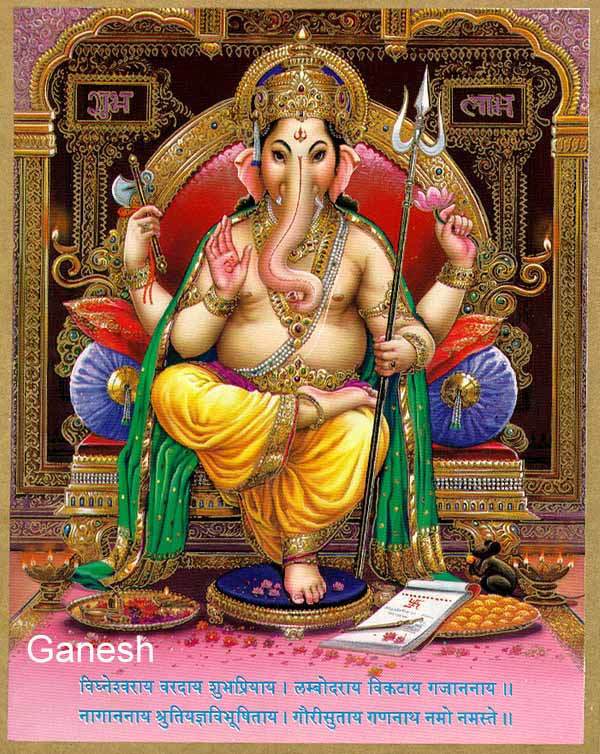

Ganesha — Hindu — God of Prosperity

Right Livelihood is one part of the Ethical Conducts in the Noble Eightfold Path of Buddha together with Right Speech and Right Action.

Right livelihood means that one should earn one’s living in a righteous way and that wealth should be gained legally and peacefully. The Buddha mentions four specific activities that harm other beings and that one should avoid for this reason: 1. dealing in weapons, 2. dealing in living beings (including raising animals for slaughter as well as slave trade and prostitution), 3. working in meat production and butchery, and 4. selling intoxicants and poisons, such as alcohol and drugs. Furthermore any other occupation that would violate the principles of right speech and right action should be avoided.

As long as I’ve been teaching yoga I’ve had more than a few discussions with yoga teachers about whether it’s really OK to be paid for teaching yoga. One yoga teacher tells me that “yoga is really supposed to be taught for free.” Uh…really? Where does it say that in the Yoga Teacher By-Laws? Did I miss the fine print somewhere? Actually I do teach for free and that’s my karma yoga that I do once a month at a domestic violence shelter and I’ve been doing that for going on three years now. Truth be told, it’s my favorite class to teach.

One of my private students is a business entrepeneur and we discussed Right Livelihood when he gave me advice on starting a yoga clothes business. He rolled his eyes when I told him how some yoga teachers believe that yoga should be free and he said, “I see lots of ads in Yoga Journal so somebody is making money.”

Money itself is not good or bad, that’s merely a judgment. Money just IS. It’s all about how it’s used and what it’s used for.

Ethan Nichtern, creator of the ID Project and son of David Nichtern, gives a great interview on Buddhism & Money: Does Priceless Mean It’s Free?. While he speaks specifically about the spiritual economics of teaching the dharma and what Right Livelihood ought to look like in a market economy, everything he says can also be applied to the spiritual economics of teaching yoga.

In this culture, the reality is that yoga is big business. A yoga teacher is performing a service just like a massage therapist, an acupuncturist, or a “Life Coach.” Ethan makes the excellent point that Life Coaches charge upwards of $100 an hour, while a dharma teacher, especially one who has gone through many hours of training in, for example, the Shambhala tradition, is sometimes much better equipped than a Life Coach to help someone. But are you going to pay your dharma teacher $100 an hour? I didn’t think so.

It’s about the perception of value, what value do you place on yoga, meditation, or the dharma? Ethan said that when he managed a Shambhala center they would ask people to “donate” $25 toward something, but they would say that $25 wasn’t in their budget. But two days later he’d go out to dinner with the same people and they would spend more than $25 on dinner and drinks.

I see that all the time at the studio where I teach. Early this year I did a fundraiser for the domestic violence shelter and had a donation box on the desk. The studio also has a small retail section so I would watch women write checks for $100 for yoga clothes, but when the donation box would be pointed out to them they did not have a buck to donate. But 15 minutes later I would see them down the street at Starbucks paying $4.00 for a double shot carmel macadoodle frappawhozit whatever.

One of the best pieces of business advice I ever got was from my first accountant when I started my garden design business. He said, “never give away your services, because if it’s free, people won’t value it.” Ethan says the same thing when he says that teaching the dharma is priceless, but the western capitalist mindset equates “price-less” with “it doesn’t have a price.”

To paraphrase Ethan, our motivation as yoga or dharma teachers should not be toward the bling, but we also need to get out of the naive “poverty mentality” about teaching.

reader warning: yoga rant #2

Time for another yoga rant. Here’s my first one on yoga and ageism.

Hmmmmm, let’s see…what’s been bugging me lately about the state of yoga?

Gum chewing.
Can someone tell me why anyone would chew gum in a yoga class? Maybe I should make people take it out and put it on their nose like my teachers did in elementary school. Not me, of course, because I never got into gum chewing, I was a Three Musketeers girl.

Why someone would sit in a yoga class and chew gum is totally beyond me. I have had to make it a rule in my college yoga class that gum chewing is strictly verboten, and if I see anyone’s jaws moving up and down they either have to swallow it or throw it out. Really. I’m that tough.

But those are college kids. What about older adults who chew gum in class? I do a lot of pranayama and meditation in my classes — how can someone be mindful when their jaws are flapping? Can someone explain this to me because I don’t get it.

No yoga mats.
I obviously don’t expect someone who has never done yoga to be an expert, but if someone signs up for a class, shouldn’t they do a little research on what “equipment” a yoga class requires? Why do people look so shocked when I tell them that a yoga mat is required for a yoga class? Why is it such a big surprise? Not a beach towel, not a blanket, a yoga mat. Is it because maybe they think a yoga class is like an aerobics class? Or is it because despite all the hype and trendiness of yoga in 2007, it’s not really as mainstream as we yoga peeps think it is?

Once I had someone ask me “why?” I said for the same reason you don’t play football without a football and you don’t play baseball without a bat. BECAUSE THAT’S WHAT THE GAME REQUIRES. I’m going to start renting mats. Really.

Over-adjusting aka micro-managing a human body.
For the four year anniversary of the yoga studio where I teach, we had a free round-robin class where the teachers took 10 or 15 minute segments and each taught a portion of the class. The teachers participated in the class while waiting their turn to teach. Only one of the teachers chose to go around the room adjusting.

I’m not a big adjuster. It’s just the way I was trained. I’ve never seen my trainer do a lot of adjustments and he studied with Pattabhi Jois and is also Iyengar trained. He’s barely ever adjusted me in the six years I’ve known him. If one of my students needs to be adjusted, I try to do so first verbally because I want my students to try to feel and intuit for themselves (especially beginners) and if that does not work, I use a light touch, two fingers. I don’t crank on people with both hands or lie on top of them like I’ve seen some teachers do.

I’m doing the practice and I’m noticing how much the teacher is adjusting people. I won’t say what style this teacher teaches but I believe that the people who are attracted to this particular brand of yoga are Type A personalities at best and control freaks at worst. Hey, just my two rupees. We all go to the yoga that resonates with us.

So I’m watching her move a heel over two centimeters, or pulling a shoulder back about three centimeters and I’m thinking, “why don’t you leave people alone? why don’t you just let people flow and feel and enjoy their practice?” The thing was, the students she was adjusting weren’t practicing in a way that would have compromised their bodies or injured them, so what did moving a toe a quarter inch accomplish? And why is she fiddling with the wrinkles on the back of a student’s neck? I would have yelled, “get off me!”

What she was doing bugged me so much I stopped and started walking around, just watching to see that people were safe, looking for major “unalignments.”

I know it was all me, I should not have let her actions bug me, but they did. But why do some yoga teachers feel the need to micro-manage their students’ bodies? Every body is different. I have gotten so far away from the mindset that everyone “should” look a certain way in a pose that one of my students says he loves my classes because it’s “yoga without rules.” Well, not quite, but I want my students to try to fully connect mind/body/breath without the imposition of my ego on their practice or their bodies.

ahhhhhh….rant over. now I feel better….

who are the Namaste Knitters?


(“Knitting is the New Yoga”, tonywatson.net)

OK, I’m calling y’all out…who are ya?

One thing I love about blogging is having a site meter where you can tell where everyone is from. I check every day (OK, that’s one of my attachments) and I know that some of my regular readers reside in California, Minnesota, Colorado, and Croatia! I’m wondering how Croatia found me, and how much yoga there is in Croatia!

So I have found more than a few readers lately who enter from the url of ravelry.com. These readers are hitting my blog from places such as Victoria, British Columbia; someone from the US Fish and Wildlife Service in Anchorage, Alaska; and Albany, New York from a computer at the Rockefeller Institute of Government, entering from a website called religionandsocialpolicy.org, to name only a few. And for you last two, get back to work!…:)

Don’t get me wrong, I don’t mind at all, the more who read this blog the merrier. But I’m curious about how this blog ended up in the Namaste Knitters discussion forum. I’m assuming the hits are coming from a discussion forum given the url that shows up on my site meter.

So how ’bout it, y’all? Step up and introduce yourselves, don’t be shy, leave some comments. I’ve heard that knitting is the new yoga, so give a holler.

and someone knit me a way cool yoga mat bag!

shanti!

inappropriate yoga guy

Here’s the video that has gotten over 1,000,000 hits already on YouTube, the “Inappropriate Yoga Guy”. Today’s Chicago Tribune ran the New York Times’ story about “yoga dating” that used the Inappropriate Yoga Guy as an example.

I don’t know about yoga classes anywhere else, but out here in White Bread (Mostly Republican) Suburbia in the far western suburbs of Chicago, I don’t see guys like this. In fact, I see very few men in the yoga classes at the studio where I teach, and the ones that do come are certainly not SNAGs — Sensitive New Age Guys. The men who come to classes are usually older (mid-40s to 60s) and move like blocks of concrete. They can barely move so I really don’t think they come to yoga looking to pick up hot yoga babes. These guys are more concerned about making it through a 90 minute flow class without throwing their back out, forget about a hot date.

Even the few guys (average age 19-22) who enroll in my yoga class at the community college aren’t looking to pick up yoga chicks. At least that’s what they tell me when I ask on the first day, “who’s in this class because you think it’s an easy A or you think it’s a good place to meet girls?”. Yes, I really do ask that question on the first day, quasi-facetiously. I have more students looking for an easy A. And let me tell you, sometimes these young dudes aren’t in any better shape than 60 year old men. Uttanasana with palms on the floor? That’s about as realistic as a date with Lindsey Lohan for these boys.

Maybe it’s different in places like California or New York. I only go to one studio in Chicago and the class I go to rarely has men in it. So the whole idea of “yoga dating” is a foreign concept to me. Frankly, even though I don’t look my age, I’d fall over in shock if a guy looked twice at me anymore, whether in a yoga class or on the street.

As for men in general being into yoga, I can count the number I know on one hand. Again, I can only relate this to the area where I live, but I don’t know of any women yoga teachers (or students) whose husbands/boyfriends do yoga. OK, I know one teacher whose husband takes my yin class, but that’s about it.

So how ’bout it, readers? “Inappropriate Yoga Guy” — fact or fiction?

going with the flow

Do you ever have days where all your yoga and meditation training kicks in and you inhale peace and exhale gratitude? The last few days have been like that for me.

I have three cats and the two pictured are Jack and Sox. Sox is 16 and Jack is the grey tabby, 15 years old. They were both strays when they came into our lives. Jack has been diabetic for about nine years and I give him a shot of insulin every day.

Just like a human diabetic, he has his ups and downs. He has hypoglycemic crashes, which can very scary and heartrending. He goes through long periods where his diabetes is regulated and then his body goes wacky and I have to rush him to the vet…like last night.

When Jack begins to crash I try to help by giving him corn syrup to raise his glucose but last night it didn’t work. His head starts shaking, he starts staggering around, his back legs go out on him, and he literally becomes blind. He is helpless. When we got him to the vet, his blood sugar was so low it did not even register on the glucose meter and his temperature was 95 degrees (cats are usually around 102.) The emergency vet started a glucose IV and put him on a heating pad. He is still at the vet’s office as I type this. The bill for last night was $410.

On top of all this, starting today I am getting a hardwood floor refinished. After the carpet was pulled up the refinisher told me that some of the spots were so badly damaged by cat urine that the wood has to be replaced, adding $400-$600 to the original cost and an extra day. The reason there’s cat urine is that (1) Jack is diabetic, and (2) he’s an old cat, and old cats sometimes forget to use the cat box.

Yes, Jack is problematic and over the years he has cost us a lot of money in vet bills, but in good conscience I can not put him to sleep to make things easier for us. I know that many people would put a cat like Jack to sleep and have no second thoughts about it. I know that people put their pets to sleep when the cost of vet care becomes too much and they can no longer afford to care for them. I know that some people would take a cat like Jack and dump him on an expressway or out in the country. There are many throw-away animals in this world.

But I can not put Jack to sleep, he is not suffering on a daily basis. He still eats well, he still gets around, and sometimes he still runs around like a kitten. A friend once described him as a “lover.”

As for the floor, the refinisher was more upset than I was about the added cost and extra day. But I looked him in the eye and I said “I’m a yoga teacher, and if there’s one thing I’ve learned, that’s to go with the flow.” I told him that things can always be worse and I am not going to get upset about things that I have no control over. I told him that I am not going to create my own suffering by becoming upset. He said that I was right and that maybe he should remember that for himself in the future.

Yeah, I wish I did not have a diabetic cat, I wish he did not cost beaucoup bucks to keep well, I wish the floor job wasn’t going to cost an extra $500 because of him. But wishing for reality to be something other than it is creates suffering. I am not going to dwell on those negatives because things can always be worse. I am just grateful that we are in a position to be able to afford these emergencies, many people can not. There was a time back in the day when I could not. There was a time back in the day when I could not afford medical care for myself.

I try to live my life from a state of abundance, and not with the attitude of lack. I know people who have much more than I have materially, yet they live their lives as if they are lacking something.

I am grateful for all that I have…even for an old sick cat.

yoga = recycling

Yoginis, do you recycle?

You might want to read more about “recycling” in this article.

“These women care about their looks and are keen on keeping up with the latest trends….They’ve finished raising their kids and want to enjoy being fashionable again,” Ando says. “They’re the types who use eco bags while shopping and drive hybrid cars. They have a strong awareness of protecting the environment. And they have no worries about going back to old boyfriends. That’s why I call what they’re doing ‘recycling sex.’… “

And a wife doing yoga should also get alarm bells ringing, according to another “recycling sex” wife.
[emphasis added.]

“I don’t know whether yoga increases your female hormones, or what, but since I’ve been doing yoga it’s made sex feel so much better for me,” [emphasis added]…. “Yoga improves your shape and I always have an excuse for getting out of the house by telling my husband I’ve got a yoga session on.”

earth day every day, I say…

"yoga unveiled"

I highly recommend this movie to all yogis and to non-yogis who want to understand what traditional yoga is all about. This documentary came out last year and contains interviews and clips of many of the Indian and western yoga biggies, as well as old shots of Krishnamacharya and Indra Devi. However, I was disappointed that the filmmakers did not mention my teacher, Srivatsa Ramaswami, who studied with Krishnamacharya for over 30 years. There is also some good analysis on the state of yoga in the west.

Of course I loved all the scenes in India…FYI, the yogi in padmasana in the opening scene of this video sample is Lara, who was the asana demonstrator in my month-long 2005 intensive at the Krishnamacharya Yoga Mandiram. The ancient yogi carving in my photograph above can be seen at Mahabalipuram, a UNESCO World Heritage Site, a bus ride outside of Chennai.

no attachment, no aversion

What would happen to pain if we did not label it as such? What would happen if we turned to face our obstacles instead of pushing them away?

I teach vinyasa flow and yin yoga. Yin yoga is a style that is still unfamiliar to many yoga students. It doesn’t make you sweat and you don’t feel like you’ve gotten a “workout” — “you mean you’re not moving? you’re just on the floor? no way can I do pigeon for 10 minutes, are you kidding?!?”

I believe that if you have strictly a “yang” practice like astanga or vinyasa, you are only giving yourself half the gift of yoga.

Because of my training with Paul Grilley and Sarah Powers and my own personal yoga and meditation practices, I feel that a yin/yang yoga practice offers a complete practice not only on the physical level, but more importantly on the psychic level. Working on these deeper levels is what leads to our personal transformation, and the changes we make in our soft tissue have a profound influence on the emotional, mental, and energetic levels. My own yoga practice deepened when I moved away from an alignment-based, precision-obsessed practice.

A quiet yin practice reveals our subtle body. We move from the gross muscular level into our bones, into the connective tissue deep within us. Many yoga students don’t practice in a way that invites stillness because many times the contemplative aspects of yoga are ignored in western yoga classes. How many of you sit in stillness for 10-15 minutes DURING a vinyasa class, i.e., at the end of class, not AFTER the class, only as an option? My study at the Krishnamacharya Yoga Mandiram in India showed me how different yoga is there compared to the fitness classes labeled as yoga here.

In my training with Sarah earlier this year she said that “yoga is a process of fully inhabiting ourselves — body, heart, and mind.” Sarah believes that as a society we are so fixated on our bodies looking and performing a certain way that we neglect the spirit body. She said that Ken Wilber calls this “bodyism”, and I see it all the time in vinyasa classes.

There is nothing wrong in trying to perfect an arm balance or headstand, nothing at all. But if the only thing behind it is Ego, then it is only a performance. Non-attachment, non-Ego, is accepting yourself just the way you are in that present moment when your legs smash the wall and you crash down from a very shaky headstand — and smiling about it instead of swearing. I ask my students, “what is going to ultimately transform you? holding an arm balance for five minutes or sitting in stillness for five minutes?”

The stillness of yin yoga allows us to observe the rising and passing away of physical and emotional sensations. All of our life experiences reside in our body, and the emotional afflictions we all carry affects the body and hardens us, physically, mentally, and emotionally. Yin yoga is not just about cultivating physical flexibility, but our inner flexibility as well. Sarah believes that we can never truly soften if we do not investigate these sensations and turn toward our pain and discomfort, instead of running from them. This process is similar to vipassana meditation — watching, arising, abiding, passing away.

Sarah’s teacher training included a workshop called “Working with Emotional Obstacles Along the Path.” She suggests that we explore our personal responses to our sensations, and instead of pushing them away, confront them, because if we do not, our obstacles continue to live in our bodies. Sarah recommends a five step process:

* Recognition — Identify what is disturbing you the most. Emotional pain, illness, addiction, self-hate?

* Acceptance — Acknowledge the issue and explore how and where it lives inside you. Does it have a shape, color, size, temperature, texture?

* Impartiality — Let go of defining the issue as right or wrong. Let go of assumptions and just observe.

* Personification — Imagine this issue as a living being in front of you. Notice its gender, color, size, etc. Ask It what It needs of You, and if this need is met, how does that make You feel?

* Compassion — Give yourself permission to have this need as you begin to open to the expansiveness and clarity of your newfound Awareness.

Yoga, done with mindfulness, allows us to come home to ourselves.

TADA DRASTUH SVARUPE VASTHANAM
(Yoga Sutra-s 1.3)
“Then, the ability to understand the object fully and correctly is apparent.”

“In the state of Yoga, the different preconceptions and products of the imagination that can prevent or distort understanding are controlled, reduced, or eliminated. The tendency to be closed to fresh comprehension or the inability to comprehend are overcome.” (Reflections on Yoga Sutra-s of Patanjali, TKV Desikachar)

the color of yoga

I’m throwing the question out there: why is western yoga so overwhelmingly white?

In my six years of teaching (and longer as a student) I’ve been to numerous yoga workshops, trainings, and conferences, and I can’t help but notice the dearth of people of color at these events.

This topic is one of my yoga rants, together with ageism in yoga marketing in this country, but you don’t see these topics discussed in Yoga Journal — and that also bugs me.

As for black yogis, I know of Rolf Gates, Alice Walker, Becky Love, a Chicago yoga teacher, and Ty Powers. There is also the International Association of Black Yoga Teachers whose mission is “to serve the African Diaspora by spreading the teachings of the ancient art and science of yoga.” As for black yoga students, I can count on one hand how many I’ve had. One of the places I teach is a community college with many African-American and Hispanic students, but in my four years there, the majority of my students are white.

Even when I go into Chicago to my teacher’s studio to take his classes, a studio that is in a hip, diverse area, the majority of students are white.

I teach karma yoga at a domestic violence shelter to the Hispanic Women’s Support Group. These women love the time they have for themselves. They love having the opportunity to meditate in a quiet place, an opportunity they usually don’t have at home with kids and with men who don’t support them emotionally.

Once a newspaper reporter interviewed me and some of the shelter’s students about yoga for battered women, and one woman said she would love to see more yoga offered in their community, but she felt that many Hispanics might not be receptive to it, mainly because of their religions (Baptist, Catholic, and Jehovah’s Witness in my area.) One woman stopped coming to my class because her minister – a Jehovah’s Witness — told her that yoga was evil and she would go to hell if she kept doing yoga. The group leader told me this and she said that the woman felt badly about it because she loved the way yoga made her feel, but she felt she had to listen to her minister over and above what she felt inside her.

I know that the cost of attending yoga classes can be prohibitive for people in lower-income areas. When one has to pay the rent, buy food, pay the utility bills, and buy clothes for the kids, yoga classes are a luxury even when offered at less expensive venues such as park districts or community centers. Are people of color in higher income brackets doing yoga or going on meditation retreats? It seems to me that people in lower-income areas — black, brown, or white — should have the same access to alternative healing modalities such as yoga, acupuncture, massage, reiki, and meditation that my white upper middle class students have. Local area yoga teachers and other healers could offer these modalities through seva service.

But as for the yoga business itself in the west, and the population of yoga teachers in the United States, how culturally diverse is it…really? Again, what about the way yoga is marketed in the west, how “colorful” are the ads in yoga magazines? Is yoga marketed predominately to the white community? If that’s the game plan of advertisers, why? Is it solely about economics and demographics?

Or is yoga just a white thang?

It all makes me go…hmmmmmmm…….

St. Theresa’s Prayer

I wanted to share a prayer that was at the end of an email a yoga student sent me. She has had a hard life and she sent me an email thanking me for being there for her. I was embarrassed because I am not used to the kind words that the student wrote, but it always does my heart good to know that yoga brings peace to someone’s soul.

This prayer touched me even though I am not Christian — I’m a very lapsed Lutheran turned Buddhist. I don’t know who St. Theresa is and I barely know the names of the important angels, but that’s not really important, is it?

May today there be peace within.
May you trust God (the Universe) that you are exactly where you are meant to be.
May you not forget the infinite possibilities that are born of faith.
May you use these gifts that you have received,
and pass on the love that has been given to you.
May you be content.
You are a child of God.
Let this presence settle into your bones,
and allow your soul the freedom to sing, dance, praise, and love.
It is there for each and everyone of us.

Peace and buddhahood are there for each and every one of us.

Another yoga student who has been with me for more than a few months told me today how yoga has helped her depression — she is only 24 and she takes care of an autistic brother. She said that her brother will always be autistic, but she does not always have to be depressed. Yoga has helped her take control, and she has realized what the Wise-Ass Buddhist said: “life sucks, but suffering is optional.” She told me very excitedly that “yoga and meditation are ways to self-heal! if only more people knew that!” Yes, if only!

I love it when some of my younger yoga students — I teach at a community college and the age range is 18-25 — totally connect to yoga and they keep coming back semester after semester. When my students tell me about how good they feel after a class, or how yoga affects their lives off the mat, I tell them that they’ve created all that by themselves, I am merely the yoga facilitator. They are their own gurus.

Does this old hippie chick’s heart good…

wishing you all peaceful hearts.